Heyoka named Wíiyokiya

Once in a time long ago, in the vast plains of the Dakota territory, lived a Heyoka named Wíiyokiya. He was known as the “sacred clown,” a figure of humour and wisdom within his Lakota tribe. Unlike others, Wíiyokiya embraced the role of a trickster, using laughter and unconventional behaviour to teach important lessons about life. One day, the tribe faced a severe drought. The rivers ran dry, and the once-bountiful land turned to dust. The people grew anxious, their spirits dampened by the relentless sun. The elders gathered, seeking guidance on how to restore balance to their world.

Wíiyokiya, seeing their despair, decided to act. He painted his face with bright colours and donned his most outrageous attire—clashing patterns and mismatched feathers. He danced through the village, mimicking the movements of the animals and poking fun at the seriousness of the elders. The people watched, confused at first, then began to chuckle. Laughter spread like wildfire, lifting their spirits. As he danced, Wíiyokiya began to chant a playful song that told the story of the sky and the earth’s love for one another. His antics reminded the tribe of their connection to nature and the importance of unity during hard times. The more they laughed, the more they remembered their resilience.

As if in response to their newfound joy, dark clouds suddenly gathered overhead. Thunder rumbled, and rain began to fall—gentle at first, then pouring down in joyous torrents. The tribe celebrated, dancing alongside Wíiyokiya, who twirled and leapt, splashing in the puddles that formed. The earth soaked up the water in the following days, and life returned to the plains. Crops began to sprout, and the rivers flowed once more. The people, grateful for the rain, recognized Wíiyokiya’s wisdom. They understood that they had summoned the very forces of nature through laughter and joy.

From that day forward, Wíiyokiya was seen as a trickster and a vital part of the tribe’s spiritual fabric. He taught them that humour and joy could be powerful tools for healing and community in times of hardship. His legacy lived on, reminding them to embrace the lightness of life, even in the darkest times. And so, the tale of Wíiyokiya, the Heyoka, became woven into the fabric of their stories, a timeless reminder of the strength found in laughter and the bonds of community.

Image by AI

A Tale for Christmas – The letter

Once upon a time, a dense forest blanketed in snow stood in the heart of a winter wonderland. The trees were adorned with glistening icicles, and the ground was covered in a pristine layer of white. On a chilly Christmas Eve, as the snowflakes gently fell from the sky, a young girl named Lily was taking a walk through the forest. She loved the peace and serenity of the winter landscape and the way the snowflakes sparkled in the sunlight. As she wandered deeper into the forest, Lily noticed something unusual lying in the snow ahead. It was a weathered envelope, slightly crumpled and partially buried in the powdery snow. Curious, she picked it up and brushed off the snow to reveal an old-fashioned letter inside. The letter, addressed to Santa Claus and written in a child’s careful handwriting, began with

“Dear Santa, I hope you are well…” and went on to list a series of heartfelt wishes and dreams for Christmas.

The words on the page were filled with innocence, hope, and a touch of sadness. Moved by the letter, Lily knew she had to do something to help fulfil the wishes of the child who had written it. She decided to take the letter home, carefully preserving it from the cold and dampness of the forest. That night, as snowflakes continued to fall outside her window, Lily penned a letter of her own to Santa Claus. She shared the story of finding the lost letter in the forest and asked Santa to help make the wishes come true. With a flicker of hope, she placed both letters by the fireplace and went to bed, dreaming of Christmas magic.

On Christmas morning, Lily awoke to a wondrous sight. Underneath the twinkling tree, she found a pile of beautifully wrapped gifts, each bearing the name of the child who had written the letter she saw in the snow. Tears of joy rose in her eyes as she realized that Santa had indeed heard their wishes and brought them to life. From that day on, Lily believed in the power of Christmas magic and the importance of spreading kindness and joy to others. As she looked out at the snowy forest, she knew that miracles could happen even in the most unexpected places, especially during the most magical time of the year. 

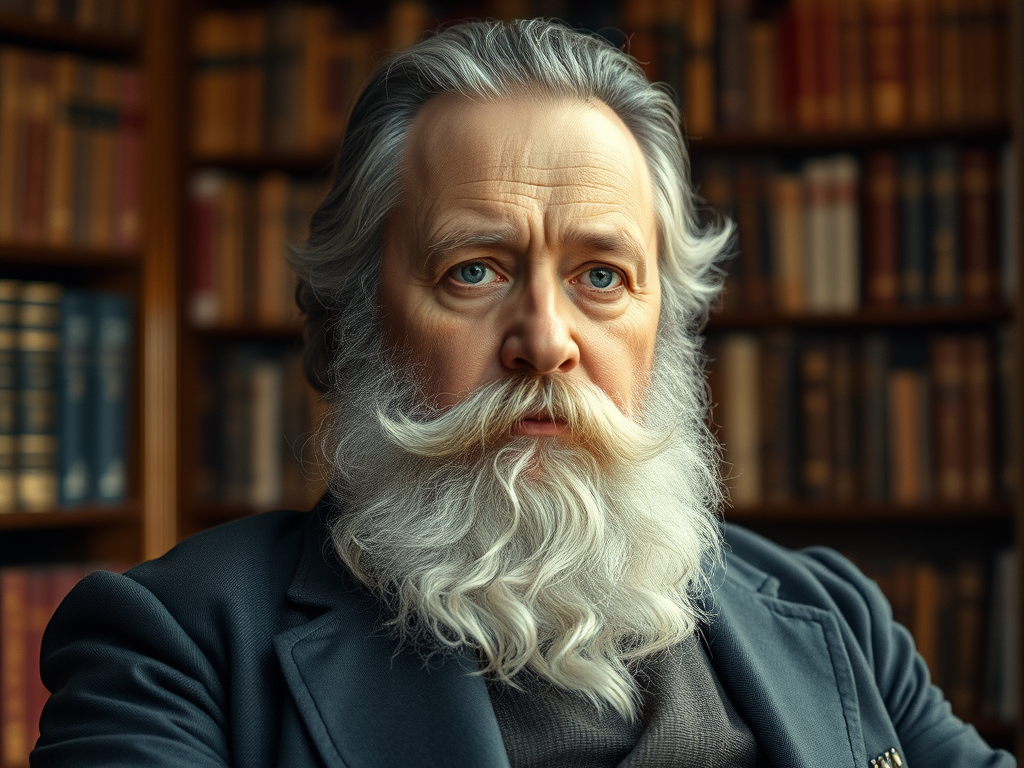
Victor Hugo

Victor Hugo (1802-1885) was a renowned French poet, novelist, and playwright who played a significant role in the Romantic literary movement. His works often explored themes of love, politics, and social injustice. Hugo was born on February 26, 1802, in Besançon, France. His father was a general in Napoleon’s army, and his mother was a royalist and supporter of the Bourbon monarchy. He showed early literary talent and published his first book of poetry at age twenty. Hugo married Adèle Foucher in 1822, and they had five children together.

Notable Works:
Les Misérables (1862)
One of Hugo’s most famous works, The Life of Jean Valjean, is a sprawling novel that follows the lives of several characters, including the ex-convict Jean Valjean, against the backdrop of social and political upheaval in 19th-century France.

The Hunchback of Notre Dame (1831)
This novel tells the story of Quasimodo, the hunchbacked bell ringer of Notre-Dame Cathedral in Paris, and Esmeralda, a beautiful gypsy girl. The book explores themes of love, fate, and social injustice.

Les Contemplations (1856)
   This collection of poetry is considered one of Hugo’s masterpieces. It reflects his personal experiences, including the death of his daughter, Léopoldine.

Victor Hugo was also known for his political activism. He was a staunch supporter of republicanism and opposed Napoleon III’s authoritarian rule. Due to his political beliefs, he was exiled from France in 1851 and spent over 15 years in various countries, including Belgium and the Channel Islands. Returning to France in 1870 after Napoleon III fell from power, he continued to write and be involved in politics until his death on May 22, 1885, in Paris.

Victor Hugo’s works have had a lasting impact on literature and continue to be studied and celebrated today. He is regarded as one of the greatest French writers, known for his lyrical style, social commentary, and passionate storytelling. Hugo’s life and work exemplify his commitment to art, justice, and human rights, making him a towering figure in French literature and culture. 

Image by AI

Alexander – Guardian, Protector of Humanity

Once upon a time, in a world much like our own but with a touch of magic woven into its fabric, there lived a man named Alexander. Alexander was blessed with an extraordinary gift – he could remember every detail of every moment he had ever experienced. His memory was a vast and intricate tapestry, a living archive of his existence. However, this gift soon turned into a curse for Alexander. The burden of remembering every joy, every sorrow, every triumph, and every failure became too heavy for him to bear. The pain of reliving past traumas and heartaches was a constant companion, a shadow that followed him wherever he went. Despite his suffering, Alexander’s remarkable memory made him indispensable to mankind. His unparalleled ability to recall information made him a living library, a repository of knowledge unprecedented in the history of the world. People came from far and wide to seek his counsel, learn from his wisdom, and benefit from his extraordinary gift.

As the years passed, Alexander became a legend, a figure shrouded in mystery and myth. Some believed he was immortal, that his memory was a divine gift bestowed upon him by the gods. Others whispered that he was a sorcerer of magic and power beyond mortal comprehension. But as time marched on, Alexander’s burden grew heavier. The weight of his memories threatened to crush and consume him from within. And so, he decided to change the course of history. On a cold winter’s night, as the world slept, Alexander walked alone to the edge of a cliff overlooking the vast expanse of the earth below. With a heavy heart and tears in his eyes, he gazed out into the darkness and made his final choice. He closed his eyes, took a deep breath, and let himself fall.

But a strange and wondrous thing happened as he plummeted towards the earth below. The world around him shimmered and shifted, and Alexander found himself suspended in mid-air, frozen in time. It was then that he understood the truth of his gift. His memory was not a curse but a blessing. His ability to remember every moment and detail was the key to mankind’s survival. Without him, the world would be lost, adrift in a sea of chaos and uncertainty. And so, Alexander made a solemn vow to himself and to the world. He would carry the burden of his memories, no matter how painful or heavy. For as long as he lived, mankind would thrive, secure in the knowledge that there was one among them who could never forget. So Alexander became a guardian, a protector of humanity, a beacon of hope in a world filled with darkness. Though his burden was great, his spirit was stronger still, a testament to the power of memory, the resilience of the human heart, and the enduring strength of the human spirit. 

Image by AI

The Crystal Crown

Once upon a time, in a world where darkness threatened to consume all light, there existed a legendary artefact known as the Crystal Crown. This crown was said to possess unimaginable power, bringing balance and harmony to the world. Long ago, when the forces of darkness, led by the malevolent sorcerer Malakar, sought to plunge the world into eternal night, a brave young heroine named Elara rose to the challenge. Elara was a skilled warrior and a master of magic, but her true strength lay in her unwavering courage and pure heart.

As the armies of darkness advanced, seeking to destroy all that was good and pure, Elara embarked on a perilous quest to find the Crystal Crown. Legends spoke of the crown’s ability to harness the very essence of light and channel it to drive back the darkness. Elara journeyed through treacherous forests, across vast deserts, and over towering mountains, facing fierce monsters and cunning traps set by Malakar’s minions. With each step, she grew stronger, her resolve unwavering as she drew closer to her goal. Finally, after a series of harrowing trials, Elara stood before the entrance to the Crystal Chamber, where the crown lay guarded by powerful enchantments. With a fierce determination burning in her eyes, Elara faced the challenges before her, overcoming each with skill and bravery.

At last, she reached the heart of the chamber, where the Crystal Crown shimmered with an ethereal light. Malakar appeared as she reached out to claim it, his dark magic crackling around him as he sought to stop her. A fierce battle ensued, with Elara and Malakar locked in a struggle that shook the very foundations of the chamber. But in the end, Elara’s courage and purity of heart triumphed. With a final burst of light, she seized the Crystal Crown and unleashed its power. The crown blazed with radiant light, driving back the darkness and banishing Malakar to the shadows, and the world was bathed in a warm, golden glow as the Crystal Crown’s magic spread, restoring balance and harmony to all lands. And so, the tale of the Crystal Crown that saved the world passed into legend, a reminder of the power of courage and compassion and the enduring light that shines within us all.Â