Lazarus Carpenter
I have lived in Wales for over twenty five years. Born in North Yorkshire, I am now an author, actor, musician and song writer, previously being a therapist, trainer and researcher, specialising in mental health. He was educated in Middlesbrough, Sheffield and Cambridge. With a fascination for Welsh History, I create worlds within worlds; magical, haunting, spirituality permeating sound moral codes of life. I live quietly with Debbie Eve (also my illustrator and our dog, Noodle in a small cottage surrounded by the beauty of the Brecon Beacons in the Valleys of South Wales.
David Walliams is a British author, comedian, and television personality best known for his children’s books and his work on the television show “Britain’s Got Talent.” His literary work includes a variety of popular children’s novels, often characterized by humour, engaging characters, and heartwarming themes. Some of his notable books include:
1. “The Boy in the Dress” – A story about a boy who enjoys wearing dresses and explores themes of identity and acceptance. 2. “Mr. Stink” – A tale about a homeless man and a young girl who befriends him, highlighting compassion and understanding. 3. “Gangsta Granny” – A humorous adventure featuring a boy and his grandmother, who turns out to be a retired jewel thief. 4. “Awful Auntie” – A story about a young girl who must outsmart her wicked aunt to save her family home.
Walliams’ books often include illustrations by artistic collaborator Tony Ross, making them visually appealing to young readers. His writing has received acclaim for its ability to tackle serious topics in an accessible and entertaining manner.
In addition to his literary accomplishments, Walliams has appeared in numerous television shows, including sketches for “Little Britain,” where he starred alongside Matt Lucas. His work blends comedy with poignant social commentary, making him a versatile figure in the entertainment industry.
In a small town shrouded in a veil of mist and secrets lived a man named Elias, a psychic with an extraordinary gift that bore the weight of an eternal burden. From a young age, Elias discovered that he could see spirits, hear their whispers, and receive messages that often lead to profound revelations. However, the constant connection to the spirit world left him in a state of perpetual anxiety, unable to switch off the cacophony of voices that flooded his mind day and night. This tale follows Elias on his tumultuous journey as he navigates the thin line between the living and the dead until one fateful day when he glimpses his demise.
Elias had always known he was different. As a child, he would sit in the garden, surrounded by flowers that danced in the breeze, while he conversed with the ethereal figures that hovered just beyond the reach of human perception. They were not frightening to him; they were lost souls seeking closure or warning those still breathing. Yet, as he matured, the whispers grew louder, the messages more urgent, and the weight of his gift transformed into a curse. Each encounter with the spirit world drained him, leaving him grappling with their stories’ emotional toll.
His reputation as a psychic spread through the town like wildfire. People sought him for guidance, hoping to connect with lost loved ones or uncover hidden truths. He became a vessel for their grief, feeling their pain as if it were his own. He often found solace in knowing he could help others find peace. However, the more he delved into the lives of the departed, the more he lost himself in their sorrow. Each spectre that reached out to him became a part of his existence, blurring the lines between his reality and the world beyond.
On a dreary Wednesday afternoon, Elias sat in his dimly lit living room, the air thick with an unshakeable sense of foreboding. As he sipped his tea, he suddenly felt an overwhelming presence wash over him. This time, it was different; it was darker and more oppressive. The familiar whispers morphed into a singular voice, urgent and chilling. “Elias, you must listen.” The message was clear, yet terrifying. He saw flashes of his life—the laughter, the love, the heartache—culminating into a vision of his own death: a violent accident. This fleeting moment shattered the illusion of safety he had clung to.
In the following days, Elias was consumed by a tumult of emotions—fear, anger, acceptance. He sought to alter his fate, to warn himself of the impending doom he foresaw. Yet, each attempt to evade the future only tightened the grip of the spirits around him, their voices now a cacophony of desperation. “You cannot escape,” they cried. “You must confront the inevitable.” With each passing moment, he learned that the only way to find peace was not to fight against the currents of fate but to embrace them.
In a final act of courage, Elias resolved to live fully in the moments he had left. He poured his heart into his work, helping others heal while accepting his fate. The day of the foretold accident arrived, and instead of fleeing, he faced it with an open heart. Surprisingly, the event unfolded differently than he had envisioned; a twist of fate saved him, revealing that the future was not set in stone. The experience taught him that while he was a conduit for the spirits, he was also the master of his path. Through acceptance and love, he found liberation from the shackles of his gift and learned to cherish the fragile beauty of life.
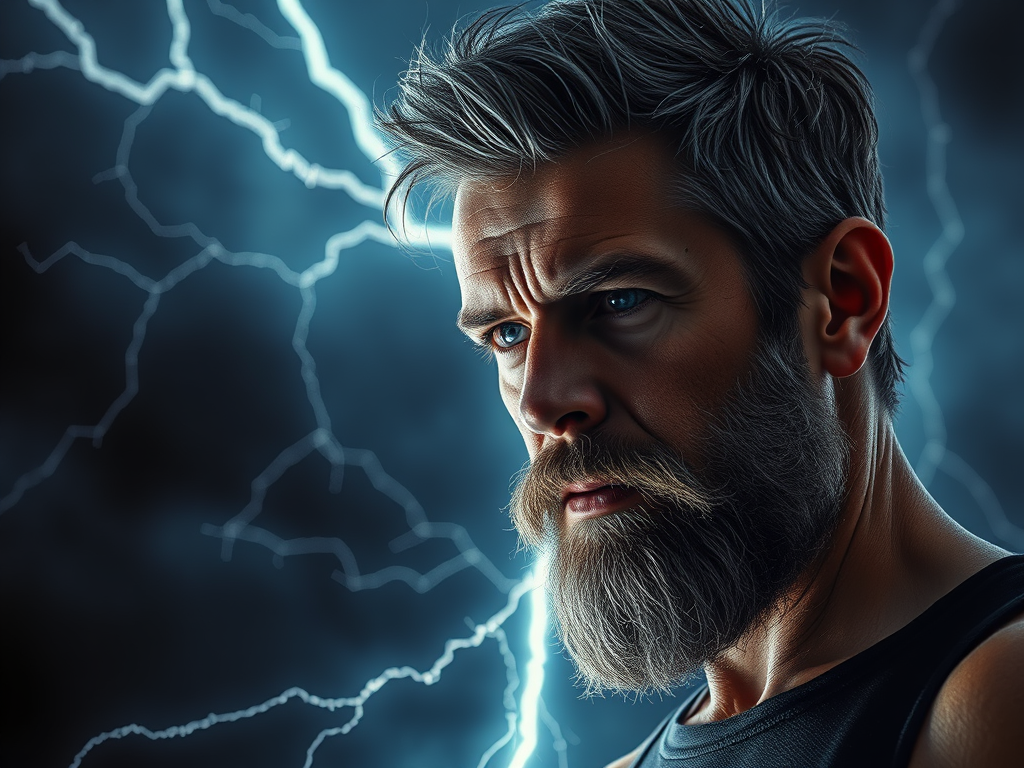
A man named Rowan lived in the tiny village of Eldergrove, nestled between rolling hills and whispering forests. Known for his quiet demeanour and simple life, Rowan spent his days tending to his garden and sharing stories with the villagers. But one fateful afternoon, everything changed. Dark clouds gathered ominously over Eldergrove, and as a storm brewed, lightning struck Rowan while he was out in his garden. Miraculously, he survived, but the strike transformed him. From that moment on, he began to experience vivid visions of the future—flashes of wondrous and terrifying events.
At first, the visions were benign. He saw the village prospering: a bountiful harvest, children laughing and playing, and the village square filled with joy. Rowan shared these glimpses with the villagers, and optimism bloomed. They celebrated their newfound fortune, and hope thrived like never before. However, as time went on, the visions darkened. Rowan foresaw a devastating drought that would wither their crops, a sickness that would sweep through the village, and an impending storm that would destroy homes. Each time he shared these visions, fear replaced the earlier joy, and the villagers began to look to him for guidance, hanging on his every word.
Some villagers welcomed the truth of his visions, believing they could prepare for the worst. Others grew resentful, feeling cursed by the knowledge of what was to come. Tensions mounted, and soon, the village was divided. Arguments erupted over what actions to take based on Rowan’s foretellings. The vibrant community spirit began to erode, replaced by suspicion and despair. Burdened by the weight of his gift, Rowan became an unwilling prophet. He tried to focus on the promising visions, but the bad ones persisted, each more dire than the last. He witnessed fires consuming the forest, floods washing away homes, and even unravelling relationships among his friends and neighbours. The village, once a close-knit community, fell into chaos.
One stormy night, Rowan had a vivid vision that shook him to his core. He saw the beautiful and serene village slowly fading away, caught in a cycle of despair and division until it vanished completely. He woke in a panic, heart racing, realizing he had to act before it was too late. Desperate to unite the villagers, Rowan called a meeting in the square. He shared his vision of the village disappearing and urged everyone to set aside their differences. He spoke of the strength of their community and the importance of supporting one another in times of adversity. Slowly, the villagers listened, and the fear that had divided them began to dissolve.
Inspired by Rowan’s plea, they worked together to prepare for the drought, forming groups to share resources and help those in need. They planted drought-resistant crops and built rainwater collection systems. The spirit of cooperation rekindled, and the villagers began to mend their relationships, rekindling the bonds frayed during the tumult. But the storm Rowan had foreseen approached, fierce and unrelenting. As the winds howled and the skies darkened, the villagers stood together, hand in hand. They faced the tempest not as individuals but as a unified community. When dawn broke, the village stood battered but intact. The storm had passed, and though the aftermath was devastating, the villagers were determined to rebuild. Rowan realized that while his visions showed both light and dark, what truly mattered was how they chose to respond. Yet, as the months passed, the visions continued, each more haunting than the last. Rowan began to understand that the visions were not merely predictions but reflections of their choices. The more they focused on fear and division, the more dire the visions became.
Finally, after months of struggle and unity, the last vision came to him—a serene image of Eldergrove, thriving and full of life, surrounded by a vibrant forest. He shared this final vision with the villagers, urging them to embrace love, cooperation, and resilience. But as he spoke, he noticed something strange. The village began to shimmer, the edges of reality blurring. The villagers gasped as they realized the visions had taken a toll on their existence. Each moment spent in fear and anger had pulled them further from the tangible world. One by one, they began to fade until only Rowan remained.
In that final moment, Rowan understood the truth: the village existed not just in the physical realm but in the hearts of its people. With a surge of determination, he closed his eyes and envisioned the vibrant community he had seen. He poured his heart into that image, willing it to become real. When he opened his eyes, he found himself standing in a lush meadow, the echoes of laughter and love surrounding him. Eldergrove had transformed into a new realm—one that existed beyond the confines of fear and division. In this place, the villagers’ souls thrived, united in spirit, forever woven together in a tapestry of shared history and hope. And so Rowan, the man struck by lightning, became the guardian of Eldergrove’s spirit, a reminder that while the future may hold both light and darkness, it is the choices we make together that shape our reality.
Once upon a time, in the ancient land of Eldor, there lived a once-mighty wizard named Eldrin. In his youth, Eldrin commanded the forces of nature, conjured storms, and spoke with the stars. But as time passed, his magic waned, and he found himself in a world that no longer believed in the wonders he once created. Now, he was just a shadow of his former self, living in a crumbling tower at the edge of the Whispering Woods. Eldrin spent his days reminiscing about the grandeur of his past, often gazing into the crystal ball that had once revealed the secrets of the universe. Yet, all he saw now was his own reflection, a reminder of lost power. His heart ached with longing for the magic that had defined him.
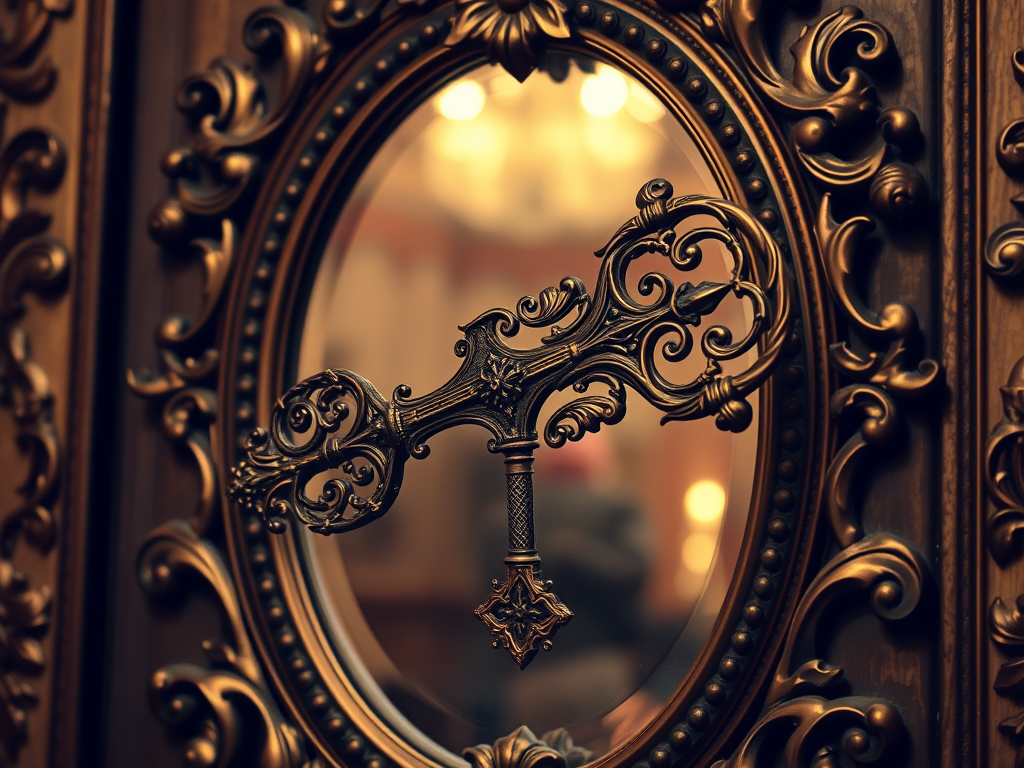
One fateful evening, while wandering through the forest in search of herbs for his dwindling potions, he stumbled upon an ancient oak tree. Its gnarled roots twisted around a curious stone pedestal, upon which lay a small, ornate key. It glimmered in the fading light, engraved with symbols that seemed to pulse with energy. Intrigued, Eldrin picked it up, feeling a surge of warmth flow through his fingers. As he turned the key, a strange sensation overcame him; it was like the key was whispering secrets of untold power. Eldrin hurried back to his tower, where he placed the key on his workbench and studied it for hours. He realized this was no ordinary key; it was a key to a hidden realm where magic thrived.
Driven by curiosity and desperation, Eldrin began to decipher the symbols etched into the key. After days of research, he discovered that to unlock the realm, he needed to recite an incantation at the stroke of midnight during the next full moon. The thought of reclaiming his magic filled him with hope, and he prepared for the night with fervor. When night finally arrived, Eldrin stood before an ancient mirror, clutching the key tightly. As the moonlight streamed through his window, he recited the incantation. The air shimmered, and the mirror rippled like water, revealing a gateway to the hidden realm. With a deep breath, he stepped through the portal. Eldrin found himself in a vibrant world teeming with magical creatures and lush landscapes. The air was thick with enchantment, and he felt a spark ignite within him. As he explored this realm, he encountered wise beings and learned forgotten spells that revitalized his craft.
But Eldrin soon realized that the key’s true power was not just to restore his magic; it was to connect him with the essence of magic itself. He understood that magic was not merely a tool to wield but a bond that intertwined all living things. With his newfound knowledge, Eldrin returned to Eldor, his heart brimming with magic once more. He used his powers to heal the land, rekindle hope in the people’s hearts, and teach them about the wonders of the world around them. No longer just a wizard, he became a guardian of magic, ensuring it would never fade away again. And so, Eldrin, the wizard with no magic left, became a legend, reminding everyone that sometimes, the greatest magic lies not in spells or incantations but in the connections we forge and the love we share with the world.