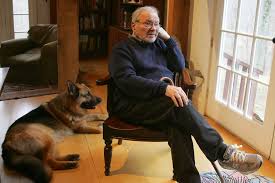
Enid Blyton

Enid Blyton (1897–1968) was a prolific British author known for her children’s books, which have captivated young readers for generations. She is best known for her series, including “The Famous Five,” “The Secret Seven,” and “Malory Towers,” which often feature themes of adventure, friendship, and mystery. Born in East Dulwich, London, Blyton had a passion for storytelling from a young age. She worked as a teacher and a governess before dedicating herself to writing full-time. Her first book was published in 1922, and she quickly gained popularity, producing over 700 titles throughout her career.

Blyton’s writing is characterized by its straightforward style, engaging plots, and relatable characters, making it accessible for children. Her work often reflects her love for nature and the outdoors, with many stories set in rural landscapes. Despite her success, Blyton’s work has faced criticism over the years for its perceived lack of depth and outdated themes. Nevertheless, her books have remained in print and continue to be loved by new generations.

Enid Blyton’s legacy endures, and her influence on children’s literature is significant, inspiring countless readers and writers alike. 

The Man Who Made a Difference

Once upon a time, in a bustling city, there lived a wealthy man named Alexander. He was known for his lavish lifestyle, opulent parties, and collection of rare artefacts from around the globe. Despite his wealth, Alexander felt an emptiness inside, a nagging sense that he was not making a meaningful impact on the world. One day, while attending a charity gala, Alexander overheard a conversation about climate change and its devastating effects on the planet. The statistics were staggering: rising sea levels, deforestation, and species extinction threatened the fabric of life on Earth. For the first time, he felt a spark of urgency and purpose.

Determined to make a difference, Alexander decided to use his resources for the greater good. He gathered a team of environmental scientists, activists, and innovators to brainstorm solutions. They realized that one of the biggest challenges was funding clean energy projects, sustainable agriculture, and reforestation efforts. With his wealth, Alexander launched the “Green Future Initiative,” a global campaign to combat climate change. He invested in renewable energy technologies, funded research for sustainable farming practices, and supported reforestation projects in deforested areas. He also partnered with local communities, ensuring that their voices were heard and that they benefitted from these projects.

As word spread about his efforts, more people joined the cause. Other wealthy individuals began to contribute, inspired by Alexander’s vision. Schools started teaching children about sustainability, and communities organized clean-up drives and tree-planting events. The movement grew, and soon it became a worldwide phenomenon. Years went by, and Alexander’s initiative began to show remarkable results. Cities transformed as they shifted to renewable energy sources, forests were restored, and wildlife returned to their natural habitats. The air became cleaner, and people started to notice the difference.

But it wasn’t just the environment that changed. Alexander found fulfilment in his work, building connections with people who shared his passion. He realized that true wealth lay not in material possessions, but in the impact, one could have on the world. Eventually, Alexander stood before a global summit, addressing leaders and citizens alike. He shared how a rich man, once lost in a world of luxury, had found purpose through service. He urged everyone to take responsibility for the planet and reminded them that change begins with a single action. As the audience erupted in applause, Alexander smiled, knowing that he had not only saved the world from impending doom but had also discovered his own place within it—a legacy built on hope, unity, and the unwavering belief that anyone, regardless of their background, could make a difference. 

W.E. Johns (William Earl Johns)

W.E. Johns (William Earl Johns) was an English writer born on February 5, 1893, and passed away on June 21, 1968. He is best known for creating the character James Bigglesworth, commonly known as Biggles, a fictional pilot and adventurer who first appeared in the 1932 novel The Camels Are Coming. Johns had a background as a pilot and served as a fighter pilot during World War I, which greatly influenced his writing. His experiences in aviation and the military provided rich material for his stories, which often featured daring aerial exploits and adventures set against the backdrop of both World Wars.

Over the years, Johns wrote numerous Biggles books, which became popular among children and young adults. The series included thrilling air battles and themes of friendship, bravery, and the spirit of adventure. There are more than 90 Biggles stories, spanning novels and short stories. Aside from the Biggles series, Johns wrote other works, including stories about various characters and subjects, but Biggles remains his most enduring legacy. The character has appeared in various adaptations, including radio shows, films, and comic strips, and continues to attract readers even decades after Johns’s death. W.E. Johns’ contributions to children’s literature, particularly in the genre of adventure and aviation, have made him a notable figure in British literary history. 

Tom and Terry – Squabbling Farmers

Once upon a time, in a quaint village surrounded by lush fields, there were two neighbouring farmers named Tom and Terry. Despite living side by side, they could not have been more different. Tom was meticulous and organized, while Terry was carefree and spontaneous. Their contrasting styles led to countless disagreements over the years, from the best way to plant crops to the ideal time for harvesting. The villagers often chuckled at their bickering. “Here come the farmers again!” they would say, shaking their heads as the two men argued about everything under the sun. It was as if they thrived on conflict, and their quarrels became a regular spectacle.

One summer, a severe drought struck the village. The once-bountiful fields began to wither under the relentless sun. Both farmers struggled to keep their crops alive, but their stubbornness prevented them from seeking help. Tom refused to accept Terry’s advice on irrigation techniques, while Terry scoffed at Tom’s meticulous planning. One fateful afternoon, as Tom worked in his parched fields, he stumbled into a hidden hole, painfully twisting his ankle. He tried to stand but fell back down, realizing he was trapped. Desperate, he called out for help, but the sound of his voice was swallowed by the dry wind.

Meanwhile, Terry was tending to his own field when he heard the faint cries. At first, he hesitated, thinking it was just another of Tom’s attempts to annoy him. But then he recognized the urgency in Tom’s voice. Without a second thought, he raced over to his neighbour’s field. When Terry arrived, he found Tom struggling to pull himself out of the hole. Without a moment to lose, he reached down and helped Tom to his feet, supporting him as they returned to safety. Tom winced in pain, but he was grateful. “Thank you, Terry,” he said, sincerity in his eyes.

For the first time, the weight of their quarrels felt trivial in the face of real danger. Terry, panting from the effort, shrugged off Tom’s thanks.

“I might not like you much, but I’d never let you suffer.”

In the days that followed, the two men began to work together. They shared resources, pooled their knowledge, and combined their efforts to save what crops they could. The drought brought them closer, and they learned to appreciate each other’s strengths. As the summer waned and the rains returned, their fields began to recover. Each day, their tension faded, replaced by a newfound respect. Of course, they still had disagreements, but now they approached them with a sense of humour, often laughing about their past squabbles. From that day on, Tom and Terry became neighbours and friends. The village watched in amazement as the two farmers, once at odds, now stood side by side, united in their efforts. Their tale became a reminder that sometimes, the most significant conflicts can lead to the most profound bonds and that compassion can flourish in the most unexpected places. 

Osho

“To be creative means to be in love with life. You can be creative only if you love life enough that you want to enhance its beauty.” Osho (Author of Courage)

Rajneesh, also known as Acharya Rajneesh, Bhagwan Shree Rajneesh, and later as Osho, was an Indian godman, philosopher, mystic and founder of the Rajneesh movement. He was viewed as a controversial new religious movement leader during his life. An Indian rebel saint who spoke nothing but the truth, which everybody knows but never dared to speak. He was a professor of psychology. And later, the wanderer of spreading something beyond knowledge. Osho gave his discourses with such elan and depth; his power to preach was so unreal, so compelling, so transforming that if you listen to any of his discourses, you will always find him logically valid yet mystically beyond something.

He had reasons to back each and every rebellious act of his. From having 93 Rolls Royce cars to allowing free sex in his ashram, to having a massive ashram in Oregon and Poona, to touching each and every religion and mystic, every god and every spiritual person of all the bygone era in such detail, depth of understanding that one cannot but appreciate his astounding knowledge and insight. As reported by yellow media, Osho was probably one of the world’s most educated men and also the most dangerous man since Jesus Christ. He was denied a visa in more than 12 countries because America told them not to allow him. Osho was utterly harmless as he never did anything except speak. He called himself a guest of his followers, whom he always told not to follow him. He was stranger than fiction. His only message to humanity was to break the shackles of past mental slavery from conditionings and break the awe of religious gods and so-called saints. All he wanted was for people to be crazy enough to dance, sing, sit silently, and meditate. He knew that all humanity needs is meditation and peace of mind. His neo-sanyas teach people to be regular enough to love and appreciate nature.

B)1931 – D)1990