Lazarus Carpenter
I have lived in Wales for over twenty five years. Born in North Yorkshire, I am now an author, actor, musician and song writer, previously being a therapist, trainer and researcher, specialising in mental health. He was educated in Middlesbrough, Sheffield and Cambridge. With a fascination for Welsh History, I create worlds within worlds; magical, haunting, spirituality permeating sound moral codes of life. I live quietly with Debbie Eve (also my illustrator and our dog, Noodle in a small cottage surrounded by the beauty of the Brecon Beacons in the Valleys of South Wales.
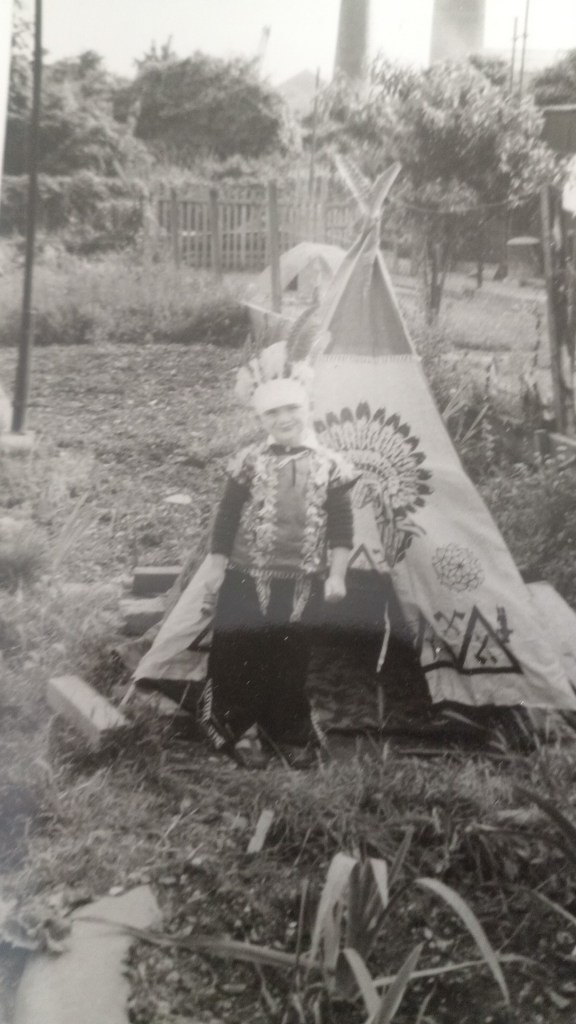
Once upon a time, a little boy named Mark lived in a small town nestled between rolling hills and endless forests. Mark was a dreamer, and every day after school, he would rush to the back garden of his home, where an old, forgotten tent he had decorated, mimicking a Teepee, stood. To Mark, this tent was not just a piece of fabric; it was a magnificent wigwam, and he was a brave red Indian living in harmony with nature. In his imagination, Mark would gather sticks and leaves, carving tools and toys, pretend to hunt and fish, and listen to the whispers of the wind as if they were the voices of his ancestors. He learned the names of plants and animals and took to heart the stories of respect and gratitude he imagined his tribe would have shared. His heart swelled with pride as he envisioned himself as a protector of the earth, a guardian of traditions long past.
One day, while exploring the forest near his home, Mark stumbled upon a litter-filled clearing—plastic bottles, wrappers, and old toys. The beauty of the place was marred, and he felt a pang of sadness. Mark remembered the stories he had created about his ancestors, who revered the land and lived in balance with it. Determined to make a change, he ran home, filled with an urgency he couldn’t quite explain. That evening, Mark gathered his friends and shared his vision.
“Let’s clean up the forest! We can be like my tribe, taking care of the land.”
His friends were intrigued; together, they formed a team armed with garbage bags and boundless energy. They spent the weekend picking up trash, returning the forest to its natural beauty. As they worked, Mark shared stories of the Red Indians and how they honoured nature and worked together for the good of all. Word spread through the town of Ystradgynlais about the children’s efforts. Inspired by Mark’s passion, adults began to join in. Families organized community clean-ups, and soon the little boy who played in a wigwam became a leader, rallying everyone to protect their environment. The town began to hold monthly events, planting trees and creating community gardens, fostering a sense of unity and stewardship.
Years passed, and Mark grew older, but his vision remained steadfast. He became an advocate for environmental education, teaching others about the importance of caring for the planet. His childhood dreams of being a red Indian morphed into a mission to honour the traditions of Indigenous peoples and to ensure their teachings about the earth were shared with future generations. The small town transformed into a beacon of sustainability, attracting visitors from afar who wanted to learn from Mark’s example. What started as a boy playing in a back garden had blossomed into a movement that inspired others. Mark had changed the town, not through grand gestures, but by reminding everyone of their simple, robust connection with nature.
And so, even as he grew, Mark never forgot his roots. He would often return to the old wigwam in his backyard, sitting quietly in reflection, knowing that the spirit of the Red Indian he had played was alive in every heart he had touched. He had learned that change begins with a single step, a small act of love for the world around us, and that everyone has the power to make a difference, no matter how small they may seem.
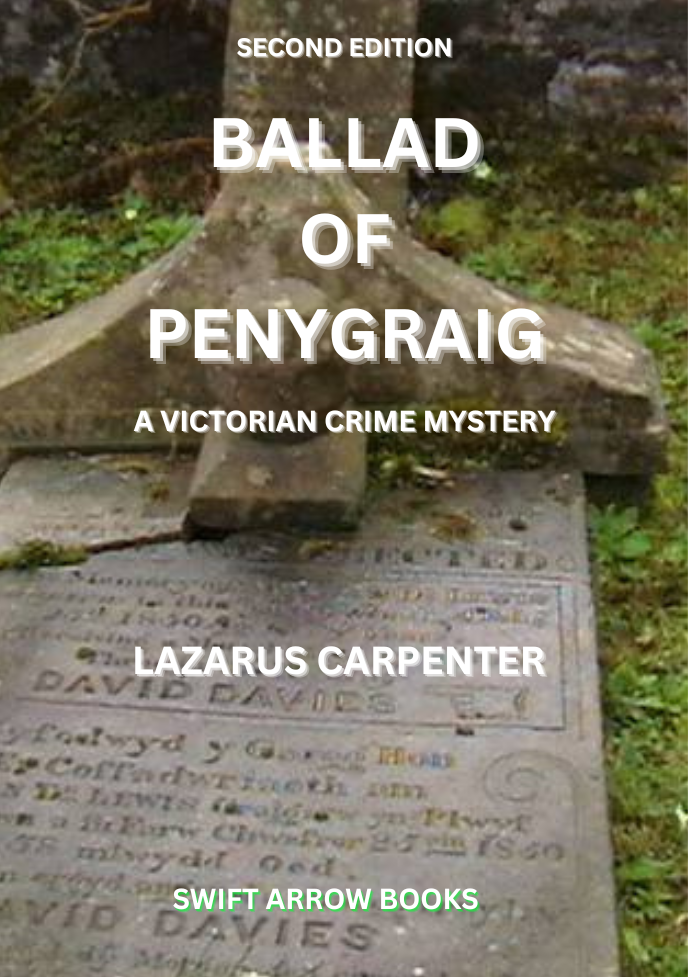
The Ballad of Penygraig is a Victorian crime mystery set in Ystalyfera, a small industrial village in the Swansea Valley of 1850. This dark tale is based on actual events, a David and Goliath story. A scandal shocking an entire community racked and divided by lies, deceit, bullying, and ultimately, murder. This novel is in the second edition and includes additions and a rewrite of parts of the story. First published in 2015.
This is the true story of a terrible tragedy in the village of Pantteg on 25 February 1850. It is the story of ordinary working folk and how everyday events and accidents between them created havoc, changing the lives of two families forever and entering the annals of valley history. The story was unknown to me until 2004, when I moved into Penygraig, ‘The House on the Rock’. Moving to Penygraig was a sanctuary where I sought to recover from sadness. I needed solitude at this time as my partner and best friend and I proved to each other that living together was an impossibility. Penygraig is five hundred yards up the mountain from our semi-detached farmhouse. Built in the early 1800s, the cottage is very isolated, and the landscape has changed much in the past one hundred and seventy odd years. Once a thriving community, it lies in ruins amidst sparse forest lost in time. Tracks once trod by horses dragging coal up the mountain to the villagers’ homes, and those bringing Welsh stone from the quarry for building the village are long gone. Also long gone are the Miner’s Arms, the Iron Works, Coal Mines and Gough Estate. The New Swan Inn is still here, though no longer used for Coroner’s Inquests, and the headstones of Morgan and Rachael still haunt the graveyard. I experienced a strange phenomenon before moving into Penygraig, accompanied by the owner, when I was viewing the cottage for the first time. We were sitting in the lounge around early afternoon when twice I started to roll a cigarette in a way that was foreign to me. I remember remarking to Andy, ‘that was a weird feeling’ as it happened when suddenly I saw a bent figure standing at the stable-doorway in silhouette looking at me, then seemingly walking on. I told Andy what I had just seen, he was not in the slightest bit surprised; he seemed to take it on the chin as an everyday occurrence – a ghost in the middle of the day!
I asked Andy if he knew who the ghost was, but he didn’t. However, he acknowledged that there had been some strange goings on in the house. He witnessed some ghostly goings on himself, and one or two tenants in the past ended up running down the hill in the middle of the night, but he never did find out why. So we left it there, and in I moved. Almost as soon as I moved in, strange phenomena seemed to be an integral part of the fabric of Penygraig. Admittedly, the isolation of the cottage, and its general bleakness, especially in the winter, could feed the most furtive creative of imaginations. Still, some of the things that were to be experienced by me, and others, could not be explained away in such dull terms. I often heard voices whispering in the corners of the cottage, and on more than one occasion heard the name John Jenkins. Only later did I understand that it was two names, and indeed later, it was revealed as the brothers of David Davies, John, and Jenkins. In my first winter at Penygraig, Christmas was followed by intrigue, and on the 25th of February, at five o’clock in the evening, a loud knock came to my back door. Still, my collie dog did not respond in her usual way of manic screeching or barking, and when I answered the door, nobody was there. Fortunately, two or three friends in the cottage at the time witnessed the event, so I could not be accused of madness. On another occasion, a photograph of the garden revealed a brick building standing in front of a giant oak tree. There is no building there now, or was there when the picture was taken, but it is believed there was one thirty years ago, back in the seventies. Something or someone lived in the attic, and it was not mice or any other creature, as my cat is a skilled hunter, but noises were often heard as if someone was moving about. Cushions in the living room were frequently moved about, and as daft as it sounds, somebody was tidying up and fluffing cushions, but who? A malevolent presence seemed to haunt the pathway through the sparse forest from the gate up to the top of the hill, opposite the main entrance, Pantteg Chapel’s graveyard. With the help of friends, I decided to find out who had lived at Penygraig in the past, and through the census, we obtained a list of names. Through this work, we accidentally discovered a grave on the boundary wall between the graveyard, and the house next door to where I had recently moved from. It said.
‘Here lies the body of Morgan Lewis whose life was taken by a stone thrown by the handof David Davies.’
In 1850 David Davies lived with his brothers John and Jenkins in Penygraig. To confuse the story even further, research through the parish records, and the census revealed that Morgan Lewis, the man killed by David Davies, along with his wife Rachael, and five children, lived in a tithe cottage fronting the garden where I lived previously, five hundred yards as the crow flies from Penygraig. All of this was such a coincidence, but why I did not know. The ‘Ballad of Penygraig’ was born or reborn on this day! Lying near Morgan Lewis’s grave, where Rachael is buried, I found to my utmost surprise the headstone of David Davies. It was sheared in half long ways. I have only been able to find this half, I picked it up from where it had been discarded, and placed it against the wall in front of Morgan and Rachael. An elder of the chapel was kind enough to tell me of the ‘stone in the hand’. He is a very elderly gentleman but remembers when he was a boy they played in the graveyard, and one of the games was called ‘blood tag’, and involved passing on fictitious blood from the stone to one’s fleeing friends running for fear of being clouted by a folk legend, Morgan Lewis. The hand has disappeared over the years, and somewhere it may be lying in a garden shed or a loft at the bottom of an old suitcase? To this day I wonder what happened to the sculptured hand with the offending murderous stone cemented to it, and whoever has that hand I wonder if they know its history? I wonder if they know about the curse long gone and forgotten. Had I moved into my own ‘Most Haunted’, was I going psychotic or was something much bigger at hand, I did not know? My research began in earnest and more and more coincidences began to emerge.
In 1850 the Swansea Guardian published a story entitled ‘Affray in Ystalyfera’. Suddenly, I was confronted with facts about the case and amazed by the coincidences between what I intuited through the apparitions in the house and what was now in black and white in front of me, which was recorded in the annals of local history. My first project included writing four songs retelling the story: The hawk cried on the moor, Poacher on the rock, The Ballad of Penygraig and Rachael’s Lament. But it was the song Ballad of Penygraig, telling the story from the reasons for the fight to its bitter conclusions, that came first. It took me a few drafts before I was happy with my lyrical content and flow. I had a tune, but there was no last line, and I could not find one I was content to use. It was very late at night, advancing through the early hours, when I played the tune repeatedly. One of the advantages of living at Penygraig was that I could make as much noise as I liked night or day without the fear of upsetting my neighbors who lived well out of earshot. I recorded the tune and struggled on through my fancy little loop pedal. At around three in the morning, almost reaching the end of the song, approaching the need for a final line, thus far not forthcoming, I felt a shiver becoming aware of the essence of Morgan Lewis standing in front of me. I carried on playing sensing Dai Davies on my left, and I still played. There was no feeling of fear or trepidation, in fact, it was like having an audience. However, approaching the song’s end, I intuited the line ‘now they are both angels in flight’. I sang the words and there was a bluish flash in the room, the essences of Morgan and Dai were gone and the song was finished. They have never been seen since, and I think the song’s final line illustrates where they went. Since that day, I have never experienced further disturbances in the house.
So, I thank Morgan and Dai most sincerely. After this, I will never be afraid of anything again and never feel alone in this life or the next.I wonder who exorcised whom?
POSTSCRIPT
Sadly, on 22 December 2012 (the day when, according to Inca predictions, the world would end) at 1am a massive landslip crashed from the mountain and Penygraig disappeared back to the earth from whence it came.
Verse written by Lazarus Carpenter and performed by Sean Edwards inspired by the novel, ‘Ballad of Penygraig’ (2025)
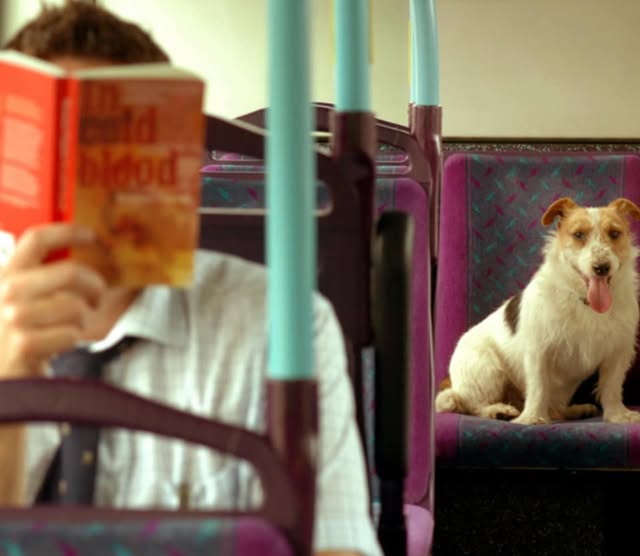
Once upon a time in a cosy little town lived a terrier named Max. With his fluffy coat and soulful eyes, he was the very definition of a devoted companion. Max spent his days lounging in the sun, chasing squirrels, and, most importantly, keeping a watchful eye on his owner, Bob. Bob was an avid reader, often lost in the pages of a new novel. Today, he had chosen Truman Capote’s “In Cold Blood,” a gripping true crime story that had captured the attention of many. Max plopped beside him as he settled into his favorite armchair, his head resting on Bob’s knee. He loved these quiet afternoons, but today felt different. As Bob turned each page, his brows furrowed deeper, and his fingers tapped rhythmically against the book. Max tilted his head, wondering what thoughts were swirling in Bob’s mind. Did he feel the tension building in the story? Was he imagining the chilling moments Capote described? Or was he simply hungry for a snack? Max’s tail wagged, hopeful that Bob would notice and share a treat.
Bob paused, his eyes scanning the text as if searching for answers. Max could sense the narrative’s weight and the crime’s gravity, and his heart ached for his owner. He wanted to understand what Bob was thinking. Did he feel fear or sadness? Was he intrigued by the complexity of human nature? Or was he reflecting on the fragility of life, as the book so poignantly illustrated? Max shifted, nudging Bob’s arm gently with his nose. Bob looked down, his expression softening as he scratched behind Max’s ears.
“What do you think, puppy?” he murmured, a hint of a smile breaking through the seriousness of the story. “Can you believe people can do such things?”
Max’s tail thumped against the floor, a response to the warmth in Bob’s voice. He didn’t fully grasp the dark themes of the book, but he understood emotions. He sensed Bob’s curiosity mingled with discomfort, a cocktail of feelings that left an imprint on the air around them. Bob returned to his reading, but his mind wandered. He thought about the complexities of morality and the choices people make. He recalled the times he had walked through the town, greeted by friendly faces, and contrasted that with the chilling accounts in his book. Could anyone in their quiet little town harbor such darkness?
Feeling Bob’s contemplative mood, Max nestled closer, offering silent comfort. In that moment, he became the embodiment of loyalty, a reminder that not all was dark in the world. Bob glanced down at his furry friend, and a wave of reassurance washed over him. There was love and companionship, and that was something to cherish. As the sun began to set, casting a golden hue through the window, Bob closed the book, his mind still racing with thoughts. He reached down and pulled Max into a gentle embrace.
“You know, puppy,” he said softly, “sometimes I think about how lucky we are. We get to share this life together, away from all that chaos.”
Max responded with a happy bark, his tail wagging furiously. It was his way of saying that no matter how dark the world could be, they had each other, and that was more than enough. In the end, as Bob set the book aside and prepared dinner, Max pranced around the kitchen, his spirit unbroken and his loyalty unwavering. Together, they moved through their evening routine, a simple rhythm filled with love, laughter, and the promise of another day. And as they settled down for the night, Max knew that no matter what stories Bob read, their bond would always shine brighter than any shadow.
Haruki Murakami is a renowned Japanese author known for his unique blend of magical realism, surrealism, and existential themes. His works often explore themes of loneliness, love, and the search for identity, frequently incorporating elements of music, dreams, and the supernatural. Some of his most notable works include:
1. “Norwegian Wood” – A poignant coming-of-age story that delves into love and loss set against 1960s Tokyo.
2. “Kafka on the Shore” is a complex narrative featuring two interrelated plots that explore themes of fate, consciousness, and the connections between people.
3. “1Q84” – A dystopian novel that intertwines the lives of two characters in a parallel world, addressing themes of reality, love, and the power of storytelling.
4. “The Wind-Up Bird Chronicle” – A multi-layered narrative that combines mystery, philosophical inquiry, and magical realism, focusing on a man’s search for his missing wife.
5. “The Elephant Vanishes” is a collection of short stories that showcase Murakami’s signature style, blending the mundane with the bizarre.
Murakami’s writing is characterized by its lyrical prose, deep psychological insight, and often surreal plot developments, making him one of world literature’s most influential contemporary authors.
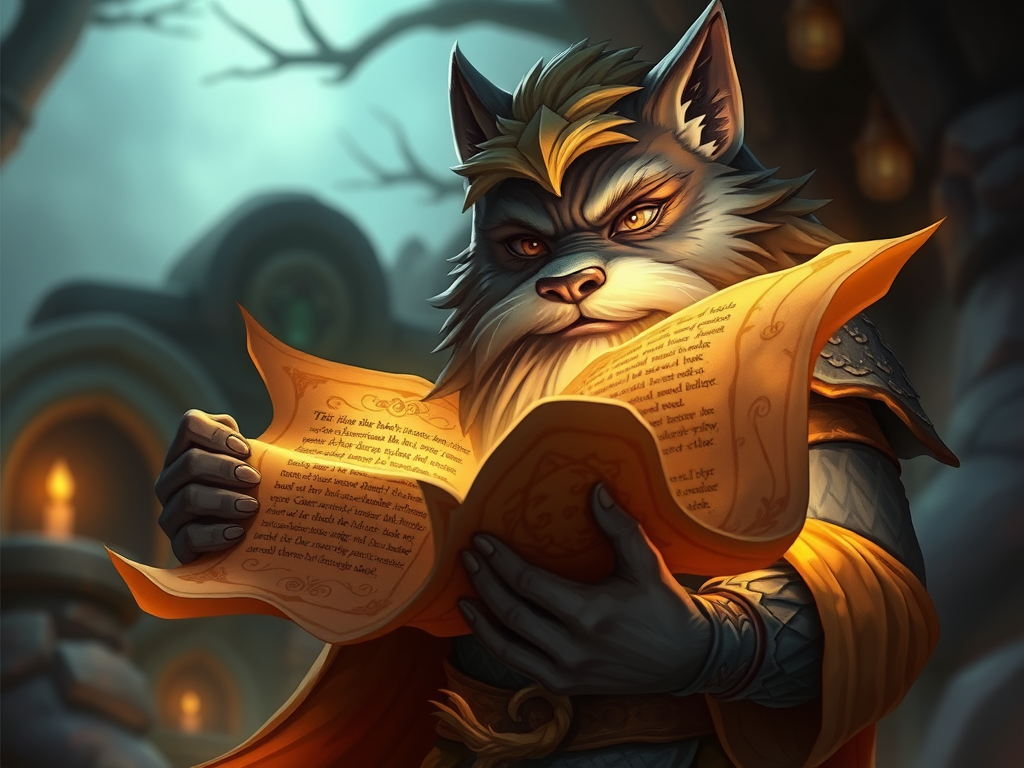
In a land where towering mountains kissed the sky, and lush forests whispered secrets, there lived a dwarf named Wolf. Unlike most dwarves, known for their prowess in mining and forging, Wolf possessed an extraordinary gift—he could communicate with all creatures of the forest and mountains. They all called him friend, from the tiniest sparrow to the mightiest bear.
One crisp morning, as the sun began to rise over the jagged peaks, Wolf received an urgent message from his friend, Eldra, the wise owl. With feathers as soft as dusk and eyes like polished amber, she perched herself on a nearby branch and hooted softly to catch Wolf’s attention. “Wolf, a great darkness looms over our world. The balance of nature is in peril, and only the ancient scroll hidden in the heart of the mountains can save us,” Eldra warned, her voice grave. “What does this scroll contain?” Wolf asked, his brow furrowing with concern. “It holds the knowledge of harmony, a way to unite all beings against the encroaching shadows. But it is guarded by the fierce Keeper of the Mountains, a creature of stone and fury.” Determined to help, Wolf packed his satchel with essentials: a sturdy rope, some enchantment herbs, and a small hammer, a gift from his father, which could mend anything broken. He donned his favourite green cloak, which blended seamlessly with the forest and set off towards the mountains.
As he journeyed, Wolf encountered many friends along the way. First, he met Thistle, the mischievous fox. “What brings you to the mountains, Wolf?” she asked, her amber eyes twinkling. “I seek the secret scroll that can save our world,” he replied.“Then I shall accompany you! I know a shortcut through the thicket,” Thistle exclaimed, her tail flicking with excitement. Together, they navigated the dense forest until they reached the base of the mountains. There, they encountered Grom, the wise old bear. “You’ll need strength and courage to face the Keeper. I’ll join you as well,” Grom said, lumbering towards them with a knowing look.
With their trio complete, they began to climb the rugged terrain. As they ascended, the air grew thin, and the path became treacherous. But with teamwork, they overcame each obstacle—Wolf’s ingenuity, Thistle’s agility, and Grom’s strength guiding them forward. At last, they reached a massive stone door, intricately carved with runes that sparkled like stars. “This must be the entrance to the Keeper’s lair,” Wolf said, his heart pounding. To their surprise, the door creaked open, revealing a cavern filled with shimmering crystals. But at its centre stood the Keeper, a towering figure of stone with eyes like molten gold. “Who dares enter my domain?” it roared, causing the ground to tremble. Wolf stepped forward, unafraid. “I am Wolf, a friend to all creatures. We seek the ancient scroll to protect our world from darkness.”
The Keeper regarded them with a mixture of curiosity and scepticism. “Many have tried to claim the scroll, but none have understood its true purpose. Why should I trust you?” At that moment, Wolf remembered the stories of unity and friendship passed down through his clan. “The scroll is not for us alone. It belongs to all beings of this land. Together, we can foster harmony and protect our home.” The Keeper paused, sensing the sincerity in Wolf’s heart. “Very well, you shall prove your worth. Solve my riddle, and the scroll shall be yours.”With a deep breath, the Keeper recited the riddle: “I can be cracked, made, told, and played. What am I?”
Wolf thought momentarily, and then a wide smile spread across his face. “A joke!” he exclaimed, laughter bubbling forth. The Keeper’s stone face softened, and it nodded slowly. “You have shown wisdom and courage. The scroll is yours.” With a wave, the Keeper revealed the scroll, glowing with an ethereal light. Wolf carefully unrolled it and read its ancient text, feeling the weight of knowledge fill him with hope. Wolf, Thistle, and Grom carried the scroll with pride as they descended the mountain. They shared its teachings with every creature they met, binding them together in a newfound alliance. With their combined strength and unity, the darkness that threatened their world began to recede. The forests flourished, the mountains stood tall, and peace returned to the land. Wolf became a legend, not for his size or strength, but for his heart—a heart that embraced all creatures, ensuring that harmony reigned forevermore. And so, the dwarf who spoke to animals became a hero, reminding everyone that true power lies in friendship and understanding.