The Lightening

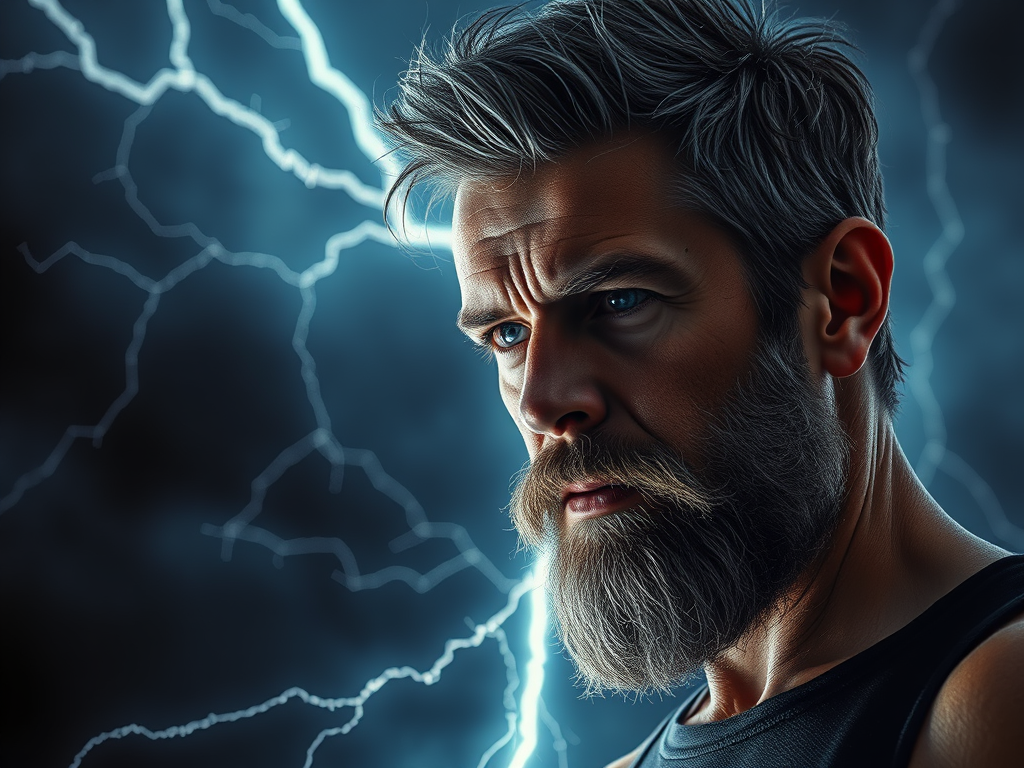
A man named Rowan lived in the tiny village of Eldergrove, nestled between rolling hills and whispering forests. Known for his quiet demeanour and simple life, Rowan spent his days tending to his garden and sharing stories with the villagers. But one fateful afternoon, everything changed. Dark clouds gathered ominously over Eldergrove, and as a storm brewed, lightning struck Rowan while he was out in his garden. Miraculously, he survived, but the strike transformed him. From that moment on, he began to experience vivid visions of the future—flashes of wondrous and terrifying events.

At first, the visions were benign. He saw the village prospering: a bountiful harvest, children laughing and playing, and the village square filled with joy. Rowan shared these glimpses with the villagers, and optimism bloomed. They celebrated their newfound fortune, and hope thrived like never before. However, as time went on, the visions darkened. Rowan foresaw a devastating drought that would wither their crops, a sickness that would sweep through the village, and an impending storm that would destroy homes. Each time he shared these visions, fear replaced the earlier joy, and the villagers began to look to him for guidance, hanging on his every word.

Some villagers welcomed the truth of his visions, believing they could prepare for the worst. Others grew resentful, feeling cursed by the knowledge of what was to come. Tensions mounted, and soon, the village was divided. Arguments erupted over what actions to take based on Rowan’s foretellings. The vibrant community spirit began to erode, replaced by suspicion and despair. Burdened by the weight of his gift, Rowan became an unwilling prophet. He tried to focus on the promising visions, but the bad ones persisted, each more dire than the last. He witnessed fires consuming the forest, floods washing away homes, and even unravelling relationships among his friends and neighbours. The village, once a close-knit community, fell into chaos.

One stormy night, Rowan had a vivid vision that shook him to his core. He saw the beautiful and serene village slowly fading away, caught in a cycle of despair and division until it vanished completely. He woke in a panic, heart racing, realizing he had to act before it was too late. Desperate to unite the villagers, Rowan called a meeting in the square. He shared his vision of the village disappearing and urged everyone to set aside their differences. He spoke of the strength of their community and the importance of supporting one another in times of adversity. Slowly, the villagers listened, and the fear that had divided them began to dissolve.

Inspired by Rowan’s plea, they worked together to prepare for the drought, forming groups to share resources and help those in need. They planted drought-resistant crops and built rainwater collection systems. The spirit of cooperation rekindled, and the villagers began to mend their relationships, rekindling the bonds frayed during the tumult. But the storm Rowan had foreseen approached, fierce and unrelenting. As the winds howled and the skies darkened, the villagers stood together, hand in hand. They faced the tempest not as individuals but as a unified community. When dawn broke, the village stood battered but intact. The storm had passed, and though the aftermath was devastating, the villagers were determined to rebuild. Rowan realized that while his visions showed both light and dark, what truly mattered was how they chose to respond. Yet, as the months passed, the visions continued, each more haunting than the last. Rowan began to understand that the visions were not merely predictions but reflections of their choices. The more they focused on fear and division, the more dire the visions became.

Finally, after months of struggle and unity, the last vision came to him—a serene image of Eldergrove, thriving and full of life, surrounded by a vibrant forest. He shared this final vision with the villagers, urging them to embrace love, cooperation, and resilience. But as he spoke, he noticed something strange. The village began to shimmer, the edges of reality blurring. The villagers gasped as they realized the visions had taken a toll on their existence. Each moment spent in fear and anger had pulled them further from the tangible world. One by one, they began to fade until only Rowan remained.

In that final moment, Rowan understood the truth: the village existed not just in the physical realm but in the hearts of its people. With a surge of determination, he closed his eyes and envisioned the vibrant community he had seen. He poured his heart into that image, willing it to become real. When he opened his eyes, he found himself standing in a lush meadow, the echoes of laughter and love surrounding him. Eldergrove had transformed into a new realm—one that existed beyond the confines of fear and division. In this place, the villagers’ souls thrived, united in spirit, forever woven together in a tapestry of shared history and hope. And so Rowan, the man struck by lightning, became the guardian of Eldergrove’s spirit, a reminder that while the future may hold both light and darkness, it is the choices we make together that shape our reality. 

The Key

Once upon a time, in the ancient land of Eldor, there lived a once-mighty wizard named Eldrin. In his youth, Eldrin commanded the forces of nature, conjured storms, and spoke with the stars. But as time passed, his magic waned, and he found himself in a world that no longer believed in the wonders he once created. Now, he was just a shadow of his former self, living in a crumbling tower at the edge of the Whispering Woods. Eldrin spent his days reminiscing about the grandeur of his past, often gazing into the crystal ball that had once revealed the secrets of the universe. Yet, all he saw now was his own reflection, a reminder of lost power. His heart ached with longing for the magic that had defined him.

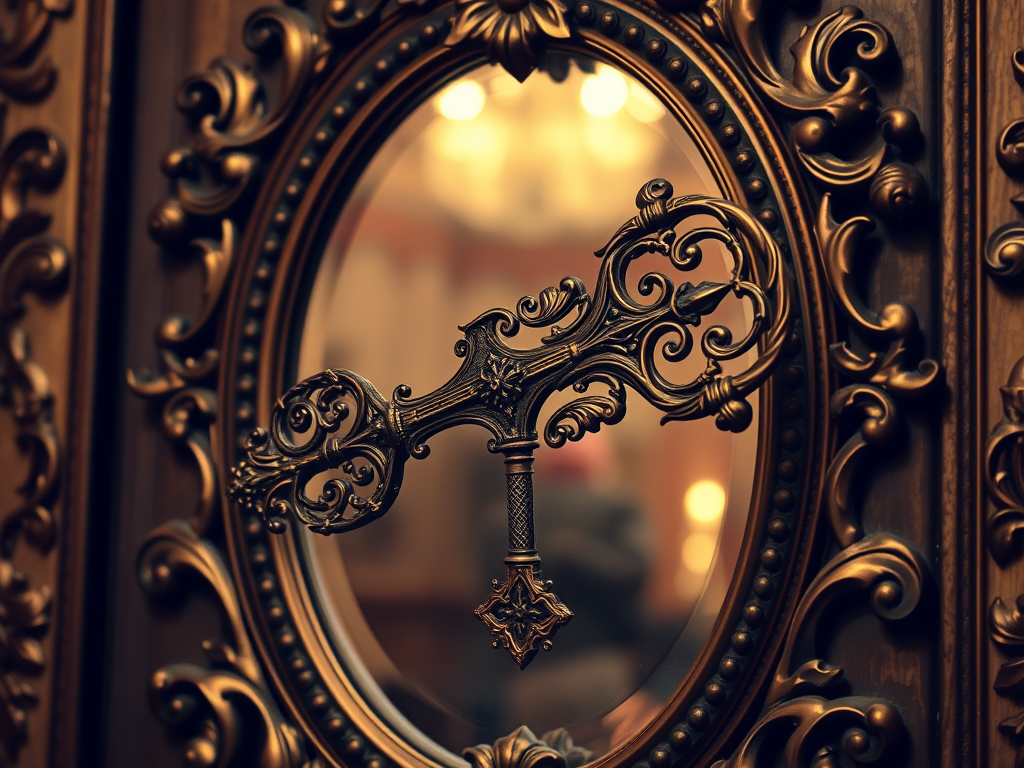
One fateful evening, while wandering through the forest in search of herbs for his dwindling potions, he stumbled upon an ancient oak tree. Its gnarled roots twisted around a curious stone pedestal, upon which lay a small, ornate key. It glimmered in the fading light, engraved with symbols that seemed to pulse with energy. Intrigued, Eldrin picked it up, feeling a surge of warmth flow through his fingers. As he turned the key, a strange sensation overcame him; it was like the key was whispering secrets of untold power. Eldrin hurried back to his tower, where he placed the key on his workbench and studied it for hours. He realized this was no ordinary key; it was a key to a hidden realm where magic thrived.

Driven by curiosity and desperation, Eldrin began to decipher the symbols etched into the key. After days of research, he discovered that to unlock the realm, he needed to recite an incantation at the stroke of midnight during the next full moon. The thought of reclaiming his magic filled him with hope, and he prepared for the night with fervor. When night finally arrived, Eldrin stood before an ancient mirror, clutching the key tightly. As the moonlight streamed through his window, he recited the incantation. The air shimmered, and the mirror rippled like water, revealing a gateway to the hidden realm. With a deep breath, he stepped through the portal. Eldrin found himself in a vibrant world teeming with magical creatures and lush landscapes. The air was thick with enchantment, and he felt a spark ignite within him. As he explored this realm, he encountered wise beings and learned forgotten spells that revitalized his craft.

But Eldrin soon realized that the key’s true power was not just to restore his magic; it was to connect him with the essence of magic itself. He understood that magic was not merely a tool to wield but a bond that intertwined all living things. With his newfound knowledge, Eldrin returned to Eldor, his heart brimming with magic once more. He used his powers to heal the land, rekindle hope in the people’s hearts, and teach them about the wonders of the world around them. No longer just a wizard, he became a guardian of magic, ensuring it would never fade away again. And so, Eldrin, the wizard with no magic left, became a legend, reminding everyone that sometimes, the greatest magic lies not in spells or incantations but in the connections we forge and the love we share with the world. 

A Delicate Balance

Once upon a time, in a world not unlike our own, a delicate balance governed the harmony of nature. This planet, known as Elysia, was a vibrant tapestry of diverse ecosystems, each thriving in its own unique way. The mountains whispered secrets to the valleys, the rivers danced with the winds, and the forests stood tall, guardians of the earth’s wisdom. In Elysia, the inhabitants were not merely humans; they were a blend of creatures, each with a role in maintaining this balance. The Elowen, a race of tree-dwelling beings, ensured that the forests flourished. They spoke to the trees, nurturing their growth and protecting them from harm. The Aquarids, beings of water, safeguarded the rivers and oceans, ensuring the waters remained pure and abundant. Meanwhile, the Terrans, grounded and sturdy, cultivated the land, fostering crops that fed all.

One fateful day, a powerful storm swept across Elysia, disrupting the harmony that had existed for millennia. The Elowen’s trees were uprooted, the Aquarids’ waters turned murky, and the Terrans struggled to grow their crops amidst the chaos. The balance was shattered, and with it, the very essence of life began to fade. In the heart of the storm, a young Elowen named Lira felt a calling. She had always been attuned to the whispers of the trees, and in their rustling leaves, she heard the echoes of a prophecy: “To restore balance, one must unite the three realms.” Determined to fulfil this prophecy, Lira embarked on a journey to find allies from each realm.

Her first stop was the watery domain of the Aquarids. With the help of a wise Aquarid named Nereus, Lira learned the importance of the waters in nurturing life. Together, they devised a plan to cleanse the rivers, using ancient songs that resonated with the water spirits. The waters began to sparkle as they sang, and life returned to the rivers, vibrant and teeming. Next, Lira ventured to the Terrans’ vast fields. There, she met a young Terran named Kael, who was disheartened by the barren soil. Lira and Kael worked hand in hand, combining the songs of the Elowen with the strength of the Terrans to revitalize the land. They planted seeds of hope, and soon, lush greenery began to sprout, a testament to their collaboration.

With both realms thriving, Lira, Nereus, and Kael returned to the forest to confront the storm’s aftermath. They knew that to restore proper balance, they must reconnect with the heart of Elysia—the Great Tree, a colossal entity that stood at the centre of the forest and connected all life. Together, the trio performed a ritual, combining their powers: the Elowen’s wisdom, the Aquarids’ purity, and the Terrans’ strength. As they chanted, the Great Tree began to glow, its branches reaching towards the skies. The storm clouds parted slowly, revealing a brilliant sun that bathed Elysia in golden light.

The balance was restored. The trees stood tall again, the waters flowed crystal clear, and the land flourished with bountiful harvests. Lira, Nereus, and Kael realized that by working together, they had not only healed their world but had also forged an unbreakable bond among their realms. From that day forward, the inhabitants of Elysia celebrated the Day of Balance, a reminder of the harmony that could be achieved when different beings united for a common cause. They understood that the true essence of life lay not in isolation but in collaboration, respect, and understanding. And so, the tale of balance across the planet continued to be told, a legacy of unity that inspired generations to come and ensured that Elysia would thrive for eternity.

Orion

Once upon a time, nestled deep within a magical forest, there lived a magnificent wolf named Orion. He possessed a sleek, silver coat that shimmered under the moonlight, and his piercing blue eyes sparkled like the stars in the night sky. But despite his extraordinary appearance, Orion carried a secret burden; he could not shed a single tear. While the other creatures of the forest revelled in the beauty of their emotions, Orion felt trapped within himself. His inability to cry made him an outcast, as his fellow wolves and woodland friends couldn’t understand his emotional plight. They believed tears to be a sign of vulnerability, but Orion yearned to experience the emotional release that tears could bring.

One day, as Orion wandered through a sunlit glade, he stumbled upon a wise old owl perched atop a moss-covered branch. The owl, Athena, possessed ancient wisdom and keen insight into matters of the heart. Sensing Orion’s sadness, she invited him to share his story. With a heavy heart, Orion poured out his tale of woe to Athena. He expressed his longing to cry, to release the emotions locked within him, and to feel a connection with his kindred spirits. Moved by his plight, Athena offered her guidance.

“Dear Orion,” Athena began, “the ability to cry goes beyond mere tears. It is the language of the heart, a gateway to understanding and compassion. But to embrace this gift, you must first uncover the source of your emotions.”

Together, Orion and Athena embarked on a quest to discover the key to unlocking Orion’s tears. They wandered through enchanted forests, climbed towering mountains, and crossed treacherous rivers. Along the way, they encountered various animals who shared their own stories of sorrow and joy, love and loss. As the journey unfolded, Orion began to understand that emotions were not a sign of weakness but rather an expression of his true self. He discovered that crying was not solely reserved for sadness but could also be a manifestation of happiness, empathy, and gratitude. Finally, deep within the heart of the forest, Orion faced his ultimate challenge, a mystical waterfall known as the “Tears of the Ancients.” It was said that those who stood before it with pure intentions would have their emotions released, allowing their tears to flow freely.

With trembling paws, Orion approached the waterfall. He called upon every emotion buried within him, allowing them to surge through his being. As his heart overflowed with a kaleidoscope of feelings, a single tear welled up in his eye, shimmering like a dewdrop. And then, with a sense of liberation, the tear trickled down Orion’s snout, splashing into the sacred waters below. In that instant, the floodgates burst open, and tears streamed down his face like a gentle rain, cleansing his soul and connecting him to the world around him. Word of Orion’s tearful transformation spread throughout the forest, and the animals rejoiced.

They recognized that emotions were not something to be feared but to be embraced and shared. Orion became a symbol of courage, teaching others to honour their feelings without shame. From that day forward, Orion’s tears became a gift, a reminder that expressing emotions is an essential part of the human experience. He roamed the forest, weaving tales of empathy and compassion, comforting those in need, and spreading the message that every tear carried within it the power to heal and unite. Children from far and wide would gather around Orion, eager to hear his stories and learn from his wisdom. They discovered that crying was not a sign of weakness but a testament to the strength and depth of their hearts.

Orion became a beloved character loved by many, guiding young ones through their own emotional journeys and encouraging them to embrace their feelings with open arms. As the forest flourished with newfound compassion and understanding, a remarkable transformation took place within Orion. With each tear shed, his heart grew lighter, and a radiant joy replaced the burden he had carried for so long. His once solitary existence transformed into a life filled with connection and meaning.

And so, the story of the wolf who could not cry, Orion, became a legend in the magical forest. It served as a reminder to all that emotions are a precious part of being alive, and that through embracing and expressing them, one can find solace, strength, and a profound sense of belonging to all that is and will ever be.

Dragons Who Saved the World Abstract

Drako

Wind Dragon

Once upon a time, in a magical land, there lived a dragon named Drako. He was unlike any other dragon in the realm. While other dragons breathed fire and hoarded treasure, Drako had a unique passion for the wind. He would spend his days soaring high above the clouds, feeling the gentle breeze against his scales, and listening to the harmonious melody it created as it whistled through the trees. Drako admired the wind’s freedom and grace. He marvelled at how it could travel anywhere it pleased, carrying whispers and stories from distant lands. Drako often imagined himself as the wind, dancing through the sky and exploring the vast wonders of the world.

One day, as Drako was gliding through the sky, he came across a small village nestled in a lush valley. The villagers, who had never seen a dragon before, were terrified at the sight of Drako. They hid inside their homes, fearing that he would unleash his fiery breath upon them. Curious and saddened by the villagers’ fear, Drako decided to show them his gentle nature. He descended from the sky and landed in the village square, making sure not to harm anyone or anything with his massive wings. The villagers cautiously peered out from behind their windows, their eyes wide with both fear and wonder. Drako approached them with a friendly smile, trying his best not to appear intimidating.

“My name is Drako,” he said softly. “I mean you no harm. I come in peace.”

The villagers hesitated for a moment, but seeing the sincerity in Drako’s eyes, they cautiously stepped forward. They soon realized that Drako was not like the other dragons they had heard tales of. Drako was kind, gentle, and harboured a deep reverence for the wind. Intrigued by Drako’s unique qualities, the children of the village gathered around him, their eyes sparkling with curiosity. Drako saw this as an opportunity to share his love for the wind and inspire the children. He began to tell them stories of his adventures through the skies, describing the breath-taking landscapes he had seen and the enchanting sounds of the wind he had heard. The children listened intently, their imaginations ignited by Drako’s words.

As the sun began to set, Drako spread his wings and took flight, his scales shimmering in the golden light. The children watched in awe as he gracefully soared through the air, riding the currents of the wind. Inspired by Drako’s passion and bravery, the children decided to create a special celebration in honour of the wind. They built colourful windmills and kites, decorating them with symbols of the wind and the dragon who worshipped it. Every year, on the same day, the village celebrated the Wind Festival. They flew their kites high in the sky, their laughter carried by the wind, and they danced joyously to the music it created.

Drako was their honoured guest, and together, they celebrated the beauty and power of the wind. And so, Drako the dragon, who worshipped the wind, not only brought joy and inspiration to the village but also taught them the importance of embracing the unique passions and qualities that make each individual special. From that day forward, the village and Drako lived in harmony, forever connected by their reverence for the wind and the dragon who showed them the beauty of following one’s heart.

Digital Illustrations by Gill Brooks