The Lost Tomes

In a quaint village nestled between misty hills and whispering woods lived an old man named Elias. His hair was as white as the clouds above, and his eyes twinkled with the kind of wisdom that only time can bestow. Elias was known for his vast collection of ancient books, which he had gathered over the decades—tomes filled with forgotten lore, mystical spells, and the stories of the world long past. Every day, he would wander through the village, his weathered leather satchel slung over his shoulder. The satchel was as old as Elias, its surface cracked and worn, telling tales of countless travels and adventures. Inside, the pages of the books were yellowed and frayed, each a treasure trove of knowledge he often shared with curious villagers, especially the children who gathered around him, wide-eyed and eager to learn.

One fateful autumn afternoon, as leaves danced gently, Elias set out for the nearby forest, seeking solace among the ancient oaks. He often found inspiration there, a connection to the earth that rejuvenated his spirit. However, as he walked deeper into the woods, the sun dipped below the horizon, casting long shadows ominously around him. Lost in thought and the beauty of the twilight, Elias didn’t notice when he brushed against a low-hanging branch. The satchel snagged, and with a sudden tug, the strap broke. Books tumbled out, scattering like leaves caught in a gust of wind. Distracted, Elias bent to gather them, but in his haste, he misjudged the distance and stumbled, falling to the ground. When he finally rose, the satchel was gone. A wave of panic washed over him as he searched the area, his heart racing. The sun had set, and the woods were now cloaked in darkness. The only sounds were the rustle of leaves and distant calls of night creatures. Elias knew he had to return to the village, but losing his precious books—a lifetime of knowledge—was unbearable. He retraced his steps, hoping against hope that he might find the satchel. Hours passed, and just as despair began to seep into his heart, he caught a glimmer of light in the distance. Curious, he followed the light and soon stumbled upon a small clearing. To his astonishment, there sat a group of children from the village, their faces illuminated by a flickering campfire. They were gathered around the very books that had spilt from his satchel, their eyes wide with wonder as they flipped through the pages, enchanted by the stories contained within.

“Elias!” they cried, spotting him. “Look what we found! These books are amazing!”

Touched by their innocent joy, Elias approached slowly, a smile breaking across his face. “I’m glad you’ve discovered them,” he said, kneeling beside them. “Each book holds a piece of history, a spark of magic.”

The children eagerly shared their favourite tales, laughter ringing through the trees. For the first time that evening, Elias felt a warmth in his heart that overshadowed his earlier worry. They spent hours together, the fire crackling as he recounted stories that brought the words in the books to life. When the night grew deep and the stars twinkled brightly overhead, Elias realized that perhaps losing the satchel was not a loss. He had found something far more precious: a community united in the love of stories, a legacy that would carry on long after the last page was turned. As dawn broke, painting the sky with hues of orange and gold, the children returned the books to Elias, their eyes sparkling with excitement and dreams. He smiled, placing the books back into his satchel, now more a symbol of shared knowledge than a mere leather and fabric bag.

From that day on, Elias continued to venture into the woods, always with his satchel in tow. But now, he often brought the children along, their laughter echoing through the trees as they discovered new tales together. And while the satchel remained worn and battered, it was a testament to Elias’s journey and the friendships that blossomed through the power of stories—timeless treasures that would never be lost. 

Mark and the Wigwam

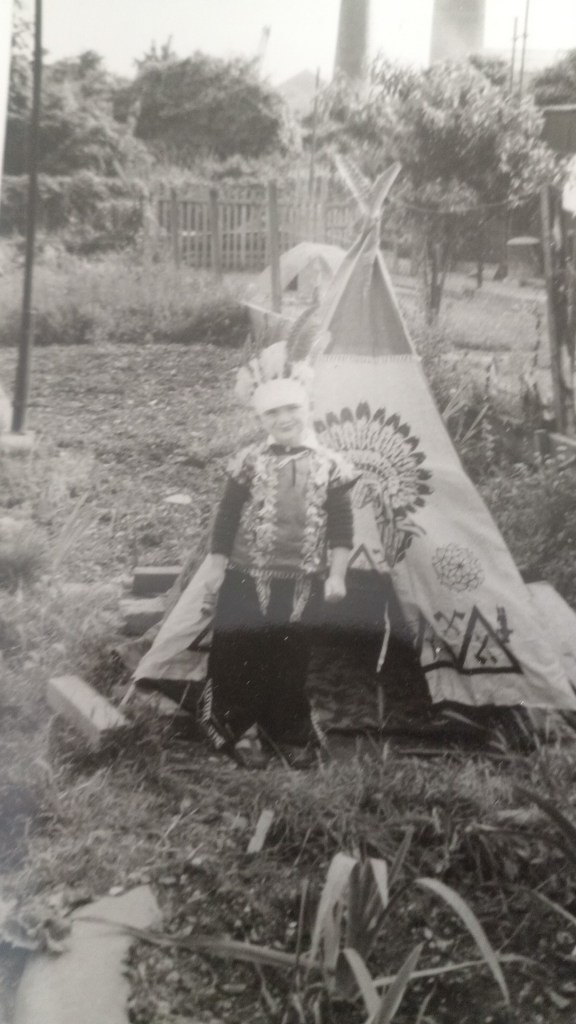
Once upon a time, a little boy named Mark lived in a small town nestled between rolling hills and endless forests. Mark was a dreamer, and every day after school, he would rush to the back garden of his home, where an old, forgotten tent he had decorated, mimicking a Teepee, stood. To Mark, this tent was not just a piece of fabric; it was a magnificent wigwam, and he was a brave red Indian living in harmony with nature. In his imagination, Mark would gather sticks and leaves, carving tools and toys, pretend to hunt and fish, and listen to the whispers of the wind as if they were the voices of his ancestors. He learned the names of plants and animals and took to heart the stories of respect and gratitude he imagined his tribe would have shared. His heart swelled with pride as he envisioned himself as a protector of the earth, a guardian of traditions long past.

One day, while exploring the forest near his home, Mark stumbled upon a litter-filled clearing—plastic bottles, wrappers, and old toys. The beauty of the place was marred, and he felt a pang of sadness. Mark remembered the stories he had created about his ancestors, who revered the land and lived in balance with it. Determined to make a change, he ran home, filled with an urgency he couldn’t quite explain. That evening, Mark gathered his friends and shared his vision.

“Let’s clean up the forest! We can be like my tribe, taking care of the land.”

His friends were intrigued; together, they formed a team armed with garbage bags and boundless energy. They spent the weekend picking up trash, returning the forest to its natural beauty. As they worked, Mark shared stories of the Red Indians and how they honoured nature and worked together for the good of all. Word spread through the town of Ystradgynlais about the children’s efforts. Inspired by Mark’s passion, adults began to join in. Families organized community clean-ups, and soon the little boy who played in a wigwam became a leader, rallying everyone to protect their environment. The town began to hold monthly events, planting trees and creating community gardens, fostering a sense of unity and stewardship.

Years passed, and Mark grew older, but his vision remained steadfast. He became an advocate for environmental education, teaching others about the importance of caring for the planet. His childhood dreams of being a red Indian morphed into a mission to honour the traditions of Indigenous peoples and to ensure their teachings about the earth were shared with future generations. The small town transformed into a beacon of sustainability, attracting visitors from afar who wanted to learn from Mark’s example. What started as a boy playing in a back garden had blossomed into a movement that inspired others. Mark had changed the town, not through grand gestures, but by reminding everyone of their simple, robust connection with nature.

And so, even as he grew, Mark never forgot his roots. He would often return to the old wigwam in his backyard, sitting quietly in reflection, knowing that the spirit of the Red Indian he had played was alive in every heart he had touched. He had learned that change begins with a single step, a small act of love for the world around us, and that everyone has the power to make a difference, no matter how small they may seem.

“In Cold Blood”

Once upon a time in a cosy little town lived a terrier named Max. With his fluffy coat and soulful eyes, he was the very definition of a devoted companion. Max spent his days lounging in the sun, chasing squirrels, and, most importantly, keeping a watchful eye on his owner, Bob. Bob was an avid reader, often lost in the pages of a new novel. Today, he had chosen Truman Capote’s “In Cold Blood,” a gripping true crime story that had captured the attention of many. Max plopped beside him as he settled into his favorite armchair, his head resting on Bob’s knee. He loved these quiet afternoons, but today felt different. As Bob turned each page, his brows furrowed deeper, and his fingers tapped rhythmically against the book. Max tilted his head, wondering what thoughts were swirling in Bob’s mind. Did he feel the tension building in the story? Was he imagining the chilling moments Capote described? Or was he simply hungry for a snack? Max’s tail wagged, hopeful that Bob would notice and share a treat.

Bob paused, his eyes scanning the text as if searching for answers. Max could sense the narrative’s weight and the crime’s gravity, and his heart ached for his owner. He wanted to understand what Bob was thinking. Did he feel fear or sadness? Was he intrigued by the complexity of human nature? Or was he reflecting on the fragility of life, as the book so poignantly illustrated? Max shifted, nudging Bob’s arm gently with his nose. Bob looked down, his expression softening as he scratched behind Max’s ears.

“What do you think, puppy?” he murmured, a hint of a smile breaking through the seriousness of the story. “Can you believe people can do such things?”

Max’s tail thumped against the floor, a response to the warmth in Bob’s voice. He didn’t fully grasp the dark themes of the book, but he understood emotions. He sensed Bob’s curiosity mingled with discomfort, a cocktail of feelings that left an imprint on the air around them. Bob returned to his reading, but his mind wandered. He thought about the complexities of morality and the choices people make. He recalled the times he had walked through the town, greeted by friendly faces, and contrasted that with the chilling accounts in his book. Could anyone in their quiet little town harbor such darkness?

Feeling Bob’s contemplative mood, Max nestled closer, offering silent comfort. In that moment, he became the embodiment of loyalty, a reminder that not all was dark in the world. Bob glanced down at his furry friend, and a wave of reassurance washed over him. There was love and companionship, and that was something to cherish. As the sun began to set, casting a golden hue through the window, Bob closed the book, his mind still racing with thoughts. He reached down and pulled Max into a gentle embrace.

“You know, puppy,” he said softly, “sometimes I think about how lucky we are. We get to share this life together, away from all that chaos.”

Max responded with a happy bark, his tail wagging furiously. It was his way of saying that no matter how dark the world could be, they had each other, and that was more than enough. In the end, as Bob set the book aside and prepared dinner, Max pranced around the kitchen, his spirit unbroken and his loyalty unwavering. Together, they moved through their evening routine, a simple rhythm filled with love, laughter, and the promise of another day. And as they settled down for the night, Max knew that no matter what stories Bob read, their bond would always shine brighter than any shadow. 

Wolf the Dwarf and the Secret Scroll

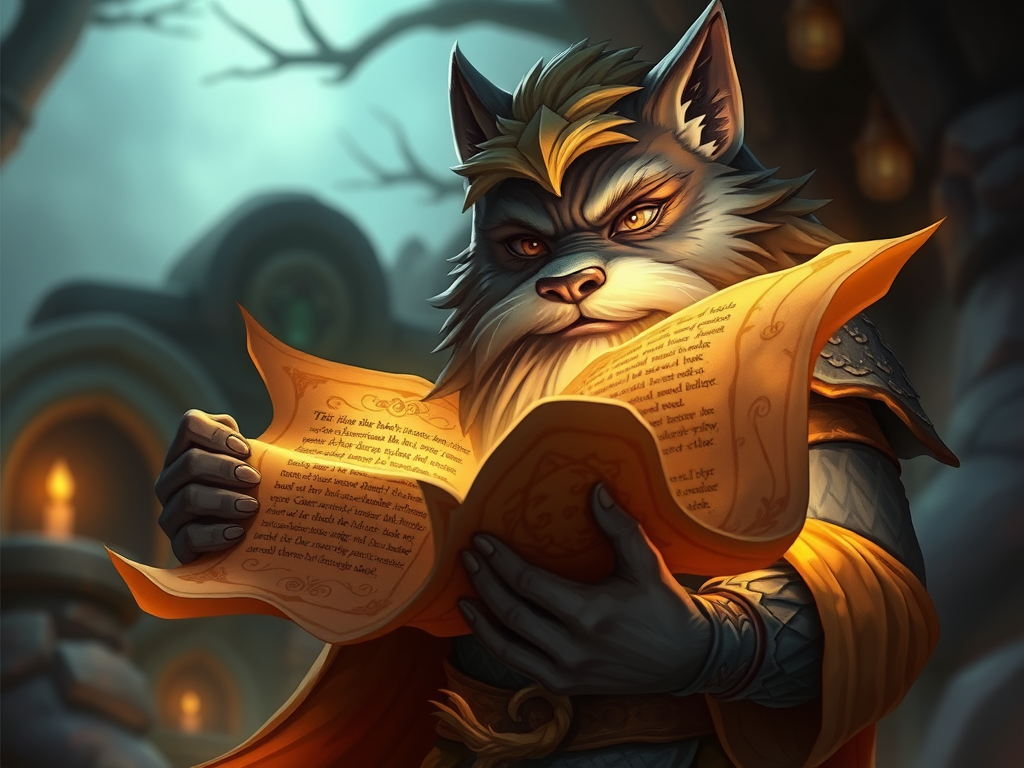
In a land where towering mountains kissed the sky, and lush forests whispered secrets, there lived a dwarf named Wolf. Unlike most dwarves, known for their prowess in mining and forging, Wolf possessed an extraordinary gift—he could communicate with all creatures of the forest and mountains. They all called him friend, from the tiniest sparrow to the mightiest bear.

One crisp morning, as the sun began to rise over the jagged peaks, Wolf received an urgent message from his friend, Eldra, the wise owl. With feathers as soft as dusk and eyes like polished amber, she perched herself on a nearby branch and hooted softly to catch Wolf’s attention. “Wolf, a great darkness looms over our world. The balance of nature is in peril, and only the ancient scroll hidden in the heart of the mountains can save us,” Eldra warned, her voice grave. “What does this scroll contain?” Wolf asked, his brow furrowing with concern. “It holds the knowledge of harmony, a way to unite all beings against the encroaching shadows. But it is guarded by the fierce Keeper of the Mountains, a creature of stone and fury.” Determined to help, Wolf packed his satchel with essentials: a sturdy rope, some enchantment herbs, and a small hammer, a gift from his father, which could mend anything broken. He donned his favourite green cloak, which blended seamlessly with the forest and set off towards the mountains.

As he journeyed, Wolf encountered many friends along the way. First, he met Thistle, the mischievous fox. “What brings you to the mountains, Wolf?” she asked, her amber eyes twinkling. “I seek the secret scroll that can save our world,” he replied.“Then I shall accompany you! I know a shortcut through the thicket,” Thistle exclaimed, her tail flicking with excitement. Together, they navigated the dense forest until they reached the base of the mountains. There, they encountered Grom, the wise old bear. “You’ll need strength and courage to face the Keeper. I’ll join you as well,” Grom said, lumbering towards them with a knowing look.

With their trio complete, they began to climb the rugged terrain. As they ascended, the air grew thin, and the path became treacherous. But with teamwork, they overcame each obstacle—Wolf’s ingenuity, Thistle’s agility, and Grom’s strength guiding them forward. At last, they reached a massive stone door, intricately carved with runes that sparkled like stars. “This must be the entrance to the Keeper’s lair,” Wolf said, his heart pounding. To their surprise, the door creaked open, revealing a cavern filled with shimmering crystals. But at its centre stood the Keeper, a towering figure of stone with eyes like molten gold. “Who dares enter my domain?” it roared, causing the ground to tremble. Wolf stepped forward, unafraid. “I am Wolf, a friend to all creatures. We seek the ancient scroll to protect our world from darkness.”

The Keeper regarded them with a mixture of curiosity and scepticism. “Many have tried to claim the scroll, but none have understood its true purpose. Why should I trust you?” At that moment, Wolf remembered the stories of unity and friendship passed down through his clan. “The scroll is not for us alone. It belongs to all beings of this land. Together, we can foster harmony and protect our home.” The Keeper paused, sensing the sincerity in Wolf’s heart. “Very well, you shall prove your worth. Solve my riddle, and the scroll shall be yours.”With a deep breath, the Keeper recited the riddle: “I can be cracked, made, told, and played. What am I?”

Wolf thought momentarily, and then a wide smile spread across his face. “A joke!” he exclaimed, laughter bubbling forth. The Keeper’s stone face softened, and it nodded slowly. “You have shown wisdom and courage. The scroll is yours.” With a wave, the Keeper revealed the scroll, glowing with an ethereal light. Wolf carefully unrolled it and read its ancient text, feeling the weight of knowledge fill him with hope. Wolf, Thistle, and Grom carried the scroll with pride as they descended the mountain. They shared its teachings with every creature they met, binding them together in a newfound alliance. With their combined strength and unity, the darkness that threatened their world began to recede. The forests flourished, the mountains stood tall, and peace returned to the land. Wolf became a legend, not for his size or strength, but for his heart—a heart that embraced all creatures, ensuring that harmony reigned forevermore. And so, the dwarf who spoke to animals became a hero, reminding everyone that true power lies in friendship and understanding. 

Whispers from Beyond

In a small town shrouded in a veil of mist and secrets lived a man named Elias, a psychic with an extraordinary gift that bore the weight of an eternal burden. From a young age, Elias discovered that he could see spirits, hear their whispers, and receive messages that often lead to profound revelations. However, the constant connection to the spirit world left him in a state of perpetual anxiety, unable to switch off the cacophony of voices that flooded his mind day and night. This tale follows Elias on his tumultuous journey as he navigates the thin line between the living and the dead until one fateful day when he glimpses his demise.

Elias had always known he was different. As a child, he would sit in the garden, surrounded by flowers that danced in the breeze, while he conversed with the ethereal figures that hovered just beyond the reach of human perception. They were not frightening to him; they were lost souls seeking closure or warning those still breathing. Yet, as he matured, the whispers grew louder, the messages more urgent, and the weight of his gift transformed into a curse. Each encounter with the spirit world drained him, leaving him grappling with their stories’ emotional toll.

His reputation as a psychic spread through the town like wildfire. People sought him for guidance, hoping to connect with lost loved ones or uncover hidden truths. He became a vessel for their grief, feeling their pain as if it were his own. He often found solace in knowing he could help others find peace. However, the more he delved into the lives of the departed, the more he lost himself in their sorrow. Each spectre that reached out to him became a part of his existence, blurring the lines between his reality and the world beyond.

On a dreary Wednesday afternoon, Elias sat in his dimly lit living room, the air thick with an unshakeable sense of foreboding. As he sipped his tea, he suddenly felt an overwhelming presence wash over him. This time, it was different; it was darker and more oppressive. The familiar whispers morphed into a singular voice, urgent and chilling. “Elias, you must listen.” The message was clear, yet terrifying. He saw flashes of his life—the laughter, the love, the heartache—culminating into a vision of his own death: a violent accident. This fleeting moment shattered the illusion of safety he had clung to.

In the following days, Elias was consumed by a tumult of emotions—fear, anger, acceptance. He sought to alter his fate, to warn himself of the impending doom he foresaw. Yet, each attempt to evade the future only tightened the grip of the spirits around him, their voices now a cacophony of desperation. “You cannot escape,” they cried. “You must confront the inevitable.” With each passing moment, he learned that the only way to find peace was not to fight against the currents of fate but to embrace them.

In a final act of courage, Elias resolved to live fully in the moments he had left. He poured his heart into his work, helping others heal while accepting his fate. The day of the foretold accident arrived, and instead of fleeing, he faced it with an open heart. Surprisingly, the event unfolded differently than he had envisioned; a twist of fate saved him, revealing that the future was not set in stone. The experience taught him that while he was a conduit for the spirits, he was also the master of his path. Through acceptance and love, he found liberation from the shackles of his gift and learned to cherish the fragile beauty of life.