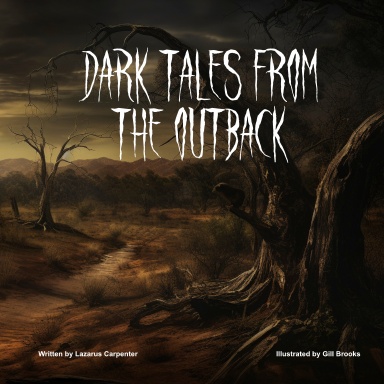
Dark Tales from the Outback – Abstract

Kaya

Once, in the remote Australian outback, there lived an aborigine named Kaya. He was a skilled tracker and hunter who roamed the vast, desolate lands with an air of quiet confidence. Kaya had always felt a deep connection to the spirits of the land, and his people often spoke of the ancient stories that warned of the dangers lurking in the wilderness. One moonless night, Kaya set out on a hunting expedition, guided only by the faint glow of the stars. His senses were sharp, and he moved through the rugged terrain with the ease of a shadow.

As he ventured deeper into the heart of the outback, a strange unease settled over him. The usual sounds of the night were absent, and an eerie silence enveloped the land. Suddenly, a piercing scream shattered the stillness, causing Kaya to halt in his tracks. The hair on the back of his neck stood on end as he tried to locate the source of the chilling cry. Following the sound, he stumbled upon a clearing where he saw a lone kangaroo, its eyes wide with terror as it desperately tried to escape an unseen force.

Kaya watched in horror as the kangaroo was dragged into the darkness by an unseen entity, its screams fading into the night. The aborigine felt a chill run down his spine, for he knew that the spirit world held many dark and malevolent forces. He knew he had stumbled upon something sinister, something beyond his understanding. Determined to uncover the truth, Kaya embarked on a quest to seek guidance from the wise elders of his tribe.

They revealed to him the ancient legend of a vengeful spirit unleashed upon the land, seeking to wreak havoc on the living. The elders warned Kaya that the spirit had become a monstrous kangaroo driven by an insatiable thirst for blood. Armed with the knowledge passed down by his ancestors, Kaya set out to confront the malevolent spirit. Armed with ancient symbols and blessed talismans, he ventured back into the wilderness. As he delved deeper into the treacherous terrain, the air grew thick with an otherworldly presence, and the ground seemed to tremble beneath his feet.

Finally, he came face to face with the monstrous kangaroo, its eyes glowing with an unholy light. The creature lunged at Kaya with supernatural speed and ferocity, but the aborigine stood his ground, wielding the protective symbols and chanting the sacred incantations. A fierce battle ensued as Kaya fought to banish the vengeful spirit from the mortal realm. The very fabric of reality seemed to warp and twist around them, and the night itself seemed to hold its breath as the two clashed in a struggle that transcended the physical world. In the end, with a final burst of mystical energy, Kaya managed to seal the spirit away, restoring peace to the land.

As the first light of dawn broke over the horizon, the outback was once again filled with the sounds of life, and Kaya knew he had fulfilled his duty as a guardian of his people. From that day on, the legend of Kaya and the malevolent kangaroo spirit became a cautionary tale, a reminder of the ancient forces that still linger in the world’s wild places. And though the memory of that fateful encounter would always haunt him, Kaya continued to roam the outback with a newfound sense of purpose and a deep respect for the land’s mysteries.

Over time, Kaya’s reputation as a protector and a keeper of ancient wisdom spread far and wide, and he became a revered figure among his people. Years passed, and Kaya’s hair turned grey, but his spirit remained unyielding. He passed down the knowledge he had gained to the younger generations, teaching them to honour the delicate balance between the physical and spiritual realms. His story became a part of the oral tradition, woven into the tapestry of his people’s history as a testament to the enduring power of courage and wisdom.

As the seasons changed and the land continued to whisper its secrets, Kaya’s name became synonymous with resilience and reverence for the natural world. His legacy endured, and the memory of his heroic encounter with the malevolent kangaroo spirit lived on as a reminder of the dangers hidden in the outback’s heart. The tale of Kaya and the vengeful spirit served as a timeless lesson, teaching the importance of humility and the need to safeguard the delicate harmony between humanity and the ancient forces that dwelled in the shadows. It became a parable of the enduring strength of the human spirit and the profound connection that binds all living things.

And so, in the vast expanse of the Australian outback, Kaya’s story echoed through the ages, a testament to the enduring power of the human spirit in the face of the unknown. And though the world continued to change, the legend of Kaya and the malevolent kangaroo spirit remained etched in the very fabric of the land, a testament to the enduring legacy of a humble aborigine who had stood against the darkness and triumphed.
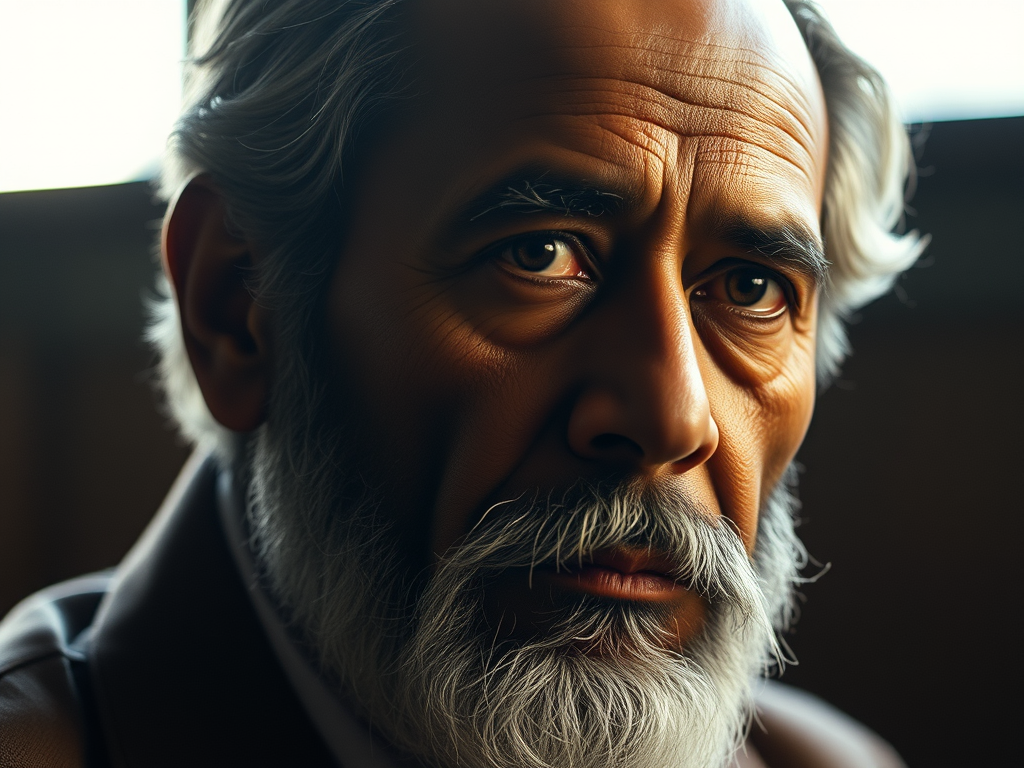
Kahlil Gibran

Kahlil Gibran (1883-1931) was a Lebanese-American poet, writer, and philosopher. He is best known for his book The Prophet, which has been translated into over 100 languages and remains a classic work of spiritual literature. Born in Bsharri, Lebanon, Gibran emigrated to the United States with his mother and siblings in 1895. His early life in Boston exposed him to diverse cultures and ideas, profoundly influencing his work. Gibran’s writing often reflects themes of love, beauty, and the human experience, blending Eastern and Western philosophies.

In addition to poetry, he created evocative paintings and drawings, showcasing his artistic talent. His literary style is characterized by lyrical prose, rich metaphors, and a deep spiritual insight. Gibran’s legacy inspires readers worldwide, and his works remain relevant for their exploration of universal themes and the quest for meaning in life. 

Kingdom of the Trees – Abstract

Once upon a time, deep within a Kingdom of Trees, the Queen watched her daughter, the Princess, playing in the castle garden.  A warm sun shone across the princess’s golden hair, causing it to glisten and casting beams of sunlight into the shadows. The Princess was around nine years old now, and for her entire short life, she had grown up watching her mother, the Queen, rule the Kingdom of Trees wisely, kindly, and with good humour. She had known nothing but love from her mother, the Queen. After all, there had never been a King of the Kingdom of Trees. The Princess had never known a King. 

Every day, the Queen taught the Princess everything she knew, knowing that one day, the little Princess would grow into a queen herself. So, like all little princesses, especially those of such a young age, she had many difficulties understanding some of the things that went on in the castle. She played with a diablo while the Queen looked on, blinking in the bright sunlight.  The Princess tossed the spinning top and jumped high to catch it.  Her mother thought as she watched, it seemed the Princess had grown up but she knew she was really still a little girl.  The little Princess often pretended to be a queen, and everybody laughed at her jokes and antics; even the Queen smiled.

But the Kingdom of Trees made many demands upon the Queen, and the little Princess did not know or even understand this as she was far too young.  The biggest problem the Queen experienced was the loneliness she felt. She often wondered what it may be like to rule the Kingdom of Trees with a king when the Princess was fast asleep in her bed.  There had been several suitors from the neighbouring kingdoms for the Queen’s hand in previous years; however, the Queen had always said “No”.  She had always said ‘she had no time for such nonsense as she had a daughter to raise and a Kingdom to rule’.  But that was then, and this is now.

As the Queen watched the Princess replace the Diablo with a hula hoop, she thought she and the Princess did everything together.  The Princess laughed as the hoop spun up and down her body, faster and faster it went.  For a long time now, the Queen had very little time to herself, assisting other families, taking holidays with the Princess, seeing to affairs of state relating to the Kingdom of Trees, and the Princess took a part in everything.  But the time was approaching when they would need to do things separately and perhaps even spend time apart. The Queen appreciated the Princess knew this; she also knew that she was worried about it as well.  But they had not really talked about it, although there had been times when they discussed such things, and the little Princess had shown she was very upset at the mere idea.  The Queen knew this because although the Princess didn’t say much, she did have a habit of licking her bottom lip when she was worried.

The Queen had decided whilst watching the Princess hula hooping, to visit Professor Knowitallicus the Wizard.  He was a wise old man and would know what should be done. But she wondered if she should take the Princess with her.  She decided she would and they would both go after lunch.  The Queen sent a messenger to Knowitallicus to let him know to expect a Royal visit that very day.

Johann Wolfgang von Goethe

Johann Wolfgang von Goethe (1749–1832) was a German writer, statesman, and naturalist who is widely regarded as one of the greatest figures in Western literature. His works encompass poetry, drama, literature, and scientific writing and reflect his diverse interests and talents.
Born in Frankfurt am Main, Goethe showed an early affinity for the arts, particularly literature and drawing. He studied law at the University of Frankfurt and later in Leipzig, but his passion for writing soon took precedence over his legal studies. His first significant work, “The Sorrows of Young Werther” (1774), established him as a leading figure of the Sturm und Drang movement, characterized by its emphasis on emotion and individualism. The novel’s exploration of unrequited love resonated with readers and made him a literary sensation.

He later wrote “Faust,” a two-part tragic play that explores ambition, desire, and redemption. This monumental work is often considered Goethe’s masterpiece and is a cornerstone of German literature. In addition to literature, Goethe had a profound interest in science. He studied botany, colour theory, and anatomy, developing a holistic approach that contrasted with the analytical methods of his time. His work “Theory of Colours” proposed ideas about perception and the emotional effects of colour. Goethe held various public positions, including a role in the Weimar court, where he influenced cultural and political life. He maintained a lifelong correspondence with other intellectuals, including Friedrich Schiller, with whom he shared a deep friendship. His legacy extends beyond literature; his ideas about individuality, nature, and the arts have influenced countless writers, artists, and thinkers. He remains a central figure in German literature and is studied and celebrated worldwide. 

The Railway Station – A Ghost Story

In the depths of a mist-covered forest, hidden from the prying eyes of modern civilization, lies the remnants of what was once a bustling railway station. This station, surrounded by an air of mystery and intrigue, is said to be haunted by the spirits of its past. Over the years, whispers of ghostly apparitions and eerie happenings have woven a tale of terror around the last railway station, captivating the imagination of those brave enough to venture near. Join me as we unlock the secrets of this ghostly realm and delve into the chilling story of the last railway station.

Once a thriving hub of activity, the last railway station was a vital link connecting distant towns and cities. Passengers eagerly awaited the arrival of trains, their anticipation mingling with the rhythmic chugging of the locomotives. The station’s bustling platforms reverberated with laughter, greetings, and tears of farewell as loved ones bid each other adieu. It was a place pulsating with life, but fate had a different plan in store.

Legend has it that disaster struck on a dark and stormy night as a train approached the station. An unforeseen malfunction caused the train to derail, hurtling off the tracks and into the surrounding wilderness. Chaos ensued, and lives were lost in the blink of an eye. The once vibrant station was forever marred by this tragic incident, casting a shadow over its existence. Since that fateful night, the abandoned railway station has become a place of inexplicable phenomena. Locals claim to have witnessed ghostly apparitions, the spectres of those who perished in the accident. These tormented souls are said to wander the deserted platforms, their ethereal figures bathed in an otherworldly glow. Some have reported hearing distant cries and whispers as if the echoes of the past linger in the air.

Among the spine-chilling tales surrounding the last railway station, the most haunting is that of the phantom train. Late at night, when the moon is concealed behind a veil of clouds, an otherworldly train is said to materialize on the abandoned tracks. Its spectral form glides silently, only to vanish into thin air moments later, leaving an eerie silence and an unsettling sense of dread behind. Psychics and paranormal investigators have been drawn to the last railway station, seeking answers and validation for the countless stories that have been shared. Some claim to have captured chilling EVP (Electronic Voice Phenomenon) recordings, capturing whispers and cries from the spirit realm. Others have reported fluctuations in temperature and strange electromagnetic readings, suggesting a lingering presence beyond our understanding.

The last railway station is a testament to the past, where history intertwines with the supernatural. Its abandoned platforms and dilapidated buildings hold the echoes of a bygone era, forever haunted by the tragic event within its walls. Whether one believes in the paranormal or not, the stories surrounding this ghostly site continue to captivate the imaginations of those who dare to explore its ethereal domain. The last railway station serves as a reminder of the fragility of life and the enduring power of the human spirit, even in the face of tragedy.