Johann Wolfgang von Goethe

Johann Wolfgang von Goethe (1749–1832) was a German writer, statesman, and naturalist who is widely regarded as one of the greatest figures in Western literature. His works encompass poetry, drama, literature, and scientific writing and reflect his diverse interests and talents.
Born in Frankfurt am Main, Goethe showed an early affinity for the arts, particularly literature and drawing. He studied law at the University of Frankfurt and later in Leipzig, but his passion for writing soon took precedence over his legal studies. His first significant work, “The Sorrows of Young Werther” (1774), established him as a leading figure of the Sturm und Drang movement, characterized by its emphasis on emotion and individualism. The novel’s exploration of unrequited love resonated with readers and made him a literary sensation.

He later wrote “Faust,” a two-part tragic play that explores ambition, desire, and redemption. This monumental work is often considered Goethe’s masterpiece and is a cornerstone of German literature. In addition to literature, Goethe had a profound interest in science. He studied botany, colour theory, and anatomy, developing a holistic approach that contrasted with the analytical methods of his time. His work “Theory of Colours” proposed ideas about perception and the emotional effects of colour. Goethe held various public positions, including a role in the Weimar court, where he influenced cultural and political life. He maintained a lifelong correspondence with other intellectuals, including Friedrich Schiller, with whom he shared a deep friendship. His legacy extends beyond literature; his ideas about individuality, nature, and the arts have influenced countless writers, artists, and thinkers. He remains a central figure in German literature and is studied and celebrated worldwide. 

The Railway Station – A Ghost Story

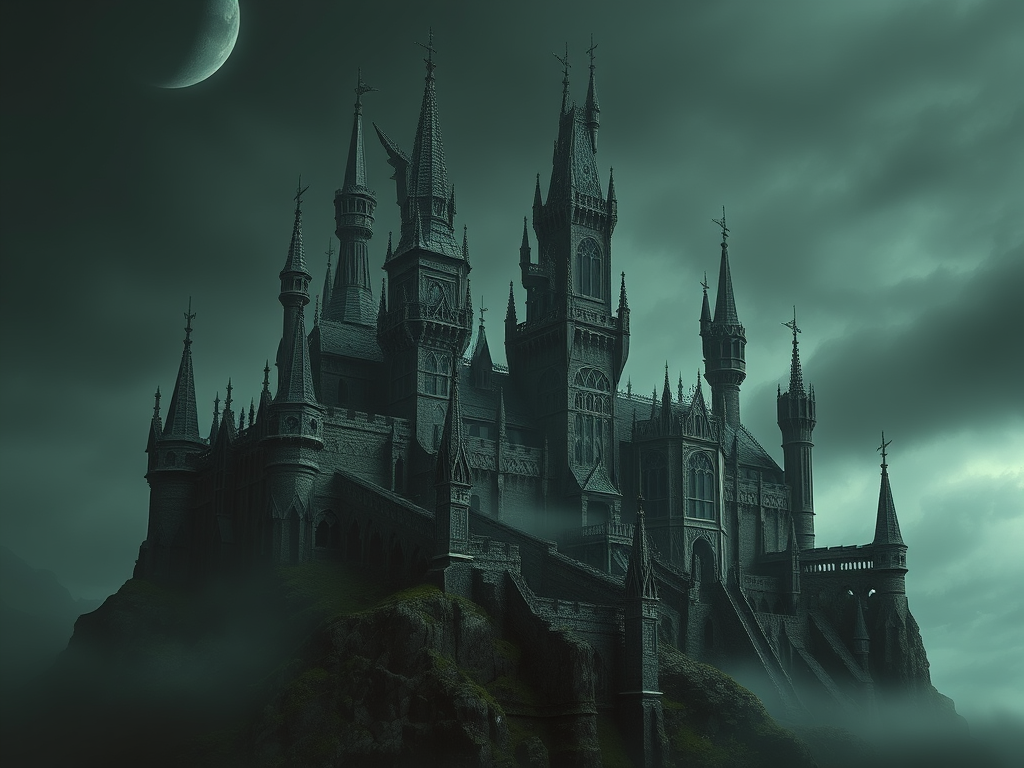
In the depths of a mist-covered forest, hidden from the prying eyes of modern civilization, lies the remnants of what was once a bustling railway station. This station, surrounded by an air of mystery and intrigue, is said to be haunted by the spirits of its past. Over the years, whispers of ghostly apparitions and eerie happenings have woven a tale of terror around the last railway station, captivating the imagination of those brave enough to venture near. Join me as we unlock the secrets of this ghostly realm and delve into the chilling story of the last railway station.

Once a thriving hub of activity, the last railway station was a vital link connecting distant towns and cities. Passengers eagerly awaited the arrival of trains, their anticipation mingling with the rhythmic chugging of the locomotives. The station’s bustling platforms reverberated with laughter, greetings, and tears of farewell as loved ones bid each other adieu. It was a place pulsating with life, but fate had a different plan in store.

Legend has it that disaster struck on a dark and stormy night as a train approached the station. An unforeseen malfunction caused the train to derail, hurtling off the tracks and into the surrounding wilderness. Chaos ensued, and lives were lost in the blink of an eye. The once vibrant station was forever marred by this tragic incident, casting a shadow over its existence. Since that fateful night, the abandoned railway station has become a place of inexplicable phenomena. Locals claim to have witnessed ghostly apparitions, the spectres of those who perished in the accident. These tormented souls are said to wander the deserted platforms, their ethereal figures bathed in an otherworldly glow. Some have reported hearing distant cries and whispers as if the echoes of the past linger in the air.

Among the spine-chilling tales surrounding the last railway station, the most haunting is that of the phantom train. Late at night, when the moon is concealed behind a veil of clouds, an otherworldly train is said to materialize on the abandoned tracks. Its spectral form glides silently, only to vanish into thin air moments later, leaving an eerie silence and an unsettling sense of dread behind. Psychics and paranormal investigators have been drawn to the last railway station, seeking answers and validation for the countless stories that have been shared. Some claim to have captured chilling EVP (Electronic Voice Phenomenon) recordings, capturing whispers and cries from the spirit realm. Others have reported fluctuations in temperature and strange electromagnetic readings, suggesting a lingering presence beyond our understanding.

The last railway station is a testament to the past, where history intertwines with the supernatural. Its abandoned platforms and dilapidated buildings hold the echoes of a bygone era, forever haunted by the tragic event within its walls. Whether one believes in the paranormal or not, the stories surrounding this ghostly site continue to captivate the imaginations of those who dare to explore its ethereal domain. The last railway station serves as a reminder of the fragility of life and the enduring power of the human spirit, even in the face of tragedy.

Shel Silverstein

Shel Silverstein was an American poet, songwriter, cartoonist, and author best known for his children’s books and whimsical poetry. He was born on September 25, 1930, in Chicago, Illinois, and showed an early interest in art and writing. Silverstein attended the School of the Art Institute of Chicago and began his career as a cartoonist, contributing to magazines like “Playboy.”

His most famous works include “The Giving Tree,” “Where the Sidewalk Ends,” and “A Light in the Attic.” These books are celebrated for their playful language, imaginative illustrations, and underlying themes of love, loss, and the joys of childhood.

In addition to his children’s literature, Silverstein wrote songs for notable artists, including “A Boy Named Sue,” famously performed by Johnny Cash. His unique style and ability to connect with children and adults have left a lasting legacy.

Shel Silverstein passed away on May 10, 1999, but his work continues to be cherished by readers of all ages. His blend of humour, insight, and profound simplicity makes his poetry and stories timeless. 

Harold – the man who was always late!

Once upon a time, in a quaint little town, there lived a man named Harold who had a peculiar talent for being late. No matter the occasion—birthdays, weddings, or important meetings—Harold always seemed to arrive just after the moment had passed. Friends and family often joked that he was on a different schedule, one that ticked a little slower than everyone else’s. As a child, Harold’s tardiness was endearing. His parents would chuckle as he stumbled into the classroom, breathless and flushed, always missing the morning bell by a few minutes. In his teenage years, he was perpetually late for dates, leaving girls waiting with a mix of exasperation and amusement. “Better late than never,” he would say with a sheepish grin, and somehow, they never held it against him for long.

As an adult, Harold’s reputation only grew. He missed job interviews and deadlines, and his friends learned to adjust their plans around him. “Let’s just tell Harold an hour earlier,” they would whisper, a strategy that often backfired when he still managed to arrive late. Yet, despite the frustration he caused, his charm and good-natured spirit kept him surrounded by loved ones. One day, Harold received news that he had a serious illness. Determined to live life to the fullest, he decided to throw a party to celebrate his life. He meticulously planned every detail, inviting everyone he had ever known. But, true to form, he miscalculated the time it would take to prepare. The party was supposed to start at 4 PM, but he arrived at 5:30, just as the last guests were leaving.

“Harold, we were just about to leave!” they exclaimed, laughing at the irony.

But Harold, ever the optimist, simply shrugged and said,

“Well, at least I made it for the cake!”

And they all stayed a little longer, sharing stories and laughter, grateful for the time they had. Months passed, and Harold’s condition worsened. He was in and out of the hospital, but even there, he was late for his own treatments. The nurses would chuckle, “We’ve got to set an alarm for you, Harold!” He would laugh along, making friends with everyone he met, turning each medical appointment into a lighthearted gathering. Finally, the day came when Harold’s time came to an end. He passed away quietly, leaving behind a legacy of laughter and love. When the day of his funeral arrived, friends and family gathered in the church, reminiscing about their favourite Harold stories. But true to form, Harold was late even for this final event. As the clock ticked on, people began to murmur. Just then, the church doors swung open with a loud creak, and Harold, or rather, his spirit, walked in. He floated in, grinning widely as if he had just walked in from a party.

“Sorry I’m late!” he shouted, and laughter erupted in the sombre room.

At that moment, everyone understood that Harold had never indeed been late. He had always arrived just when he was meant to, filling every moment with joy, love, and laughter. And so, they celebrated his life and the wonderful chaos he brought into theirs, proving that sometimes, being late is the best way to make a grand entrance.

Image by http://www.gillsplace.com

Charles Darwin

Charles Darwin was an English naturalist, geologist, and biologist best known for his contributions to understanding evolution. His most famous work, “On the Origin of Species,” published in 1859, introduced the concept of natural selection as a mechanism for evolution. Darwin’s observations during his voyage on the HMS Beagle, particularly in the Galápagos Islands, led him to develop his theories on the diversity of life and the common descent of species. Darwin proposed that individuals with traits better suited to their environments are more likely to survive and reproduce, passing those traits on to future generations. He argued that species evolve over time through gradual changes rather than static or unchanging. Darwin’s ideas challenged traditional views of creation and profoundly impacted various fields, including biology, genetics, anthropology, and philosophy. His work laid the foundation for modern evolutionary biology, influencing scientific thought and research.