The Wizard Who Chased Time

Once upon a time, in a small village nestled between rolling hills and lush green meadows, lived a wizard named Doctor John. Unlike ordinary wizards who were content with casting spells and brewing potions, Doctor John possessed an insatiable curiosity about the mysteries of time. From a young age, he had been fascinated by the concept of time and its ever-elusive nature. He often found himself pondering questions such as,

“Where does time go?” and “Can we ever catch up with time?”

These thoughts consumed his mind day and night, leaving him with an unquenchable desire to chase after time itself. One sunny morning, while strolling through the village, Doctor John stumbled upon an ancient book hidden in the depths of a dusty old bookstore.

The book was bound in weathered leather and emanated an aura of magic. As he opened its pages, a burst of shimmering light enveloped him, transporting him to a realm where time was tangible. In this enchanted world, time manifested as a radiant, glowing entity, dancing and swirling in the air. His eyes widened with awe as he watched the magical spectacle unfold before him. Determined to chase time and uncover its secrets, he embarked on an exhilarating quest. Doctor John soon discovered that chasing time was no easy feat. Time darted and weaved through the forest, slipping through his fingers like sand. Undeterred, he summoned his magical abilities and conjured a magnificent timepiece to aid him in his pursuit.
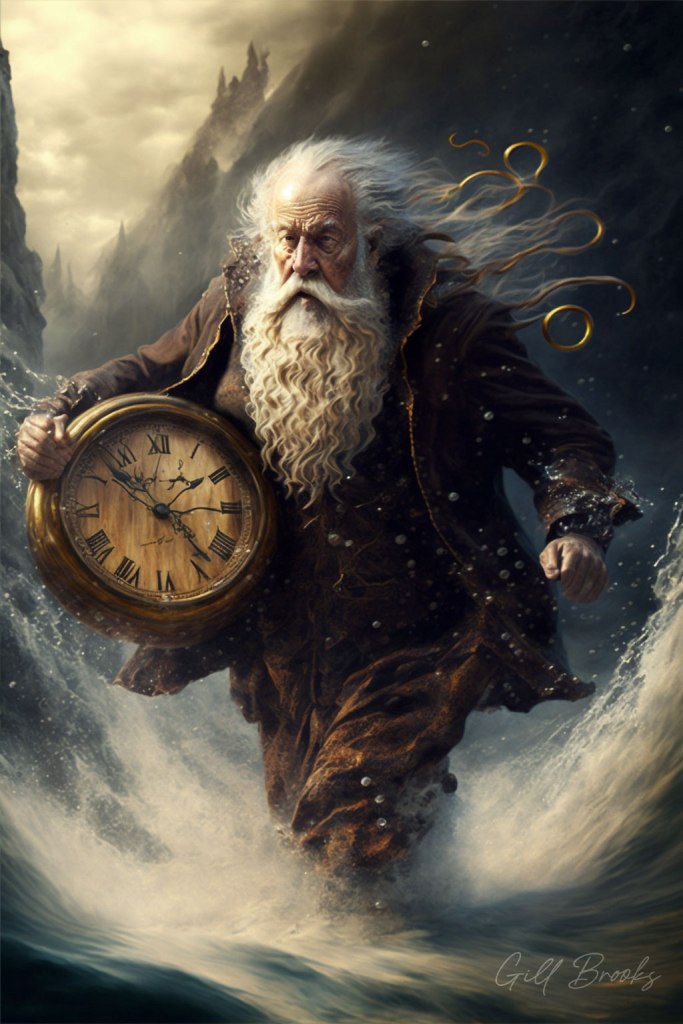
With each swoop and swirl, he tried to close the gap between himself and time. As he ventured deeper into the mystical forest, he encountered a mischievous fairy named Luna. She had heard of his quest and decided to join him on his adventure. Together, they traversed treacherous terrains, battled formidable creatures, and solved riddles left by ancient guardians. His determination and Luna’s cleverness formed an unstoppable duo. During their journey, Doctor John and Luna encountered various villagers whose lives were directly influenced by time. They met an elderly woman who yearned for more time to spend with her loved ones, a young artist who wished to capture the essence of time in her paintings, and a group of children who dreamed of slowing down time to savour every moment of their youth. Moved by these encounters, he realized that the beauty of time lay not in capturing it, but in cherishing the moments it offered. He understood that time was not something to be chased but something to be embraced.
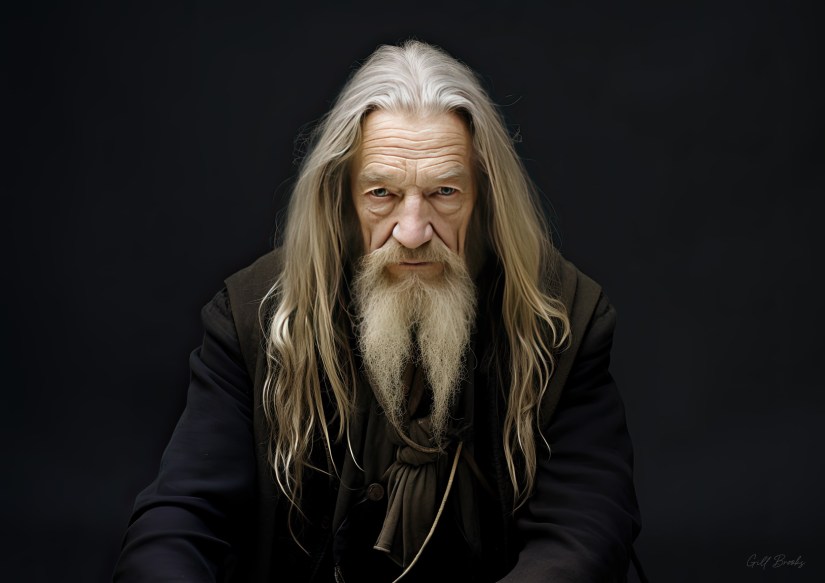
With this newfound wisdom, Doctor John knew his quest had transformed into a mission to help others appreciate the value of time. Returning to the village, he used his magical powers to create a magnificent clock tower in the heart of the community. The clock tower became a symbol of time’s preciousness, reminding everyone to make the most of each passing second. Now an old man, he shared his experiences and the lessons learned, inspiring the villagers to live each day to the fullest. And so, the tale of the wizard who chased time turned into a story of wisdom and enlightenment. Doctor John’s quest may not have led him to physically catch time, but it led him to a deeper understanding of its significance. From that day forward, he dedicated himself to helping others cherish every moment, teaching them that the true magic of time lies within their hearts.

Book cover and images by http://www.gillsplace.com
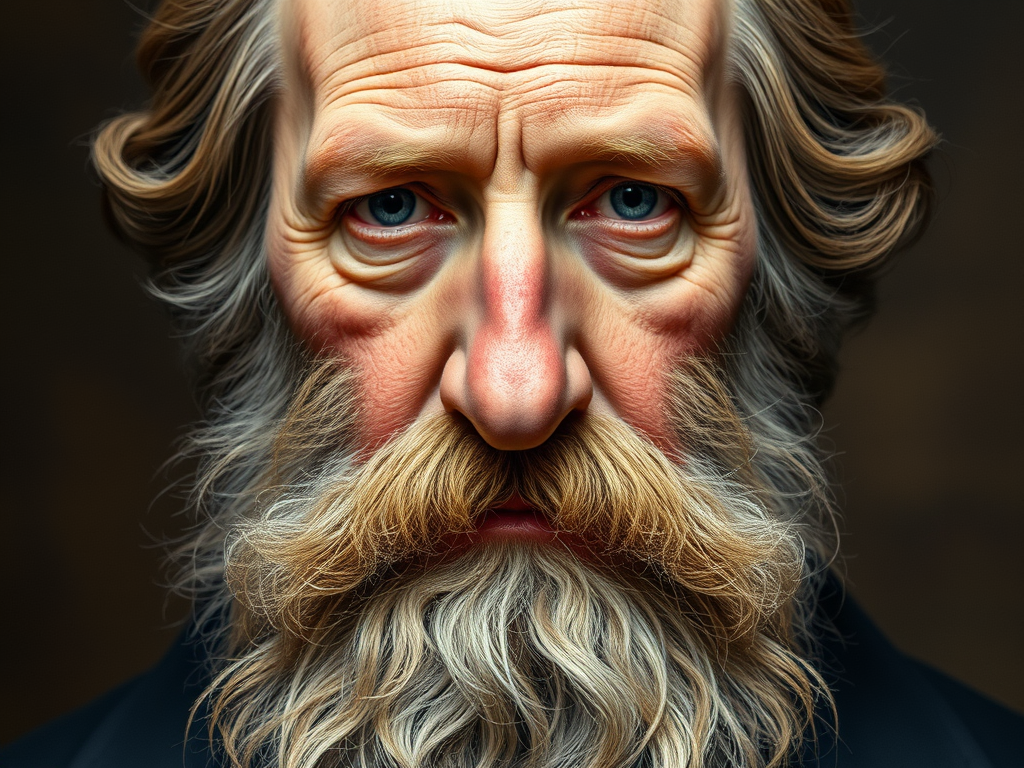
Peter Kropotkin

Peter Kropotkin (1842-1921) was a Russian revolutionary, geographer, and anarchist philosopher best known for advocating anarcho-communism. Born into a noble family, Kropotkin initially pursued a career in the Russian military and later in geography and natural sciences. His experiences in Siberia, where he conducted extensive geological and biological research, led him to develop ideas about mutual aid, which he argued was a natural principle of evolution. Kropotkin’s seminal works, such as “Mutual Aid: A Factor of Evolution,” challenged the prevailing notion of survival of the fittest, emphasizing cooperation over competition as a driving force in nature.

Kropotkin became involved in revolutionary activities and was imprisoned for his beliefs. After his release, he lived in exile in Europe, writing influential texts advocating for a society based on voluntary cooperation and the abolition of the state. His major works include “The Conquest of Bread” and “Fields, Factories and Workshops.” Throughout his life, Kropotkin remained committed to social justice and environmentalism, promoting anarchist principles and influencing various movements and thinkers. He returned to Russia after the 1917 Revolution but became disillusioned with the Bolshevik regime’s authoritarianism. Kropotkin’s legacy endures in anarchist thought and movements advocating for decentralized, egalitarian societies. 

Henri Bergson

Henri Bergson (1859–1941) was a French philosopher known for his influential ideas on time, consciousness, and creativity. His works challenged the prevailing mechanistic view of the universe and emphasized the importance of intuition and experience over rationalism.

In “Time and Free Will” (1889), he distinguished between “measurable time” (quantitative) and “lived time” (qualitative), introducing the concept of “duration” (durée) to describe how individuals experience time subjectively.

In “Creative Evolution” (1907), Bergson argued against Darwinian evolution’s purely mechanistic interpretation. He introduced the idea of an élan vital, a vital force driving evolution and creativity, emphasizing the spontaneity and unpredictability of life.

Bergson believed that traditional philosophical methods relied too heavily on intellect and abstract reasoning, which could miss the essence of life. He advocated for intuition as a means to grasp reality more fully. His ideas profoundly influenced various fields, including literature, psychology, and the arts. His thoughts on time and consciousness paved the way for existentialist and phenomenological philosophies.

Bergson received the Nobel Prize in Literature in 1927, recognizing his rich philosophical contributions. His work continues to inspire discussions on the nature of time, consciousness, and the dynamic quality of life. 

Herman Hesse

Herman Hesse was a German-Swiss author, poet, and painter, born on July 2, 1877, in Calw, Germany, and died on August 9, 1962, in Montagnola, Switzerland. He is best known for exploring individual spirituality and self-discovery, often delving into themes of duality, nature, and the human psyche.

Steppenwolf (1927) – This novel explores the conflict between the individual and society, focusing on a man named Harry Haller who feels split between his human and wolf-like instincts.

Siddhartha (1922) – A philosophical novel that follows the journey of a young man in ancient India as he seeks enlightenment, reflecting Hesse’s interest in Eastern spirituality.

Demian (1919) is a semi-autobiographical novel about self-realization and the struggle against societal norms.

The Glass Bead Game (1943) – Often considered his magnum opus, this novel imagines a future society that values intellectual and artistic pursuits above all, exploring the nature of culture and knowledge.


Hesse’s work was heavily influenced by his own experiences, including his struggles with identity and mental health. He was associated with the German Expressionist movement and later became a key figure in the counterculture of the 1960s, particularly among those seeking alternative spiritual paths. He was awarded the Nobel Prize in Literature in 1946. Hesse’s writings resonate with readers today, appealing to those interested in philosophy, psychology, and the quest for meaning in life. His exploration of the inner self and the pursuit of authenticity remains relevant in contemporary discussions of personal growth and spirituality.

‘Walls Have Ears’- Craig y Nos Castle

Introduction

In December of 2022, I had a dream to bring alive the story of Craig y Nos Castle,
to relate the history, its life and times but in that of a novel format. Then, the idea came to write the story from the ‘first person’ perspective as an observer of the comings and
goings of life in this Gothic mansion. What better, thought me, than to be a lump of rock
in the foundations mined from the Cribarth, overlooking Cae-Brynmelyn-Bach opposite
Pentrecribarth farm? Deep in the foundations I would be aware of everything that
happened through vibrations emanating within the walls. Thus, the title was born, ‘Walls
Have Ears’.

Craig y Nos Castle has a long history of paranormal occurrences. As a ‘trance
psychic channel’
I felt an opportunity presented itself to incorporate the words and stories of the spirits still present, combined with tales gained through actual historical facts and interviews with people who had family and work connections with the castle through the years. Thus my research began both with those alive, and those long gone to the world of spirit.

Abstract

I know not how long I have lain upon the Cribarth, here so high on this
craggy ridge amidst passing clouds looking down to the valley below. Back in the
mists of time, volcanoes roared, earthquakes cracked mountains, ice thawed, and beds
of limestone and Twrch sandstone were laid down in sedimentary layers in tropical
seas near the equator some 350 million years ago. They arrived where they are
today by continental drift, and since then, here is where I have been, and much has
passed me by. Many have trod over me through millennia, ancient Celts, Druids,
invaders from Rome and England. But I am a rock, and I remember everything
passing through time as only a rock can.
Staring down the valley below, I see a tall man whom I know to be Captain Rice
Davies Powell, distinguished, suited and whiskered, leaning on an ebony walking
cane with a hand grip of gold. He stands on a field I know as Cae-Brynmelyn-Bach
opposite Pentrecribarth farm. It is late in the Autumn of 1843, leaves falling and
floating through the air, blown by easterly winds gather beneath stone walls and
footings covering ground as a carpet of bronze.
Captain Rice Davies Powell shielded his eyes with a gloved hand, the noonday
autumnal sun momentarily blinding more than ambition. His companion was a much smaller yet rotund man in his fifties, with bushy dark hair swept back over a checkedcoat collar. He stood with a sketchpad in one hand and charcoal in the other. Thomas H Wyatt was an architect of some renown, and being far from his offices in Great Russell
Street, London, he stood looking at the empty field of Cae-Brynmelyn-Bach. A tall,

stooped, thin man with wispy, greying hair stood at Thomas Wyatt’s shoulder. His
partner, David Brandon, accompanied him travelling from their offices by rail to
Swansea and then coach and four to Pentrecribarth for a planning meeting with
Captain Powell. Both were well-known architects at this time, responsible for building numerous Gothic-style churches, public buildings and private mansions.