W.E. Johns (William Earl Johns)

W.E. Johns (William Earl Johns) was an English writer born on February 5, 1893, and passed away on June 21, 1968. He is best known for creating the character James Bigglesworth, commonly known as Biggles, a fictional pilot and adventurer who first appeared in the 1932 novel The Camels Are Coming. Johns had a background as a pilot and served as a fighter pilot during World War I, which greatly influenced his writing. His experiences in aviation and the military provided rich material for his stories, which often featured daring aerial exploits and adventures set against the backdrop of both World Wars.

Over the years, Johns wrote numerous Biggles books, which became popular among children and young adults. The series included thrilling air battles and themes of friendship, bravery, and the spirit of adventure. There are more than 90 Biggles stories, spanning novels and short stories. Aside from the Biggles series, Johns wrote other works, including stories about various characters and subjects, but Biggles remains his most enduring legacy. The character has appeared in various adaptations, including radio shows, films, and comic strips, and continues to attract readers even decades after Johns’s death. W.E. Johns’ contributions to children’s literature, particularly in the genre of adventure and aviation, have made him a notable figure in British literary history. 

Tom and Terry – Squabbling Farmers

Once upon a time, in a quaint village surrounded by lush fields, there were two neighbouring farmers named Tom and Terry. Despite living side by side, they could not have been more different. Tom was meticulous and organized, while Terry was carefree and spontaneous. Their contrasting styles led to countless disagreements over the years, from the best way to plant crops to the ideal time for harvesting. The villagers often chuckled at their bickering. “Here come the farmers again!” they would say, shaking their heads as the two men argued about everything under the sun. It was as if they thrived on conflict, and their quarrels became a regular spectacle.

One summer, a severe drought struck the village. The once-bountiful fields began to wither under the relentless sun. Both farmers struggled to keep their crops alive, but their stubbornness prevented them from seeking help. Tom refused to accept Terry’s advice on irrigation techniques, while Terry scoffed at Tom’s meticulous planning. One fateful afternoon, as Tom worked in his parched fields, he stumbled into a hidden hole, painfully twisting his ankle. He tried to stand but fell back down, realizing he was trapped. Desperate, he called out for help, but the sound of his voice was swallowed by the dry wind.

Meanwhile, Terry was tending to his own field when he heard the faint cries. At first, he hesitated, thinking it was just another of Tom’s attempts to annoy him. But then he recognized the urgency in Tom’s voice. Without a second thought, he raced over to his neighbour’s field. When Terry arrived, he found Tom struggling to pull himself out of the hole. Without a moment to lose, he reached down and helped Tom to his feet, supporting him as they returned to safety. Tom winced in pain, but he was grateful. “Thank you, Terry,” he said, sincerity in his eyes.

For the first time, the weight of their quarrels felt trivial in the face of real danger. Terry, panting from the effort, shrugged off Tom’s thanks.

“I might not like you much, but I’d never let you suffer.”

In the days that followed, the two men began to work together. They shared resources, pooled their knowledge, and combined their efforts to save what crops they could. The drought brought them closer, and they learned to appreciate each other’s strengths. As the summer waned and the rains returned, their fields began to recover. Each day, their tension faded, replaced by a newfound respect. Of course, they still had disagreements, but now they approached them with a sense of humour, often laughing about their past squabbles. From that day on, Tom and Terry became neighbours and friends. The village watched in amazement as the two farmers, once at odds, now stood side by side, united in their efforts. Their tale became a reminder that sometimes, the most significant conflicts can lead to the most profound bonds and that compassion can flourish in the most unexpected places. 

Osho

“To be creative means to be in love with life. You can be creative only if you love life enough that you want to enhance its beauty.” Osho (Author of Courage)

Rajneesh, also known as Acharya Rajneesh, Bhagwan Shree Rajneesh, and later as Osho, was an Indian godman, philosopher, mystic and founder of the Rajneesh movement. He was viewed as a controversial new religious movement leader during his life. An Indian rebel saint who spoke nothing but the truth, which everybody knows but never dared to speak. He was a professor of psychology. And later, the wanderer of spreading something beyond knowledge. Osho gave his discourses with such elan and depth; his power to preach was so unreal, so compelling, so transforming that if you listen to any of his discourses, you will always find him logically valid yet mystically beyond something.

He had reasons to back each and every rebellious act of his. From having 93 Rolls Royce cars to allowing free sex in his ashram, to having a massive ashram in Oregon and Poona, to touching each and every religion and mystic, every god and every spiritual person of all the bygone era in such detail, depth of understanding that one cannot but appreciate his astounding knowledge and insight. As reported by yellow media, Osho was probably one of the world’s most educated men and also the most dangerous man since Jesus Christ. He was denied a visa in more than 12 countries because America told them not to allow him. Osho was utterly harmless as he never did anything except speak. He called himself a guest of his followers, whom he always told not to follow him. He was stranger than fiction. His only message to humanity was to break the shackles of past mental slavery from conditionings and break the awe of religious gods and so-called saints. All he wanted was for people to be crazy enough to dance, sing, sit silently, and meditate. He knew that all humanity needs is meditation and peace of mind. His neo-sanyas teach people to be regular enough to love and appreciate nature.

B)1931 – D)1990

Orion

Once upon a time, nestled deep within a magical forest, there lived a magnificent wolf named Orion. He possessed a sleek, silver coat that shimmered under the moonlight, and his piercing blue eyes sparkled like the stars in the night sky. But despite his extraordinary appearance, Orion carried a secret burden; he could not shed a single tear. While the other creatures of the forest revelled in the beauty of their emotions, Orion felt trapped within himself. His inability to cry made him an outcast, as his fellow wolves and woodland friends couldn’t understand his emotional plight. They believed tears to be a sign of vulnerability, but Orion yearned to experience the emotional release that tears could bring.

One day, as Orion wandered through a sunlit glade, he stumbled upon a wise old owl perched atop a moss-covered branch. The owl, Athena, possessed ancient wisdom and keen insight into matters of the heart. Sensing Orion’s sadness, she invited him to share his story. With a heavy heart, Orion poured out his tale of woe to Athena. He expressed his longing to cry, to release the emotions locked within him, and to feel a connection with his kindred spirits. Moved by his plight, Athena offered her guidance.

“Dear Orion,” Athena began, “the ability to cry goes beyond mere tears. It is the language of the heart, a gateway to understanding and compassion. But to embrace this gift, you must first uncover the source of your emotions.”

Together, Orion and Athena embarked on a quest to discover the key to unlocking Orion’s tears. They wandered through enchanted forests, climbed towering mountains, and crossed treacherous rivers. Along the way, they encountered various animals who shared their own stories of sorrow and joy, love and loss. As the journey unfolded, Orion began to understand that emotions were not a sign of weakness but rather an expression of his true self. He discovered that crying was not solely reserved for sadness but could also be a manifestation of happiness, empathy, and gratitude. Finally, deep within the heart of the forest, Orion faced his ultimate challenge, a mystical waterfall known as the “Tears of the Ancients.” It was said that those who stood before it with pure intentions would have their emotions released, allowing their tears to flow freely.

With trembling paws, Orion approached the waterfall. He called upon every emotion buried within him, allowing them to surge through his being. As his heart overflowed with a kaleidoscope of feelings, a single tear welled up in his eye, shimmering like a dewdrop. And then, with a sense of liberation, the tear trickled down Orion’s snout, splashing into the sacred waters below. In that instant, the floodgates burst open, and tears streamed down his face like a gentle rain, cleansing his soul and connecting him to the world around him. Word of Orion’s tearful transformation spread throughout the forest, and the animals rejoiced.

They recognized that emotions were not something to be feared but to be embraced and shared. Orion became a symbol of courage, teaching others to honour their feelings without shame. From that day forward, Orion’s tears became a gift, a reminder that expressing emotions is an essential part of the human experience. He roamed the forest, weaving tales of empathy and compassion, comforting those in need, and spreading the message that every tear carried within it the power to heal and unite. Children from far and wide would gather around Orion, eager to hear his stories and learn from his wisdom. They discovered that crying was not a sign of weakness but a testament to the strength and depth of their hearts.

Orion became a beloved character loved by many, guiding young ones through their own emotional journeys and encouraging them to embrace their feelings with open arms. As the forest flourished with newfound compassion and understanding, a remarkable transformation took place within Orion. With each tear shed, his heart grew lighter, and a radiant joy replaced the burden he had carried for so long. His once solitary existence transformed into a life filled with connection and meaning.

And so, the story of the wolf who could not cry, Orion, became a legend in the magical forest. It served as a reminder to all that emotions are a precious part of being alive, and that through embracing and expressing them, one can find solace, strength, and a profound sense of belonging to all that is and will ever be.
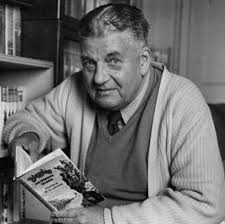
Sebastian Faulks

Sebastian Faulks is a British author known for his novels, short stories, and works of journalism. He was born on April 20, 1953, in Doncaster, England. Faulks studied English at Emmanuel College, Cambridge, where he developed a deep interest in literature.

Faulks gained widespread acclaim with his novel “Birdsong,” published in 1993, which explores the impact of World War I on personal lives and relationships. His writing often reflects themes of love, loss, and historical context, blending rich character development with vivid settings.

In addition to “Birdsong,” he has written several other notable works, including “Charlotte Gray,” “The Fatal Englishman,” and “Engleby.” Faulks is also recognized for his efforts in reviving the character of James Bond in “Devil May Care,” published in 2008, which was well-received by both fans and critics.

Throughout his career, Faulks has received various literary awards and honours, solidifying his reputation as a significant voice in contemporary British literature.