Milligan the Miser (Inspired by Christmas Carol by Charles Dickens)

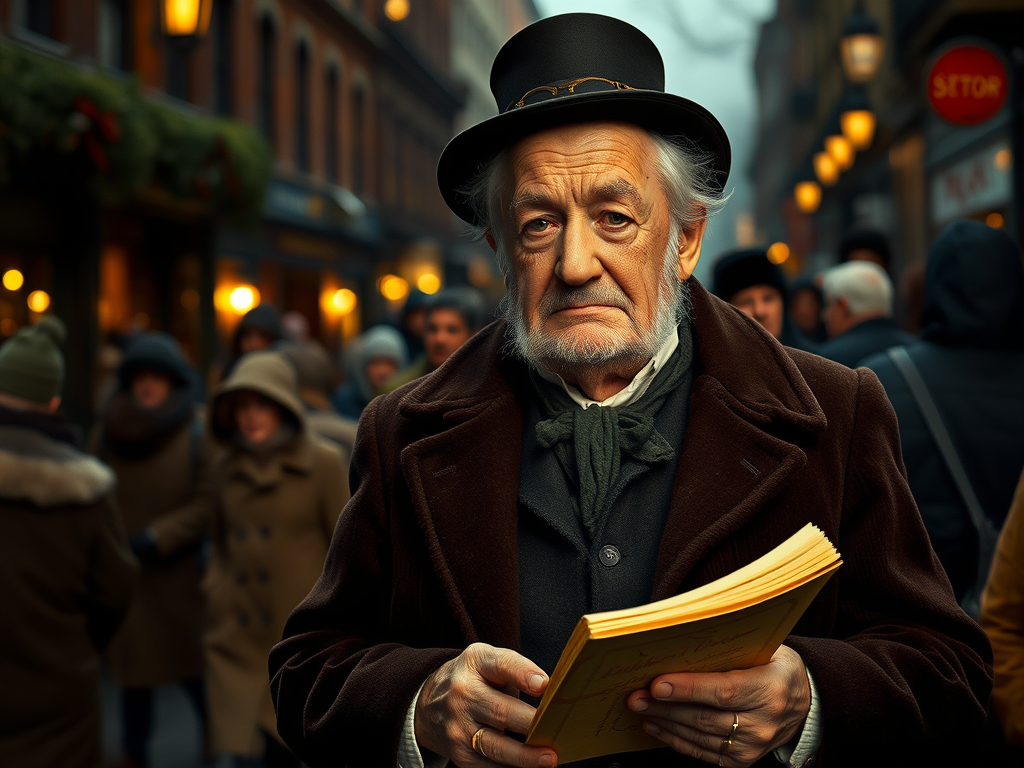
Once upon a time, in a small, frostbitten town, there lived a man named Milligan the Miser. Milligan was notorious for his disdain for Christmas and children. As the holiday season approached, he would retreat to his dimly lit home every year, avoiding the festive cheer that filled the streets. He loathed the laughter of children building snowmen, the carolers singing joyfully, and the bright decorations adorning every house but his. Milligan hoarded his wealth, counting every penny like a precious gem. He believed showing generosity showed weakness and took pride in his solitude. The townsfolk whispered about him, shaking their heads at the old man who seemed to embody the very spirit of Scrooge.

One freezing Christmas Eve, as snowflakes danced outside his window, Milligan sat alone by the fire, grumbling about the holiday. Suddenly, he was jolted awake by a strange noise. It sounded like laughter, but not the kind he detested. This laughter was light and filled with joy, echoing from outside his window. Curious, he peeked outside. To his astonishment, he saw a group of children gathered in the yard across the street. They were building a snowman, their cheeks flushed with excitement. At that moment, a memory flickered in Milligan’s mind—a memory of his childhood, when he once loved Christmas when the laughter had filled his home. But as quickly as the memory appeared, it vanished, replaced by his familiar bitterness. Milligan the Miser closed the curtain, determined to return to his solitude. Yet, as he lay back down, a strange warmth enveloped him, and he drifted into a deep sleep.

That night, Milligan was visited by three spirits. The first, the Ghost of Christmas Past, showed him scenes from his youth—joyful Christmas mornings filled with laughter and love. He saw himself as a boy, running down the stairs to find gifts and family gathered around a tree, their faces glowing with happiness. Tears filled his eyes as he remembered what he had lost.

The second spirit, the Ghost of Christmas Present, revealed the joy that surrounded him. Milligan watched as families celebrated, sharing meals and laughter. He saw the children he had dismissed, their innocence and joy illuminating the dark winter night. He felt a pang of longing for the first time—a desire to be part of their happiness.

Finally, the Ghost of Christmas Yet to Come appeared, showing Milligan a bleak future. He saw himself alone, forgotten, his wealth turning to dust. The town had moved on without him, and the children’s laughter was replaced by silence. Milligan felt a deep sorrow; he realized that his miserly ways had cost him the warmth of human connection.

When he awoke, it was Christmas morning. The sun streamed through his window, and Milligan felt a spark of joy for the first time in years. He quickly dressed and rushed outside, determined to change his ways. He visited the local bakery, buying sweets and treats to share. He filled his arms with gifts and headed to the town square, where children played.

“Happy Christmas!” he called out, his voice booming with newfound cheer.

The children turned, surprised, but their faces lit up with smiles. Milligan handed out gifts, sharing the joy he had long denied himself. He laughed with them, feeling the warmth of community wrap around him like a cosy blanket. As the day unfolded, Milligan found himself surrounded by laughter and love. The townsfolk welcomed him with open arms, their hearts warmed by his transformation. No longer was he Milligan the Miser; he had become Milligan the Generous, a man who had learned the true spirit of Christmas. From that day on, Milligan embraced the holiday season, filling his home with laughter and joy. He discovered that giving brought him more happiness than hoarding ever had. And every year, as Christmas approached, he looked forward to the festivities and the children’s laughter that filled the air—reminding him of the magic of connection he had once forgotten. 

Image by AI

William Wordsworth

William Wordsworth (1770-1850) was a renowned English Romantic poet who, along with Samuel Taylor Coleridge, helped launch the Romantic Age in English literature with their joint publication “Lyrical Ballads” in 1798. Wordsworth is known for his lyrical poetry that often celebrates nature’s beauty, the individual’s emotions, and the human mind’s power.

Some of Wordsworth’s most famous works include poems like “Lines Composed a Few Miles Above Tintern Abbey,” “I Wandered Lonely as a Cloud” (commonly known as “Daffodils”), and “The Prelude,” which is considered one of the greatest autobiographical poems in the English language. Wordsworth’s poetry often explores memory, childhood, imagination, and the relationship between humanity and nature. He believed that poetry should be accessible to the common people and spontaneously overflow with powerful feelings.

Throughout his life, Wordsworth was closely associated with the Lake District in England, where he drew much of his inspiration from the landscape’s natural beauty. His work significantly influenced subsequent poets and writers, and he is widely regarded as one of the greatest poets in the English literary tradition. 

Elias

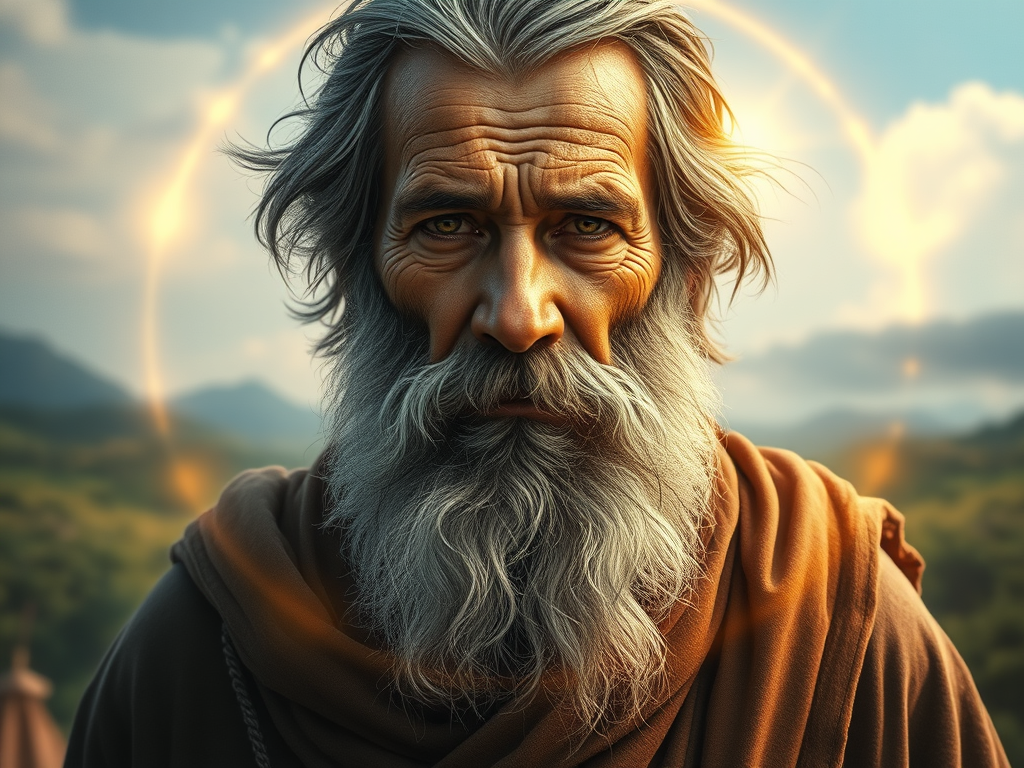
Once upon a time, in a quiet village nestled between rolling hills, there lived an old man named Elias. Known for his wisdom and gentle spirit, Elias was often seen tending to his garden or sharing stories with the village children. Few knew of his past; he had once been a renowned scholar and adventurer who travelled the world searching for knowledge and truth. One fateful day, a dark cloud descended upon the land. An ancient evil, long thought vanquished, had awakened. Creatures of shadow began to emerge, spreading fear and chaos. The villagers were terrified, and many fled their homes, believing nothing could save them.

Elias, however, felt a familiar stirring within him. He remembered the old prophecies about the “Keeper of Light” rising in times of darkness. Determined to protect his home, he gathered his few belongings and set off on a quest to confront the evil that threatened the world. His journey led him to the Whispering Woods, where he sought the wisdom of the ancient spirits. They revealed that the source of the darkness was a powerful crystal hidden deep within the Caves of Despair. Only by uniting the fragments of the Light Stone scattered across the land could he hope to confront the malevolence.

Elias travelled far and wide, facing numerous challenges along the way. He helped a village beset by drought by teaching them sustainable farming techniques, earning the first fragment of the Light Stone. He rescued a trapped beast in the mountains, gaining another fragment in gratitude. Each act of kindness brought him closer to his goal and rekindled hope in the hearts of those he encountered. Finally, after many trials, Elias gathered all the fragments and made his way to the Caves of Despair. Inside, he faced the embodiment of darkness itself—a towering figure wreathed in shadows. With courage in his heart, Elias held the Light Stone high, channelling the love and kindness he had shared throughout his journey.

A brilliant light erupted from the stone, clashing with the darkness. The power of his compassion and bravery pierced through the shadows, banishing the evil that had plagued the land. As the light spread, it illuminated the cave and transformed the darkness into shimmering stars, restoring balance to the world. Exhausted but triumphant, Elias returned to his village, where he was greeted as a hero. Yet, he humbly declined the title, choosing instead to continue his quiet life among the people he loved. Inspired by his bravery and kindness, the villagers began rebuilding their lives and spreading their lessons. Elias spent his remaining years sharing stories of hope and resilience, reminding everyone that true strength comes not from power or might but from compassion and the willingness to act in the face of adversity. And so, the old man who saved the world became a cherished legend, his tale whispered through generations, a beacon of light against the darkness. 

Image by AI

C.S. Lewis

Clive Staples Lewis, commonly known as C.S. Lewis, was a British writer and academic. He is best known for his works of fiction, especially “The Chronicles of Narnia,” a series of seven fantasy novels that have become classics of children’s literature. Lewis was also a renowned Christian apologist, known for books such as “Mere Christianity” and “The Screwtape Letters,” in which he defended and explained the Christian faith.

In addition to his fiction and apologetic works, Lewis was a scholar of medieval literature and a fellow at Oxford University and Cambridge University. He was close friends with J.R.R. Tolkien, the author of “The Lord of the Rings,” and was a member of the informal literary group known as the Inklings, which met regularly to discuss literature and share their work.

C.S. Lewis’s writing continues to be widely read and influential, both in the fields of literature and theology. Although he passed away in 1963, his works remain popular and have been adapted into films, television series, and stage plays. 

The Blade of Elys

In a world where legends intertwine with the fabric of reality, there lay a magical sword known as the Blade of Elys. Forged over ten thousand years ago by the ancient gods, this sword was imbued with the power to restore peace and vanquish darkness. Its hilt was adorned with intricate engravings that shimmered like stars, and the blade gleamed with an ethereal light, said to be the essence of hope itself.

The tale begins with Aeloria, a fierce warrior of the Eldrin tribe. Her people lived in harmony with nature, but their peace was shattered when the Shadow Wraiths, malevolent spirits from the Netherrealm, threatened to engulf the world in despair. The skies darkened, and a chilling fear gripped the heart of every living being. Aeloria, driven by a vision of a radiant sword and a call from the gods, embarked on a perilous journey to the Sacred Caverns of Lumina. Deep within, she discovered the Blade of Elys, resting atop a pedestal bathed in celestial light. She felt a surge of power and purpose as she grasped its hilt. With the sword in hand, Aeloria united the fragmented tribes of the land, rallying them against the encroaching darkness. In the heart of the Valley of Whispers, Aeloria faced the Wraith King, a creature born from the very shadows it sought to spread. The battle raged for days, echoing with the clash of steel and the cries of warriors. Yet, with a final, resounding strike of the Blade of Elys, Aeloria shattered the Wraith King’s essence, dispersing the shadows and bringing light back to the realm. The tribes celebrated her as a hero. Aeloria, knowing the sword’s power was too great for any one person, entrusted it to the Eldrin Council, vowing to protect it for future generations.

Centuries passed, and the sword lay dormant, waiting for the next worthy hero. That hero arrived in the form of Thorian, a humble blacksmith’s son from the village of Eldergrove. Known for his unwavering courage and kind heart, Thorian lived a simple life, unaware that destiny had greater plans for him. When a fierce dragon named Zephyrax descended upon the land, scorching villages and hoarding treasures, Thorian felt the call of destiny. Guided by dreams of Aeloria and whispers of the past, he sought the Blade of Elys, hidden deep within the Whispering Woods. Upon retrieving the sword, Thorian confronted Zephyrax atop the fiery peaks of Mount Solara. The dragon roared, its flames threatening to consume all. But Thorian, with the guidance of the sword, harnessed the power of the winds. The battle was fierce, but he struck the beast’s heart with a swift and decisive blow, releasing a torrent of fire into the sky. The skies cleared, and peace returned as the dragon’s hoard was shared among the people, ensuring prosperity.

Millennia later, the world faced a new threat: the Veil of Sorrow, a dark mist that drained joy and hope from the people’s hearts. Lyra, a gifted mage with a deep connection to nature, felt the sword’s pull as she wandered the Whispering Woods. She found the Blade of Elys, still radiant and powerful, waiting for her to wield it. Lyra journeyed to the source of the Veil, a cursed grove where sorrowful spirits lingered. With the sword, she channelled the ancient magic of the earth, transforming the blade into a beacon of light. As she faced the spirit of despair, she spoke words of love and remembrance, reminding the spirits of their past joys. The sword glowed brightly, and the mist began to lift, revealing the world’s beauty beneath. The spirits were freed, and harmony was restored.

Through the ages, the Blade of Elys symbolised hope and unity. Each hero, Aeloria, Thorian, and Lyra, left their mark on history, their stories woven into the very fabric of the land. The sword itself, a silent guardian, rested in the Eldrin Council’s sanctuary, awaiting the next hero who would rise in the face of darkness. As the years turned into aeons, the tales of the Blade of Elys echoed through the mists of time, reminding all that true strength lies not in the sword itself but in the hearts of those who wield it. And so, the legacy of peace and courage continued, a timeless reminder that hope would always shine through, even in the darkest of times. The stories of these heroes became legends, told around campfires and recorded in ancient tomes, inspiring generations to come. The Blade of Elys, a beacon of hope, stood as a testament to the enduring spirit of those who dared to dream and fight for a better world. 

Image by AI