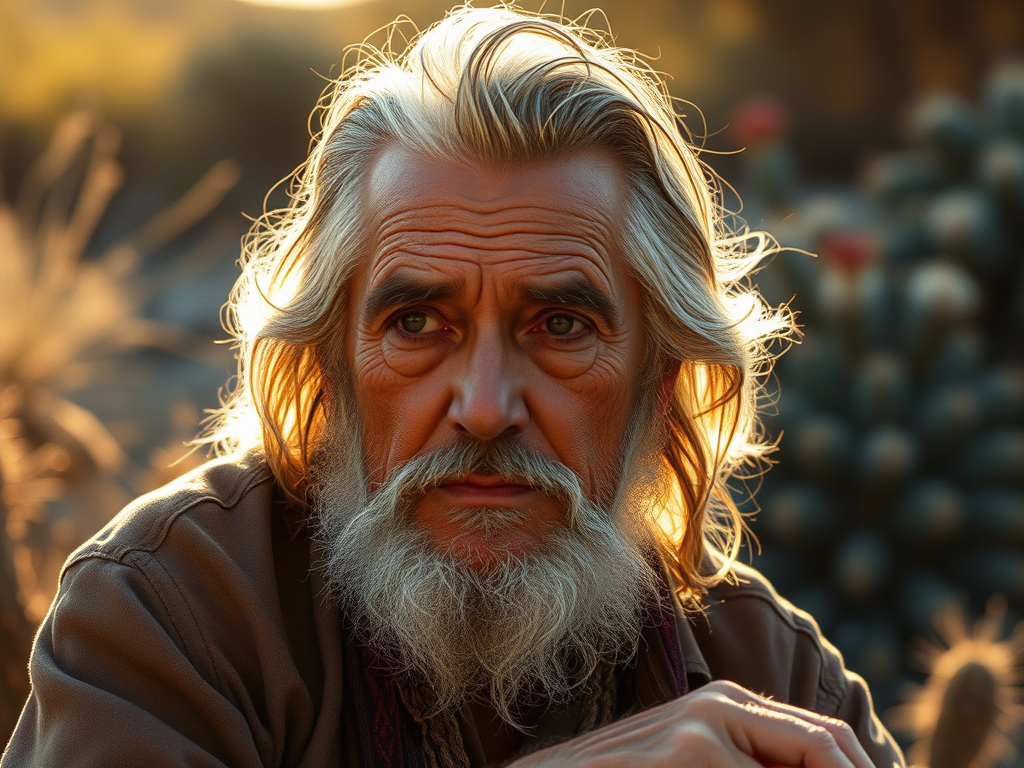
Marcus of Doria, the man who could never be King.

Once upon a time, a man named Marcus lived in the prosperous kingdom of Doria. Marcus was a kind and noble soul known throughout the land for his courage, wisdom, and unwavering dedication to the kingdom. He was a skilled warrior, a trusted advisor, and a beloved friend to all who knew him. Marcus was born into a noble family with a long lineage of kings and queens. However, fate had a different path in store for him. Despite his royal blood, Marcus would never ascend to the throne. The kingdom’s laws dictated that only the firstborn son of the reigning monarch could inherit the crown, and Marcus was not that son.

Many in the kingdom saw this as a significant loss. Marcus possessed all the qualities of a great leader, integrity, compassion, and strength of character. He deeply understood the people’s needs and envisioned a brighter future for Doria. But despite his qualifications, he could never be king. Instead, Marcus dedicated his life to serving the kingdom in other ways. He became a trusted advisor to the king, offering counsel and guidance in times of peace and war. He led the kingdom’s armies to victory in battles against invaders and defended the realm against threats from within and without.

Marcus’s loyalty and selflessness endeared him to the people of Doria even more than if he had worn the crown. He was a beacon of hope in times of darkness and a pillar of strength in times of uncertainty. The kingdom flourished under his leadership even though he would never be king. In the end, Marcus’s legacy was not one of titles or crowns but of love and service. He showed the people of Doria that true greatness is not measured by the position one holds, but by the impact one has on the lives of others. And so, despite his lineage, Marcus would always be remembered as a king in the hearts of the people he served. 

Image by AI

The Elephant who forgot!

An elephant named Ellie lived in the heart of a lush, vibrant jungle. Ellie was known far and wide for her incredible memory. She could remember the location of every watering hole, every fruit tree, and every hidden path in the jungle. Her memory was a source of pride for her, and the other animals often came to her for guidance and advice. One day, a strange phenomenon occurred in the jungle. Ellie woke up with a peculiar feeling of fuzziness in her mind. She initially shrugged it off, thinking it was just a passing moment of forgetfulness. However, as the day went on, Ellie found herself forgetting simple things – where she had left her favourite tree to scratch her back, the way to the river where she liked to bathe, and even the names of some of her closest friends in the jungle.

The news of Ellie, the elephant who could not remember, spread quickly through the jungle. The animals were shocked and afraid. If Ellie, with her legendary memory, could forget, what hope was there for the rest of them? The jungle shook with fear as uncertainty loomed over them. Without Ellie’s guidance, the animals felt lost and vulnerable. They gathered near the Great Banyan Tree, the ancient meeting place of the jungle, to discuss what to do. As the animals debated and worried, a wise old owl spoke up.

“Perhaps Ellie’s forgetfulness is a test for us all,” he said. “Instead of relying on her memory, we must unite as a community to overcome this challenge.”

Inspired by the owl’s words, the animals supported Ellie and each other during this difficult time. They helped Ellie remember what she had forgotten and worked together to navigate the jungle and keep each other safe. As days turned into weeks, Ellie’s memory slowly began to return. The jungle settled back into its usual rhythm, but this time with a more profound sense of unity and cooperation among the animals.

Ellie never forgot the time when she, the elephant who did forget, brought the jungle together in a way that had never been seen before. The memory of that time reminded all the animals that even in moments of fear and uncertainty, they could overcome anything by standing together as one. 

Images by AI

Carlos Castaneda

Carlos Castaneda (1925-1998) was an American author and anthropologist known for his controversial and influential series of books on shamanism and spirituality. Castaneda’s most famous work is “The Teachings of Don Juan: A Yaqui Way of Knowledge,” first published in 1968. This book and the subsequent volumes in the series purported to chronicle Castaneda’s experiences studying under a Yaqui Indian shaman named Don Juan Matus in the deserts of the American Southwest.

In his books, Castaneda describes his initiation into the world of shamanism, detailing his encounters with Don Juan and the teachings he received on topics such as perception, consciousness, reality, and the nature of existence. His writing style blends ethnography, personal narrative, and philosophy, creating a unique and engrossing account of his spiritual journey. Despite the popularity of his books, Castaneda’s work has been met with scepticism and criticism from various quarters. Some scholars and anthropologists have questioned the accuracy of his accounts, suggesting that he may have embellished or fabricated elements of his experiences with Don Juan. Others have raised concerns about the ethical implications of Castaneda’s interactions with indigenous cultures and the commercialization of his teachings.

Nevertheless, Castaneda’s books have had a lasting impact on popular culture and the New Age movement. His writings have inspired generations of readers to explore alternative spiritual practices, indigenous wisdom, and the boundaries of human consciousness. Whether viewed as a profound spiritual guide or a controversial figure in the history of anthropology, Carlos Castaneda remains a compelling and enigmatic figure in the realm of mystical literature. 

Image by AI

H.G. Wells

Herbert George Wells, known as H.G. Wells, was a prominent English writer born on September 21, 1866, in Bromley, Kent, England. He is best known for his science fiction novels and works of social commentary. Wells was born into a working-class family. He struggled with health issues and financial constraints throughout his childhood. Despite facing challenges, Wells won a scholarship to the Normal School of Science in London, where he studied under Thomas Henry Huxley. He later earned a degree in biology.

Wells began his writing career as a novelist and journalist. He gained fame with works like “The Time Machine” (1895), “The Invisible Man” (1897), and “The War of the Worlds” (1898), which established him as a pioneer of science fiction. In addition to his science fiction, Wells wrote extensively on social and political issues. Works like “The War in the Air” (1908) and “The Shape of Things to Come” (1933) reflected his concerns about humanity’s future. He was known for his unconventional personal life. He had numerous affairs and marriages, including his relationship with writer Rebecca West. As he grew older, Wells’ writing shifted towards non-fiction and social criticism. He continued to write and lecture on various topics until his death. He is considered one of the founding fathers of science fiction and a key figure in the genre’s development. His works have had a lasting impact on popular culture and continue to be studied and adapted today.

H.G. Wells passed away on August 13, 1946, in London, leaving behind a rich literary legacy that has inspired generations of writers and readers. 

Image by AI

The Sacred Spear

Once upon a time, in a realm shrouded in mystery and magic, there existed a sacred spear known as “Aetherion’s Grace.” This legendary weapon was said to be forged by the gods themselves and imbued with divine power to protect the land from darkness and chaos. The spear was crafted from a rare metal found only in the heart of the deepest mountains. Its tip sparkled with a brilliant light that could pierce through the shadows of evil. Its handle was adorned with intricate runes that glowed with soft, ethereal light, and those who wielded it were said to be blessed with great strength and courage. Legends spoke of a chosen hero destined to wield Aetherion’s Grace in times of great peril, to stand against the forces of darkness that threatened to consume the world. Many brave warriors sought the spear, but only the purest of hearts and the strongest of spirits could hope to claim it as their own.

One day, a young warrior named Elara heard the call of the gods and set out on a quest to find the sacred spear. Along her journey, she faced many trials and challenges, battling fierce monsters and overcoming treacherous obstacles. But with determination and unwavering faith in her cause, she pressed on. Finally, after a long and arduous journey, Elara reached the hidden temple where Aetherion’s Grace was kept. As she approached the altar where the spear lay, a blinding light filled the chamber, and the voice of the gods echoed through the halls, proclaiming her as the chosen one.

Elara lifted the sacred spear with trembling hands, feeling its power course through her veins. She knew her true test was yet to come, for a great darkness loomed on the horizon, threatening to engulf the land in shadow. As the forces of evil gathered for their final assault, Elara stood tall, her grip firm on Aetherion’s Grace. With a fierce battle cry, she charged into the fray, the light of the spear shining like a beacon of hope in the darkness. The battle raged on, but Elara fought with unmatched skill and bravery, her every strike guided by the divine power of the sacred spear. Ultimately, she emerged victorious, the forces of darkness vanquished, and the land was saved from destruction.

And so, Elara became a legend in her own right, known throughout the realm as the hero who wielded Aetherion’s Grace and saved the world from certain doom. The sacred spear remained a symbol of hope and courage for generations to come, a reminder that even in the darkest of times, the light of bravery and righteousness would always prevail. 

Image by AI