The Lost Tomes

In a quaint village nestled between misty hills and whispering woods lived an old man named Elias. His hair was as white as the clouds above, and his eyes twinkled with the kind of wisdom that only time can bestow. Elias was known for his vast collection of ancient books, which he had gathered over the decades—tomes filled with forgotten lore, mystical spells, and the stories of the world long past. Every day, he would wander through the village, his weathered leather satchel slung over his shoulder. The satchel was as old as Elias, its surface cracked and worn, telling tales of countless travels and adventures. Inside, the pages of the books were yellowed and frayed, each a treasure trove of knowledge he often shared with curious villagers, especially the children who gathered around him, wide-eyed and eager to learn.

One fateful autumn afternoon, as leaves danced gently, Elias set out for the nearby forest, seeking solace among the ancient oaks. He often found inspiration there, a connection to the earth that rejuvenated his spirit. However, as he walked deeper into the woods, the sun dipped below the horizon, casting long shadows ominously around him. Lost in thought and the beauty of the twilight, Elias didn’t notice when he brushed against a low-hanging branch. The satchel snagged, and with a sudden tug, the strap broke. Books tumbled out, scattering like leaves caught in a gust of wind. Distracted, Elias bent to gather them, but in his haste, he misjudged the distance and stumbled, falling to the ground. When he finally rose, the satchel was gone. A wave of panic washed over him as he searched the area, his heart racing. The sun had set, and the woods were now cloaked in darkness. The only sounds were the rustle of leaves and distant calls of night creatures. Elias knew he had to return to the village, but losing his precious books—a lifetime of knowledge—was unbearable. He retraced his steps, hoping against hope that he might find the satchel. Hours passed, and just as despair began to seep into his heart, he caught a glimmer of light in the distance. Curious, he followed the light and soon stumbled upon a small clearing. To his astonishment, there sat a group of children from the village, their faces illuminated by a flickering campfire. They were gathered around the very books that had spilt from his satchel, their eyes wide with wonder as they flipped through the pages, enchanted by the stories contained within.

“Elias!” they cried, spotting him. “Look what we found! These books are amazing!”

Touched by their innocent joy, Elias approached slowly, a smile breaking across his face. “I’m glad you’ve discovered them,” he said, kneeling beside them. “Each book holds a piece of history, a spark of magic.”

The children eagerly shared their favourite tales, laughter ringing through the trees. For the first time that evening, Elias felt a warmth in his heart that overshadowed his earlier worry. They spent hours together, the fire crackling as he recounted stories that brought the words in the books to life. When the night grew deep and the stars twinkled brightly overhead, Elias realized that perhaps losing the satchel was not a loss. He had found something far more precious: a community united in the love of stories, a legacy that would carry on long after the last page was turned. As dawn broke, painting the sky with hues of orange and gold, the children returned the books to Elias, their eyes sparkling with excitement and dreams. He smiled, placing the books back into his satchel, now more a symbol of shared knowledge than a mere leather and fabric bag.

From that day on, Elias continued to venture into the woods, always with his satchel in tow. But now, he often brought the children along, their laughter echoing through the trees as they discovered new tales together. And while the satchel remained worn and battered, it was a testament to Elias’s journey and the friendships that blossomed through the power of stories—timeless treasures that would never be lost. 

David Walliams

David Walliams is a British author, comedian, and television personality best known for his children’s books and his work on the television show “Britain’s Got Talent.” His literary work includes a variety of popular children’s novels, often characterized by humour, engaging characters, and heartwarming themes. Some of his notable books include:

1. “The Boy in the Dress” – A story about a boy who enjoys wearing dresses and explores themes of identity and acceptance.
2. “Mr. Stink” – A tale about a homeless man and a young girl who befriends him, highlighting compassion and understanding.
3. “Gangsta Granny” – A humorous adventure featuring a boy and his grandmother, who turns out to be a retired jewel thief.
4. “Awful Auntie” – A story about a young girl who must outsmart her wicked aunt to save her family home.

Walliams’ books often include illustrations by artistic collaborator Tony Ross, making them visually appealing to young readers. His writing has received acclaim for its ability to tackle serious topics in an accessible and entertaining manner.

In addition to his literary accomplishments, Walliams has appeared in numerous television shows, including sketches for “Little Britain,” where he starred alongside Matt Lucas. His work blends comedy with poignant social commentary, making him a versatile figure in the entertainment industry. 

The Key

Once upon a time, in the ancient land of Eldor, there lived a once-mighty wizard named Eldrin. In his youth, Eldrin commanded the forces of nature, conjured storms, and spoke with the stars. But as time passed, his magic waned, and he found himself in a world that no longer believed in the wonders he once created. Now, he was just a shadow of his former self, living in a crumbling tower at the edge of the Whispering Woods. Eldrin spent his days reminiscing about the grandeur of his past, often gazing into the crystal ball that had once revealed the secrets of the universe. Yet, all he saw now was his own reflection, a reminder of lost power. His heart ached with longing for the magic that had defined him.

One fateful evening, while wandering through the forest in search of herbs for his dwindling potions, he stumbled upon an ancient oak tree. Its gnarled roots twisted around a curious stone pedestal, upon which lay a small, ornate key. It glimmered in the fading light, engraved with symbols that seemed to pulse with energy. Intrigued, Eldrin picked it up, feeling a surge of warmth flow through his fingers. As he turned the key, a strange sensation overcame him; it was like the key was whispering secrets of untold power. Eldrin hurried back to his tower, where he placed the key on his workbench and studied it for hours. He realized this was no ordinary key; it was a key to a hidden realm where magic thrived.

Driven by curiosity and desperation, Eldrin began to decipher the symbols etched into the key. After days of research, he discovered that to unlock the realm, he needed to recite an incantation at the stroke of midnight during the next full moon. The thought of reclaiming his magic filled him with hope, and he prepared for the night with fervor. When night finally arrived, Eldrin stood before an ancient mirror, clutching the key tightly. As the moonlight streamed through his window, he recited the incantation. The air shimmered, and the mirror rippled like water, revealing a gateway to the hidden realm. With a deep breath, he stepped through the portal. Eldrin found himself in a vibrant world teeming with magical creatures and lush landscapes. The air was thick with enchantment, and he felt a spark ignite within him. As he explored this realm, he encountered wise beings and learned forgotten spells that revitalized his craft.

But Eldrin soon realized that the key’s true power was not just to restore his magic; it was to connect him with the essence of magic itself. He understood that magic was not merely a tool to wield but a bond that intertwined all living things. With his newfound knowledge, Eldrin returned to Eldor, his heart brimming with magic once more. He used his powers to heal the land, rekindle hope in the people’s hearts, and teach them about the wonders of the world around them. No longer just a wizard, he became a guardian of magic, ensuring it would never fade away again. And so, Eldrin, the wizard with no magic left, became a legend, reminding everyone that sometimes, the greatest magic lies not in spells or incantations but in the connections we forge and the love we share with the world. 

An Insatiable Passion for Writing

Once, in a small town, there lived a man named Victor, known for his insatiable passion for writing. His small apartment was cluttered with stacks of paper, overflowing notebooks, and a typewriter that had seen better days. Victor believed the world was shrouded in mysteries that desperately needed to be unveiled. Every morning, he rose before dawn, fueled by an unquenchable thirst for knowledge and a sense of duty to inform others. He would pen down the secrets he stumbled upon—hidden histories, forgotten truths, and conspiracies that loomed large in the shadows. His writings ranged from the mundane to the profound; he wrote about everything from the local legends of his town to grand political intrigues that spanned continents.

Victor’s obsession with writing grew as he uncovered more secrets. He believed the truth could change the world and was determined to share it. He spent hours in libraries, searching for ancient texts, interviewing elderly townsfolk, and even delving into the internet’s dark corners. His fingers danced across the typewriter keys as he poured out the revelations he unearthed. However, his relentless pursuit began to take a toll on his personal life. Friends and family grew concerned as they noticed Victor becoming increasingly reclusive. Invitations to gatherings went unanswered, and his once vibrant social life faded into the background, overshadowed by his compulsion to write. Still, he pressed on, convinced that every secret he unveiled was a step towards enlightenment for humanity.

One day, while rummaging through an old bookstore, Victor stumbled upon a dusty manuscript that spoke of a long-lost artefact said to hold the knowledge of the universe—a key to understanding the very fabric of existence. This ignited a new fire within him. He became obsessed with the idea of finding this artefact, believing that it would validate his work and serve as a beacon of truth for the world. Victor’s quest led him on a journey across the globe, from ancient ruins in Egypt to the mountains of Tibet. He documented every encounter, every whisper of wisdom he gathered along the way. His writings transformed into a grand narrative, a tapestry woven with threads of history, culture, and the universe’s secrets.

As he neared the end of his journey, Victor realized that the true secret was not the artefact itself but the connections he made and the stories he shared. He returned home, his heart full and his mind racing with ideas. With a renewed sense of purpose, he began to compile his works into a book that would reveal the secrets he had uncovered and inspire others to seek their truths. When the book was finally published, it became a sensation. People were drawn to Victor’s fervour and passion, and his words resonated with those yearning for understanding in a chaotic world. He held readings and discussions, fostering a community of seekers who gathered to share their secrets and stories.

Victor transformed from a solitary writer into a catalyst for change, showing that while secrets might be hidden, the quest for truth is a shared journey. Ultimately, he learned that writing was not just about revealing secrets but about connecting with others and sparking the flame of curiosity in every heart. And in that, Victor found his true purpose—a lifelong storyteller dedicated to illuminating the shadows of the unknown.

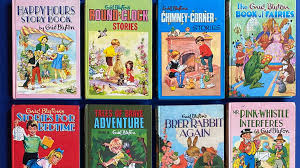
Enid Blyton

Enid Blyton (1897–1968) was a prolific British author known for her children’s books, which have captivated young readers for generations. She is best known for her series, including “The Famous Five,” “The Secret Seven,” and “Malory Towers,” which often feature themes of adventure, friendship, and mystery. Born in East Dulwich, London, Blyton had a passion for storytelling from a young age. She worked as a teacher and a governess before dedicating herself to writing full-time. Her first book was published in 1922, and she quickly gained popularity, producing over 700 titles throughout her career.

Blyton’s writing is characterized by its straightforward style, engaging plots, and relatable characters, making it accessible for children. Her work often reflects her love for nature and the outdoors, with many stories set in rural landscapes. Despite her success, Blyton’s work has faced criticism over the years for its perceived lack of depth and outdated themes. Nevertheless, her books have remained in print and continue to be loved by new generations.

Enid Blyton’s legacy endures, and her influence on children’s literature is significant, inspiring countless readers and writers alike.