Philippa Gregory is a British historical novelist known for her works in historical fiction, particularly historical romances and thrillers. She was born on January 9, 1954, in Nairobi, Kenya. Gregory’s most famous works include “The Other Boleyn Girl,” which tells the story of Mary Boleyn and her sister Anne Boleyn, who both had relationships with King Henry VIII. This novel was adapted into a successful film in 2008, starring Natalie Portman and Scarlett Johansson.
She has written many other novels set in various historical periods, including the Tudor era, the Wars of the Roses, and other significant periods in British history. Some of her other notable works include “The White Queen,” “The Red Queen,” and “The Kingmaker’s Daughter.” Gregory’s writing is known for its rich historical detail, complex characterizations, and engaging storytelling. She often focuses on women’s lives in history and explores their roles and relationships in the context of the broader historical events of their time.
In addition to her novels, Philippa Gregory has written non-fiction works on the Wars of the Roses and the Tudor period. She is a popular and prolific author with a large and dedicated following of readers worldwide.
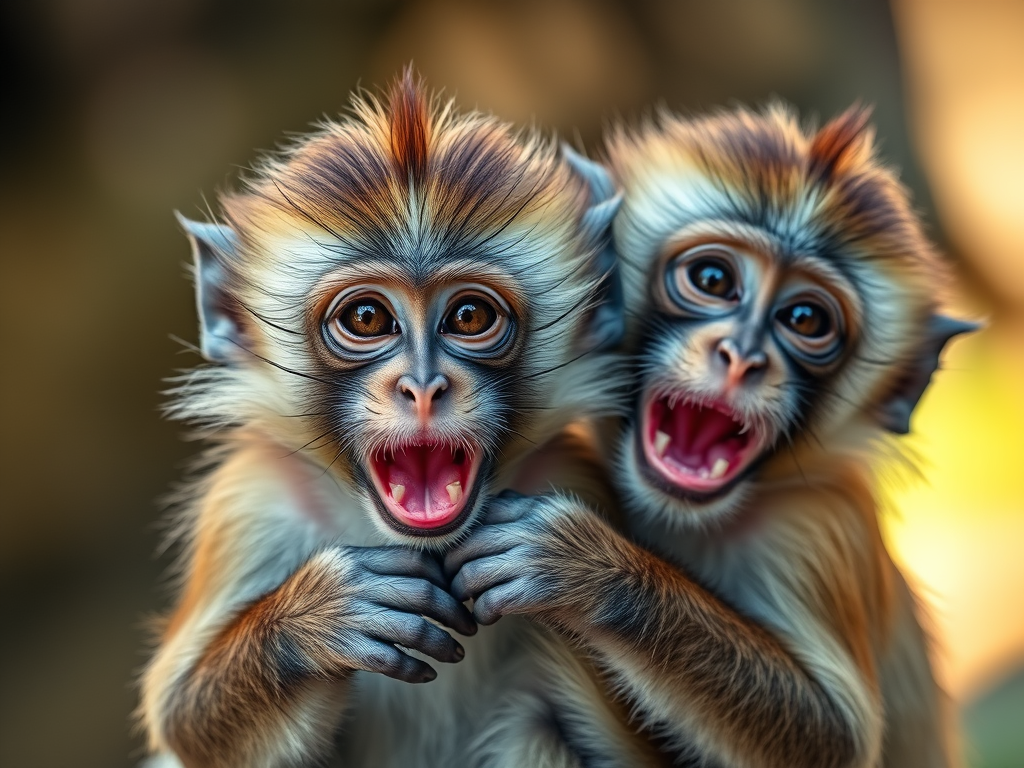
Once upon a time in a bustling city zoo, lived two identical twin monkeys named Max and Milo. They were the stars of their enclosure with their bright eyes, playful nature, and strikingly similar appearances. However, despite their playful antics for visitors, the twins felt a deep sense of unhappiness. Their days were filled with the same routines, the same visitors, and the same banana treats. They longed for adventure beyond the confines of their cage. One day, as they swung from branch to branch, Max had a brilliant idea.
“What if we use our identical looks to confuse the keepers? We could escape and explore the world beyond this zoo!”
Milo’s eyes sparkled with excitement.
“Yes! We can switch places! They won’t know who’s who!”
That night, as the zoo quieted down and the moon cast a silver glow, the twins put their plan into action. They practised their mimicry, copying each other’s movements and sounds. When morning came, the keepers arrived, unaware of the mischief about to unfold. As the keepers entered their enclosure, Max climbed high into the branches while Milo hung back, pretending to groom himself. When the keeper called out for them, Max swung down, but at the last moment, he let out a loud screech, startling the keeper. In the confusion, Milo took the chance to leap into the opposite corner, making it look like he was still in the same spot. The keepers were baffled.
“Wait, which one is which?” one of them exclaimed, scratching his head.
The twins exchanged mischievous glances, stifling their laughter. They knew they only had a short window before the keepers figured it out. As the day went on, the twins continued their clever ruse. They switched places during feeding time, and when the keepers tried to separate them, they would jump and play, making it impossible to tell who was who. The twins revelled in their newfound freedom to roam their enclosure without supervision, but they knew it was just a matter of time before the keepers caught on. That evening, when the zoo was closed to the public, Max and Milo knew it was time for the final phase of their escape. They waited until the keepers were distracted and then darted out of their enclosure, using the shadows to hide. They climbed over fences and squeezed through gaps, their hearts racing with excitement. Finally, they found themselves outside the zoo, standing in the cool night air. The world beyond was vast and filled with the sounds of nature. Max looked at Milo, his eyes wide with wonder.
“We did it! We’re free!”
With newfound courage, they ventured into the nearby park, trees towering above them like old friends. They swung from branches, chased fireflies, and feasted on wild fruit, their laughter echoing in the night. For the first time, they felt truly alive. As dawn broke, the twins knew they could not stay in the park forever. They missed the comfort of each other and the familiar routines, even if they were unhappy. So, they decided to return to the zoo, but not as prisoners. They would find ways to bring joy to their lives, using their cleverness to entertain not just visitors but also themselves. When they returned, the keepers were in disbelief, having searched high and low for the mischievous twins. Max and Milo resumed their antics, but now, with a sparkle in their eyes, knowing the world outside was filled with possibilities. They learned to embrace the zoo life with newfound joy, always planning little adventures and reminding each other that sometimes, happiness was a matter of perspective. And so, the twin monkeys lived on, not just as entertainers but as adventurers in their own right, forever bonded by their shared escapade and the spirit of freedom.
Dr. Seuss, whose real name was Theodor Seuss Geisel, was an American author and illustrator best known for his famous children’s books. He was born on March 2, 1904, in Springfield, Massachusetts, and passed away on September 24, 1991, in La Jolla, California. He wrote and illustrated over 60 books during his lifetime, many of which have become classics of children’s literature. Some of his most famous works include “The Cat in the Hat,” “Green Eggs and Ham,” “How the Grinch Stole Christmas!” and “Horton Hears a Who!”
Dr. Seuss received numerous awards for his work throughout his career, including the Pulitzer Prize, three Caldecott Honors, and three Academy Awards. His books have been translated into multiple languages and have sold millions of copies worldwide. His whimsical and imaginative stories often carried essential messages about tolerance, diversity, and environmental conservation. His unique writing style and iconic illustrations have made him one of the most beloved and influential children’s authors ever.
A boy named Septimus lived in the quaint village of Oldridge, nestled between rolling hills and dense forests. From a young age, Septimus was different. He was smaller than his peers, with a quiet demeanour that often made him feel overlooked. Yet, beneath his unassuming exterior lay a heart full of courage and an unwavering spirit. As Septimus grew older, the village faced challenges. A severe drought struck, leaving crops wilting and families in despair. Once vibrant and full of life, the villagers were burdened with worry. Many believed the drought was a punishment for their past mistakes, and fear began to take root in their hearts. While the adults lamented their fate, Septimus felt a flicker of determination ignite within him. He had always loved the stories of heroes who faced insurmountable odds and realized that perhaps it was time for him to become one of those heroes.
As the sun dipped below the horizon one evening, Septimus gathered his courage and climbed to the highest hill overlooking Oldridge. He gazed down at the parched fields and the worried faces of his neighbours. At that moment, he made a vow to himself: he would find a way to bring life back to their village. With a plan in mind, Septimus began to explore the ancient forest surrounding Oldridge. He remembered tales of a hidden spring that was said to have healing waters that could revive the land. The journey was fraught with challenges—thorns that scratched his arms, steep cliffs that tested his footing, and shadows that whispered doubt into his ears. But with each obstacle, Septimus drew strength from within, reminding himself of his purpose. After days of searching, he finally discovered the spring, a shimmering pool nestled among stones, surrounded by vibrant greenery. Septimus filled his small flask with the precious water, feeling a surge of hope as he returned to the village. When he arrived, the villagers were sceptical.
“How can a boy like you save us?” they asked, their voices tinged with doubt.
But Septimus stood tall, his confidence shining through.
“I believe we can revive our land if we work together,” he proclaimed.
With the water from the spring, Septimus led the villagers in a collective effort. They watered the crops, shared the precious liquid, and tended to the withering plants. Little by little, life began to return. Green shoots broke through the parched earth, and hope blossomed in the villagers’ hearts. As the days turned into weeks, the drought faded, replaced by the laughter of children and the joyful work of families. The village of Oldridge was once again vibrant, and Septimus, the boy who had once been overlooked, became a symbol of strength and resilience. Through his journey, Septimus learned that true strength comes not from physical prowess but from the courage to face adversity and the confidence to inspire others. His tale spread far and wide, reminding everyone that hope can emerge from the most unexpected places, even in the darkest times. And so, the village thrived, forever grateful for the boy who dared to believe in a brighter future.
James Redfield is an American author best known for his spiritual and self-help book, The Celestine Prophecy. He was born on March 19, 1950, in Birmingham, Alabama. James studied sociology at Auburn University and later received a Master’s in counselling from the University of West Florida. “The Celestine Prophecy” was self-published in 1993. The book blends adventure, spirituality, and insights into human consciousness. It became a bestseller and gained a large following, especially among readers interested in personal growth and spirituality. “The Celestine Prophecy” popularized ideas about synchronicity, energy flow, and spiritual growth. It inspired many readers to explore spirituality and personal development in new ways.
Redfield has written several other books, including “The Tenth Insight: Holding the Vision,” “The Secret of Shambhala: In Search of the Eleventh Insight,” and “The Twelfth Insight: The Hour of Decision.” His writings continue to inspire readers and spiritual seekers worldwide, and the books have been translated into multiple languages and have sold millions of copies. Overall, James Redfield is known for his contributions to spiritual literature and his ability to blend adventure storytelling with profound spiritual insights.



 Lazarus Carpenter - Author