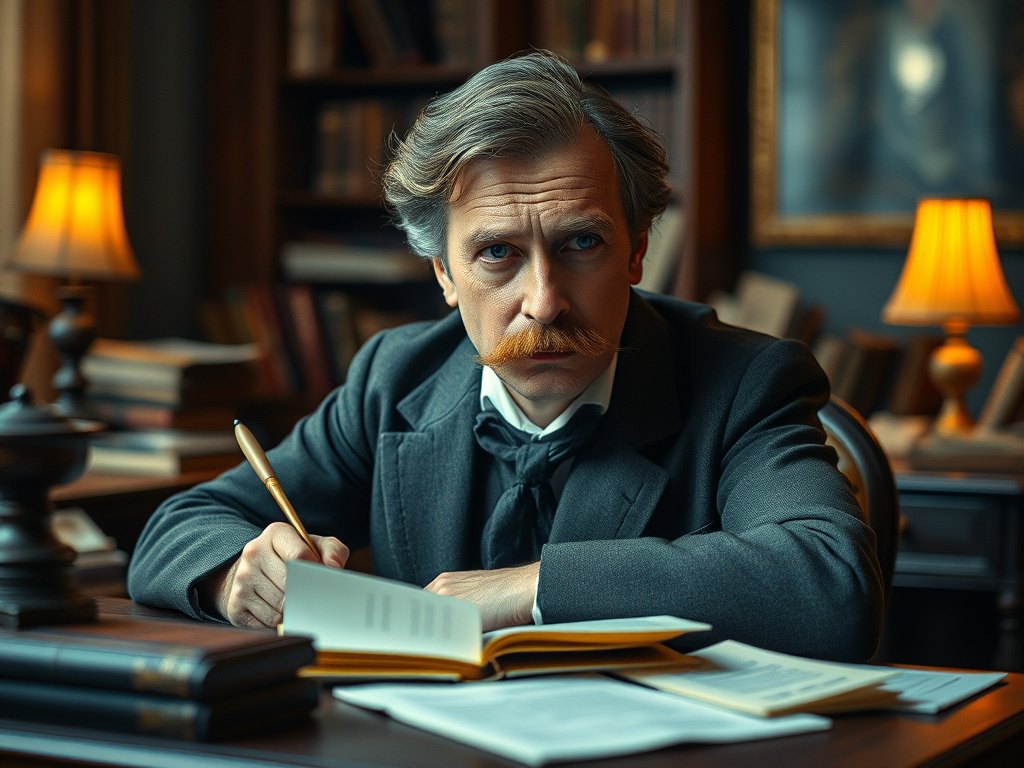
James Redfield is an American author best known for his spiritual and self-help book, The Celestine Prophecy. He was born on March 19, 1950, in Birmingham, Alabama. James studied sociology at Auburn University and later received a Master’s in counselling from the University of West Florida. “The Celestine Prophecy” was self-published in 1993. The book blends adventure, spirituality, and insights into human consciousness. It became a bestseller and gained a large following, especially among readers interested in personal growth and spirituality. “The Celestine Prophecy” popularized ideas about synchronicity, energy flow, and spiritual growth. It inspired many readers to explore spirituality and personal development in new ways.
Redfield has written several other books, including “The Tenth Insight: Holding the Vision,” “The Secret of Shambhala: In Search of the Eleventh Insight,” and “The Twelfth Insight: The Hour of Decision.” His writings continue to inspire readers and spiritual seekers worldwide, and the books have been translated into multiple languages and have sold millions of copies. Overall, James Redfield is known for his contributions to spiritual literature and his ability to blend adventure storytelling with profound spiritual insights.
Harold Robbins (1916-1997) was an American author known for his novels that often depicted the lives of the rich, powerful, and famous. He was one of the best-selling authors of all time, with his books selling over 750 million copies worldwide. Robbins was born in New York City and had a difficult childhood, growing up in poverty. He worked various jobs before finding success as a novelist. His first novel, “Never Love a Stranger,” was published in 1948 and was a commercial success.
Throughout his career, Robbins wrote over 25 novels, many of which were bestsellers. Some of his most famous works include “The Carpetbaggers,” “A Stone for Danny Fisher,” “The Betsy,” and “79 Park Avenue.” His books often featured themes of sex, power, money, and ambition. Critics frequently dismissed Robbins’ work as sensational and melodramatic, but readers were drawn to his fast-paced storytelling and larger-than-life characters. Despite the criticism, Robbins’ books were incredibly popular and adapted into several films and television series. Harold Robbins’ influence on popular culture and the literary world is undeniable. His novels have entertained millions of readers worldwide.
Nikolai Gogol, a prominent Russian writer of Ukrainian origin, lived from 1809 to 1852. He is considered one of the greatest authors in Russian literature and is known for his unique style and satirical approach to various societal issues. Gogol was born in the Ukrainian Cossack village of Sorochyntsi (now in Ukraine) in 1809. He studied at the Nizhyn Gogol Collegium and later moved to Saint Petersburg to work as a government clerk. His early works were heavily influenced by Ukrainian folklore and culture. Gogol’s most famous work is the novel “Dead Souls,” which satirizes the flaws of Russian society and bureaucracy. He is also known for his short stories, including “The Overcoat,” “The Nose,” and “The Diary of a Madman,” which often blend realism with elements of the fantastic and absurd. A master of the grotesque and the ridiculous, he used these elements to highlight society’s flaws and absurdities. His writing profoundly impacted subsequent Russian literature, influencing writers such as Fyodor Dostoevsky and Anton Chekhov. The works he achieved have been adapted into numerous films, plays, and operas. Gogol’s legacy extends beyond literature, as his name is often used to describe a particular style of dark humour and satire. Struggling with his faith and identity later led to a spiritual crisis, and he destroyed the second part of “Dead Souls” and many of his other manuscripts, possibly due to this crisis. Gogol died in 1852 under mysterious circumstances, and conflicting reports about the cause of his death exist. Nikolai Gogol’s works continue to be studied and celebrated for their wit, originality, and deep insights into human nature and society.
Agatha Christie, born Agatha Mary Clarissa Miller on September 15, 1890, in Torquay, Devon, England, was a renowned English writer known for her detective novels and short stories. She is considered one of the best-selling authors in history, and her works have been translated into many languages and adapted into numerous films, TV series, and plays. Agatha Christie was born into a wealthy upper-middle-class family. She was home-schooled and developed a love for reading and writing from an early age. In 1914, she married Archibald Christie, an aviator in the Royal Flying Corps. They had one daughter, Rosalind Hicks. The marriage ended in divorce in 1928.
Her first novel, “The Mysterious Affair at Styles,” featuring the iconic detective Hercule Poirot, was published in 1920. She went on to write over 60 detective novels, including classics such as “Murder on the Orient Express,” “Death on the Nile,” and “And Then There Were None.” Apart from Hercule Poirot, Agatha Christie created another famous detective character, Miss Marple, an elderly spinster with a knack for solving crimes in the village of St. Mary Mead. In 1926, Agatha Christie famously disappeared for 11 days, sparking a massive manhunt. She was eventually found staying at a hotel under a different name. The reasons for her disappearance remain a mystery to this day.
Agatha Christie continued to write and publish books throughout her life. She received numerous awards for her work and was appointed a Dame Commander of the Order of the British Empire in 1971. She passed away on January 12, 1976, at the age of 85. Christie’s works continue to be popular worldwide, and she is often referred to as the “Queen of Crime” for her contributions to the detective fiction genre. Her books are still widely read and adapted for various forms of media, ensuring that her legacy endures for generations to come.
Once, in a bustling town, there lived a man named Victor. He was known for his sharp tongue and bitter demeanour. Victor had built a fortress of solitude around himself, convinced that the world was filled with selfishness and cruelty. He scowled at children playing in the streets, rolled his eyes at neighbours who greeted him, and scoffed at the joy of others. To him, happiness was a façade that masked the harsh realities of life. One dreary day, as Victor wandered through the market, he overheard a group of villagers discussing a charity event to help the local orphanage. They spoke passionately about how they could make a difference in the lives of children who had lost everything. Victor rolled his eyes and muttered under his breath,
“Why bother? Nothing ever changes.”
Later that evening, as he returned home, Victor stumbled upon a small, injured dog lying in the alley. Instead of helping, he turned away, thinking,
“It’s not my problem.”
However, the dog’s whimpering tugged at something deep inside him. Against his better judgment, he approached the creature. Its big, sad eyes seemed to plead for compassion. With a reluctant sigh, Victor picked up the dog and took it to the vet. Sitting in the waiting room, he watched families come in and out, each filled with love and concern for their pets. For the first time, he felt a flicker of something he hadn’t experienced in years: connection. After treating the dog, Victor named him Max and took him home. Over the following weeks, Max’s joyful antics began to chip away at Victor’s hardened heart. The way the dog wagged his tail, greeted him at the door and curled up beside him at night slowly transformed Victor’s world. He found himself smiling more, laughing at Max’s playful nature, and even taking him on walks where he encountered friendly neighbours.
One day, as they strolled through the park, Victor noticed a group of children playing with a makeshift soccer ball. They invited him to join, and to his surprise, he felt a warmth spread through him as he kicked the ball back and forth. He felt the joy of being part of something larger than himself for the first time. While reflecting on his life that afternoon, Victor realized how much he had missed by shutting himself away from the world. The more he opened up to others, the more he discovered kindness and generosity were alive and well despite his previous beliefs. Fueled by this revelation, Victor channelled his energy into helping others. He joined the charity event he had once derided, bringing Max along as a companion. Together, they raised funds for the orphanage, and Victor found joy in giving back. The children adored Max, and their laughter filled his heart with warmth.
As the months passed, Victor transformed from a selfish recluse into a beloved community member. He learned that by opening his heart, he could change his own life and bring others happiness. The world he once hated became a place of wonder, full of connections and love. In the end, Victor learned that sometimes, it takes a little kindness—in whatever form it may come—to change one’s perspective and find happiness in the world. And so, with Max by his side, he embraced life with open arms, forever grateful for the lesson he’d learned.