Kingdom of the Trees – Abstract

Once upon a time, deep within a Kingdom of Trees, the Queen watched her daughter, the Princess, playing in the castle garden.  A warm sun shone across the princess’s golden hair, causing it to glisten and casting beams of sunlight into the shadows. The Princess was around nine years old now, and for her entire short life, she had grown up watching her mother, the Queen, rule the Kingdom of Trees wisely, kindly, and with good humour. She had known nothing but love from her mother, the Queen. After all, there had never been a King of the Kingdom of Trees. The Princess had never known a King. 

Every day, the Queen taught the Princess everything she knew, knowing that one day, the little Princess would grow into a queen herself. So, like all little princesses, especially those of such a young age, she had many difficulties understanding some of the things that went on in the castle. She played with a diablo while the Queen looked on, blinking in the bright sunlight.  The Princess tossed the spinning top and jumped high to catch it.  Her mother thought as she watched, it seemed the Princess had grown up but she knew she was really still a little girl.  The little Princess often pretended to be a queen, and everybody laughed at her jokes and antics; even the Queen smiled.

But the Kingdom of Trees made many demands upon the Queen, and the little Princess did not know or even understand this as she was far too young.  The biggest problem the Queen experienced was the loneliness she felt. She often wondered what it may be like to rule the Kingdom of Trees with a king when the Princess was fast asleep in her bed.  There had been several suitors from the neighbouring kingdoms for the Queen’s hand in previous years; however, the Queen had always said “No”.  She had always said ‘she had no time for such nonsense as she had a daughter to raise and a Kingdom to rule’.  But that was then, and this is now.

As the Queen watched the Princess replace the Diablo with a hula hoop, she thought she and the Princess did everything together.  The Princess laughed as the hoop spun up and down her body, faster and faster it went.  For a long time now, the Queen had very little time to herself, assisting other families, taking holidays with the Princess, seeing to affairs of state relating to the Kingdom of Trees, and the Princess took a part in everything.  But the time was approaching when they would need to do things separately and perhaps even spend time apart. The Queen appreciated the Princess knew this; she also knew that she was worried about it as well.  But they had not really talked about it, although there had been times when they discussed such things, and the little Princess had shown she was very upset at the mere idea.  The Queen knew this because although the Princess didn’t say much, she did have a habit of licking her bottom lip when she was worried.

The Queen had decided whilst watching the Princess hula hooping, to visit Professor Knowitallicus the Wizard.  He was a wise old man and would know what should be done. But she wondered if she should take the Princess with her.  She decided she would and they would both go after lunch.  The Queen sent a messenger to Knowitallicus to let him know to expect a Royal visit that very day.

Lily and Jack

Once upon a time, in a small, sunlit town, two cradles sat in a cosy nursery. Inside one cradle lay a girl named Lily, with bright blue eyes and curly hair. In the other, a boy named Jack cooed with a shock of dark hair and a mischievous grin as he reached out to touch the world around him. Their parents were close friends, and from the very beginning, their lives were intertwined. As infants, Lily and Jack shared playdates filled with giggles and laughter. Their families often found them reaching for each other’s toys, their tiny hands clasped together. As they grew, their bond deepened; they learned to walk, talk, and explore the world side by side. They built forts in the backyard, rode bicycles down the lane, and spent countless summer afternoons chasing fireflies.

Through childhood and adolescence, they faced the ups and downs of life together. They were each other’s confidants, sharing dreams and fears. Jack would make Lily laugh when she felt shy, and Lily would calm Jack’s wild spirit when he needed peace. They danced through school dances, cheered each other during sports, and supported one another through heartbreaks. As they entered adulthood, their friendship blossomed into love. After many adventures, Jack finally asked Lily to marry him on a starlit night beneath the old oak tree where they had spent many evenings dreaming of the future. With tears of joy, she said yes, and they celebrated their union surrounded by friends and family. Their marriage was a beautiful journey that spanned 70 years. Together, they built a life filled with love, laughter, and cherished moments. They travelled the world, explored new cultures, and created a home that was always warm and inviting. They welcomed children and later grandchildren, filling their lives with even more joy and love.

As the years passed, Lily and Jack grew old, their hands still intertwined as they reminisced about their shared history. They often laughed about their adventures as children, recalling the mischief they had caused and the dreams they once had. Their love had weathered storms and celebrated triumphs, each moment adding to the tapestry of their lives. On their 90th anniversary of friendship, they threw a grand celebration, inviting everyone who had been part of their journey. Friends and family gathered to share stories, laughter, and tears, honouring the extraordinary bond that had started in that nursery many years ago.

As they stood together, surrounded by loved ones, Jack took Lily’s hand, looking into her eyes with the same love he had felt since they were infants.

“You’ve been my best friend and greatest adventure,” he said softly.

Lily smiled, her heart full.

“And you’ve been my home,” she replied.

In that moment, they knew that their incredible journey—one that began in cradles and flourished over decades—was a testament to the power of love and friendship. As the sun set, casting a golden glow over the gathering, they felt deeply grateful for every moment they shared, knowing their hearts would remain intertwined for all eternity. 

Daniel Defoe

Daniel Defoe was born around 1660 in London, England, into a family of dissenters. His father was a successful merchant, which provided Defoe with a certain level of education. He attended a dissenting academy, where he was exposed to various ideas and philosophies. Defoe started his career as a merchant but faced financial difficulties, leading him to switch to writing and journalism. He wrote political pamphlets and essays, often expressing his views on trade, politics, and society. His early works included “The Review,” a periodical that discussed contemporary issues.


Robinson Crusoe (1719): Defoe’s most famous novel tells the story of a shipwrecked sailor who spends 28 years on a deserted island. The novel explores survival, self-sufficiency, and colonialism, and it has been interpreted in various ways, including as an allegory for the human condition.

Moll Flanders (1722): This novel follows the life of a woman born in prison and embarks on a series of adventures that include crime, love, and betrayal. It examines issues of gender, class, and morality.

A Journal of the Plague Year (1722): This historical novel is a first-person account of the Great Plague of London in 1665. It blends fiction with real events and provides vivid descriptions of the plague’s societal impact.

Roxana (1724): In this novel, Defoe tells the story of a woman who becomes a successful courtesan. It explores themes of identity, morality, and women’s struggles in a patriarchal society.

Defoe’s later years were marked by financial instability and political controversy. He was imprisoned for a time due to his political writings, which often criticized the government. Despite these challenges, he continued to write until he died in 1731. Defoe is considered one of the founding figures of the modern novel. His works influenced future writers and established narrative techniques still used today. His exploration of character psychology and realistic settings helped shape prose fiction’s development.

Rick Riordan

Rick Riordan is a well-known American author who wrote the Percy Jackson & the Olympians series, among other popular book series. Riordan was born on June 5, 1964, in San Antonio, Texas, USA. Before becoming a full-time writer, he worked as a teacher and taught English and history at public and private schools in Texas for many years. Riordan is best known for his Percy Jackson series, which follows the adventures of a young demigod named Percy Jackson as he navigates the world of Greek mythology. The series includes five books: “The Lightning Thief,” “The Sea of Monsters,” “The Titan’s Curse,” “The Battle of the Labyrinth,” and “The Last Olympian.”

In addition to the Percy Jackson series, Riordan has written several other successful book series, including The Heroes of Olympus, The Kane Chronicles, Magnus Chase and the Gods of Asgard, and The Trials of Apollo. Riordan’s books often blend modern-day settings with ancient mythology, appealing to readers of various ages with their mix of action, adventure, humour, and mythology. His books have been widely praised for their engaging storytelling, diverse characters, and introduction of mythology to a new generation of readers. His works have been adapted into movies and graphic novels.

Image by AI

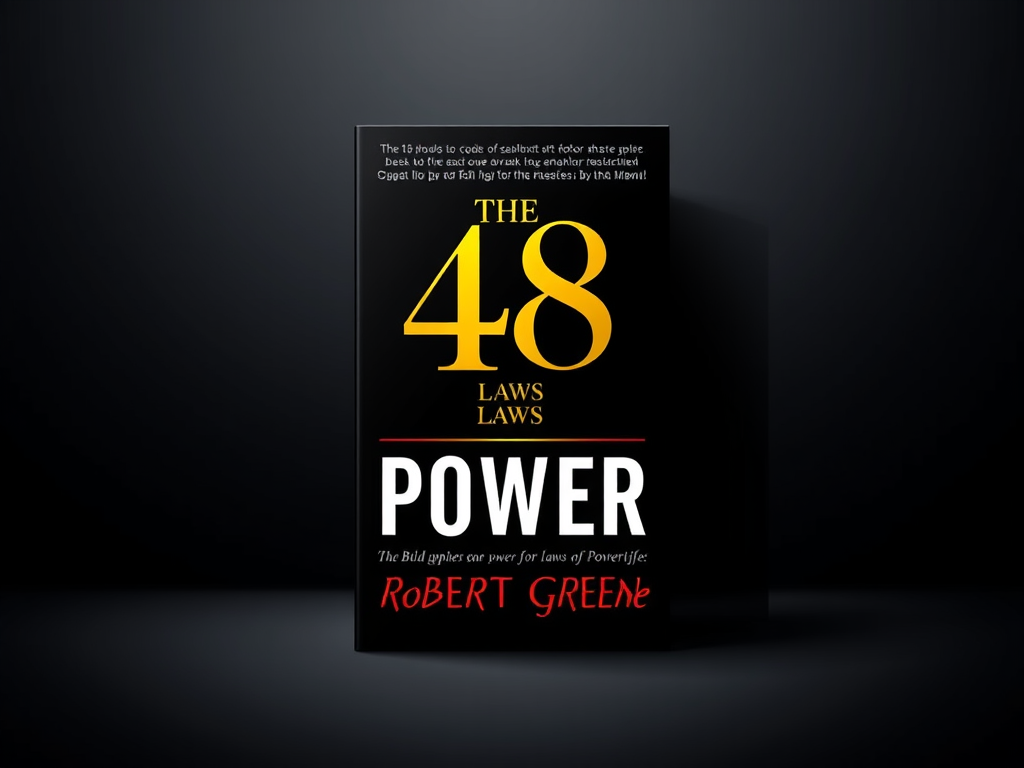
Robert Greene – “The 48 Laws of Power”

“The 48 Laws of Power” by Robert Greene is a guide to gaining and maintaining power, drawing on historical examples and philosophical insights. Here’s a summary of some key themes and a few notable laws:

1. Power Dynamics: The book emphasizes the importance of understanding power dynamics in relationships, personal or professional.

2. Manipulation and Strategy: Greene discusses the art of manipulation and the strategies individuals can use to achieve their goals, often advocating for cunning and strategic thinking.

3. Historical Examples: Each law is illustrated with historical anecdotes, showcasing figures like Machiavelli, Sun Tzu, and various monarchs and politicians who exemplified the principles.

Notable Laws:

– Law 1: Never Outshine the Master: Make those above you feel superior; in your desire to please, do not go too far in displaying your talents.

– Law 3: Conceal Your Intentions: Keep people off-balance by never revealing your true purpose.

– Law 15: Crush Your Enemy Totally: Leave no room for your opponent to recover; if you allow them to escape, they may return stronger.

– Law 33: Discover Each Man’s Thumbscrew: Find the weakness in others to gain leverage over them.

– Law 48: Assume Formlessness: Be adaptable and unpredictable to avoid being pinned down by others.

The book is a controversial but insightful exploration of power and its complexities. It encourages readers to navigate their social landscapes with awareness and strategy. I have had this book on my shelf for many years, and it serves numerous uses, including bibliomancy. In my opinion, there are two sides to the usage of the laws:

Softly, as in a positive way of thinking without harming others or oneself but using them to achieve goals. Example – The success of this book, which became a New York Times bestseller with over 1.3 million copies sold in North America alone.

Hard and Literate, as some of today’s politicians and country leaders’ attitudes and behaviours testify. This world seems overrun by people in powerful positions in whatever industries, as being ruthless in the extreme. There is room to consider that many of these laws could also be applied to rules, regulations and policies repressing the electorate globally.