It is an absolute pleasure and most satisfying to facilitate this diverse group of writers. Some members have never written stories since school. The group has been running for three years and is based at Ystradgynlais Library. The membership, aged 23 to 83, is diverse, and we pride ourselves on inclusivity. In 2023, we published the first ‘Anthology of Collected Stories – 500 Words’ https://amzn.eu/d/7Nu5xQF and look forward to publishing Volume 2 in early 2025. The National Lottery Community Fund supported the group with a Development Grant in the summer of this year. The award was presented by Carole Morgan Hopkin, artist, author and poet.
A Creative Writing competition for all ages helped to increase interest in story-telling, and there is yet another in the wings. Guest authors drop in every six weeks and share their journey as writers, and we visited the Hay Literature Festival this year.
And so we ended this year with a Festive Tales Tour and had the honour of performing the group’s work at the Pontardawe Heritage and Visitor Centre and in the ancient 6th Century Llangwig Church. The tour began for a home audience at Ystradgynlais Library.
Ystradgynlais Creative Writing Group Festive Tales Tour – Pontardawe Heritage and Visitor Centre
Merry Christmas and a Prosperous New Year
Grateful Thanks to:
Ystradgynlais Library, Powys County Council, National Lottery Community Fund, Oystermouth Radio, Pontardawe Heritage and Visitor Centre, Llangwig Trust, Carole Morgan Hopkin. Jo Paine (Chairperson), Paul Rees (Secretary), Mark Hopton, Emily Northey, Jode Pegge-Jones, Tony Pegge-Jones, Pam Moon, Jayden Trott, Ruth Peace, Sentient Coven and Laura Price.
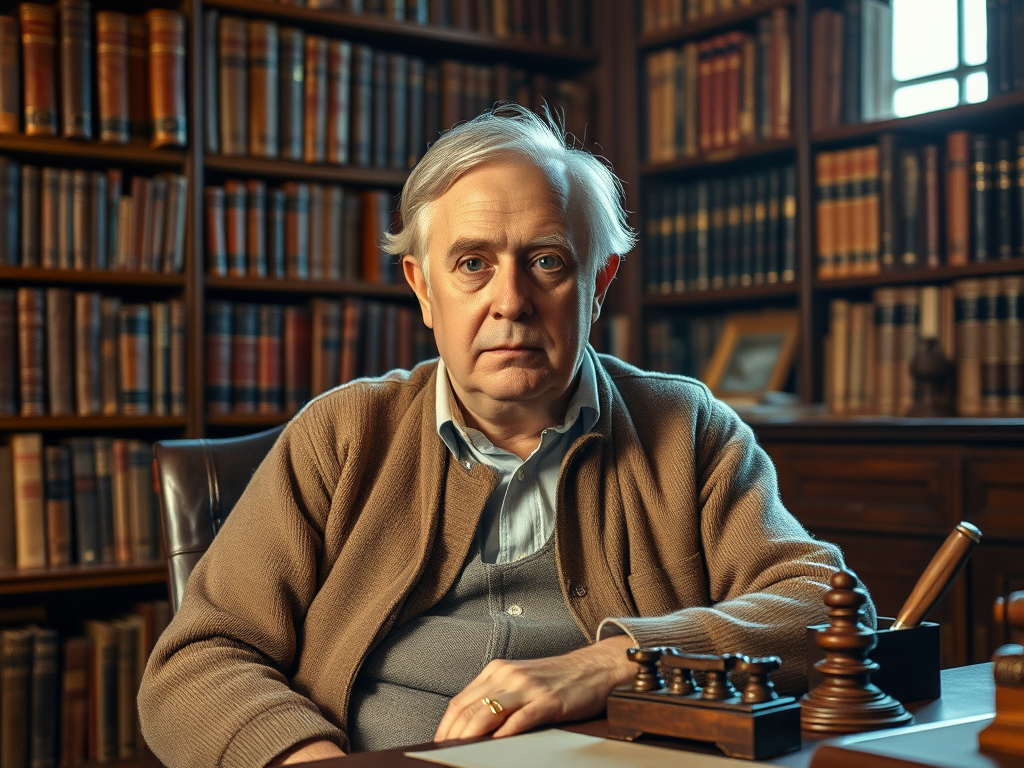
Kenneth Grahame was a Scottish author born in Edinburgh on March 8, 1859. He is best known for his children’s classic “The Wind in the Willows,” published in 1908, which has become a beloved work celebrated for its whimsical characters and exploration of nature and friendship. Grahame’s early life was marked by tragedy; his mother died when he was just five years old, and he was raised by his father and later his grandmother. He studied at Oxford University, where he developed a love for literature. After graduating, he worked in the Bank of England, a career that lasted for many years.
In addition to “The Wind in the Willows,” Grahame wrote other notable works, including “The Reluctant Dragon” and “Dream Days.” His writing often reflects themes of nostalgia, nature, and the passage of time. Grahame’s later years were marred by personal challenges, including the tragic death of his son, Alistair, in 1920. He passed away on July 6, 1932, leaving a literary legacy that continues to enchant readers of all ages.
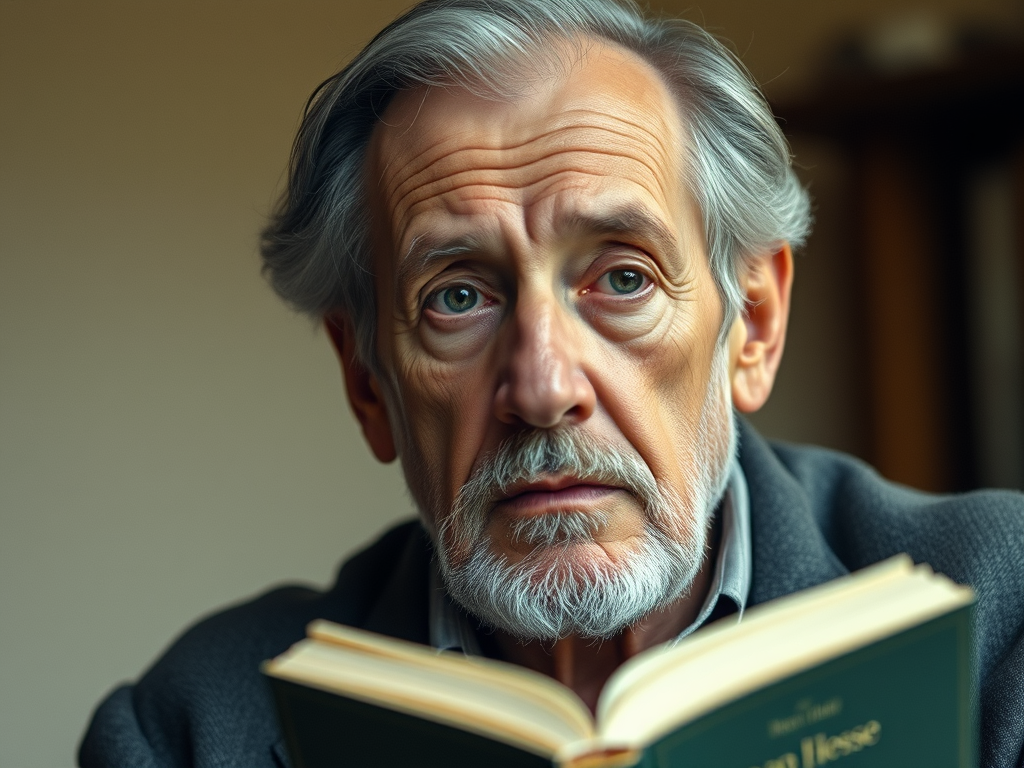
Herman Hesse was a German-Swiss author, poet, and painter, born on July 2, 1877, in Calw, Germany, and died on August 9, 1962, in Montagnola, Switzerland. He is best known for exploring individual spirituality and self-discovery, often delving into themes of duality, nature, and the human psyche.
Steppenwolf (1927) – This novel explores the conflict between the individual and society, focusing on a man named Harry Haller who feels split between his human and wolf-like instincts.
Siddhartha (1922) – A philosophical novel that follows the journey of a young man in ancient India as he seeks enlightenment, reflecting Hesse’s interest in Eastern spirituality.
Demian (1919) is a semi-autobiographical novel about self-realization and the struggle against societal norms.
The Glass Bead Game (1943) – Often considered his magnum opus, this novel imagines a future society that values intellectual and artistic pursuits above all, exploring the nature of culture and knowledge.
Hesse’s work was heavily influenced by his own experiences, including his struggles with identity and mental health. He was associated with the German Expressionist movement and later became a key figure in the counterculture of the 1960s, particularly among those seeking alternative spiritual paths. He was awarded the Nobel Prize in Literature in 1946. Hesse’s writings resonate with readers today, appealing to those interested in philosophy, psychology, and the quest for meaning in life. His exploration of the inner self and the pursuit of authenticity remains relevant in contemporary discussions of personal growth and spirituality.
Graham Greene was an English novelist, playwright, and critic born on October 2, 1904, in Berkhamsted, Hertfordshire. He is known for his exploration of moral ambiguity and human conflict, often set against geopolitical backgrounds.
Greene’s early life was marked by a strict upbringing, with his father being a headmaster. He attended Balliol College, Oxford, where he developed a passion for literature. His literary career began in the 1920s, and he gained fame with novels such as “Brighton Rock” (1938) and “The Heart of the Matter” (1948). These works often delve into themes of faith, guilt, and the complexities of human nature.
Throughout his career, Greene wrote over twenty novels, along with short stories, plays, and screenplays. He also worked as a journalist and was involved in various political and social causes, which influenced his writing. Greene’s experiences during World War II and his travels in Africa, Cuba, and Vietnam provided rich material for his narratives.
In addition to fiction, Greene was known for his non-fiction works and essays, often reflecting his views on politics and religion. He was also a devout Catholic, and his faith significantly shaped his worldview and literary themes.
Greene received numerous accolades for his contributions to literature, including being nominated for the Nobel Prize in Literature multiple times. He passed away on April 3, 1991, in Vevey, Switzerland, leaving behind a profound legacy that continues to influence writers and readers today. His work remains relevant for its deep psychological insight and exploration of moral dilemmas
The King of ancient Gwynedd ceased fiddling with his beard and called across to the dragons. Raising a hand towards the greatest of dragons beckoned encouragement.
“Tan-y-Mynedd, the table is yours, my old friend.”
Tan-y-Mynedd sat on his huge haunches, fluttered loosely folded wings and shook his head. Flaring those rather unpredictable nostrils, his proud chest expanded, taking in the deepest of breaths.
As the great dragon inhaled, everybody, including the other dragons, ducked to seek cover. The large goblin disappeared within a flash under the grand oak table, tankards and food flew precariously in every conceivable direction. Carron and his friend took to flight, joining the other ravens perched high upon an outcrop on the cave wall above our heads. The eagle spread his enormous wings and in three sharp flaps, alighted to accompany the ravens. Needless to say, a slight squawking of discontent and fluttering of wings welcomed their elder. Fwynedd and the elven seer joined the goblin under the table, also accompanied by several dwarves, including me. It was only those from the other world that did not flinch. Math Fab Mathonwy, Myrddin Goch ap Cwnwrig, and Llwyd ap Crachan Llwyd, remained in their seats, amused by the spectacle unfurling. Tan-y-Mynedd gasped, uttered a slight cough and very slowly exhaled. He surprised us all as he controlled the whirlwind gusts he usually created, thus no damage was done, save for the flying food.
The great dragon exploded into uncontrollable laughter. Within no time, everybody scrambled from under the table, attempting to return to their seats with as much grace as the situation would allow. We all joined him in seeing the funny side of our chaotic bid for cover. The eagle returned, landing on the branch of one of the Tree Folk. Carron and his friend fluttered down from the outcrop of rock, alighting gently on a chair close to Tan-y-Mynedd. Fwynedd regained his composure and gently assisted the Elven seer to maintain her dignity by lifting her light body back onto the seat. By now, the entire cave echoed with the sound of goodhearted laughter.
“You see, I can control myself when I am of a mind to do so!” Tan-y-Mynedd laughed again. “You always think there will be disaster when I prepare to speak. Well, my friends, the only disaster is with you for thinking such in the first place.” He laughed again, as did everybody else. “And now, we have had enough frivolity, it is to business.” Tan-y-Mynedd paused.
Calmness and silence eroded the humour which had now dissipated within the ether, replaced by attention and focus to the duty confronting this ancient Great Council of Blue Stone.
“We are familiar with all we need to be familiar with. We know storm clouds linger on the horizon and the English are behind such inclemency in our Kingdom. We will not waste time with whys and wherefores as we are beyond such trivialities.” A murmur of agreement whipped up a stir from the listeners, but a cursory snort from the great snout of Tan-y-Mynedd soon silenced them. “To continue, if I may be permitted?” He snorted again. “All is now in place, as predicted by ‘The Prophecy’. Owain Glyndwr is, as we speak, receiving news of yet more betrayal from Henry. He who sits on the black throne rules unfairly, and Glyndwr will no longer endure lies and deceit. In twenty-one months, as the clouds continue to gather before the great storm, the sun will blaze across our land, and our Prince in Waiting will at last take his rightful place.” Tan-y-Mynedd flared his nostrils, but this time, nobody moved a whisker. Spreading his wings and standing erect, he inhaled forcefully. “The rise of the dragon!” He exclaimed. Everybody applauded, banged fists and tankards on the table, cheering in agreement. It was at that moment, Tan-y-Mynedd sneezed!