Inspector Septimus Summer-Garden and the Curious Case of the Missing Moustache

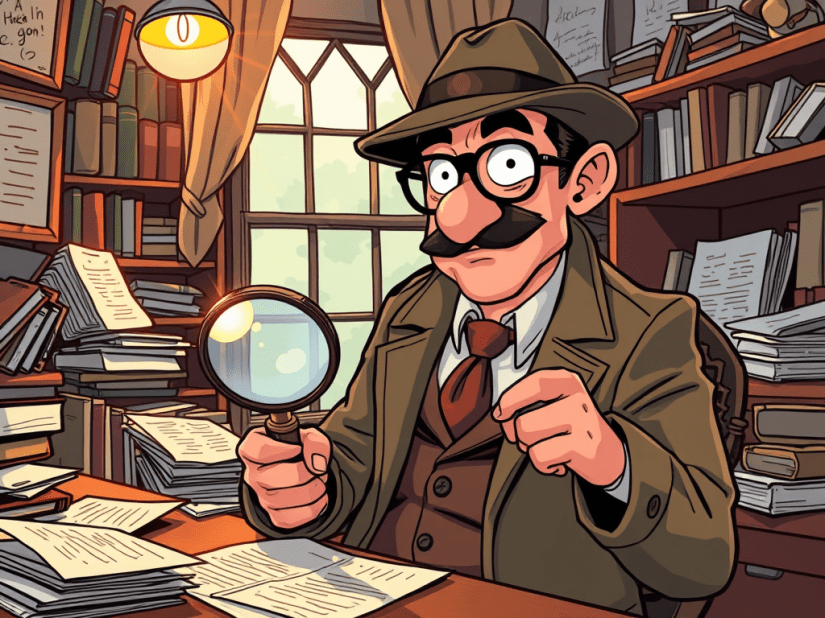
There is no doubt, Inspector Septimus Summer-Garden was well-loved for his big heart and even bigger clumsiness. One day, as he was enjoying a cup of tea at his cluttered desk, the town’s mayor burst into the police station looking quite flustered.

“Inspector! Something terrible has happened!” the mayor exclaimed. “My prized moustache… it’s gone!”

Septimus blinked a few times, then looked down at his own face, realising he was missing something too, his own moustache! But the mayor’s moustache was famous all over town, thick, curly, and the colour of ripe chestnuts.

“Gone?” Septimus asked, scratching his head. “Are you sure? Maybe it’s just… misplaced?”

“No, no!” the mayor replied. “It disappeared right from my dressing room! And I have a sneaking suspicion that it wasn’t just lost, it was stolen!”

Septimus took out his magnifying glass and examined the scene. There were tiny footprints leading from the mayor’s dressing room to the window, small, like those of a mouse or a tiny thief.

“Hmm,” mused Septimus. “Small footprints… probably a sneaky suspect!”

He then noticed a faint scent lingering in the air, something spicy and unusual. Smelling it carefully, he exclaimed,

“Ah! That’s the smell of cinnamon and ginger, like a baking shop!”

Just then, a young girl named Lily ran into the room, clutching a crumpled piece of paper.

“Inspector! I saw Mr. Whiskers, the bakery cat walking around with something shiny in his mouth yesterday!”

Septimus’s eyes widened.

“Aha! A clue! The bakery cat has a habit of sneaking into places… maybe he took the mayor’s moustache as a snack or a toy!”

He hurried to the bakery, dodging a rolling dough and tripping over a sack of flour. There, sitting atop a pile of bread, was Mr. Whiskers, the fluffy black cat, proudly licking his paw.

“Mr. Whiskers,” Septimus said softly, “did you take the mayor’s moustache?”

The cat looked up with big, innocent eyes, then jumped down and trotted over to a corner. Septimus followed and found a small, shiny object tangled in a ball of yarn. It was the mayor’s moustache! Or at least, what was left of it.

“Oh no!” exclaimed Septimus. “The moustache has been chewed up!”

The mayor arrived just then, looking worried.

“My moustache! Oh, what am I going to do?”

Septimus looked at the torn moustache, then at Mr. Whiskers.

“It seems your feline friend was very curious and perhaps a bit hungry. But don’t worry, Mayor. I’ll get you a new moustache perhaps one made of real hair, or even a clever fake!”

The mayor chuckled despite himself.

“Well, I suppose every mystery has a reason. Thank you, Inspector!”

Septimus, proud of his detective work, accidentally knocked over a stack of empty milk bottles as he tried to leave.

“Oops! Clumsy as ever. But the case is closed, thanks to a very sneaky cat!”

And from that day on, the townsfolk made sure to keep their moustaches and their catsout of trouble. Inspector Septimus Summer-Garden may have been forgetful and clumsy, but his heart was always in solving the most peculiar mysteries.

The Boy, a Monkey and an Elephant

Once upon a time, in a lush, vibrant jungle teeming with life, there lived a spirited boy named Kavi. He had an unbreakable bond with two remarkable friends: a clever monkey named Miko and a gentle elephant named Elara. Together, they roamed the emerald canopies and winding rivers, exploring every nook and cranny of their beloved home.

One sunny morning, while playing by a sparkling stream, Kavi noticed something strange. The air was thick with tension, and the usual sounds of the jungle seemed muted. As they ventured deeper into the forest, they stumbled upon a gathering of animals—birds, deer, and even the wise old tortoise. They were all anxious, their eyes filled with fear.

“What’s wrong?” Kavi asked, kneeling beside a trembling fawn.

“It’s the humans,” the fawn whispered. “They’re coming to cut down the trees! Our home is in danger!”

Kavi felt a surge of determination. “We can’t let that happen! We have to protect our jungle!”

Miko swung from a branch and chattered excitedly. “We’ll use our skills! I can gather information and distract them. Elara can help with her strength, and you, Kavi, can rally everyone!”

Elara nodded, her large eyes filled with wisdom. “Together, we can create a plan.”

That night, the trio sat under the stars, devising their strategy. Miko would scout the area for the humans and their machines, while Elara would gather the animals to form a united front. Kavi would lead them in a peaceful protest to show the humans the beauty of their home.

The next day, Miko dashed through the trees, his nimble body weaving effortlessly among the branches. He spotted the humans setting up camp at the edge of the jungle, their chainsaws gleaming ominously in the sunlight. He returned to Kavi and Elara, breathless but determined.

“They’re getting ready to start cutting tomorrow!” Miko exclaimed. “We need to act fast!”

That evening, Kavi called together all the animals of the jungle. They gathered at a clearing where the moonlight bathed the forest in silver. Kavi stood on a rock, his heart pounding, but his voice steady.

“Friends! Our home is in danger, but together we can save it! Tomorrow, we will show the humans how much this jungle means to us. We will stand united!”

As dawn broke, the jungle was alive with activity. Elara, with her mighty presence, rallied the larger animals, while Miko flitted about, spreading the word to every corner of the forest. Kavi painted vibrant signs made from leaves and flowers, each one depicting the beauty of their home and the message: “Save Our Jungle!”

When the humans arrived the next morning, they were met not with fear, but with a magnificent display of unity. Animals of all shapes and sizes lined the path, their eyes shining with hope. Kavi stood at the forefront, holding up a sign that read, “This is our home—please don’t take it away!”

The humans paused, taken aback by the sight. Miko swung down from the tree and began performing acrobatic tricks, drawing laughter and attention. Elara trumpeted, her voice echoing through the jungle, reminding everyone of the strength of their bond. The humans, witnessing the resilience and beauty of the jungle and its inhabitants, began to reconsider their actions. They saw the vibrant life surrounding them, the intricate balance of the ecosystem, and the fear in the eyes of the creatures who called it home. After a tense moment, the human leader stepped forward.

“We didn’t realise how much this forest means to you. We will rethink our plans.”

Cheers erupted from the animals as they celebrated their victory. The humans, moved by the display of unity and love for the jungle, decided to leave the forest untouched. From that day forward, Kavi, Miko, and Elara became guardians of the jungle, ensuring that its beauty would be preserved for future generations. The bonds they forged that day with their fellow creatures became stronger, and their home thrived once more, a testament to the power of friendship and the fight for what is right. And so, the jungle remained a sanctuary of life, where every creature had a voice, and every sound echoed the spirit of unity that saved their home. 

Orion

Once upon a time, nestled deep within a magical forest, there lived a magnificent wolf named Orion. He possessed a sleek, silver coat that shimmered under the moonlight, and his piercing blue eyes sparkled like the stars in the night sky. But despite his extraordinary appearance, Orion carried a secret burden; he could not shed a single tear. While the other creatures of the forest revelled in the beauty of their emotions, Orion felt trapped within himself. His inability to cry made him an outcast, as his fellow wolves and woodland friends couldn’t understand his emotional plight. They believed tears to be a sign of vulnerability, but Orion yearned to experience the emotional release that tears could bring.

One day, as Orion wandered through a sunlit glade, he stumbled upon a wise old owl perched atop a moss-covered branch. The owl, Athena, possessed ancient wisdom and keen insight into matters of the heart. Sensing Orion’s sadness, she invited him to share his story. With a heavy heart, Orion poured out his tale of woe to Athena. He expressed his longing to cry, to release the emotions locked within him, and to feel a connection with his kindred spirits. Moved by his plight, Athena offered her guidance.

“Dear Orion,” Athena began, “the ability to cry goes beyond mere tears. It is the language of the heart, a gateway to understanding and compassion. But to embrace this gift, you must first uncover the source of your emotions.”

Together, Orion and Athena embarked on a quest to discover the key to unlocking Orion’s tears. They wandered through enchanted forests, climbed towering mountains, and crossed treacherous rivers. Along the way, they encountered various animals who shared their own stories of sorrow and joy, love and loss. As the journey unfolded, Orion began to understand that emotions were not a sign of weakness but rather an expression of his true self. He discovered that crying was not solely reserved for sadness but could also be a manifestation of happiness, empathy, and gratitude. Finally, deep within the heart of the forest, Orion faced his ultimate challenge, a mystical waterfall known as the “Tears of the Ancients.” It was said that those who stood before it with pure intentions would have their emotions released, allowing their tears to flow freely.

With trembling paws, Orion approached the waterfall. He called upon every emotion buried within him, allowing them to surge through his being. As his heart overflowed with a kaleidoscope of feelings, a single tear welled up in his eye, shimmering like a dewdrop. And then, with a sense of liberation, the tear trickled down Orion’s snout, splashing into the sacred waters below. In that instant, the floodgates burst open, and tears streamed down his face like a gentle rain, cleansing his soul and connecting him to the world around him. Word of Orion’s tearful transformation spread throughout the forest, and the animals rejoiced.

They recognized that emotions were not something to be feared but to be embraced and shared. Orion became a symbol of courage, teaching others to honour their feelings without shame. From that day forward, Orion’s tears became a gift, a reminder that expressing emotions is an essential part of the human experience. He roamed the forest, weaving tales of empathy and compassion, comforting those in need, and spreading the message that every tear carried within it the power to heal and unite. Children from far and wide would gather around Orion, eager to hear his stories and learn from his wisdom. They discovered that crying was not a sign of weakness but a testament to the strength and depth of their hearts.

Orion became a beloved character loved by many, guiding young ones through their own emotional journeys and encouraging them to embrace their feelings with open arms. As the forest flourished with newfound compassion and understanding, a remarkable transformation took place within Orion. With each tear shed, his heart grew lighter, and a radiant joy replaced the burden he had carried for so long. His once solitary existence transformed into a life filled with connection and meaning.

And so, the story of the wolf who could not cry, Orion, became a legend in the magical forest. It served as a reminder to all that emotions are a precious part of being alive, and that through embracing and expressing them, one can find solace, strength, and a profound sense of belonging to all that is and will ever be.

The Hermit and the Dog Wolf Abstract

It was many miles to the valley below, though walking down the scree-covered mountainside was much easier than coming up it. Tired feet were a little sore because his shoes, being nearly as old as he was, were not all that comfortable. The soles had worn very thin, so small stones on the pathway tended to dig through and pinch his feet and toes while walking. Eventually, he reached the main path towards the forest, some two or three miles from the village where his destiny awaited a timely arrival. Tired legs trudged across a most uneven forest floor, calves aching with every step. Such discomfort in his legs always stole the beautiful sounds of the forest from his mind. The trees were tall and often so close together that they hindered progress. As he attempted to negotiate a way through a path strewn with roots, stumbling and nearly falling flat on his face, he heard the howl and whining of a wolf in the distance. Instinctively coming to an abrupt halt, the old man dropped to his haunches. Leaning down rather precariously, he used his right arm to support himself against an old oak tree. Again, he heard the howl, but this time, it seemed closer than before. Suddenly, through the undergrowth off to his right, he watched in awe as bushes and bracken parted with force. A huge dog-wolf stood in front of him.

The dog-wolf was huge with big blue eyes sunk into a deep-set stare. The old man and the dog-wolf stared at each other, their eyes met neither showing any sign of fear, not a flinch of muscle nor a wisp of hair moved between them. Motionlessly he stared into the wolf’s eyes and thought how frightened this beast of the forest seemed but how beautiful and majestic in his fear. His huge, sleek body hunched forward into a defensive stance. Massive paws and strong muscular front legs dug several inches into the forest floor, which allowed some idea of how heavy he was. A vast mouth quivered, snarling and slavering as great white fangs captured the old man’s attention. His slobbering tongue dribbled spittle on the forest floor as the wolf, standing ground, shook his great head from side to side. Hermit kept perfectly still. He did not even allow the sound of breath to rise from his chest.

The arm that supported him against the tree felt slightly strained from holding his body perfectly still; tired muscles twitched in spasm. The dog-wolf stood his ground, digging huge paws deeper into the earth. Around his great thick neck, a black and golden ruff was imprisoned in a thick leather collar. Attached to the collar was a heavy linked chain. The dog-wolf must have dragged these chains of bondage for miles through the forest. From wherever he had come, and no matter how many miles he may have travelled, these chains of bondage travelled with him. The free end of the heavy chain lay on the ground, and Hermit could not help but notice a dead tree stump caught in the chain links, adding to the weight this beautiful animal dragged on his escape. 

The dog-wolf was obviously tired, worn out and very frightened, and his beautiful body was covered in blood from old scars that had opened and new wounds which ripped at the muscular body as he charged through the forest. His chest was heaving with breathlessness, and an empty, lean stomach stuck to the bony rib cage, which protruded through his flesh.

Available in Ye Olde Book Shoppe

Two Little Monkeys

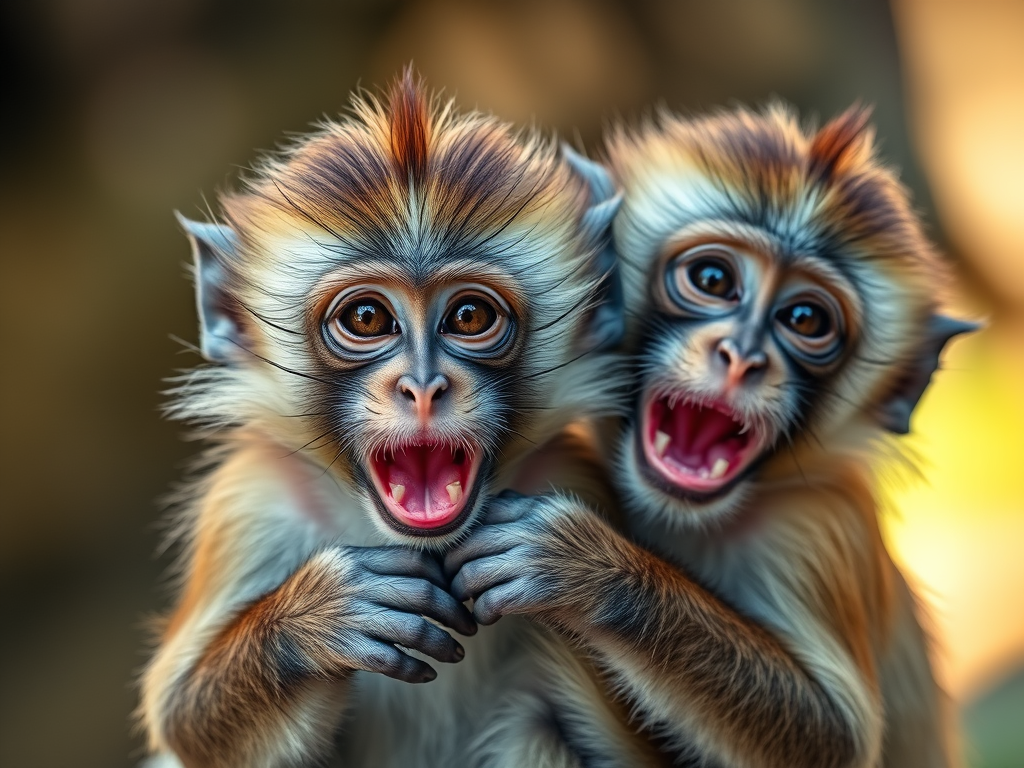
Once upon a time in a bustling city zoo, lived two identical twin monkeys named Max and Milo. They were the stars of their enclosure with their bright eyes, playful nature, and strikingly similar appearances. However, despite their playful antics for visitors, the twins felt a deep sense of unhappiness. Their days were filled with the same routines, the same visitors, and the same banana treats. They longed for adventure beyond the confines of their cage. One day, as they swung from branch to branch, Max had a brilliant idea.

“What if we use our identical looks to confuse the keepers? We could escape and explore the world beyond this zoo!”

Milo’s eyes sparkled with excitement.

“Yes! We can switch places! They won’t know who’s who!”

That night, as the zoo quieted down and the moon cast a silver glow, the twins put their plan into action. They practised their mimicry, copying each other’s movements and sounds. When morning came, the keepers arrived, unaware of the mischief about to unfold. As the keepers entered their enclosure, Max climbed high into the branches while Milo hung back, pretending to groom himself. When the keeper called out for them, Max swung down, but at the last moment, he let out a loud screech, startling the keeper. In the confusion, Milo took the chance to leap into the opposite corner, making it look like he was still in the same spot. The keepers were baffled.

“Wait, which one is which?” one of them exclaimed, scratching his head.

The twins exchanged mischievous glances, stifling their laughter. They knew they only had a short window before the keepers figured it out. As the day went on, the twins continued their clever ruse. They switched places during feeding time, and when the keepers tried to separate them, they would jump and play, making it impossible to tell who was who. The twins revelled in their newfound freedom to roam their enclosure without supervision, but they knew it was just a matter of time before the keepers caught on. That evening, when the zoo was closed to the public, Max and Milo knew it was time for the final phase of their escape. They waited until the keepers were distracted and then darted out of their enclosure, using the shadows to hide. They climbed over fences and squeezed through gaps, their hearts racing with excitement. Finally, they found themselves outside the zoo, standing in the cool night air. The world beyond was vast and filled with the sounds of nature. Max looked at Milo, his eyes wide with wonder.

“We did it! We’re free!”

With newfound courage, they ventured into the nearby park, trees towering above them like old friends. They swung from branches, chased fireflies, and feasted on wild fruit, their laughter echoing in the night. For the first time, they felt truly alive. As dawn broke, the twins knew they could not stay in the park forever. They missed the comfort of each other and the familiar routines, even if they were unhappy. So, they decided to return to the zoo, but not as prisoners. They would find ways to bring joy to their lives, using their cleverness to entertain not just visitors but also themselves. When they returned, the keepers were in disbelief, having searched high and low for the mischievous twins. Max and Milo resumed their antics, but now, with a sparkle in their eyes, knowing the world outside was filled with possibilities. They learned to embrace the zoo life with newfound joy, always planning little adventures and reminding each other that sometimes, happiness was a matter of perspective. And so, the twin monkeys lived on, not just as entertainers but as adventurers in their own right, forever bonded by their shared escapade and the spirit of freedom.

Image by AI