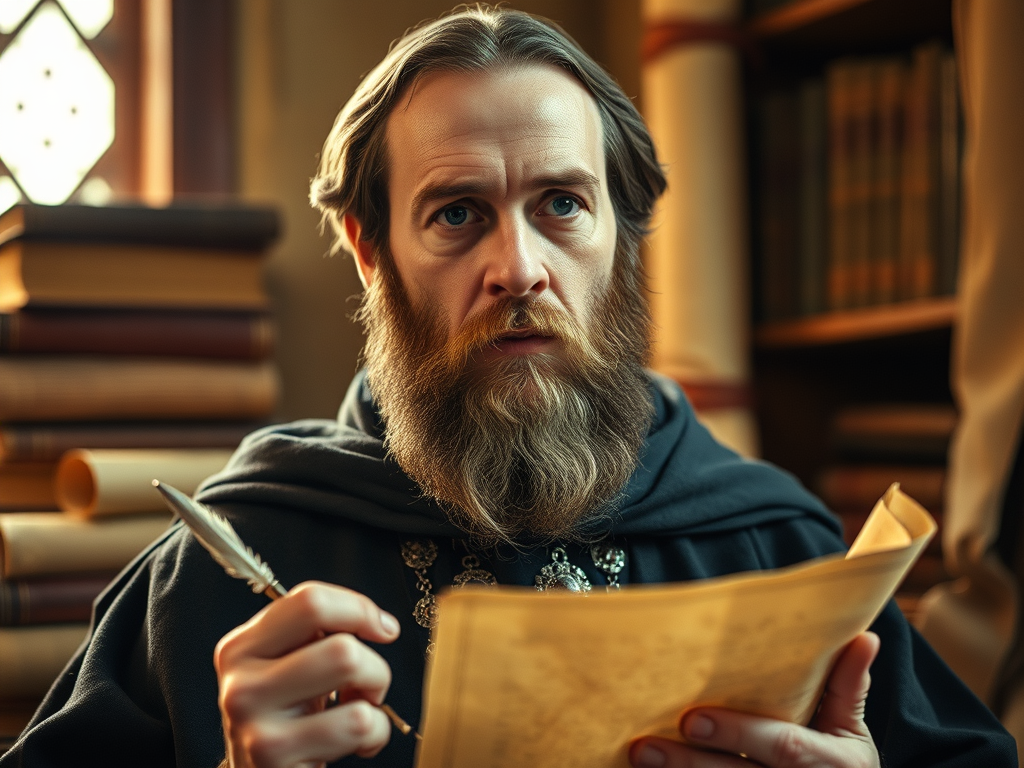
Thomas De Quincey

De Quincey was born on August 15, 1785, and passed away on December 8, 1859. His most famous work, “Confessions of an English Opium-Eater,” is an autobiographical account of his opium addiction and its effects on his life. He also wrote numerous essays and articles on a wide range of subjects, including literature, philosophy, and social issues. De Quincey’s writing is characterized by its complex and elaborate prose style. He is known for his vivid descriptions, intricate sentence structures, and rich vocabulary.

He was a significant figure in the English Romantic movement, and his work influenced later writers such as Edgar Allan Poe and Charles Baudelaire. De Quincey led a tumultuous life marked by struggles with addiction, poverty, and personal loss. Despite these challenges, he continued to write prolifically throughout his life. Thomas De Quincey is remembered as a pioneering figure in English literature and a master of the English essay. His work continues to be studied and admired for its rich language and deep insights into the human condition.

Well … We Can Dream

Once upon a time, in the depths of the vast ocean, there lived a kind and compassionate mermaid named Maria. Maria had long, flowing hair the colour of the ocean’s depths and eyes that sparkled like the sun reflecting off the waves. She spent her days swimming among the coral reefs, playing with the sea creatures, and admiring the beauty of her underwater world. One day, Maria noticed a troubling change in her beloved ocean. The waters had become murky, littered with trash and pollution. The once vibrant coral reefs were dying, and the sea creatures struggled to survive in the toxic environment.

Maria knew she had to do something to save her home. Determined to make a difference, Maria set out to rid the ocean of pollution. She swam tirelessly, collecting plastic bags, bottles, and other debris that humans had carelessly discarded. Maria’s resolve grew more assertive with each piece of trash she removed.


As word of Maria’s efforts spread throughout the ocean, other sea creatures joined her cause. Together, they formed a team dedicated to cleaning up the ocean and protecting its fragile ecosystem. Dolphins, sea turtles, and even some curious octopuses pitched in to help. Despite facing challenges and setbacks, Maria and her friends never gave up. They organized beach cleanups, educated humans about the importance of protecting the ocean, and worked tirelessly to restore the health of the underwater world they loved.


Maria and her friends made a significant impact through their hard work and determination. The ocean began to heal, the coral reefs flourished again, and the sea creatures thrived in their clean and vibrant home. Maria had become a hero to all who lived in the ocean, known far and wide as the mermaid who saved the sea. Her dedication and courage inspired others to take action and protect the environment for future generations. And so, thanks to Maria the Mermaid and her friends, the ocean remained a place of beauty and wonder for all to enjoy, a testament to the power of compassion and determination in the face of adversity.

Images by AI

J.R.R. Tolkien

J.R.R. Tolkien, full name John Ronald Reuel Tolkien, was an English writer, poet, philologist, and university professor, best known as the author of the high fantasy works “The Hobbit,” “The Lord of the Rings,” and “The Silmarillion.” Tolkien was born on January 3, 1892, in Bloemfontein, Orange Free State (modern-day South Africa). He moved to England with his mother and brother after his father’s death when he was three years old. As a child, Tolkien showed an early interest in languages and storytelling, creating his own languages and fantasy stories.

He studied at Exeter College, Oxford, where he specialised in philology and Old and Middle English. Later, he became an Anglo-Saxon professor at Oxford University and then the Merton Professor of English Language and Literature. Tolkien’s first significant work was “The Hobbit,” published in 1937. It introduced readers to the world of Middle-earth and the character of Bilbo Baggins. He followed up with “The Lord of the Rings,” a sequel to “The Hobbit,” published in three volumes between 1954 and 1955. Tolkien’s works are renowned for their detailed world-building, complex characters, and rich mythology. His works have profoundly influenced fantasy and garnered a massive following worldwide. “The Lord of the Rings” has been adapted into successful films directed by Peter Jackson, further popularizing Tolkien’s work. Tolkien passed away on September 2, 1973, in Bournemouth, England, leaving behind a rich literary legacy that inspires readers and writers today. His impact on literature and popular culture is significant, and his works are considered classics in the fantasy genre. 

Image by AI

Oscar Wilde

Oscar Wilde, born on October 16, 1854, in Dublin, Ireland, was a prominent playwright, poet, and author in the late 19th century. Known for his wit, flamboyant style, and sharp satire, Wilde became one of the most successful playwrights of his time. His notable works include “The Picture of Dorian Gray,” his only novel, as well as plays such as “Lady Windermere’s Fan,” “A Woman of No Importance,” “An Ideal Husband,” and his most famous play, “The Importance of Being Earnest.”

Despite his literary success, Wilde is remembered for his tumultuous personal life. He was known for his flamboyant dress and extravagant lifestyle, as well as his involvement in a scandal that led to his imprisonment. In 1895, Wilde was put on trial for “gross indecency” due to his homosexual relationships, which were illegal at the time in England. He was found guilty and sentenced to two years of hard labour. After his release from prison, Wilde lived in exile in France, where he wrote less and struggled financially. Oscar Wilde died on November 30, 1900, aged 46, in Paris, France. Despite the challenges he faced in his later years, Wilde’s works continue to be celebrated for their wit, humour, and social commentary, and he remains an iconic figure in literature and LGBTQ+ history.

Image by AI

Charles Dickens

The renowned English novelist Charles Dickens was born on February 7, 1812, in Portsmouth, England. He was one of the most popular and influential writers of the 19th century, known for his vivid characters and depiction of social issues in Victorian England. Dickens’ childhood was marked by financial struggles as his family faced poverty and debt. At the age of 12, he was forced to work in a factory to support his family after his father was imprisoned for debt. These early experiences profoundly influenced his later writings, as themes of poverty, social injustice, and the plight of the working class are prevalent in many of his novels.

Dickens began his writing career as a journalist and soon found success writing serialized novels. Some of his most famous works include “Oliver Twist,” “David Copperfield,” “A Christmas Carol,” “Great Expectations,” and “A Tale of Two Cities.” His works often featured colourful characters, intricate plots, and a keen eye for social commentary. Dickens was a prolific writer and a tireless social reformer. He advocated for better conditions for the poor and marginalized in society. His writing shed light on the injustices of his time and called for social change.

Charles Dickens passed away on June 9, 1870, leaving behind a rich literary legacy that continues to be celebrated and studied. His works remain popular and have been adapted into numerous films, plays, and other forms of media, ensuring that his influence endures in the world of literature. 

Image by AI