John Dee

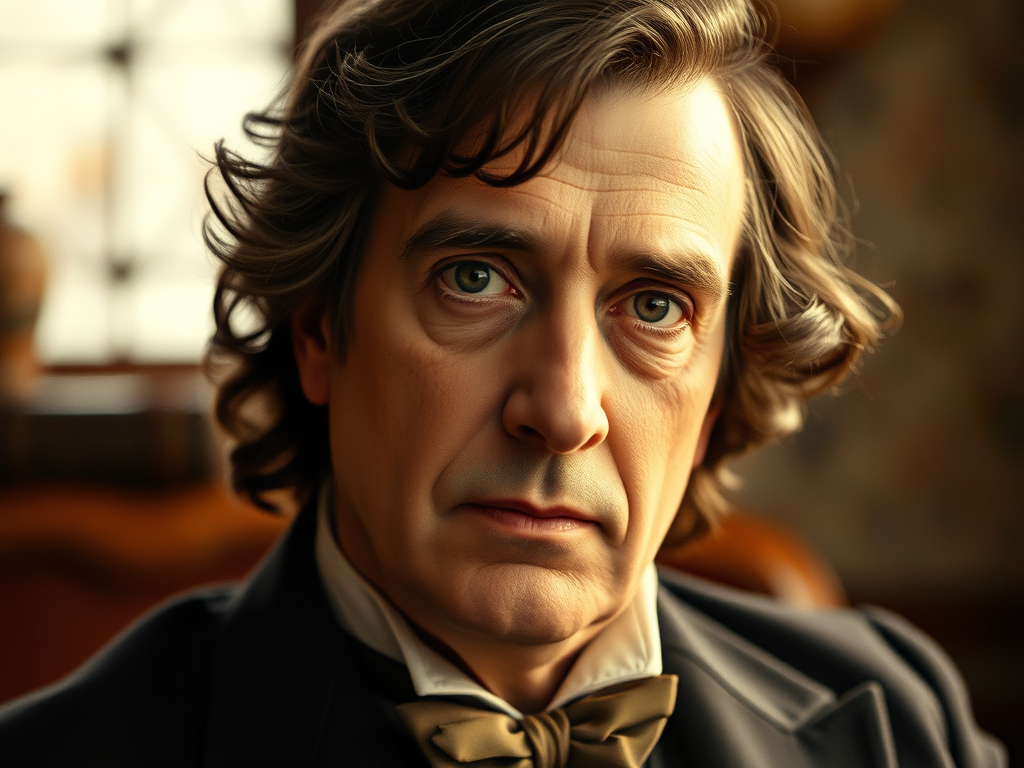
John Dee, a prominent figure in the Elizabethan era and a fascinating polymath, was known for his wide range of interests and pursuits that spanned mathematics, astronomy, astrology, and the occult. His work and writings have captured the imagination of scholars and enthusiasts for centuries, offering a glimpse into the intellectual landscape of the Renaissance period. While John Dee is most well-known for his contributions to mathematics and his role as an advisor to Queen Elizabeth I, he also delved into the realms of esoteric knowledge and mysticism. Dee’s interests in the occult and the metaphysical were deeply intertwined with his scientific inquiries, leading him to explore the boundaries between the material world and the spiritual realms.

Eschatology, the study of the End of Times or the ultimate destiny of humanity, was a topic that intrigued Dee, as it did many thinkers of his time who grappled with questions about the nature of existence and the fate of the world. While Dee did not have a single, well-defined theory on the End of Times, his esoteric pursuits and spiritual beliefs likely influenced his thoughts on the subject. In his quest for knowledge and understanding, Dee engaged in practices such as scrying, divination or seeking visions through a crystal ball or other reflective surfaces, and communication with spiritual beings. These activities were part of his broader exploration of the hidden forces and dimensions that he believed shaped the universe and human destiny.

In interpreting Dee’s writings and works, scholars have uncovered layers of symbolism, allegory, and hidden meanings that reveal his complex worldview and philosophical outlook. His involvement in the occult and his interactions with spiritual entities have added a mystical dimension to his legacy, inviting speculation and curiosity about his beliefs regarding eschatology and the End of Times. To understand John Dee’s thoughts on the End of Times, one must consider his writings, such as his journals, letters, and treatises on subjects ranging from mathematics to alchemy to angelic communication. By exploring the intersections of science, mysticism, and spirituality in Dee’s work, one can unravel the enigmatic tapestry of his intellectual pursuits and potentially glimpse his reflections on the ultimate fate of humanity and the cosmos.

Image by AI

Rudyard Kipling

Rudyard Kipling was a renowned British author and poet who was born on December 30, 1865, in Bombay, India. He is best known for his fiction, including “The Jungle Book,” “Kim,” and “Just So Stories.”

Kipling spent his early childhood in India, where his father worked as a museum director and an art teacher. However, he was sent to England at six to receive his formal education. His time in England was marked by harsh treatment at the hands of his foster family, which left a lasting impact on him. Kipling worked as a journalist and writer in his adult life, producing poetry and short stories that often drew upon his experiences in India. His writing was known for its vivid descriptions of life in the British Empire and its exploration of themes such as colonialism, the relationship between the colonizer and the colonized, and the clash of cultures.

Kipling was awarded the Nobel Prize in Literature in 1907, becoming the first English-language writer to receive this honour. Despite his literary success, Kipling faced criticism for his views on imperialism and his perceived support for British colonialism. Rudyard Kipling died on January 18, 1936, in London, England. His work continues to be studied and admired for its rich storytelling, evocative language, and exploration of complex themes.

Image by AI

Mary Shelley

Mary Shelley, born Mary Wollstonecraft Godwin on August 30, 1797, in London, England, had a life filled with tragedy, creativity, and literary accomplishment. Mary was the daughter of the feminist writer Mary Wollstonecraft and the political philosopher William Godwin. Her mother died shortly after her birth, and Mary was brought up by her father and stepmother. In 1814, at 16, Mary met the poet Percy Bysshe Shelley, who was married then. They fell in love and eloped to Europe in 1814 with Mary’s stepsister, Claire Clairmont. During the summer of 1816, Mary, Percy, Claire, and Lord Byron spent time together in Geneva, Switzerland. During this time, Mary conceived the idea for her most famous work, “Frankenstein.” The novel was published anonymously in 1818.

Mary experienced significant personal tragedies throughout her life. She lost several children to illness or premature death, and Percy Shelley drowned in a boating accident in 1822. Despite the challenges she faced, Mary Shelley continued to write and publish works of fiction. She also edited and promoted her late husband’s poetry. Mary Shelley died in London on February 1, 1851, at 53. Mary Shelley’s legacy endures through her groundbreaking novel “Frankenstein,” which continues to captivate readers and inspire adaptations in various forms of media. She is celebrated as a pioneering figure in the science fiction genre and a vital voice of the Romantic era. 

Image by AI

Edgar Allan Poe

Edgar Allan Poe was an American writer, poet, editor, and literary critic best known for his macabre and Gothic tales and poems. He was born on January 19, 1809, in Boston, Massachusetts. His parents were actors, but his father abandoned the family early on, and his mother died when Poe was only three years old. He was then taken in by John and Frances Allan, a wealthy Richmond family. Poe attended the University of Virginia but had to drop out due to financial difficulties. He later enrolled at the United States Military Academy at West Point but was expelled for neglecting his duties. Edgar began his literary career as a writer and editor for various magazines and newspapers. He is best known for his poems and short stories, particularly his mystery and macabre tales. Some of his most famous works include “The Tell-Tale Heart,” “The Raven,” “The Fall of the House of Usher,” and “The Masque of the Red Death.”

Poe’s personal life was marked by tragedy and hardship. He struggled with poverty, alcoholism, and depression throughout his life. He also experienced the death of several loved ones, including his wife, Virginia Clemm, who died of tuberculosis at a young age. Edgar Allan Poe died under mysterious circumstances on October 7, 1849, in Baltimore, Maryland. The exact cause of his death remains unknown, with theories ranging from alcohol poisoning to murder. Despite facing many challenges during his lifetime, Poe is now considered one of the most significant figures in American literature. His works have profoundly influenced the development of various literary genres, including detective fiction and horror. Poe’s dark and atmospheric writing style continues to captivate readers to this day. Overall, Edgar Allan Poe’s life was marked by brilliance and tragedy, and his works continue to be celebrated for their haunting beauty and psychological depth. 

Image by AI

George R. R. Martin

George R. R. Martin, born George Raymond Richard Martin on September 20, 1948, is an American novelist and short story writer known for his contributions to the fantasy and science fiction genres. His most famous work is the epic fantasy series “A Song of Ice and Fire,” which has captured the imagination of readers worldwide and was adapted into the acclaimed television series “Game of Thrones” by HBO.

Martin was born in Bayonne, New Jersey, and from a young age, he showed a keen interest in writing and storytelling. After attending Northwestern University, where he studied journalism, he began his career as a writer, selling short stories to various science fiction and fantasy publications. His early works established him as a talented and imaginative writer within the genre. In 1996, Martin published the first book in his “A Song of Ice and Fire” series, titled “A Game of Thrones.” This novel marked the beginning of a sprawling and complex narrative set in the fictional continents of Westeros and Essos, filled with intricate plots, morally ambiguous characters, and a richly detailed world. The series has been praised for its realism, political intrigue, and exploration of themes such as power, honour, and betrayal.

As the series gained popularity, Martin became a household name in the world of fantasy literature. Fans eagerly awaited each new instalment in the series, but the gap between book releases lengthened as the story grew in scope and complexity. This led to frustration among some readers who eagerly anticipated the saga’s completion with the final two books, “The Winds of Winter” and “A Dream of Spring.” Aside from his work on “A Song of Ice and Fire,” Martin has authored numerous other novels, novellas, and short stories, showcasing his versatility. He has also worked in television, serving as a screenwriter and producer on various projects and collaborating with other creators in the industry.

George R. R. Martin’s impact on the fantasy genre is profound, with his storytelling prowess and world-building skills earning him a place among the most influential authors of his generation. His work has inspired a new wave of fantasy writers and has left an indelible mark on popular culture. Despite the challenges of completing his magnum opus, Martin’s legacy as a master storyteller remains secure.