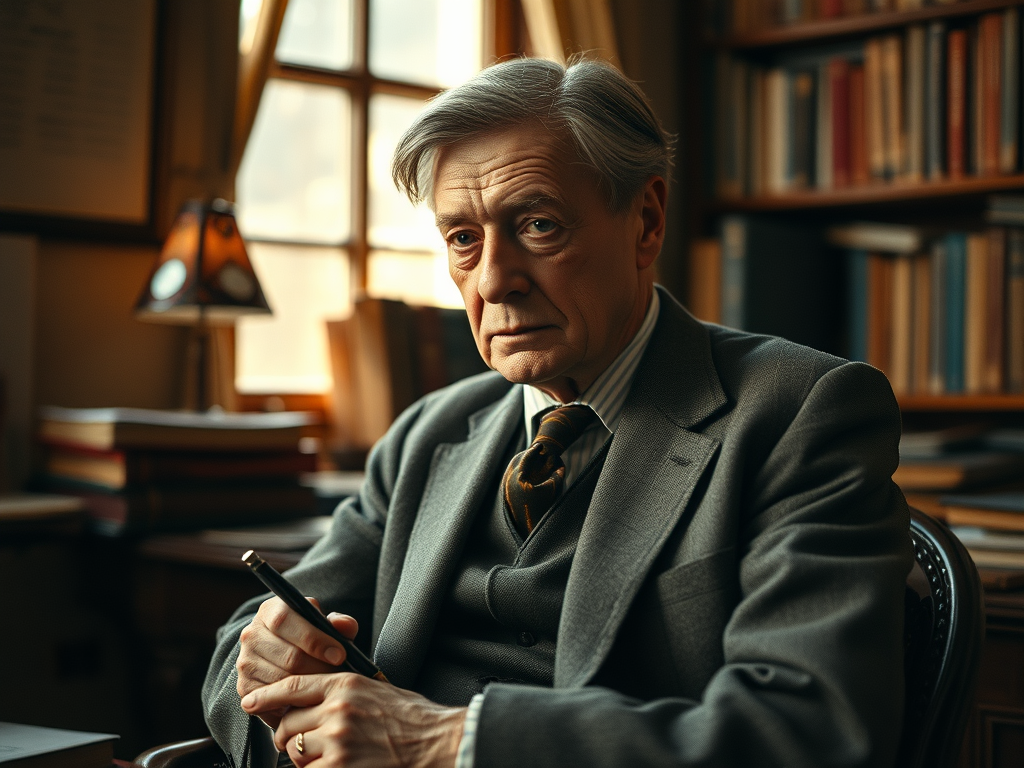
Lord Byron

Lord Byron, whose full name was George Gordon Byron, was a renowned British poet and a leading figure in the Romantic movement. He was born on January 22, 1788, in London, England, and died on April 19, 1824, in Missolonghi, Greece. Byron led a fascinating and often tumultuous life marked by scandal, literary success, and political involvement. Byron was born into a noble and wealthy family. His father, Captain John “Mad Jack” Byron, was a profligate, and his mother, Catherine Gordon, was a Scottish heiress. Byron inherited his title, becoming the 6th Baron Byron, at the age of 10 upon the death of his great-uncle. He gained fame as a poet by publishing his first major work, “Childe Harold’s Pilgrimage,” in 1812. This poem brought him almost instant acclaim and established him as one of the leading literary figures of his time. Byron’s works often reflected his experiences and emotions, and he was known for his passionate and lyrical poetry, with a reputation for his romantic liaisons and scandalous affairs. He had numerous love affairs, including a notorious relationship with Lady Caroline Lamb and a half-sister, Augusta Leigh. His personal life often overshadowed his literary reputation. In 1816, Byron left England, never to return, amidst rumours and scandals surrounding his personal life. He spent time in Switzerland and Italy, where he associated with other Romantic poets such as Percy Bysshe Shelley and Mary Shelley. He became involved in the Greek War of Independence against the Ottoman Empire in 1823. He travelled to Greece to support the cause and died of a fever at Missolonghi in 1824 at 36. The Greek people mourned his death, seeing him as a hero of their struggle for independence.

Overall, Lord Byron’s life was marked by passion, literary genius, and controversy. His works continue to be celebrated for their beauty and emotional depth, and he remains one of the most influential poets in English literature. 

Image by AI

William Blake

William Blake (1757-1827) was an English poet, painter, and printmaker now considered one of the most significant figures of English literature. Born on November 28, 1757, in London, England, he showed an early talent for drawing and poetry and was encouraged by his parents to nurture his creative skills. Blake was a visionary artist who created his own unique mythology and symbolism in his art. He was known for his intricate and imaginative illustrations, often combining text and images. He is widely recognized for his poetry, which frequently explored themes of spirituality, imagination, and social injustice. Some of his most famous works include “Songs of Innocence and Experience,” “The Marriage of Heaven and Hell,” and “The Tyger.”

Blake’s work was deeply influenced by his spiritual beliefs, which combined elements of Christianity, mysticism, and a rejection of conventional organized religion. He believed in the power of the imagination and the importance of creativity and art in understanding the world. As a skilled printmaker, he developed his own unique method of printing, known as relief etching, which allowed him to combine text and images on the same plate. This technique gave him greater artistic freedom and control over the production of his work. Although Blake was not widely recognized during his lifetime, he has since come to be regarded as one of the most influential figures in English literature and art. His work has influenced countless artists and writers, and his ideas about creativity, imagination, and spirituality continue to resonate today. Overall, William Blake’s life and achievements reflect his unique vision and creativity, as well as his deep engagement with his time’s spiritual and philosophical questions. 

Geoffrey Chaucer

Geoffrey Chaucer was an English poet and author who is widely regarded as the greatest English poet of the Middle Ages. He is best known for his work “The Canterbury Tales,” a collection of stories written in Middle English considered one of the most important works of English literature. Born around 1343 in London, England, Chaucer came from a family of wine merchants and was well-educated. He served as a page in the household of Elizabeth, Countess of Ulster. Holding various positions in the royal court throughout his life exposed him to various experiences and people that influenced his writing. In addition to his work on “The Canterbury Tales,” Chaucer was also a diplomat and civil servant. He travelled to various European countries on diplomatic missions and held important government positions, including serving as a customs official and a justice of the peace.

His writing style was innovative for the time. He used English vernacular instead of the more traditional Latin or French. His writing often featured humour, satire, and social commentary, making him a popular and influential figure in English literature. Geoffrey Chaucer died in 1400 and was buried in Westminster Abbey in London. His work continues to be studied and celebrated for its literary merit and its insight into life and society in medieval England. 

Jean M. Auel

Jean M. Auel is an American writer known for her Earth’s Children series of novels, a prehistoric fiction series set in Europe during the Upper Paleolithic era. The series started with the publication of “The Clan of the Cave Bear” in 1980, which was a huge success and became a bestseller.

Jean Marie Auel was born on February 18, 1936, in Chicago, Illinois. She studied at the University of Portland and received her Bachelor of Arts degree in 1976. Before becoming a writer, she worked as a technical writer and a credit manager. After the success of her first novel, Auel continued the Earth’s Children series with several more books, including “The Valley of Horses,” “The Mammoth Hunters,” “The Plains of Passage,” “The Shelters of Stone,” and “The Land of Painted Caves.” Her novels are known for their detailed research into prehistoric times, including the flora, fauna, and cultures of the time. The series follows the life of a young Cro-Magnon woman named Ayla, who is raised by Neanderthals and must navigate the challenges of life in a prehistoric world.

Jean M. Auel’s books have been translated into numerous languages and have sold millions of copies worldwide. While she faced some criticism for the accuracy of her portrayals of prehistoric life, her novels have been praised for their imaginative storytelling and vivid depictions of ancient cultures. She passed away on March 28, 2019, at the age of 82. Her legacy lives on through her Earth’s Children series, which continues to captivate readers with its unique blend of historical research and compelling storytelling.

Bernard Cornwell

Bernard Cornwell is a British author known for his historical novels, notably his series of historical fiction novels set during the Napoleonic Wars featuring the character Richard Sharpe. Born on February 23, 1944, in London, England, Cornwell did not start writing novels until later. Before becoming an author, he worked as a teacher and television producer. His experiences as a teacher and interest in history influenced his decision to write historical fiction novels. Cornwell’s breakthrough came with publishing his first Richard Sharpe novel, “Sharpe’s Eagle,” in 1981. The Richard Sharpe series, which follows the adventures of a British soldier in the Napoleonic Wars, became immensely popular and established Cornwell as a leading author of historical fiction. In addition to the Sharpe series, Cornwell has written several other series and standalone novels set in various historical periods, including the Saxon Stories series (adapted into the TV series “The Last Kingdom”), the Warlord Chronicles, and the Grail Quest series.

Bernard Cornwell’s novels are known for their meticulous research, engaging storytelling, and vivid depictions of historical events and battles. Over the course of his career, Cornwell has received numerous awards and accolades for his work, and his books have been translated into multiple languages and adapted for television and film.

Images by AI