Daniel Defoe

Daniel Defoe was born around 1660 in London, England, into a family of dissenters. His father was a successful merchant, which provided Defoe with a certain level of education. He attended a dissenting academy, where he was exposed to various ideas and philosophies. Defoe started his career as a merchant but faced financial difficulties, leading him to switch to writing and journalism. He wrote political pamphlets and essays, often expressing his views on trade, politics, and society. His early works included “The Review,” a periodical that discussed contemporary issues.


Robinson Crusoe (1719): Defoe’s most famous novel tells the story of a shipwrecked sailor who spends 28 years on a deserted island. The novel explores survival, self-sufficiency, and colonialism, and it has been interpreted in various ways, including as an allegory for the human condition.

Moll Flanders (1722): This novel follows the life of a woman born in prison and embarks on a series of adventures that include crime, love, and betrayal. It examines issues of gender, class, and morality.

A Journal of the Plague Year (1722): This historical novel is a first-person account of the Great Plague of London in 1665. It blends fiction with real events and provides vivid descriptions of the plague’s societal impact.

Roxana (1724): In this novel, Defoe tells the story of a woman who becomes a successful courtesan. It explores themes of identity, morality, and women’s struggles in a patriarchal society.

Defoe’s later years were marked by financial instability and political controversy. He was imprisoned for a time due to his political writings, which often criticized the government. Despite these challenges, he continued to write until he died in 1731. Defoe is considered one of the founding figures of the modern novel. His works influenced future writers and established narrative techniques still used today. His exploration of character psychology and realistic settings helped shape prose fiction’s development.

Rick Riordan

Rick Riordan is a well-known American author who wrote the Percy Jackson & the Olympians series, among other popular book series. Riordan was born on June 5, 1964, in San Antonio, Texas, USA. Before becoming a full-time writer, he worked as a teacher and taught English and history at public and private schools in Texas for many years. Riordan is best known for his Percy Jackson series, which follows the adventures of a young demigod named Percy Jackson as he navigates the world of Greek mythology. The series includes five books: “The Lightning Thief,” “The Sea of Monsters,” “The Titan’s Curse,” “The Battle of the Labyrinth,” and “The Last Olympian.”

In addition to the Percy Jackson series, Riordan has written several other successful book series, including The Heroes of Olympus, The Kane Chronicles, Magnus Chase and the Gods of Asgard, and The Trials of Apollo. Riordan’s books often blend modern-day settings with ancient mythology, appealing to readers of various ages with their mix of action, adventure, humour, and mythology. His books have been widely praised for their engaging storytelling, diverse characters, and introduction of mythology to a new generation of readers. His works have been adapted into movies and graphic novels.

Image by AI

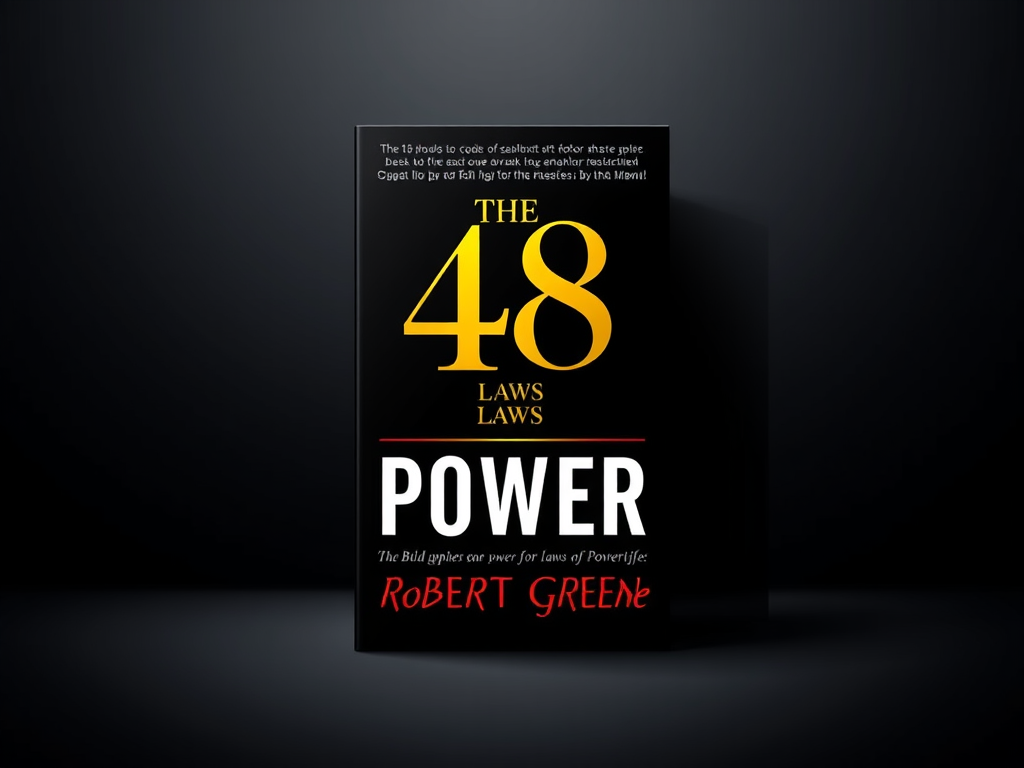
Robert Greene – “The 48 Laws of Power”

“The 48 Laws of Power” by Robert Greene is a guide to gaining and maintaining power, drawing on historical examples and philosophical insights. Here’s a summary of some key themes and a few notable laws:

1. Power Dynamics: The book emphasizes the importance of understanding power dynamics in relationships, personal or professional.

2. Manipulation and Strategy: Greene discusses the art of manipulation and the strategies individuals can use to achieve their goals, often advocating for cunning and strategic thinking.

3. Historical Examples: Each law is illustrated with historical anecdotes, showcasing figures like Machiavelli, Sun Tzu, and various monarchs and politicians who exemplified the principles.

Notable Laws:

– Law 1: Never Outshine the Master: Make those above you feel superior; in your desire to please, do not go too far in displaying your talents.

– Law 3: Conceal Your Intentions: Keep people off-balance by never revealing your true purpose.

– Law 15: Crush Your Enemy Totally: Leave no room for your opponent to recover; if you allow them to escape, they may return stronger.

– Law 33: Discover Each Man’s Thumbscrew: Find the weakness in others to gain leverage over them.

– Law 48: Assume Formlessness: Be adaptable and unpredictable to avoid being pinned down by others.

The book is a controversial but insightful exploration of power and its complexities. It encourages readers to navigate their social landscapes with awareness and strategy. I have had this book on my shelf for many years, and it serves numerous uses, including bibliomancy. In my opinion, there are two sides to the usage of the laws:

Softly, as in a positive way of thinking without harming others or oneself but using them to achieve goals. Example – The success of this book, which became a New York Times bestseller with over 1.3 million copies sold in North America alone.

Hard and Literate, as some of today’s politicians and country leaders’ attitudes and behaviours testify. This world seems overrun by people in powerful positions in whatever industries, as being ruthless in the extreme. There is room to consider that many of these laws could also be applied to rules, regulations and policies repressing the electorate globally.

Francis Bacon

Francis Bacon (1561–1626) was an English philosopher, statesman, scientist, and author. He is best known for developing the scientific method and for his works on empiricism. Bacon’s philosophy emphasized the importance of observation, experimentation, and inductive reasoning. His major works include “Novum Organum,” which lays out his ideas on scientific inquiry, and “The Advancement of Learning,” where he advocates for the reform of learning and knowledge.

Bacon also served as Attorney General and Lord Chancellor of England, and he played a significant role in the intellectual climate of the Renaissance. His ideas have had a lasting influence on the philosophy of science and the development of modern scientific thought. Would you like to know more about a specific aspect of his work or life? 

Benny the Donkey

Once upon a time, in a lush, green forest, there lived a little donkey named Benny. One day, while exploring the woods, Benny wandered too far from home and soon found himself lost among the towering trees. The sunlight flickered through the leaves, and Benny felt a twinge of fear as he realized he didn’t know the way back. As he wandered, Benny stumbled upon a small clearing filled with twinkling lights and laughter. Curiosity sparked within him, and he approached cautiously. To his amazement, he discovered a group of cheerful elves busily preparing for the holiday season. They were wrapping presents, decorating trees, and singing jolly tunes. The elves spotted Benny and immediately rushed over, their eyes sparkling with delight.

“A lost donkey! How wonderful!” exclaimed one of the elves named Tinsel. “You must come with us to Santa’s grotto!”

Benny, feeling a mix of excitement and relief, followed the elves through the forest. They led him to a magical place filled with shimmering snowflakes and the sweet scent of pine. Santa’s grotto was a cosy haven, bustling with activity. Benny was welcomed with open arms and given a warm, fluffy blanket to snuggle in. As the days passed, Benny found a new home among the elves and quickly made friends with the reindeer. There was Dasher, the fastest; Dancer, the most graceful; and Blitzen, who loved to play tricks. Benny and the reindeer grew inseparable, spending their days playing games in the snow and sharing stories under the stars. One chilly evening, as Christmas approached, Santa called upon Benny.

“Would you help us deliver the presents this year?” he asked with a twinkle in his eye.

Benny’s heart swelled with joy. He had never felt so needed. On Christmas Eve, Benny teamed up with the elves and reindeer to load the sleigh with brightly wrapped gifts. He felt proud as he carried the heavier packages, his strong little legs working alongside the swift reindeer. Together, they soared through the night sky, delivering joy to children all around the world.

When the night was over, Benny returned to the grotto, his heart full. He had found not just a home but a family. Every year after, he became an essential part of Santa’s team, spreading cheer and magic, proving that sometimes, getting lost can lead to the most beautiful adventures. And so, Benny the Donkey lived happily ever after, embraced by the warmth of friendship and the spirit of Christmas. 

Image by AI