Sylvia Plath was an American poet, novelist, and short-story writer born in Boston, Massachusetts, on October 27, 1932. She is best known for her confessional style of writing, which explores themes of death, self-destruction, and the female experience. Sylvia Plath showed literary promise from a young age and began writing poetry as a child. She excelled academically and won a scholarship to Smith College in 1950. Plath studied at Smith College and later at Newnham College, Cambridge, on a Fulbright Scholarship. She struggled with depression during her college years, which would later influence her writing.
In 1956, Sylvia Plath married British poet Ted Hughes. The couple had two children, Frieda and Nicholas. Their marriage was tumultuous and ended in separation in 1962. Her poetry is known for its intense, personal subject matter and powerful imagery. The first poetry collection, “The Colossus,” was published in 1960. She is best known for her semi-autobiographical novel, “The Bell Jar,” published under a pseudonym in 1963.
Plath battled with depression and underwent electroconvulsive therapy. Her struggles with mental illness are reflected in her writing, particularly in her later works. She tragically died by suicide on February 11, 1963, at the age of 30. Her death came just a month after publishing “The Bell Jar” in the UK. Despite her short life, Sylvia Plath’s work has had a lasting impact on literature. She is regarded as one of the leading figures of confessional poetry and a critical voice in feminist literature. Her poetry collections, including “Ariel,” published posthumously in 1965, continue to be studied and admired for their depth and emotional power. Sylvia Plath’s writing continues to be celebrated and analyzed for its raw emotion, vivid imagery, and exploration of complex themes. Her legacy as a writer and poet remains influential in literature.
In a bustling medieval village surrounded by dense forests and majestic mountains, there lived a mysterious figure known only as the Masked One. This enigmatic persona was a source of fascination and fear as they moved silently through the cobblestone streets, always wearing a beautifully ornate mask that concealed their true identity. The mask was a masterpiece adorned with intricate designs, yet its purpose was to hide rather than reveal. The villagers were divided in their opinions about the Masked One. Some believed they were a nobleman in disguise, others feared they were sorcerers dabbling in dark arts, and a few even whispered that the mask concealed the face of a ghost seeking redemption. Despite the rumours, one thing was sure: the Masked One was a figure of mystery and intrigue.
Despite their anonymity, the Masked One was known for their acts of kindness. They would leave baskets of food on the doorsteps of the poor, offer coins to struggling families, and sometimes even provide medicine to the sick. These benevolent deeds earned them both admiration and suspicion. Villagers pondered why someone would be so generous yet hide behind a mask. Among those captivated by the Masked One’s allure was a young girl named Elara. Unlike others who feared the unknown, Elara was driven by curiosity and a desire to uncover the truth. She often watched the Masked One from a distance, fascinated by their quiet grace and the aura of mystery that surrounded them. One stormy night, as rain poured down and thunder rumbled in the distance, Elara decided to follow the Masked One. She watched as they moved with purpose through the village, eventually reaching the edge of the settlement where a secluded cottage stood, partially hidden by overgrown trees and vines. With her heart pounding, Elara crept closer, peering through a window to catch a glimpse inside.
What she saw astonished her. The Masked One, alone in the dimly lit room, slowly removed their mask. Beneath it was the face of Sir Cedric, a knight once renowned for his valour and honour. His face bore the marks of battle—scars that told tales of bravery and betrayal. Sir Cedric had been a hero, but after being wronged by those he trusted, he withdrew from the world, choosing to hide his identity behind the mask. Elara’s heart ached with compassion. She knocked softly on the cottage door, and when Sir Cedric opened it, he was taken aback to see the young girl standing there. Instead of fear or judgment, Elara offered kindness.
“You’ve helped so many,” she said, “but who helps you?”
At that moment, Sir Cedric realised that he had been isolating himself physically and emotionally. He invited Elara in and recounted his story—a tale of loyalty betrayed, battles lost, and the deep shame that had driven him to hide. The mask, he explained, was both his shield from the world and a prison of his own making. Moved by his story, Elara vowed to help Sir Cedric reclaim his place in the village. Together, they devised a plan to share his true identity and intentions with the townsfolk. Elara’s courage and Sir Cedric’s sincerity would be key to winning their trust. The following day, with Elara by his side, Sir Cedric returned to the village square, this time without his mask. The villagers gasped in surprise, recognizing the once-great knight they thought was lost to time. Sir Cedric spoke to them openly, sharing his story and the reasons behind his disguise. He expressed his desire to serve and protect the community once more, not as a masked stranger but as a friend and neighbour. At first, the villagers were hesitant, but Elara’s unwavering support and Sir Cedric’s genuine remorse and goodwill began to sway their hearts. They saw not a ghost or a villain but a man who had suffered and learned the true value of compassion and humility. Over time, Sir Cedric became a beloved protector of the village, respected not for his past glories but for his present kindness. The mask, which once symbolized fear and mystery, was transformed into a powerful reminder of redemption and the strength found in vulnerability. The tale of the face behind the mask became a cherished legend, teaching generations that true beauty lies not in appearances but in the courage to reveal one’s true self and the kindness that flows from an open heart.
William Shakespeare (1564-1616) was an English playwright, poet, and actor. He is widely regarded as one of the greatest writers in the English language and the world’s pre-eminent dramatist. He is often called England’s national poet and the “Bard of Avon.” Shakespeare’s works, including plays, sonnets, and poems, have had a profound influence on literature and the arts. His plays have been translated into every major living language and are performed more often than those of any other playwright.
Some of his most famous plays include “Romeo and Juliet,” “Hamlet,” “Macbeth,” “Othello,” “King Lear,” and “A Midsummer Night’s Dream.” His works explore themes such as love, jealousy, betrayal, ambition, and the human condition. Shakespeare’s writing style is known for its rich language, complex characters, and timeless themes. His contributions to the English language are immense, with many phrases and words he coined that are still used today.
Overall, Shakespeare’s works continue to be studied, performed, and celebrated around the world, making him a cultural icon whose influence extends far beyond the literary realm.
Once upon a time, in a small, frostbitten town, there lived a man named Milligan the Miser. Milligan was notorious for his disdain for Christmas and children. As the holiday season approached, he would retreat to his dimly lit home every year, avoiding the festive cheer that filled the streets. He loathed the laughter of children building snowmen, the carolers singing joyfully, and the bright decorations adorning every house but his. Milligan hoarded his wealth, counting every penny like a precious gem. He believed showing generosity showed weakness and took pride in his solitude. The townsfolk whispered about him, shaking their heads at the old man who seemed to embody the very spirit of Scrooge.
One freezing Christmas Eve, as snowflakes danced outside his window, Milligan sat alone by the fire, grumbling about the holiday. Suddenly, he was jolted awake by a strange noise. It sounded like laughter, but not the kind he detested. This laughter was light and filled with joy, echoing from outside his window. Curious, he peeked outside. To his astonishment, he saw a group of children gathered in the yard across the street. They were building a snowman, their cheeks flushed with excitement. At that moment, a memory flickered in Milligan’s mind—a memory of his childhood, when he once loved Christmas when the laughter had filled his home. But as quickly as the memory appeared, it vanished, replaced by his familiar bitterness. Milligan the Miser closed the curtain, determined to return to his solitude. Yet, as he lay back down, a strange warmth enveloped him, and he drifted into a deep sleep.
That night, Milligan was visited by three spirits. The first, the Ghost of Christmas Past, showed him scenes from his youth—joyful Christmas mornings filled with laughter and love. He saw himself as a boy, running down the stairs to find gifts and family gathered around a tree, their faces glowing with happiness. Tears filled his eyes as he remembered what he had lost.
The second spirit, the Ghost of Christmas Present, revealed the joy that surrounded him. Milligan watched as families celebrated, sharing meals and laughter. He saw the children he had dismissed, their innocence and joy illuminating the dark winter night. He felt a pang of longing for the first time—a desire to be part of their happiness.
Finally, the Ghost of Christmas Yet to Come appeared, showing Milligan a bleak future. He saw himself alone, forgotten, his wealth turning to dust. The town had moved on without him, and the children’s laughter was replaced by silence. Milligan felt a deep sorrow; he realized that his miserly ways had cost him the warmth of human connection.
When he awoke, it was Christmas morning. The sun streamed through his window, and Milligan felt a spark of joy for the first time in years. He quickly dressed and rushed outside, determined to change his ways. He visited the local bakery, buying sweets and treats to share. He filled his arms with gifts and headed to the town square, where children played.
“Happy Christmas!” he called out, his voice booming with newfound cheer.
The children turned, surprised, but their faces lit up with smiles. Milligan handed out gifts, sharing the joy he had long denied himself. He laughed with them, feeling the warmth of community wrap around him like a cosy blanket. As the day unfolded, Milligan found himself surrounded by laughter and love. The townsfolk welcomed him with open arms, their hearts warmed by his transformation. No longer was he Milligan the Miser; he had become Milligan the Generous, a man who had learned the true spirit of Christmas. From that day on, Milligan embraced the holiday season, filling his home with laughter and joy. He discovered that giving brought him more happiness than hoarding ever had. And every year, as Christmas approached, he looked forward to the festivities and the children’s laughter that filled the air—reminding him of the magic of connection he had once forgotten.
William Wordsworth (1770-1850) was a renowned English Romantic poet who, along with Samuel Taylor Coleridge, helped launch the Romantic Age in English literature with their joint publication “Lyrical Ballads” in 1798. Wordsworth is known for his lyrical poetry that often celebrates nature’s beauty, the individual’s emotions, and the human mind’s power.
Some of Wordsworth’s most famous works include poems like “Lines Composed a Few Miles Above Tintern Abbey,” “I Wandered Lonely as a Cloud” (commonly known as “Daffodils”), and “The Prelude,” which is considered one of the greatest autobiographical poems in the English language. Wordsworth’s poetry often explores memory, childhood, imagination, and the relationship between humanity and nature. He believed that poetry should be accessible to the common people and spontaneously overflow with powerful feelings.
Throughout his life, Wordsworth was closely associated with the Lake District in England, where he drew much of his inspiration from the landscape’s natural beauty. His work significantly influenced subsequent poets and writers, and he is widely regarded as one of the greatest poets in the English literary tradition.



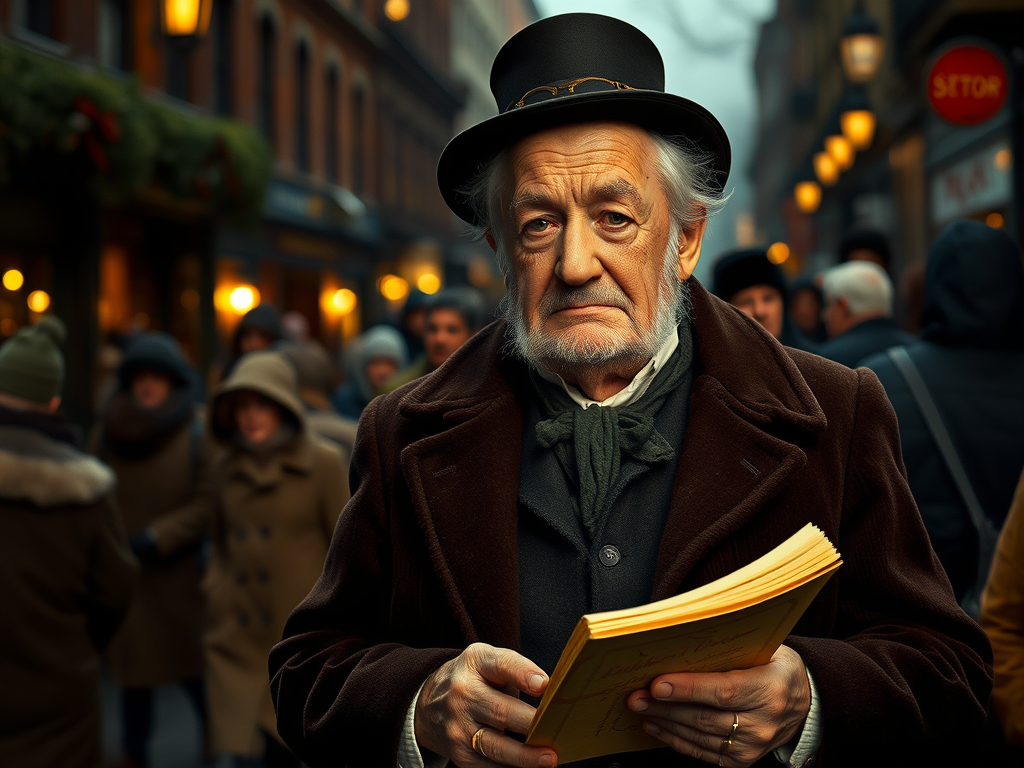

 Lazarus Carpenter - Author