Tom and Terry – Squabbling Farmers

Once upon a time, in a quaint village surrounded by lush fields, there were two neighbouring farmers named Tom and Terry. Despite living side by side, they could not have been more different. Tom was meticulous and organized, while Terry was carefree and spontaneous. Their contrasting styles led to countless disagreements over the years, from the best way to plant crops to the ideal time for harvesting. The villagers often chuckled at their bickering. “Here come the farmers again!” they would say, shaking their heads as the two men argued about everything under the sun. It was as if they thrived on conflict, and their quarrels became a regular spectacle.

One summer, a severe drought struck the village. The once-bountiful fields began to wither under the relentless sun. Both farmers struggled to keep their crops alive, but their stubbornness prevented them from seeking help. Tom refused to accept Terry’s advice on irrigation techniques, while Terry scoffed at Tom’s meticulous planning. One fateful afternoon, as Tom worked in his parched fields, he stumbled into a hidden hole, painfully twisting his ankle. He tried to stand but fell back down, realizing he was trapped. Desperate, he called out for help, but the sound of his voice was swallowed by the dry wind.

Meanwhile, Terry was tending to his own field when he heard the faint cries. At first, he hesitated, thinking it was just another of Tom’s attempts to annoy him. But then he recognized the urgency in Tom’s voice. Without a second thought, he raced over to his neighbour’s field. When Terry arrived, he found Tom struggling to pull himself out of the hole. Without a moment to lose, he reached down and helped Tom to his feet, supporting him as they returned to safety. Tom winced in pain, but he was grateful. “Thank you, Terry,” he said, sincerity in his eyes.

For the first time, the weight of their quarrels felt trivial in the face of real danger. Terry, panting from the effort, shrugged off Tom’s thanks.

“I might not like you much, but I’d never let you suffer.”

In the days that followed, the two men began to work together. They shared resources, pooled their knowledge, and combined their efforts to save what crops they could. The drought brought them closer, and they learned to appreciate each other’s strengths. As the summer waned and the rains returned, their fields began to recover. Each day, their tension faded, replaced by a newfound respect. Of course, they still had disagreements, but now they approached them with a sense of humour, often laughing about their past squabbles. From that day on, Tom and Terry became neighbours and friends. The village watched in amazement as the two farmers, once at odds, now stood side by side, united in their efforts. Their tale became a reminder that sometimes, the most significant conflicts can lead to the most profound bonds and that compassion can flourish in the most unexpected places. 

David Lodge

David Lodge is a renowned British author and playwright, born on January 28, 1935, in London. He is best known for his novels that often explore themes of academia, religion, and the complexities of human relationships, typically infused with humour and irony.

Lodge’s academic career significantly influenced his writing. He taught English literature at the University of Birmingham for many years, which provided him with a rich backdrop for his literary explorations. His notable works include “Changing Places” (1975), “Small World” (1984), and “Nice Work” (1988), all of which are part of what is sometimes referred to as the “Campus Trilogy.” These novels examine the lives of academics and the often absurd realities of university life.

In addition to his novels, Lodge has written plays, essays, and critical works on literature, showcasing his deep engagement with the literary world. His writing style is characterized by wit and a keen observation of social dynamics, making his works both entertaining and thought-provoking. Lodge has received various awards and accolades throughout his career, solidifying his status as a significant figure in contemporary literature. His contributions to both fiction and literary criticism continue to resonate with readers and scholars alike. 

Dragons Who Saved the World Abstract

Drako

Wind Dragon

Once upon a time, in a magical land, there lived a dragon named Drako. He was unlike any other dragon in the realm. While other dragons breathed fire and hoarded treasure, Drako had a unique passion for the wind. He would spend his days soaring high above the clouds, feeling the gentle breeze against his scales, and listening to the harmonious melody it created as it whistled through the trees. Drako admired the wind’s freedom and grace. He marvelled at how it could travel anywhere it pleased, carrying whispers and stories from distant lands. Drako often imagined himself as the wind, dancing through the sky and exploring the vast wonders of the world.

One day, as Drako was gliding through the sky, he came across a small village nestled in a lush valley. The villagers, who had never seen a dragon before, were terrified at the sight of Drako. They hid inside their homes, fearing that he would unleash his fiery breath upon them. Curious and saddened by the villagers’ fear, Drako decided to show them his gentle nature. He descended from the sky and landed in the village square, making sure not to harm anyone or anything with his massive wings. The villagers cautiously peered out from behind their windows, their eyes wide with both fear and wonder. Drako approached them with a friendly smile, trying his best not to appear intimidating.

“My name is Drako,” he said softly. “I mean you no harm. I come in peace.”

The villagers hesitated for a moment, but seeing the sincerity in Drako’s eyes, they cautiously stepped forward. They soon realized that Drako was not like the other dragons they had heard tales of. Drako was kind, gentle, and harboured a deep reverence for the wind. Intrigued by Drako’s unique qualities, the children of the village gathered around him, their eyes sparkling with curiosity. Drako saw this as an opportunity to share his love for the wind and inspire the children. He began to tell them stories of his adventures through the skies, describing the breath-taking landscapes he had seen and the enchanting sounds of the wind he had heard. The children listened intently, their imaginations ignited by Drako’s words.

As the sun began to set, Drako spread his wings and took flight, his scales shimmering in the golden light. The children watched in awe as he gracefully soared through the air, riding the currents of the wind. Inspired by Drako’s passion and bravery, the children decided to create a special celebration in honour of the wind. They built colourful windmills and kites, decorating them with symbols of the wind and the dragon who worshipped it. Every year, on the same day, the village celebrated the Wind Festival. They flew their kites high in the sky, their laughter carried by the wind, and they danced joyously to the music it created.

Drako was their honoured guest, and together, they celebrated the beauty and power of the wind. And so, Drako the dragon, who worshipped the wind, not only brought joy and inspiration to the village but also taught them the importance of embracing the unique passions and qualities that make each individual special. From that day forward, the village and Drako lived in harmony, forever connected by their reverence for the wind and the dragon who showed them the beauty of following one’s heart.

Digital Illustrations by Gill Brooks

Anthony Trollope

Anthony Trollope (1815–1882) was an English novelist and civil servant, known for his prolific writing and keen social observations. He is best known for his series of novels set in the fictional county of Barsetshire, which explore the lives and interactions of its inhabitants, often highlighting themes of politics, love, and social change.

Born in London, Trollope faced various challenges in his early life, including financial difficulties. He worked for the Post Office, where he developed a disciplined writing routine, often composing during his commute. This dedication enabled him to publish numerous works, including “The Warden,” “Barchester Towers,” and the “Palliser” series.

Trollope’s writing is characterized by its realism, humor, and deep understanding of human nature. He was a pioneer in the use of serialized fiction, which allowed him to reach a broad audience. Despite facing criticism during his time, he has since been recognized as one of the major Victorian novelists, influencing many writers who followed.

In addition to his literary work, Trollope was known for his travels and interest in politics. He was an advocate for social reform and often infused his political views into his narratives. His legacy endures, with many of his novels still in print and widely read today. 

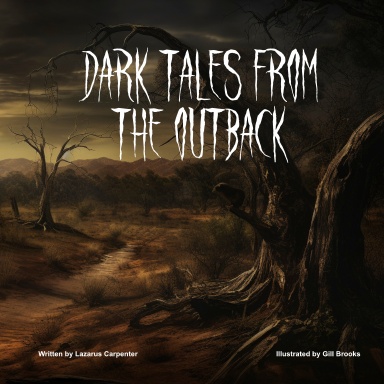
The Madness of Outback’s Shadow

In the heart of the Australian Outback, there existed a legend whispered among the indigenous tribes: the tale of Outback’s Shadow, a monstrous kangaroo driven mad by the spirits of the land. According to legend, Outback’s Shadow was cursed for trespassing into sacred grounds, and ever since, it roamed the desolate plains, seeking vengeance on any who dared enter its domain. The story was dismissed as a mere folktale by most, but for those who lived near the Outback, it was a different matter entirely.

The small town of Dusty Creek was plagued by strange occurrences; livestock was found brutally mutilated, and eerie howls echoed through the night. People whispered that Outback’s Shadow was real, and it hungered for human flesh. One fateful evening, a group of adventurous tourists, drawn by the legend, ventured into the heart of the Outback. Among them was Sarah, a young woman with a penchant for the macabre.

As the sun dipped below the horizon, the group set up camp, oblivious to the danger lurking in the darkness. As the night wore on, the air grew thick with an otherworldly stillness. The crackling campfire is the only source of warmth and comfort in this vast expanse of wilderness. A blood-curdling screech shattered the silence, sending shivers down the spines of the campers. Terrified, they huddled together, their eyes scanning the inky blackness for any sign of movement. It was then they saw it: a pair of malevolent, glowing eyes fixated on them from the shadows. Outback’s Shadow had found its prey.

The creature emerged from the darkness, towering over the campers on hind legs, fur mottled and matted, its eyes burning with madness. Sarah and her companions recoiled in horror as Outback’s Shadow let out a guttural, unearthly growl. Driven by primal instinct, they scattered, but the kangaroo, fuelled by an insatiable bloodlust, pursued them relentlessly. One by one, it picked them off, tearing through flesh and bone with incredible savage ferocity. Sarah, her heart pounding in terror, found herself alone, the agonized screams of her friends echoing hauntingly in the night.

Desperate and on the brink of despair, Sarah stumbled upon a cave, its entrance shrouded in ominous shadows. With no other options, she sought refuge within, hoping to evade the ravenous creature stalking her. As she delved deeper into the cavern’s murky depths, she discovered a series of crude drawings etched onto the walls, depictions of a kangaroo, its eyes ablaze with malevolence, and scenes of carnage and suffering. It was then she realized the truth: Outback’s Shadow was no mere beast; it was a malevolent entity, a twisted spirit bound to the form of a kangaroo, cursed to wreak havoc upon any who dared encroach upon its domain. But before Sarah could process this revelation, she heard a guttural snarl emanating from the cave’s entrance. Outback’s Shadow had found her. In a frenzied panic, she stumbled deeper into the darkness, heart pounding deep in her chest. The walls seemed to close in around her, and the air grew thick with a palpable sense of dread. Sarah’s breath came in ragged gasps as she frantically sought a way out, but the labyrinthine passages seemed to twist and turn, leading her deeper into the heart of the cursed cavern.

The oppressive darkness enveloped her, and the walls seemed to pulse with malevolent energy. She stumbled into a chamber bathed in an eerie, ethereal glow. In the centre of the chamber, a gnarled tree stood, its twisted branches reaching toward the ceiling like skeletal fingers. As Sarah cautiously approached the tree, she noticed an ancient, weathered tome resting at its base. With trembling hands, she opened the book and began to decipher the cryptic text within its pages.

The tome spoke of an ancient ritual, a ritual that could break the curse binding Outback’s Shadow to the physical realm. Driven by a newfound sense of purpose, Sarah fervently studied the arcane instructions. The ritual required her to gather rare herbs and perform an intricate sequence of incantations at the exact stroke of midnight when the veil between the spirit world and the living world were thinnest. With the weight of the ancient tome in her hands, Sarah ventured deeper inside the cavern, determined to seek out the elusive herbs. Minutes stretched into hours as she scoured the subterranean passages, her senses honed to the slightest rustle or whisper that might lead to the ingredients she sought. As the midnight hour approached, Sarah emerged from the depths of the cave, clutching the precious herbs in her trembling hands.

With unwavering resolve, she returned to the gnarled tree and prepared to enact the ritual that could break the curse of Outback’s Shadow. The air crackled with otherworldly energy as Sarah meticulously followed the instructions, her voice infused with ancient power as she chanted sacred incantations. The very ground seemed to tremble when the ritual reached its crescendo, and the chamber became bathed in an ethereal glow. Suddenly, a bestial howl pierced the air, and Outback’s Shadow materialized before her, eyes ablaze with fury. But as the ritual neared completion, the creature’s form began to waver, its roars turning into anguished cries. With a final, resounding incantation, Sarah completed the ritual, and a blinding flash of light filled the chamber.

When the radiance subsided, Outback’s Shadow was gone, and the oppressive aura that before shrouded the cavern evaporated like mist in the morning sun. Exhausted but triumphant, Sarah emerged from the cave, the weight of the ancient tome still heavy in her hands. As the first light of dawn painted the horizon, she knew that she had broken the curse that had plagued the Outback for centuries. From that day forward, the legend of Outback’s Shadow faded into obscurity, and the cursed creature was never seen or heard from again.

Some whispered it had been banished to the spirit realm, while others believed it had found peace at last. For Sarah, the memories of that fateful night would forever linger, a testament to the inexplicable terrors lurking in the depths of the Outback. But she also carried with her the knowledge that even the most malevolent of spirits could be vanquished with courage, determination, and the enduring power of ancient magic.