The Little Boy Who Loved to Sleep

Once upon a time, in a quaint little village, there lived a boy named Leo. Leo was known throughout the village not for his mischievous antics or playful spirit but for his extraordinary talent for sleeping. From the moment he was born, it seemed like sleep was his superpower. He could doze off anywhere—on a swing, in the middle of a game, and even during dinner! While other children played in the sun, Leo would often be found under a shady tree, snuggled up with a soft blanket, dreaming of far-off lands and magical creatures. His parents, while sometimes exasperated by his constant napping, loved him dearly. They often joked,

“Our Leo could sleep through a thunderstorm!”

One sunny afternoon, the village held its annual festival, filled with laughter, music, and delicious food. The children ran about, excitedly participating in games and contests. But as the festivities began, Leo found a cozy spot beneath a grand old oak tree and quickly drifted off to sleep. In his dreams, Leo wandered through a vibrant world filled with colorful flowers that sang and trees that danced. He met friendly animals who invited him to join their adventures. There were talking birds who shared stories of their journeys and wise old turtles who offered him riddles to solve.

Meanwhile, back in the village, the festival continued, but something unexpected happened. As the sun began to set, a thick fog rolled in, enveloping the village in a mysterious haze. The villagers grew worried; they could hardly see each other, and the celebrations stopped. Suddenly, from the depths of the fog, a melodic voice rang out. It was the Dreamkeeper, a magical being who appeared only when the village was in need.

“Fear not, dear villagers,” she said. “The fog will lift if you can awaken the boy who dreams the most.”

The villagers looked at each other, realizing that Leo was missing. They rushed to the oak tree and gently shook him awake. Leo yawned and blinked, still caught between the dream world and reality. With a nudge from a concerned friend, he finally sat up, rubbing his eyes.

“Leo, you must help us!” the villagers pleaded. “The fog won’t clear until you share your dreams with us.”

Still half-asleep but sensing the urgency, Leo took a deep breath and recounted his incredible adventures in his dreams. He spoke of the singing flowers, the dancing trees, and the wise turtles. As he shared these tales, the fog began to shimmer and swirl, slowly lifting as laughter and joy filled the air. The villagers felt a sense of wonder with each story, their hearts lightening with each whimsical detail. The Dreamkeeper smiled, her magic weaving through the air, and soon the fog disappeared completely, revealing a beautifully starlit sky. The villagers cheered, grateful for Leo’s gift of dreams. They realized that his ability to sleep wasn’t just a quirk; it was a special connection to a world that inspired joy and creativity. From that day on, Leo was celebrated as the boy who slept and as the storyteller who brought dreams to life.

And so, Leo continued to nap, but now he did so with purpose. Every time he awoke, he shared his adventures, bringing the village together with enchanting tales. The little boy who was always sleeping had become the heart of the village, reminding everyone that dreams can bring light to even the foggiest days. And they all lived happily, the dreamers and the awakened, forever enchanted by the magic of imagination. 

‘Just One More Trophy’

In a small town where the sun kissed the rooftops every morning lived a man named Victor Ace. Victor was a boxer, revered for his lightning-fast jabs and an iron will that had led him to victory in every competition he entered. His home was a shrine to his achievements, with trophies gleaming on every surface, from the kitchen cupboards to the living room shelves. Each trophy told a story of sweat, determination, and the thrill of victory. As the years passed, Victor’s fame grew, but so did the weight of his trophies. They began to overwhelm him, crowding his space and life. He often joked that he was winning more cups than he could drink from. Friends would laugh, but Victor felt a strange sense of burden. He had dedicated his life to the ring, but now he yearned for something more profound meaning beyond the accolades that adorned his home.

One day, as he polished a particularly large championship cup—his pride and joy—Victor received a call from his longtime coach, Leo.

“Victor, there’s one last fight coming up. It’s a big one. The championship title is on the line, and they want you to take it.”

Victor hesitated. He had promised himself that this would be his final fight, a chance to retire on top.

“I don’t know, Leo. I’ve won so much already. What if I lose?”

“Winning or losing isn’t everything,” Leo replied, his voice steady. “It’s about the journey, the passion. Just think about it.”

That night, Victor lay in bed, staring at the ceiling. The thought of one last fight gnawed at him. After a restless night, he made his decision; he would fight, but not just for the trophy. He would fight to embrace his legacy, to show that boxing was more than just medals and cups. The day of the fight arrived, and the arena buzzed with electric anticipation. As he stepped into the ring, the crowd roared, their cheers echoing in his ears like a heartbeat. The atmosphere was tense; he could feel the weight of expectations pressing down on him. His opponent, a fierce young fighter with a reputation for raw power, stood across the ring, eyes burning with determination.

The bell rang, and the fight began. Victor danced around his opponent, slipping punches that came at him like thunder. He felt alive, the adrenaline coursing through his veins. Each jab was not just a move but a message to himself that he still had it and could soar. But as the rounds wore on, fatigue began to set in. The young fighter was relentless, pushing him to his limits. Victor’s body ached, but his spirit remained unbroken. With the crowd on the edge of their seats in the final round, he summoned every ounce of strength he had left. He executed a combination of punches that left his opponent staggering, and for a moment, time stood still.

With one final blow, he sent his rival to the canvas. The referee’s count echoed in the arena, and when the bell rang, it was clear—Victor had won again. The crowd erupted into a frenzy, but as he stood there, the cheers felt distant. He raised his arms in triumph, but his gaze shifted to the faces in the audience. In that moment, he understood. It wasn’t the trophy that mattered; it was the love of the sport, the camaraderie with his fellow fighters, and the journey he had taken. The trophies would remain, but they were just symbols of a life well-lived. After the fight, Victor walked home, the championship belt glistening at his side. He entered his house, where trophies lined every shelf, a testament to his legacy. But instead of feeling overwhelmed, he felt a profound sense of peace. He would keep the belt as a reminder. Still, he would also begin to clear out the cupboards, making space for new experiences—mentoring young fighters, volunteering, and sharing his love for boxing with the next generation. He smiled as he placed the latest trophy on a shelf that night. This was his last fight but also the beginning of a new chapter. The trophies would always be there, but now, they would serve as a reminder of the journey rather than the destination. Victor Ace had fought his last fight, but the real victory was yet to come. 

The Lost Tomes

In a quaint village nestled between misty hills and whispering woods lived an old man named Elias. His hair was as white as the clouds above, and his eyes twinkled with the kind of wisdom that only time can bestow. Elias was known for his vast collection of ancient books, which he had gathered over the decades—tomes filled with forgotten lore, mystical spells, and the stories of the world long past. Every day, he would wander through the village, his weathered leather satchel slung over his shoulder. The satchel was as old as Elias, its surface cracked and worn, telling tales of countless travels and adventures. Inside, the pages of the books were yellowed and frayed, each a treasure trove of knowledge he often shared with curious villagers, especially the children who gathered around him, wide-eyed and eager to learn.

One fateful autumn afternoon, as leaves danced gently, Elias set out for the nearby forest, seeking solace among the ancient oaks. He often found inspiration there, a connection to the earth that rejuvenated his spirit. However, as he walked deeper into the woods, the sun dipped below the horizon, casting long shadows ominously around him. Lost in thought and the beauty of the twilight, Elias didn’t notice when he brushed against a low-hanging branch. The satchel snagged, and with a sudden tug, the strap broke. Books tumbled out, scattering like leaves caught in a gust of wind. Distracted, Elias bent to gather them, but in his haste, he misjudged the distance and stumbled, falling to the ground. When he finally rose, the satchel was gone. A wave of panic washed over him as he searched the area, his heart racing. The sun had set, and the woods were now cloaked in darkness. The only sounds were the rustle of leaves and distant calls of night creatures. Elias knew he had to return to the village, but losing his precious books—a lifetime of knowledge—was unbearable. He retraced his steps, hoping against hope that he might find the satchel. Hours passed, and just as despair began to seep into his heart, he caught a glimmer of light in the distance. Curious, he followed the light and soon stumbled upon a small clearing. To his astonishment, there sat a group of children from the village, their faces illuminated by a flickering campfire. They were gathered around the very books that had spilt from his satchel, their eyes wide with wonder as they flipped through the pages, enchanted by the stories contained within.

“Elias!” they cried, spotting him. “Look what we found! These books are amazing!”

Touched by their innocent joy, Elias approached slowly, a smile breaking across his face. “I’m glad you’ve discovered them,” he said, kneeling beside them. “Each book holds a piece of history, a spark of magic.”

The children eagerly shared their favourite tales, laughter ringing through the trees. For the first time that evening, Elias felt a warmth in his heart that overshadowed his earlier worry. They spent hours together, the fire crackling as he recounted stories that brought the words in the books to life. When the night grew deep and the stars twinkled brightly overhead, Elias realized that perhaps losing the satchel was not a loss. He had found something far more precious: a community united in the love of stories, a legacy that would carry on long after the last page was turned. As dawn broke, painting the sky with hues of orange and gold, the children returned the books to Elias, their eyes sparkling with excitement and dreams. He smiled, placing the books back into his satchel, now more a symbol of shared knowledge than a mere leather and fabric bag.

From that day on, Elias continued to venture into the woods, always with his satchel in tow. But now, he often brought the children along, their laughter echoing through the trees as they discovered new tales together. And while the satchel remained worn and battered, it was a testament to Elias’s journey and the friendships that blossomed through the power of stories—timeless treasures that would never be lost. 

Mark and the Wigwam

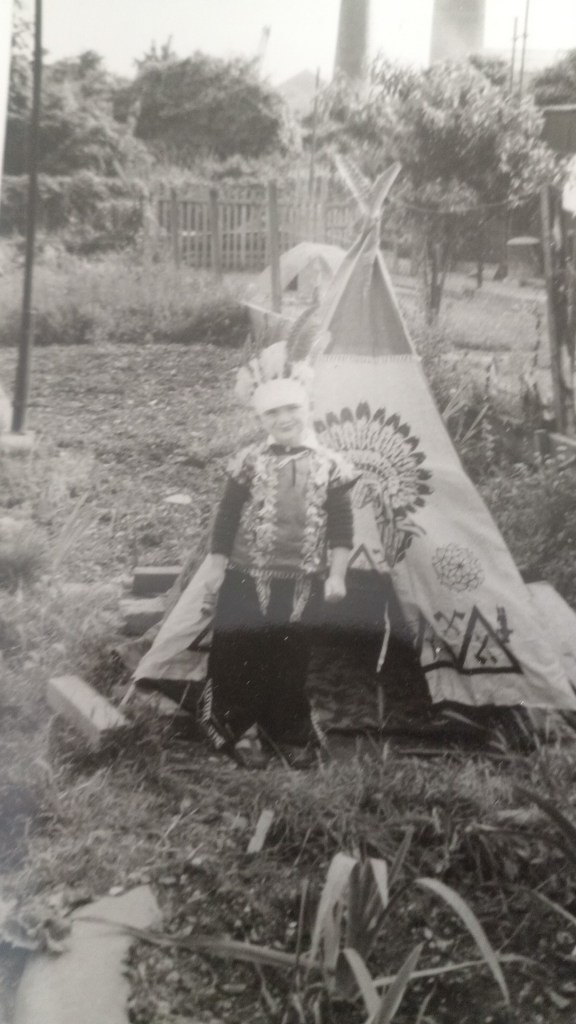
Once upon a time, a little boy named Mark lived in a small town nestled between rolling hills and endless forests. Mark was a dreamer, and every day after school, he would rush to the back garden of his home, where an old, forgotten tent he had decorated, mimicking a Teepee, stood. To Mark, this tent was not just a piece of fabric; it was a magnificent wigwam, and he was a brave red Indian living in harmony with nature. In his imagination, Mark would gather sticks and leaves, carving tools and toys, pretend to hunt and fish, and listen to the whispers of the wind as if they were the voices of his ancestors. He learned the names of plants and animals and took to heart the stories of respect and gratitude he imagined his tribe would have shared. His heart swelled with pride as he envisioned himself as a protector of the earth, a guardian of traditions long past.

One day, while exploring the forest near his home, Mark stumbled upon a litter-filled clearing—plastic bottles, wrappers, and old toys. The beauty of the place was marred, and he felt a pang of sadness. Mark remembered the stories he had created about his ancestors, who revered the land and lived in balance with it. Determined to make a change, he ran home, filled with an urgency he couldn’t quite explain. That evening, Mark gathered his friends and shared his vision.

“Let’s clean up the forest! We can be like my tribe, taking care of the land.”

His friends were intrigued; together, they formed a team armed with garbage bags and boundless energy. They spent the weekend picking up trash, returning the forest to its natural beauty. As they worked, Mark shared stories of the Red Indians and how they honoured nature and worked together for the good of all. Word spread through the town of Ystradgynlais about the children’s efforts. Inspired by Mark’s passion, adults began to join in. Families organized community clean-ups, and soon the little boy who played in a wigwam became a leader, rallying everyone to protect their environment. The town began to hold monthly events, planting trees and creating community gardens, fostering a sense of unity and stewardship.

Years passed, and Mark grew older, but his vision remained steadfast. He became an advocate for environmental education, teaching others about the importance of caring for the planet. His childhood dreams of being a red Indian morphed into a mission to honour the traditions of Indigenous peoples and to ensure their teachings about the earth were shared with future generations. The small town transformed into a beacon of sustainability, attracting visitors from afar who wanted to learn from Mark’s example. What started as a boy playing in a back garden had blossomed into a movement that inspired others. Mark had changed the town, not through grand gestures, but by reminding everyone of their simple, robust connection with nature.

And so, even as he grew, Mark never forgot his roots. He would often return to the old wigwam in his backyard, sitting quietly in reflection, knowing that the spirit of the Red Indian he had played was alive in every heart he had touched. He had learned that change begins with a single step, a small act of love for the world around us, and that everyone has the power to make a difference, no matter how small they may seem.

“In Cold Blood”

Once upon a time in a cosy little town lived a terrier named Max. With his fluffy coat and soulful eyes, he was the very definition of a devoted companion. Max spent his days lounging in the sun, chasing squirrels, and, most importantly, keeping a watchful eye on his owner, Bob. Bob was an avid reader, often lost in the pages of a new novel. Today, he had chosen Truman Capote’s “In Cold Blood,” a gripping true crime story that had captured the attention of many. Max plopped beside him as he settled into his favorite armchair, his head resting on Bob’s knee. He loved these quiet afternoons, but today felt different. As Bob turned each page, his brows furrowed deeper, and his fingers tapped rhythmically against the book. Max tilted his head, wondering what thoughts were swirling in Bob’s mind. Did he feel the tension building in the story? Was he imagining the chilling moments Capote described? Or was he simply hungry for a snack? Max’s tail wagged, hopeful that Bob would notice and share a treat.

Bob paused, his eyes scanning the text as if searching for answers. Max could sense the narrative’s weight and the crime’s gravity, and his heart ached for his owner. He wanted to understand what Bob was thinking. Did he feel fear or sadness? Was he intrigued by the complexity of human nature? Or was he reflecting on the fragility of life, as the book so poignantly illustrated? Max shifted, nudging Bob’s arm gently with his nose. Bob looked down, his expression softening as he scratched behind Max’s ears.

“What do you think, puppy?” he murmured, a hint of a smile breaking through the seriousness of the story. “Can you believe people can do such things?”

Max’s tail thumped against the floor, a response to the warmth in Bob’s voice. He didn’t fully grasp the dark themes of the book, but he understood emotions. He sensed Bob’s curiosity mingled with discomfort, a cocktail of feelings that left an imprint on the air around them. Bob returned to his reading, but his mind wandered. He thought about the complexities of morality and the choices people make. He recalled the times he had walked through the town, greeted by friendly faces, and contrasted that with the chilling accounts in his book. Could anyone in their quiet little town harbor such darkness?

Feeling Bob’s contemplative mood, Max nestled closer, offering silent comfort. In that moment, he became the embodiment of loyalty, a reminder that not all was dark in the world. Bob glanced down at his furry friend, and a wave of reassurance washed over him. There was love and companionship, and that was something to cherish. As the sun began to set, casting a golden hue through the window, Bob closed the book, his mind still racing with thoughts. He reached down and pulled Max into a gentle embrace.

“You know, puppy,” he said softly, “sometimes I think about how lucky we are. We get to share this life together, away from all that chaos.”

Max responded with a happy bark, his tail wagging furiously. It was his way of saying that no matter how dark the world could be, they had each other, and that was more than enough. In the end, as Bob set the book aside and prepared dinner, Max pranced around the kitchen, his spirit unbroken and his loyalty unwavering. Together, they moved through their evening routine, a simple rhythm filled with love, laughter, and the promise of another day. And as they settled down for the night, Max knew that no matter what stories Bob read, their bond would always shine brighter than any shadow.