The Triplets

Once upon a time, there lived three identical triplets named Tom, Tim, and Toby. They were inseparable and mischievous, known throughout the village for their clever jokes and playful tricks. Whether it was swapping clothes, pretending to be each other, or pulling harmless pranks on villagers, they loved to keep everyone on their toes. Their favourite game was to deceive outsiders with their identical appearances. They would often stand together, fooling travellers and merchants, claiming to be the “triplet trio” and spinning amusing stories about their adventures. Their antics brought laughter to the village until one day, their jokes went too far.

One afternoon, a wandering old wizard named Eldrin arrived in the village. Rumours of his wisdom and magical powers had spread far and wide, and villagers gathered to hear his tales. Curious about the triplets, Eldrin approached them and asked,

“Young ones, what mischief do you play today?”

Tom grinned mischievously.

“Oh, sir, we’re just having fun! We love to trick people and make them laugh.”

Eldrin’s eyes twinkled with a mixture of amusement and concern.

“Fun is good, but remember, deception can sometimes lead to confusion and hurt feelings. Tell me, what do you truly value?”

The triplets shrugged and laughed, dismissing his words. But Eldrin, sensing their playful spirit was also a bit reckless, decided to teach them a lesson. That evening, as the village settled into sleep, Eldrin approached the triplets’ home. Using his magic, he cast a spell that made each of them appear as a different person: Tom as a humble farmer, Tim as a wise old scholar, and Toby as a shy merchant. When the triplets awoke the next morning, they were bewildered to find themselves in unfamiliar clothes, with villagers treating them differently.

“Who are you?” asked a confused villager, eyeing the “farmer” who looked nothing like Tom.

The triplets tried to convince everyone of their true identities, but their appearances and voices had changed. They felt helpless and embarrassed, realising how confusing and upsetting their tricks could be when taken too far. Eldrin appeared before them, smiling gently.

“You see, my children, tricks are fun but should never come at the expense of trust. Today, you experienced what it’s like to be misunderstood and deceived — not as a joke, but as a lesson.”

The triplets nodded solemnly, understanding the wisdom in his words. They apologised to the villagers and promised to use their cleverness for good rather than mischief. Eldrin then reversed his spell, returning them to their true selves. From that day on, Tom, Tim, and Toby still loved jokes and laughter, but they learned to be kind and honest in their fun. Their tricks became playful rather than deceptive, and the villagers appreciated their newfound maturity. And so, the triplets grew wiser, carrying with them the lesson that true friendship and trust are the greatest treasures of all.


The Tale of the Friendly Ghost of Ravenshire Castle

Once upon a time, an ancient castle called Ravenshire stood perched atop a misty hill. Legend had it that the castle was haunted by a ghost named Sir Whisp, who was infamous for frightening every visitor who dared to step inside. Sir Whisp’s spectral form was tall and translucent, often glowing faintly in the darkness, and he would bellow loudly,

“Get out! Leave this place! This is my home, not yours!” startling even the bravest souls.

For centuries, visitors were terrified of Ravenshire. No one ever stayed long enough to enjoy its grand halls or explore its history; they only wanted to escape the ghostly shouts and eerie whispers.

One day, a young traveller named Oliver arrived at the castle. Unlike others, Oliver was not afraid of ghosts. He had read stories of spirits and believed that they only wanted to be understood. When Sir Whisp appeared and roared, Oliver simply looked at him calmly and said,

“Hello there. Why do you scare people?”

The ghost was taken aback. No one had ever spoken kindly to him before.

“I frighten people because I am lonely,” Sir Whisp replied. “Long ago, I was a noble knight, but now I am trapped here, unseen and unheard. My only way to be noticed is to shout and scare.”

Oliver listened thoughtfully and then said,

“If you want to be seen and heard, why not try speaking softly or sharing your story? Maybe people would listen and learn about you.”

For the first time, Sir Whisp paused. He realised that his loudness only pushed visitors away and deepened his loneliness. From that day, he decided to change his ways. The next visitor who entered Ravenshire found the ghost not shouting loudly but softly whispering,

“Welcome, traveller.”

He told stories of the castle’s history and his own past as a brave knight. Visitors found the ghost’s new gentle demeanour more charming than frightening. They began to enjoy their visits, listening to Sir Whisp’s tales and marvelling at the castle’s mysteries. Thanks to Oliver’s kindness and understanding, the ghost’s appearance softened, and Ravenshire became a place where stories and spirits could coexist peacefully. And so, the ghostly goings-on turned from frightful to friendly, filling the castle with a new kind of magic, one born of compassion and empathy.

Parable of the Smiling Lady

Once upon a time, there lived a woman named Elara. She was renowned throughout the village for her radiant smile, shimmering eyes, and a beauty that seemed to glow from within. Yet, beneath her grace lay a life that had seen its share of hardships, losses, worries, and moments of quiet despair. Despite these trials, Elara possessed a remarkable gift: her sense of humour. It was a spark that never truly dimmed, even in the darkest times. Her laughter was like sunlight piercing through storm clouds, and her quick wit could turn the gloomiest day into a celebration.

One day, as she strolled through the market, Elara overheard a young boy trying to sell his handmade trinkets. His voice trembled with nervousness, and his eyes held a flicker of hope. Elara knelt down, flashed a warm smile, and said,

“If I buy one of your treasures, will you promise to keep making the world a little brighter?”

The boy nodded eagerly, and Elara chuckled softly, purchasing a tiny, imperfect but charming locket. This simple act sparked a series of joyful moments. Elara began to host small gatherings in her garden, inviting friends and neighbours to share stories, laughter, and music. Her jokes and playful teasing became the heart of these gatherings, infusing the air with warmth and happiness. Her humour was a balm for her own wounds and a gift she shared freely. Over time, her life, once shadowed by sorrow, blossomed with love and joy. She found that her ability to laugh and make others laugh transformed her hardships into stories of resilience, her tears into tears of mirth. The villagers came to see her not just as a beautiful lady, but as a beacon of hope, a reminder that even in life’s most difficult moments, a good laugh could turn everything around.

And so, Elara’s story became a gentle legend: a testament to the power of humour to heal, to connect, and to turn life’s toughest trials into moments of pure, infused love and joy. 

The Tale of Thomas Gray

Thomas Gray was a man of a kind heart and noble dreams. From a young age, he believed in doing what was right, helping others, and making the world a better place. His intentions were pure, and he often went out of his way to lend a hand, whether volunteering at the local shelter or advising those in need. Despite his good heart, Thomas’s actions sometimes led to unforeseen consequences. He believed that he knew what was best for everyone, and in his eagerness to help, he often overlooked the complexities of others’ lives. His desire to fix problems sometimes came across as meddling or patronising.

One day, Thomas learned that a neighbour, Mrs. Whitaker, struggled to keep her small bakery afloat. Moved by her plight, he bought her a new oven and offered her a loan to expand her business. He thought he was doing a kind deed—helping a neighbour succeed. But Thomas didn’t consult her first. He didn’t understand her plans or her vision. When she found out, she felt patronised and overwhelmed, unable to accept his help on her own terms. Instead, the loan, intended to lift her up, created tension and distrust. Mrs. Whitaker, feeling insulted, withdrew her trust from Thomas, and her bakery’s decline worsened as a result.

Thomas’s well-meaning efforts didn’t stop there. He tried to mediate disputes between friends, but his solutions often ignored the feelings of those involved. His attempts to “help” sometimes heightened conflicts rather than resolve them. Over time, Thomas’s reputation as a helpful man was replaced by one seen as intrusive or oblivious. His intentions, though noble, had blind spots—an inability to see the whole picture or respect others’ autonomy. He believed he was doing right, but his actions caused harm rather than good.

Eventually, Thomas realised that genuine kindness isn’t just about good intentions; it’s about listening, understanding, and respecting others’ wishes. It was a hard lesson, but one that taught him humility. Ultimately, Thomas learned that doing right isn’t always about action alone. Sometimes, the best help is to step back and let others lead their own paths. His journey was a reminder that even the noblest intentions can lead astray if they’re not tempered with empathy and humility.

The Stairs of the Mind

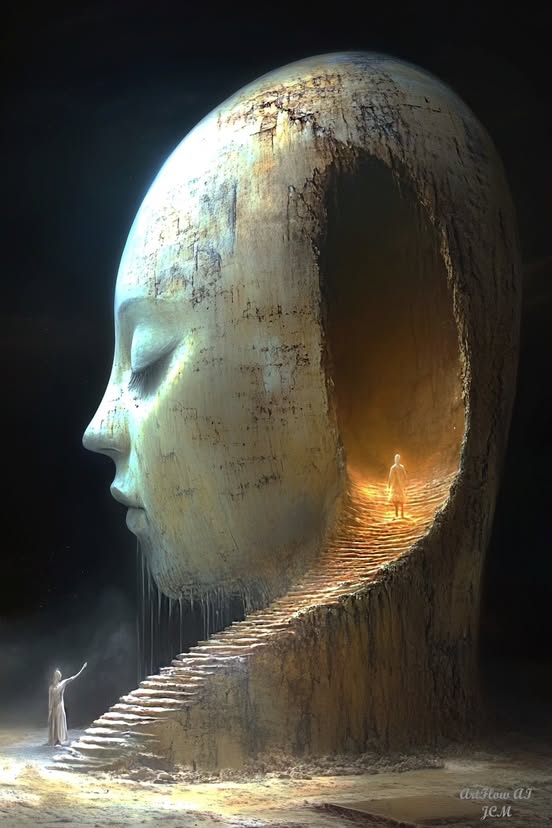
A curious student named Liam lived in a quiet town. From a young age, Liam was fascinated by the mysteries of life—why things were the way they were, and how he could understand the world more deeply. But as he grew older, he realised that understanding wasn’t always straightforward; it was a journey, a quest that required patience and courage. One day, as Liam sat beneath an ancient tree in the town square, he closed his eyes and imagined a staircase stretching endlessly upward, each step shimmering with possibilities. Intrigued, he decided to embark on a journey—an ascent of his mind—to reach enlightenment.
Liam’s first step was fueled by curiosity. He looked around the world with fresh eyes, asking questions about everything—about the stars, trees, and people he met. Each question was a rung on the staircase, guiding him higher. He learned that he must first acknowledge how much he didn’t know to truly understand.
Climbing higher, Liam gathered knowledge from books, teachers, and experience. He discovered truths about science, history, and philosophy. But he also realised that knowledge alone was not enough; it was like holding a map without knowing how to read it. Wisdom was the next step.
As he ascended, Liam paused to reflect. He pondered the meaning behind what he learned, contemplating his thoughts and feelings. Reflection helped him see his biases and assumptions, clearing the way for deeper understanding.
Beyond intellect, Liam learned the importance of compassion. He saw how kindness and empathy connected people. As he practised compassion, the staircase became wider, and the view from each new step became clearer and more vibrant.
Liam discovered mindfulness—being present in each moment. This practice quieted the noise of doubt and distraction, allowing him to see things as they were. The stairs now shimmered with clarity, each step a breath of peace.
Higher still, Liam faced challenges—doubts, fears, and illusions. But with perseverance, humility, and a heart open to discovery, he continued upward. And at last, he reached the summit—the place of proper understanding, where the mind is clear, and the soul feels at peace. From this height, Liam saw the interconnectedness of all things. He understood that enlightenment was not a destination but a continual journey, a stairway he would climb anew daily. Descending back into the world, Liam carried the light of his discovery, eager to share this newfound wisdom and continue ascending the stairs of his mind.