The Tale of Edward, the Blind Healer

In a quiet village nestled between rolling green hills, there lived a man named Edward. No one remembered exactly when he was born, but they knew two things for certain: Edward had been blind from birth, and yet, he possessed a gift unlike any other, a healing power that could mend both body and spirit. Despite his blindness, Edward was known far and wide for his compassion and gentle spirit. He spent his days wandering through the village, offering his help to anyone in need. Children loved to sit beside him, and elders sought his counsel, for Edward’s words carried wisdom beyond his years.

But what made Edward truly extraordinary was his magic. When someone was sick or broken, he would place his hands upon them, and their pain would fade, their wounds would close, and their spirits would lift. It was as if an unseen light flowed through him, illuminating and healing everything it touched. Many wondered how Edward could do such wondrous things without sight. Some believed he saw with his heart. Others whispered that he had been touched by a divine presence, a second coming of hope in a world often shadowed by darkness.

One day, a terrible storm swept through the village, bringing destruction and despair. Crops were ruined, homes damaged, and spirits broken. The villagers gathered, feeling lost and helpless. In the midst of the chaos, Edward stepped forward. His hands trembled with quiet resolve. He closed his eyes, though he had never seen with them, and began to hum softly. A warm, glowing light seemed to emanate from his palms, spreading across the village like dawn’s first light. As he moved from house to house, healing the wounded and comforting the grieving, a remarkable transformation took place. The storm’s fury ebbed away, replaced by a gentle calm. The villagers watched in awe as their suffering was eased, as hope was rekindled in their hearts.

When the storm had passed and the skies cleared, the villagers saw Edward in a different light. They saw not just a blind man, but a vessel of divine grace, a symbol of renewal—the second coming of compassion and healing.

From that day forward, Edward’s story spread beyond the village, inspiring others to believe in the power of kindness, faith, and unseen light. Though he could not see the world with his eyes, he had opened the eyes of everyone around him to the truth: that sometimes, the greatest vision comes from the heart, and true miracles happen when we believe in the impossible. Edward’s legacy endured, the humble healer who, through his magic and his love, reminded the world that even in darkness, there is always a light waiting to be awakened.

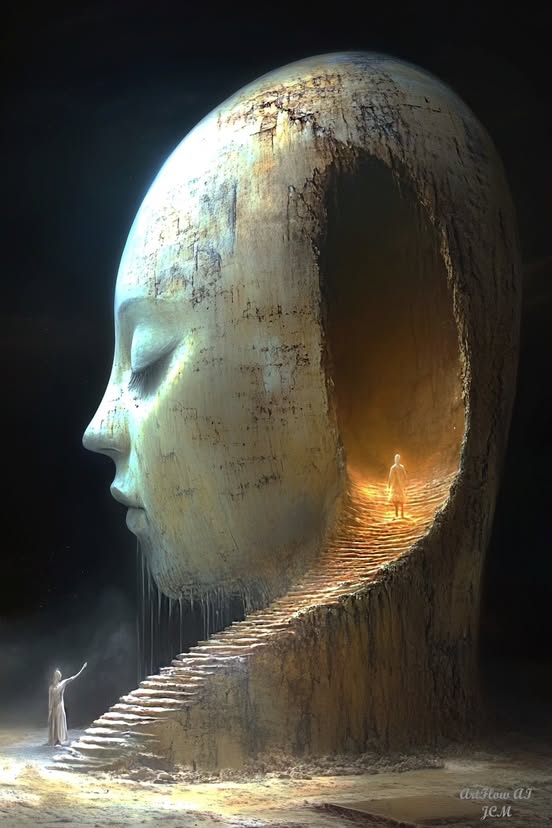
The Stairs of the Mind

A curious student named Liam lived in a quiet town. From a young age, Liam was fascinated by the mysteries of life—why things were the way they were, and how he could understand the world more deeply. But as he grew older, he realised that understanding wasn’t always straightforward; it was a journey, a quest that required patience and courage. One day, as Liam sat beneath an ancient tree in the town square, he closed his eyes and imagined a staircase stretching endlessly upward, each step shimmering with possibilities. Intrigued, he decided to embark on a journey—an ascent of his mind—to reach enlightenment.
Liam’s first step was fueled by curiosity. He looked around the world with fresh eyes, asking questions about everything—about the stars, trees, and people he met. Each question was a rung on the staircase, guiding him higher. He learned that he must first acknowledge how much he didn’t know to truly understand.
Climbing higher, Liam gathered knowledge from books, teachers, and experience. He discovered truths about science, history, and philosophy. But he also realised that knowledge alone was not enough; it was like holding a map without knowing how to read it. Wisdom was the next step.
As he ascended, Liam paused to reflect. He pondered the meaning behind what he learned, contemplating his thoughts and feelings. Reflection helped him see his biases and assumptions, clearing the way for deeper understanding.
Beyond intellect, Liam learned the importance of compassion. He saw how kindness and empathy connected people. As he practised compassion, the staircase became wider, and the view from each new step became clearer and more vibrant.
Liam discovered mindfulness—being present in each moment. This practice quieted the noise of doubt and distraction, allowing him to see things as they were. The stairs now shimmered with clarity, each step a breath of peace.
Higher still, Liam faced challenges—doubts, fears, and illusions. But with perseverance, humility, and a heart open to discovery, he continued upward. And at last, he reached the summit—the place of proper understanding, where the mind is clear, and the soul feels at peace. From this height, Liam saw the interconnectedness of all things. He understood that enlightenment was not a destination but a continual journey, a stairway he would climb anew daily. Descending back into the world, Liam carried the light of his discovery, eager to share this newfound wisdom and continue ascending the stairs of his mind.

The Sun and the Moon’s Gentle Dispute

Once upon a time, in the vastness of the cosmos, the Sun and the Moon often watched over Mother Earth. They shared a bond forged by their love for her, each shining in their own way, bringing life and calm to her surface. One day, as the Sun blazed fiercely across the sky, he grew worried.

“Mother Earth is burning under my rays,” he muttered. “Her deserts are drying up, her forests withering. I must shine brighter to warm her, but I fear I’m causing her pain.”

The Moon, soft and gentle, listened quietly. When the Sun finished, she softly replied,

“Dear Sun, your warmth is vital, but too much can scorch her delicate lands. I watch over her at night, providing gentle light and cooling shadows, giving her time to rest and heal.”

The Sun frowned, flickering with concern.

“But if I don’t shine fiercely, she might freeze in the cold darkness of space. My rays sustain her life, but I worry I might be harming her through excess.”

The Moon nodded, understanding his fears.

“And I, too, worry. I see her suffering when you burn too brightly, and I see her thriving when I cast my quiet glow. Perhaps we need to find balance, for her sake.”

Suddenly, a gentle breeze whispered through the cosmos, and the stars listened intently. The Sun and the Moon looked at each other, realising their shared concern. They understood that together, their light and warmth could work in harmony, each taking turns to nurture Mother Earth, ensuring she flourished without harm. From that day forward, the Sun and the Moon agreed to share their care. The Sun would shine fiercely by day, warming and energising her, while the Moon would cast calming shadows by night, helping her rest and recover. Their argument turned into a beautiful dance—balancing light and dark, warmth and coolness—for the love of Mother Earth.

And so, under their watchful eyes, Mother Earth thrived and still is, cradled in the gentle embrace of the Sun and the Moon. If only mankind could achieve such a balance?

Free, Fearless, and Forever a Champion.

A boy named Leo lived in a small town nestled between rolling hills and wide-open fields. Leo was born with a condition that made it difficult for him to walk without support. He wore sturdy callipers on his legs, which helped him stand and move but also made him feel different from the other children. Despite the challenges, Leo was full of dreams. He loved running, watching races on TV, and imagining himself crossing finish lines with a gold medal gleaming around his neck. His parents and friends cheered him on, constantly reminding him that his strength came from within.

Every day, Leo practised running with his callipers. Some days were tough, and he felt frustrated, but he never gave up. He believed that someday, he could run like everyone else—fast, free, and fearless. One bright morning, after many years of hard work and perseverance, Leo made a decision. He would cast off his callipers. With the help of his coach, family, and friends, he carefully removed them for the last time. It was a symbolic moment—an act of courage and hope.

The next day, Leo entered a local race. At first, his legs trembled, and doubts crept into his mind. But he remembered all the times he had practised, all the hurdles he had faced, and he pushed forward. To everyone’s surprise, Leo ran with a strength and determination that inspired everyone watching. His speed grew, and he crossed the finish line first. The crowd erupted in cheers, and Leo’s heart swelled with pride. That race was just the beginning. He trained harder, faster, and stronger, dreaming of bigger stages.

Years later, Leo qualified for the Olympics. He trained tirelessly, breaking records and defying expectations. When the marathon day arrived, Leo stepped onto the track, feeling nervous and excited. He remembered his journey with every stride, every struggle, every moment of doubt, and every time he had refused to give up. As he approached the final stretch, the crowd roared louder than ever. Leo surged forward, running with all his heart. And then, with one final burst of energy, Leo crossed the finish line in first place. The stadium erupted into applause. He had not only won a gold medal but had also shown the world that limitations are often just the beginning of new possibilities. Leo’s story inspired many, reminding everyone that with courage, perseverance, and belief in oneself, even the greatest obstacles can be overcome. From that day on, Leo ran beyond limits—free, fearless, and forever a champion.

The Blind Banjo Traveller

In a small, bustling town in the valley between rolling hills and shimmering rivers, lived a man named Enzel. Enzel was not an ordinary man—he was blind, yet his spirit shone brighter than the sun. His eyes, unseen to the world, saw through the melodies he played on his banjo, a weathered instrument with strings that hummed stories of hope and love. Enzel’s faithful companion was Jem, a wise and gentle guide dog with a nose for adventure and a heart full of loyalty. Together, they journeyed from city to city, village to village, spreading joy wherever they went.

Despite his blindness, Enzel’s sense of hearing was extraordinary. He listened to the whispers of the wind, the laughter of children, and the rhythm of life itself. His banjo was his voice—each note, word, song, and story. With Jem faithfully by his side, Enzel played wherever he could find an audience—under the shade of a tree, in a bustling marketplace, or on the steps of an old church. His music had a magical quality. It made people laugh, brought tears to their eyes, and reminded them of love in the simplest moments. Children would gather around, clapping their hands, their faces lit with wonder. Elders would close their eyes, swaying to the melodies that seemed to carry them back to days long gone.

One day, Enzel and Jem arrived at a small seaside village. The villagers had forgotten how to dream, weighed down by worries and hardships. Hearing Enzel’s music, however, their hearts began to lift. Enzel played a song about a star that guided lost sailors home—a song that shimmered with hope. As the notes floated over the waves, the villagers remembered the beauty of love, kindness, and community. They joined in singing, their voices blending with Enzel’s banjo, creating a harmony that healed weary hearts.

Years passed, and Enzel’s legend grew. His music travelled across continents, touching the lives of countless people. His story was one of resilience, kindness, and the power of love—proof that even without sight, one can see the world’s beauty with the heart.