The Park, a sprawling mouth of shadows, swallowed the last yawns of daylight as a chill crept along the grass. Leaves skittered like frightened promises across the benches, and a solitary streetlamp flickered with the stubborn glow of a tired lighthouse in fog. It was Halloween, all the way from the first orange of dusk to the final graveyard hush of midnight, but tonight the park wore its spookiness with a slow, almost reverent patience. In the oldest corner, where trees bent like old storytellers, stood a park bench weathered by more conversations than the town library cared to admit. Its wood bore the quilted marks of a hundred seasons, and two iron arms were etched with the names of picnics that had never forgotten the taste of summer. It looked as ordinary as a seat can look when it has learned to listen.
From the creak of those iron joints rose a sigh, a breath of something long unspent. The bench shuddered, not with fear but with memory, and then like a page turning in a book left out in the rain something began to unthread itself from the wood beneath the seat. It wasn’t a ghost in the blustering, streaking sense; it was more precise, more patient: a skeleton, radiant in a pale, glimmering fear, stepping from the bench as if the bench itself was a cocoon. The bones wore a suit of dust and old dusk, a cloak of autumn’s last sighs. The skull tilted, the jaw creaked, and a rough, cheerful voice once bright, now hollow whistled from it. The skeleton glanced around, ears long since retired in the flesh, listening for sound remembered from a century ago: the soft chime of a bell on a bicycle, faraway laughter of a child, clink of a glass toasting the night.
“Do you hear it?” it questioned, though no one stood near to hear except the rustle of leaves and the shy tremor of a distant crow. The skeleton’s eye sockets glowed with pale blue light, not anger but insistence, a beacon in the half-light. It stood upon the bench’s edge as if on a tightrope between two lives, between then and now. It wasn’t hunting fear or chasing a haunting. It was seeking something gentler: a memory to finish, a farewell to grant, a name that could finally be spoken aloud without tremor. For years, decades perhaps, connections had frayed around the town’s Halloween festival. The living would come with lanterns and laughter, and the dead would drift with the wind, collecting the crumbs of the day’s happiness.
But this particular night, a thread tugged the skeleton toward the living world: a letter, long misplaced, written by a girl who had grown up and learned to forget the names she used to call her neighbours. The letter, tucked in a desk drawer of a house long since gone quiet, spoke of a promise to return, to tell a story that would bind the living and the dead in a single breath. The skeleton found the bench because it was the last place the girl, now a grown woman, sat with her grandmother on the night of her tenth birthday. The grandmother whispered a ritual in her ear, one that promised that on Halloween, the veil between the worlds would open just enough for a small truth to cross.
So the skeleton waited, patient as a librarian who knows every overdue book by heart. It listened for the creak of a distant gate, the soft sigh of a bicycle tyre, the whisper of a name spoken in the dark. And when the woman finally arrived, lantern in hand and pockets full of memories, the corridor between then and now widened. The skeleton stepped forward, not to frighten but to answer.
“Is it you?” the woman asked, voice tremulous yet steady.
“I am you, once,” the skeleton replied, its voice a wind through dry leaves. “And you, perhaps, are me, once more, if we tell the story true.”
It spoke the name they had promised to remember together, and with that, the park exhaled a quiet sigh of relief. The bench, no longer merely wood and iron, settled back into its old, patient seat, and the night hummed with the soft glow of restored promises.
Why now? Because Halloween is the hour when endings learn to breathe again, and beginnings, too, are given a chance to stand in the light and be remembered.
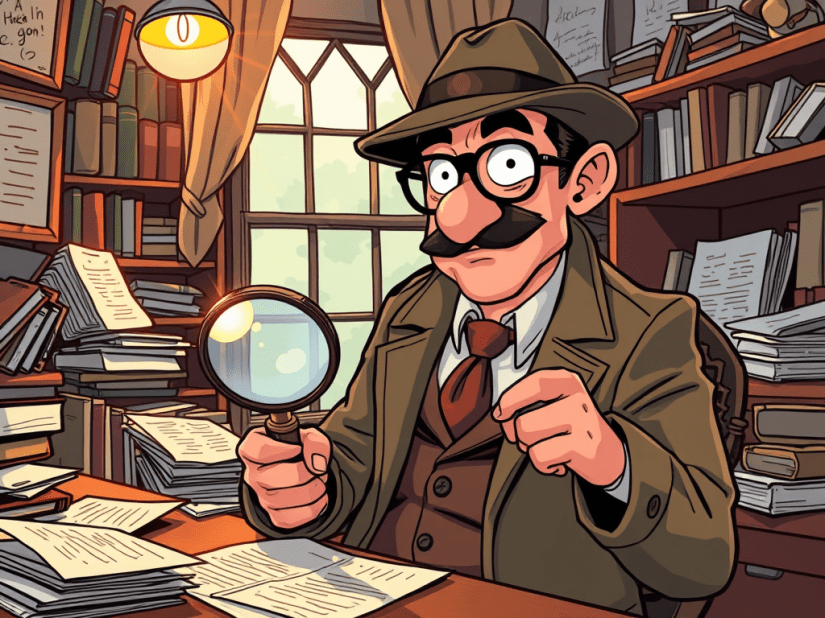
Inspector Septimus Summer-Garden tipped his hat at a suspiciously grand angle, shuffled his umbrella just so, and peered at the town clock as if it might reveal its own alibi. The bell above the door of Mellish & Co. Antiques gave a polite tinkle, and Septimus stepped inside as if he were entering a parlour where every chair had a secret.
“Good afternoon,” he announced to the shop, as if addressing a court. “I am here to investigate a most peculiar case, the case of the aging balding teddy bear named Rufus.”
The shopkeeper benevolently raised an eyebrow.
“Rufus is at the back, dear boy,” she said, pointing toward a dim corridor lined with velvet ropes and the soft scent of mothballs and lemon wax. “He’s been with us since the days of village fairs and the annual puddings contest. Which I suppose doesn’t help your case much, Inspector.”
Septimus wheeled into the back room, where a display case gleamed with the sort of pride that only comes from owning a lot of things people once loved. In the center sat Rufus: a classic teddy bear, hand-sewn with patchwork fur that had once been a cheerful cinnamon but now wore patches of balding wool like little pause marks on a sentence. Rufus’s glass eyes seemed to blink in apology at every wobble the inspector made as he approached. Rufus had two obvious problems. First, his fur was thinning in patches, particularly across the crown where the stuffing peeked through like a shy bump on a road. Second, his eyes once bright as buttercup petals had a certain faraway look, as if Rufus were thinking about something you wouldn’t understand, perhaps a biscuit he’d never eaten or a child he’d never hugged again.
Septimus cleared his throat.
“I understand you’ve noticed some… changes with the subject of our inquiry.”
The shopkeeper nodded.
“Changes indeed. Rufus arrived in this town when a Mrs. Alderidge donated him to the hospital fund drive. He’s always drawn crowds, a certain sentimental magnet, you see. Then suddenly, well, not suddenly, but over a few weeks the fur started thinning, and the little bald patches grew. We thought perhaps the museum’s climate was a touch too dry, or perhaps Rufus had a secret life as a magician and was shedding his tricks.”
Septimus studied Rufus with the seriousness of a man who had once stopped a clock from running by arguing with it. He pressed a gloved finger to Rufus’s paw, feeling the seams. He listened to the creak of the joint between arm and torso, the sort of creak that says, “I have been hugged by countless small children and probably a few overzealous grandmothers who insisted on tucking in the stuffing.” He examined the back, where a tiny tag lay, worn nearly smooth by decades of handling.
“Tell me about the last time Rufus was treated with care,” Septimus said, not looking at the shopkeeper but at the bear as if Rufus might respond.
The shopkeeper shrugged.
“The hospital volunteers took him for a charity visit three weeks ago. The children sang the bear’s song,” she added with a smile.
Septimus nodded slowly. A song. A bear. A case. He opened the display case a fraction, just enough to let in a breeze that carried the faint scent of peppermint and old oak. The inspector’s mind, which often resembled a mildly caffeinated hedgehog, began to feel around the edges of the problem. Clues were never as loud as the obvious; they were whispers tucked into corners, like moths in a wardrobe. He started with the obvious fuel for a mystery of this kind: the room’s climate and Rufus’s materials. The shop’s owner had mentioned moths and indeed the air carried a faint suggestion of their presence, a grandma’s attic musk that felt protective and a touch accusatory at the same time.
“Let’s have a look at the stuffing,” Septimus said, producing a small magnifying glass from his pocket with the fanfare of a magician revealing a rabbit.
He peered under the bear’s seam and found something surprising: not rot or mold, but a faint, chalky residue almost like the trace of old sugar dust. He touched it with a gloved finger and sniffed, then frowned as if he’d smelled a memory.
“Dusting powder?” ventured the shopkeeper, half afraid to know.
Septimus shook his head. “No. This is talcum dust with a hint of cinnamon and there it is, a signature.” He looked at the tag again, then at the shelves. “Rufus has the sort of care label you don’t usually see on children’s toys or vintage bears, almost as if he were treated as a patient and not a playmate.”
The shop fell quiet except for the distant lilt of a child’s laughter from the street, the sound curiously like a memory slipping through the cracks of time. Septimus visited the hospital the next day, dragging his umbrella with him as if it were a witness. The children greeted Rufus with the same enthusiasm you’d reserve for an old hero returning from a long voyage. A nurse named Mrs. Wimple guided Septimus to a quiet corner where a small group of volunteers stood by a card table with a banner reading: Rufus’s Radiant Rescue.
“Is this the bear you were looking for?” Mrs. Wimple asked with a dry smile.
Septimus offered her a small, apologetic bow.
“Ma’am, I am chasing a theory that Rufus is aging due to a combination of wear and perhaps unseen care. I’d like to interview anyone who has handled him closely in the last few weeks.”
A little girl with a ribbon in her hair stepped forward.
“I remember reading a story to Rufus during the last visit. He listened very kindly when I read about a brave clock that forgot the time. He didn’t blink when I bumped the case and whispered to the man with the red scarf.” She frowned. “Is Rufus sad? He looked a little sad after we left.”
Septimus crouched to the girl’s level, listening as if he were a seashell listening to the ocean.
“Sometimes sadness wears a fur coat and a pair of button eyes,” he said softly. “But sometimes sadness is just yesterday’s rain tapping at the window.”
Back at the ward, he found something else: a receipt tucked in Rufus’s back seam, not something that would have belonged to a toy’s care, but a charity donation receipt dated three months ago, signed by a Dr. Mallory, the hospital administrator known for keeping long hours and shorter tempers. The receipt was for a “special preservation experiment” not the kind of thing ordinarily disclosed in a fundraising drive, but not unheard of in a hospital that changed its fundraising strategies with the seasons. Septimus sat on a chair in the quiet corner and thought about the weird phrase: preservation experiment. The phrase had a clinical bite to it, as if someone were treating Rufus not as a teddy bear but as something to be studied, catalogued, and perhaps cured of some ill. He tucked the receipt into his coat and returned to the shop to gather people for another conversation.
“Let us consider the possibility that Rufus is aging not by malice but by method,” he announced to the shop’s patrons, who had gathered as if a stage show had begun. “It is possible he has been part of a controlled study, one that involves materials that degrade with time, perhaps a rare local ramie fiber mixed with wool causing thinning fur and a slow, almost dignified receding of his hair, like a gentle old man’s receding hairline.”
A murmour travelled through the crowd, half skepticism, half reverence for the inspector’s inferential appetite. The shopkeeper, who had a soft spot for theatrics and good-natured gossip, shrugged.
“Well, if Rufus is the subject of some secret experiment, I hope he’s being treated kindly. He’s always been kind to us.”
Septimus, who had a knack for finding structure in chaos, retraced the morning’s steps. He visited the attic above the shop a cluttered sanctuary of forgotten things where every trunk had a story and every moth hole whispered a rumour. He found a small metal box wedged behind a stack of dusty hats. Inside lay a set of tiny vials labeled with dates and letters: “Aging Elixir—test batch A,” “Stability Compound,” and a few plain, almost innocent-looking labels that suggested something scientific but not dangerous, more like a test specimen for a new kind of textile preservation. The inspector’s eyes widened slightly, then settled back into their usual kindly-narrow gaze. He pocketed the box, careful to note every lable’s placement and every footprint on the attic’s floor. The evidence suggested someone had been experimenting with Rufus’s fur, perhaps to study how materials age under certain environmental conditions. But why Rufus, and who? That evening, Septimus returned to Mellish & Co. with more questions than answers. The shop’s bell chimed a tired welcome, and the shopkeeper poured him a cup of tea that steamed with curiosity more than heat.
“Inspector, you look like you’ve discovered a map in a teacup,” she teased gently.
Septimus sipped, thinking of the child’s laughter, the memory of the missing clock in the hospital ward, and the tiny vials in the attic. He put Rufus’s speaking-stuffing theory aside for a moment, and instead looked at the people who had touched Rufus, the volunteers, the nurses, the donors, the patients. The bear belonged to more than one life; he had collected pieces of many hearts.
“Dr. Mallory,” he finally said, almost to himself, “the administrator with the long hours and the shorter tempers.” He paused, then added aloud, “He had access to the attic, to the hospital’s spare materials, and he cared about Rufus in the way someone cares about a symbol.”
The shopkeeper glanced at him with a curious mixture of awe and scepticism. “Are you saying Dr. Mallory is a saboteur of fur and memory?”
“No,” Septimus replied. “I am saying he might have used Rufus as a vessel for an idea, a project that romanticises aging, assigns it a process, and thus makes it easier to discuss with donors when you talk about preserving the past. The audacious thing is that Rufus’s case has become a symbol within this hospital’s fundraising strategy.”
The next day, Septimus visited the hospital with a calm certainty that comes from having seen a lot of human logic fail to account for human kindness. He spoke with Dr. Mallory in a quiet office filled with charts and a single flower, wilting in a vase. The doctor wore the fatigue of people who solve other people’s problems for a living and forget to eat. Septimus presented the evidence tagged fur samples, vials in the attic, the donation receipt tied with a thread of conscience.
“Is Rufus aging?” Mallory asked, not defensively but with a sort of worn curiosity. “He is older than most of the patients who pass through here. He’s a symbol of a time when care wasn’t measured in metrics but in hugs.”
Septimus nodded, his mind balancing between the literal and the sentimental.
“Perhaps Rufus isn’t aging because someone is harming him. Perhaps he is aging because he represents a memory of a time when people believed objects could carry kindness. If you tell a story about Rufus aging, you invite people to care for him, to care for others. If that is the case, then what we must do is ensure Rufus receives that care, not an experiment.”
Mallory looked thoughtful, and for once not defensive but reflective. He admitted that the hospital’s fundraising literature had indeed embraced the idea of Rufus as a “vessel of time,” a gentle nudge to remind people of aging and memory. He hadn’t realised the emotional weight his framing placed on the bear’s fur, nor how it might be misinterpreted by anxious volunteers and grateful children.
Septimus returned to the shop, Rufus nestled in the quiet corner as if listening to the world’s soft weather report. He spoke to the bear as one speaks to a patient in need of rest after a long journey.
“Rufus,” he said softly, “you are not merely a relic to be studied or a prop to raise funds. You are a memory keeper, and your fur’s thinning is a reminder of the many hugs you have carried. If your hair is thinning, it is because your life has absorbed time like a tree that grows rings to show its age.” He patted Rufus’s head with the lightest of touches, making the bear seem almost to sigh in contentment.
The town’s people, hearing of the inspector’s theories and the hospital’s confession, began to treat Rufus with renewed tenderness. The bear would spend weekends in the hospital’s lobby, not as a display but as a guest, listening to children read stories, volunteering to model “how to hold on to love gracefully” with a bravery that wasn’t loud but deeply felt. The elastic in Rufus’s joints still creaked, and the fur still thinned in the crown, but the community’s care mended what time and neglect had threatened. In the weeks that followed, the mysterious case of the aging balding teddy bear became, for Septimus, a story about memory, care, and the gentle power of misinterpreted clues. He left the bear with a small card tucked under his paw: a reminder that some mysteries aren’t solved with perfect logic but with patient listening, with the willingness to accept that a bear can be loved into old age by the people who adore him.
Back in Mellish & Co., Septimus was asked if he would declare the case closed. He looked toward Rufus, who seemed to decide, in his quiet, button-eyed way, to blink once, as if to say, “Yes, the case is closed — by love.”
“Case closed,” he announced to the patrons, with a bow that was more wry grin than grand gesture. “Rufus is aging, yes, but only in the sense that a cherished life accumulates stories and scars that make it all the more precious. Let us not force him to be younger than his history. Let us allow him to be Rufus.”
And so Inspector Septimus Summer-Garden, the bumbling, generous, endlessly curious detective went away with a sense of completion that didn’t rely on a neat bow but on the soft, unfolding story of a teddy bear, a hospital lobby, and a town that learned to grow a little kinder with every passing season. Rufus, for his part, remained on his shelf in the back room, listening to the room’s quiet, and whenever a child pressed their face to the glass and whispered, “Rufus,” he would tilt his head just so, and the room would seem, for a heartbeat, to remember all the hugs that had ever crossed their paths.
Inspector Septimus Summer-Garden shuffled down the lane as if the day itself needed to be coaxed forward with a pair of well-polished boots. He wore a tweed frock coat that seemed to have absorbed more rain and gossip than actual fabric, a hat perched at a jaunty angle like a small, stubborn hedgehog, and spectacles so eternally optimistic that you could swear they believed in him more than he did in himself. The case today was simple in theory: a wheelbarrow had vanished from the allotments behind the village conservatory, and the local constabulary, which consisted of one sleepy sergeant and two cats, needed a hand to find it before the community garden grew into a scandal. Summer-Garden had travelled three miles from the city police station to assist.
Septimus approached the scene with all the confidence of a man who had once persuaded an entire bakery that he was a famed pastry inspector. The wheelbarrow in question belonged to Mrs. Petunia Puddleford, a widow who tended plants with such devotion that her begonias had tiny brass nameplates and her cabbages believed in constitutional monarchies. The wheelbarrow, however, was famous for a different reason: painted a heroic yet somehow clashing combination of canary yellow and emerald green, it could be seen from the far end of the allotment and still wink back at you with it’s faded chrome handles.
“Evening, inspector,” called Mrs. Puddleford, stepping out with her apron stained in a pattern of seed dust and yesterday’s rain. She peered at Septimus through half-moon spectacles perched at the end of her nose, that looked like two curious sparrows peering from a hedge.
“Good Mrs. Puddleford,” he replied with a bow that caused his spectacles to dance a little jig. “I understand we have a… voluntary, ventful mystery on our hands.”
She sighed.
“The wheelbarrow was here this morning. I fetched the watering cans, and when I returned, it had vanished. Strange as a missing lemon in a lemonade stand, Inspector.”
Septimus scribbled in a notebook that looked as though it had survived a small war of pencils and tea stains. The pages smelled faintly of rosemary and optimism. He read aloud:
“Wheelbarrow, yellow and green, with chrome handles. Last seen near plot number seven, shade of elderberry.” He paused. “Plot seven? That is a garden of whispering hosts and rebellious tomatoes.”
“Or perhaps a thief with a love for efficient horticulture,” muttered a voice from behind him. It belonged to Mr. Harold Finch, a retired tailor who believed every problem could be stitched into a neat seam and then pressed flat. He wore a green apron with the motto: “If it isn’t nailed down, it’s probably in the shed.”
Septimus turned, eyes wide behind his spectacles.
“Harold! Good to see you. Tell me, did you by any chance hear anything suspicious, perhaps the creak of a lever, or the soft rustle of gardening gloves?”
Harold lowered his voice to a conspiratorial whisper.
“Only that the elder tree near plot five has been humming a tune that sounds suspiciously like ‘Wheelbarrow Polka.’ And if you ask me, that is not a natural tree song.”
Septimus exhaled, which caused his bow tie to flutter like a flag in a gentle breeze. He studied the garden as though it were a theatre stage, every plant a prop, every shed a potential alibi. He started at the elder tree, which did indeed hum when the breeze favored its branches. The hum had a rhythm, a stubborn, plucky rhythm, the kind of rhythm that makes a detective believe in both the impossible and the improbable. He consulted a series of “improbably logical” deductions he kept in a leather-case bound by a string that rarely made it to the knot. He began with a lineup of suspects: the elder tree (a suspect by virtue of music), Mrs. Puddleford’s mischievous neighbour, young Milo with the bicycle that squealed when he pedaled too hard, and the Weather Vane that claimed to be a “witness to the winds.” The elder tree, when asked politely if it had seen the wheelbarrow, did not respond; trees, Septimus knew, were excellent at silence. The Weather Vane merely whirred and claimed it had “heard nothing but the wind and the gossip of the clouds.” Milo, the neighbor’s nephew, was found practicing wheel spins on a homemade scooter, which, in Septimus’s opinion, was not exactly the same as a wheelbarrow.
The key breakthrough, if you could call it that, came when Septimus spotted a faint skid mark in the soft earth near plot seven. He knelt, admired the mud as if it were a work of modern sculpture, and noted a splatter of green paint on a nearby brick. He followed the trampled blade of grass to a small, nearly forgotten shed behind a row of cauliflower. Inside, to his great relief and mild dismay, stood the missing wheelbarrow. It was propped against the wall, the chrome handles catching the late afternoon sun, a soft gleam like a lighthouse for wayward tools. The wheelbarrow wore a sticker plastered by a child’s hand: “Property of the Gardener’s Guild” (with a heart in the corner). But the wheelbarrow appeared to have been used quite recently; the inside had soil from several plots and a faint scent of rosemary, the Puddleford way of reminding everyone who tended the beds that life needed a little fragrance. Septimus’s eyes widened behind his spectacles.
“Aha. The wheelbarrow has not run away; it has been temporarily displaced.”
He looked around. In the corner, a small, muddy footprint led to a battered garden hat that belonged to Mr. Finch. Under a shelf, a tin of seed packets bore the label: “Milo’s Mischief Mix.” The pieces fell into place with a soft clink, like coins in a child’s piggy bank. He emerged from the shed with the wheelbarrow in tow, triumphant and a touch breathless. The crowd gathered by Mrs. Puddleford’s impromptu call to “gather and witness the great reveal”, parted to let him pass.
“Now, now,” he announced, addressing the assemblage with the gravity of a man about to reveal the true purpose of a hedgehog. “The wheelbarrow has not been stolen by a thief. It has been… temporarily relocated for the safety and efficiency of our gardens.”
Mrs. Puddleford gasped, then chuckled softly.
“Are you saying someone borrowed it, Inspector? Borrowed is a fancy word for ‘took without asking,’ is it not?”
Septimus cleared his throat.
“Borrowed, yes, but with intent to return. It seems that a particular plant arrangement, let us call it The Great Tomato Mosaic, required the barrow’s services for a brief transportation of compost, mulch, and a particularly stubborn manure ball that refused to roll on its own.” He glowed with the rare moment of confidence that can only come from a good explanation and a small victory.
Harold Finch raised an eyebrow.
“That sounds like planning, Inspector. Planning that would require a wheelbarrow to be present at all times.”
Septimus nodded vigorously.
“A sound observation, Harold. The wheelbarrow needed for The Great Tomato Mosaic was temporarily out of service, because, now get this, the mosaic itself would not have been possible without the wheelbarrow’s help. It functioned as a moving canvas.”
The children gasped. A few gardeners tittered. Milo, who had hidden behind a rhubarb stalk, shrank away. Mrs. Puddleford stepped forward, her eyes sparkling with relief and a hint of pride.
“So you’re saying the wheelbarrow wasn’t stolen out of malice or greed, but out of a gardener’s need to beautify? Inspector, you’ve solved the case with a flourish. And you’ve returned the wheelbarrow to its rightful owner.”
Septimus bowed again, this time with more dignity, though his bow tie remained suspiciously tangled.
“Madam, it is always the simplest things that reveal themselves when you pause long enough for the soil to speak.”
He wheeled the wheelbarrow to the centre of the gathering, and with a flourish that would have made a stage magician envious, he released the handles so the wheelbarrow could stand upright on its own, a proud instrument of horticultural destiny. As the crowd clapped, a soft, polite rhythm that sounded like wind chimes in a cottage garden, Septimus lifted the lid of the tool tray and produced a small folded note that had been tucked away at the bottom. It read: “To the gardener who believes in the power of compost, from the box of seeds that grew too big for one plot. Your wheelbarrow is a steward, not a thief.”
He looked up.
“The note was left by our aspiring artist of soil, Milo. It appears he was trying to transport a new pallette of seeds to plot six, a venture he thought would be best accomplished with the wheelbarrow as a mule.”
Milo emerged, cheeks red with embarrassment and something that could have been pride or a stubborn desire to pretend he had never done anything wrong. Septimus placed a reassuring hand on the boy’s shoulder.
“Milo, your heart is in the right place. Your method may have been a little misguided, but you have a gardener’s soul. Keep planting, and you will learn the art of moving forward without moving the world in the wrong direction.”
The village applauded as if the sun itself had decided to attend the ceremony. Even the elder tree swayed its branches, as if clapping along to the gentle rhythm of a grateful crowd. In the end, the case of the missing wheelbarrow was less a mystery and more a lesson in communal care. The wheelbarrow had journeyed not through theft, but through the busy life of a garden that cared for itself by caring for its tools. Septimus had connected the dots with his usual blend of earnestness, bluff, and a peculiar sense that every garden is a tiny theatre where every plant, tool, and person plays a role. That night, the village held a small celebration by the conservatory. Lanterns hung from trellises, casting a warm amber glow. Mrs. Puddleford plated cucumber sandwiches with such precision that the crusts were cut in perfect crescent moons, while the cats from the village constabulary lounged on warm stones, dignified and indifferent as ever. Septimus, lounging against the wheelbarrow now parked by the gate, looked quite content with himself. He had solved the case, but more importantly, he had kept the peace, and a wheelbarrow, which is to gardeners what a wand is to wizards, an instrument that is only as powerful as the person wielding it, but can do wonders in the right hands.
“Inspector,” called a voice from the crowd, this time a little kid with a hat too large for his head and a pocket full of badge stickers, “will you come and teach us how to find things that disappear into the soil?”
Septimus squinted into the horizon, the light catching his spectacles and turning them into two little stars.
“My dear gardener-in-training, the first rule of finding things is to listen to the soil. The soil will tell you where to dig and when to stop. The second rule is to keep your tools within arm’s reach, unless you want the tools to get the better of you.”
The crowd laughed, the wheelbarrow hummed softly in the quiet night, and the elder tree finally permitted a sigh of satisfaction, all the while continuing its hymn to the winds and the patient, stubborn garden.
And so life in the village regained its gentler pace. The wheelbarrow rested where it belonged, the tomatoes grew a fraction taller, and the bumbling Inspector Septimus Summer-Garden, whose overlong coat sleeves often got tangled with his own curiosity, reiterated to those who would listen that mystery, much like a good garden, thrives on a careful blend of patience, humour, and a little faith in the everyday miracles of soil and seed.
Inspector Septimus Summer-Garden stood beneath a streetlamp that hummed like an irritable bee and wore the face of a man who had forgotten where he parked his own manners. His badge hung at a jaunty angle, his hat was perched at the wrong tilt, and his notebook looked as though it had been stitched together by a pair of excitable pigeons. He took a deep, ceremonial breath that resulted in him coughing on his own suspicion.
“Right then,” he announced to the empty alley, which was not so empty as it appeared, since the alley’s resident cats stared with the cool detachment of small, furry judges. “We’ve got a mystery that requires method, perception, and a modicum of luck. Let’s begin at the beginning.”
The case had begun with a very peculiar ringing of a very ordinary morning. The city where rivers sang old songs and streetlamps kept odd hours, was not accustomed to crime that required the attention of a man who once mistook a lamppost for a suspect and interviewed it for hours. Yet here he was, standing outside the Public Library, where the windows bore the scuffs of many winters and the occasional grimace of rain. The trouble, as the constable had put it, involved a rash of broken windows. Not shattered glass with the flourish of a grand crime, but the quiet, almost polite kind that left the windowpanes with captious cracks and the owners with puzzled looks and a resume of suspicious explanations about flying hedgehogs and rogue snowflakes. The first break had occurred at Mrs. Primrose Waddle’s teashop, where a single pane on the shopfront looked as if it had politely decided to retire from service.
Septimus was told to investigate. He took a long look at the window in question, which bore a fine network of hairline cracks suggesting a tiny marching army of minuscule anvils had hammered away in the night. He peered at it with all the suspicion of a man who had once mistaken a cucumber for a suspect and had spent the afternoon interrogating it about alibis.
“It’s not a cased-crime, it’s a cracked-crime,” he muttered, and scribbled something in his notebook that looked suspiciously like a doodle of a tea kettle wearing a monocle.
His first step, as he announced to the town’s gossiping hedgehogs was to interview Mrs. Waddle. Mrs. Waddle ran the teashop with sugary efficiency and a talent for telling stories that made people feel both hungry and suspicious of pastry.
“Inspector,” she said, a polite tilt to her head, “my windows keep getting cracks in them, and I swear I do not know what to do with the concept of a flying crack. It isn’t as if a bird sits on the sill and taps its beak, though if a bird did that, I’d sell it a biscuit and a cup of tea.”
Septimus blinked.
“Cracks,” he said, as if savoring the word, “are the language of stress in glass. We must translate.”
“Or it’s a prank,” suggested a young boy who had wandered in to lick the sugar from a spoon. He wore a scarf with the city’s map on it, which is a fashion choice that only children and detectives can pull off with equal awkwardness.
“A prank?” Septimus repeated, tapping his chin with the nib of his pen, which was actually a quill he had borrowed from a historical society exhibit and had not realized was inhabited by a family of moths. The quill drooped. He wrote: Pranks?
Mrs. Waddle waved a gloved hand as if she were shooing away a particularly persistent idea.
“Oh, I don’t believe in pranks that involve breaking windows,” she said. “Pranks are for misplacing hats, not glass. Glass is expensive and polite, and it does not enjoy being broken.”
Septimus put this down as a lead, or at least as a note to himself that Mrs. Waddle considered glass “polite.” He thanked her with the gravity one reserves for a teacake that might become a suspect if it isn’t properly interrogated. Next, Septimus visited the town’s glassmaker, a robust woman named Ms. Claro who could coax a pane of glass to flex with the weather and the mood of a room. She measured the cracks, which seemed to grow or shrink according to the weather forecast she kept taped to the back of her desk like a guilty secret.
“Inspecting, are you?” she said, with a laugh that sounded like broken crystal chiming in a windstorm. “If you want to know why your windows break, you’ll need more than superstition and a hat that looks like it has misplaced its owner. You’ll need a classroom full of science and a measure of imagination.”
Septimus inched closer to the glass with the seriousness of a man who believed glass could talk if you listened hard enough. He tapped it, listening for a response. All he heard was the faintest echo of his own heartbeat and the distant hooting of a night owl that clearly approved of vandalism only when performed in a theatrical context.
“Cracks don’t just happen,” Ms. Claro continued, as if lecturing to a very slow audience. “They form from stress. Wind pressure, temperature shifts, and sometimes, if you are unlucky, a cat with a bad habit of slapping things with its paw. But here the more likely culprit is a combination of poor window maintenance and a drift of misaligned belief that windows exist to be looked at, not to be tested.”
Septimus jotted this down as a new theory: windows as an audience. He wondered if perhaps the town’s windows were watching him, judging him for a crime he had not yet solved but already felt guilty about. The case took a turn when the library’s janitor, a quiet man named Mr. Finch, reported that the broken windows did not occur at random. They appeared to concentrate around the town’s calendar of events: market days, book club nights, and the annual Lantern Parade. He swore the windows thrummed with the same rhythm as the parade drums, as if they were trying to catch a beat to dance to. Septimus, who enjoyed rhythm in a detective sense but disliked dancing in the direction of danger, took the observation as a clue. It suggested a pattern. A plan formed in his mind, half-baked as a scone and twice as sweet for its potential to mislead or delight.
That evening, Septimus stood under the lanterns along Brindlewick’s High Street, which glowed with the soft orange of a sun that forgot to set. He inspected the windows again, this time with a small instrument he had borrowed from the lighthouse keeper—a glass-tester that looked like a cross between a magnifying glass and a tiny weather vane. He tapped lightly on a pane here, pressed a thumb against a pane there, and listened for differences in the sound that windows made when they disagreed with the world.
“Cracks occur where glass fights against pressure,” he murmured, as if reciting from a very dull poetry book. Then he looked up and saw, for the first time clearly, a peculiar silhouette across the street: a figure wrapped in a cloak, moving with a measured, almost ceremonial step, as though walking to the rhythm of a long-forgotten clock. The figure disappeared as soon as Septimus blinked, but not before Septimus caught a glimmer of something metallic at the cloak’s edge. He hurried after, but the cloak turned a corner and ended up in a narrow alley that opened into a small courtyard behind the town’s tailor shop. There, the metallic glint showed itself again, a key, or perhaps a key-shaped charm, dangling from a chain. The cloak had left a signature that looked suspiciously like a thief’s calling card. Septimus returned to his desk in the station, where a kettle hissed on a stove and the station’s cat whom everyone had decided to name Sir Purrsalot despite his moody temperament, lounged atop a stack of dispatches. He laid out the clues: the calendar pattern of breaks, the glinting key, the silhouette that appeared and vanished like a bad memory.
He drafted a plan. The plan was not a good plan, but it was a plan, which, in Septimus’s world, was enough to begin a grand investigation. He would borrow a window to test his theory that the windows’ “cries” (the cracks) were propelled by something inside the walls, something small, clever, and perhaps fond of pranks. The next day, with his hat at an almost comically serious tilt, Septimus returned to the library with a bucket, a mop, and a freshly sharpened sense of misdirection. He invited the librarian, Miss Larkspur, to stand by a particularly cracked pane that faced the market square. He explained that they were going to coax the window to reveal its thoughts by performing a little test: they would play a note on a violin outside the window and listen to the glass respond.
Miss Larkspur, who had a patient smile reserved for the most impossible of patrons, nodded slowly. The violin sounded, though not rather well, since Miss Larkspur’s cat, Sir Purrsalot, had taken a particular interest in a stringed instrument and kept batting at the bow like a man with a very determined moustache. The window cracked in response, a few tiny lines sprouting as if the glass itself had decided to cough from the noise.
“Interesting,” Septimus said, scribbling furiously. “The glass is malleable to sound, and perhaps to music. Or perhaps to a certain frequency that coincides with the town’s heartbeat.”
Just then, a boy ran past, chasing a dog, and knocked into the library door. The door swung open, and in slid a figure draped in that same cloak, the metallic glint now clearly visible as a key on a chain. The figure paused, then bolted for the back stairs, dropping a glove as it escaped. Septimus leaped to his feet with the grace of a mailable teapot and knocked into a shelf, sending a cascade of books fluttering down like startled birds. He recovered his balance, grabbed his notebook, and chased after. He hurried through the hallways of the library, which smelled of old parchment and the faintest trace of cinnamon, and found himself in the back room where the town’s archives were stored. There, among boxes of faded ledgers, he found a cluster of windows, each covered by a thick layer of dust and a line of cracks that seemed to radiate outward like sunbursts.
The cloaked figure had vanished again, but the glove lay on the floor, a feathery clue that anything could be a clue if you looked at it in the right light. Septimus picked up the glove, turned it over, and found stitched on the cuff a small insignia, two crossed keys, the emblem of the city’s old guild of locksmiths. A locksmith’s guild, of all things, could be involved in something this peculiar. That evening, he visited the locksmith’s workshop, a bright, bustling place filled with the chime of hammers and the smell of oil and leather. The master locksmith, a cheerful woman named Mrs. Nettle, greeted him as if he were a long-lost customer who had finally returned after misplacing his sense of direction.
“Inspector,” she said, eyeing his notebook with a mixture of amusement and professional suspicion, “you’re chasing a rumor that windows talk, aren’t you? You’ll be chasing clouds next and charging them with a crime.”
Septimus, who wasn’t sure if this was a joke or a threat, offered a polite nod. He showed her the glove and the insignia. She studied them, then shrugged in a way that suggested she knew more than she would admit.
“The guild sometimes collaborates on delicate tasks,” she said, “like installing new glass that resists the weather or threading locks that open only for the rightful owner. But a crime of breaking windows? That would require a certain kind of mischief that isn’t usually guild business.”
“Whose mischief would that be?” Septimus asked, though he already knew the answer, a suggestion that had been tapping at the edge of his thoughts like a stubborn drumbeat.
“Perhaps someone who wants to quiet city chatter,” she replied, almost under her breath, but loud enough for the window to catch it.
Mrs. Nettle glanced toward a back door, as if listening to a distant whisper of a plan forming. Then she sighed and handed Septimus a small, delicate device that looked like a key, a tiny instrument with a dial.
“This is a window tester, built by a guild colleague who believed windows sometimes deserve a voice too,” she explained. “If you want to hear what a window has to say, you need to listen between the cracks.”
Septimus accepted the device with reverence, as though it were a relic from a saint’s pocket. He thanked her and left, the device ticking softly against his palm. Back at the library, he set up the device near the cracked pane and pressed a small button. The window gave a response, not a sound, but a sensation in the air, a slight vibrating that travelled through the room like a whisper. It was not telling him who broke the windows, but suggesting that the breaks were caused by a joint effort: weather, temperature, and an unseen force that preferred to operate during the lantern-parade nights. The parade. The concept clicked with Septimus as if a bell had just fallen from a cabinet and landed squarely in his brain. The lantern parade was the grandest event, a procession of lights that travelled the streets and filled the air with a chorus of reflections on glass. If the breaks occurred during those nights, there was a good chance that someone, or something was using the crowd’s energy to manipulate the windows.
On the night of the lantern parade, Septimus took up residence on a rooftop overlooking the square. He wore a coat two sizes too large and a hat that looked as though it had committed the sin of overconfidence. He studied the square as it bloomed with orange and gold and the soft clacking of wooden shoes on cobbles. The crowd’s laughter, music, and chatter rose like a tide, and the windows listened. Something moving, he thought, but not human. The cloaked figure reappeared, no longer a silhouette, but a clear presence: the figure moved with the rhythm of the parade, stepping from window to window and pressing something into their frames, a tool, perhaps, that tapped a tempo into the glass. The windows, in response to the tempo, cracked along the same lines, echoing and amplifying the parade’s beat. Septimus realized that the culprit was not a mastermind, but a group of pranksters who had discovered a way to synchronise their taps with the parade’s drumbeat, using a discreet device to transmit micro-vibrations through the air and into the glass for a moment of dramatic effect. The intention: to create a spectacle, to turn windows into a chorus and to make the lanterns feel all the more alive. He watched as the pranksters, three youngsters with clever hands and a glimmer of mischief moved from window to window, their cloaks flapping in the parade’s gusts. They paused as a pair of lanterns swayed, their shadows threading through the crowd like dark dancers. Then, with a nod to each other, they pressed their devices against the glass and retreated into the crowd. Septimus made his move with the clumsiness that had earned him his reputation. He slipped on a lantern’s string, nearly toppled into the fountain, and landed in a heap upon a bed of velvet hats that belonged to a vendor who swore he would sue the moon for offering such weather. He scrambled upright, chased after the trio, and managed to corner them in a narrow alley behind the tailor’s shop.
There, among the bricks and hanging laundry, he confronted them with a display of theatrical seriousness that would have done a stage actor proud. The pranksters, two brothers and a cousin, all with eyes that shone with the thrill of the chase raised their hands in mock surrender. They explained with a mixture of pride and embarrassment that they had not intended real harm; they merely wanted folk to notice the windows more, to feel alive during a city that often forgot to blink. Septimus, who believed that a detective’s job included compassion, did not arrest them on the spot. Instead, he escorted them to the city square, gathered the townspeople, and staged a small audience with the windows as honoured guests. He asked the crowd to listen to the windows and to tell him what they needed. The windows, as if they had been waiting for an opportunity to express themselves, offered a chorus of creaks and sighs, a symphony of time passing and glass sighing at the weight of the world.
In that moment, Septimus realised what the evidence had been telling him all along: the broken windows were not the crime; they were a clue to the city’s need to be seen, to be heard, to feel part of something larger than the daily grind. The lantern parade, the guild, the old clock tower, the library’s whispered stories, all of these were threads in a tapestry, and the broken windows were the needle that threaded them together. He called a meeting the next day in the square, where he stood atop a crate and addressed the crowd with the earnestness of a man who had discovered a map that led to a bakery and decided a treasure lay there. He explained the prank, the device, and the reason the windows had cracked in unison with the parade’s rhythm. He proposed a plan that would both honor the windows and prevent harm: a collaborative project to repair and strengthen the city’s windows and to celebrate them as part of living history rather than as fragile victims.
The guild master and Mrs. Nettle agreed to lead a window-restoration festival, a week of workshops where villagers could learn to repair, reinforce, and decorate glass with safety and flair. The pranksters would help, not by breaking windows, but by designing performances that used sound, light, and music to make the glass “perform” without causing damage. The town would borrow a lesson from the windows: that pressure can crack, but collaboration and care can repair and even beautify. Septimus’s report, which he read aloud with the solemn pride of a man who had spent more time with a pencil than a moral compass, concluded with a flourish that surprised even him. He recommended that the city install wind-and-temperature monitoring near the most fragile panes, train a small corps of window-keepers to watch for unusual stress signatures, and host an annual Glass Festival, where the windows would be celebrated as living witnesses to the community’s history.
The case of the broken windows, Septimus concluded, was not a crime to be solved by punishment, but a chorus to be understood and harmonized with. The town, which had always claimed to be ordinary, discovered that it possessed a kind of poetry hidden in plain sight: glass that sang, a parade that listened, and a detective who, while bumbling, could still connect the dots when they dangled like bells on a winter’s night. September rolled in with a soft grin, as if the town had finally admitted to him that it enjoyed his peculiar methods. He walked along the market square, now lined with lanterns that blinked politely at him, like a chorus of tiny, polite witnesses. He paused outside Mrs. Primrose Waddle’s teashop, which now boasted a sign that read: The Listening Glass, where every pane has a tale to tell.
He entered, as if entering a friend’s drawing room rather than a crime scene, and ordered a cup of tea that tasted faintly of lemon and old stories. The teashop’s windows glowed with a warm light that seemed to exhale sighs of relief. Mrs. Waddle poured a second cup for him, as if she had anticipated his thirst for truth.
“Inspector,” she said, with the soft humour that had first drawn him to her door, “did you catch the culprit?”
Septimus sipped the tea, let the steam fog his glasses just enough to blur his own expression into something thoughtful and slightly ridiculous.
“The culprit,” he began, “was fear, perhaps, fear of being unseen. The windows were crying out for attention, and the city finally listened.”
Mrs. Waddle nodded, satisfied, as if the answer satisfied a long hunger.
“Then may I suggest,” she added, “that we keep listening? The city may be ordinary, but it’s never dull when a window speaks back.”
Septimus smiled, the kind of smile that looked as if it might topple a shelf if he permitted gravity the indulgence. He closed his notebook and tucked it away, as though locking away a confession that was not a crime but a confession nonetheless. And so, the case of the broken windows ended not with a capture or a confession, but with a new tradition: a town that learned to listen to its own glass, to hear its stories, and to treat its windows not as fragile inconveniences but as partners in a shared life. Inspector Septimus Summer-Garden, the bumbling man who could not always tell a clue from a kite string but who could always hear a chorus in a crack, walked home beneath a sky that felt, for once, perfectly well-lit. He paused at the corner where the lanterns pressed their orange light into the night and looked up at the now-silent, content windows with a kind of quiet triumph. The case had taught him something invaluable: mysteries are often not about catching a criminal, but about catching a moment, one in which a community discovers it can be better together than apart.
Inspector Septimus Summer-Garden adjusted his tweed cap for the seventh time in as many minutes, which was to say that his cap had convened a small confab about where it wanted to sit. It settled, finally, on the very tip of his ear, which was convenient for nothing but a good story if anyone were paying attention to his ears. He stood in the middle of Redberry Lane, a village suburb of the city, so small that the hedges knew your business better than your mother did, and even the village bench had a tendency to gossip. The case file in his gloved hand read simply: The Stolen Tractor. The tractor, a gleaming green Massey-Ferguson with a dent the size of a curry plate on the right fender, was the village’s pride and joy, the kind of machine that could make hay in the rain and still have time to win a village bake-off in the same afternoon. Septimus cleared his throat.
“If you’ll forgive the metaphor,” he began to the assembled crowd, which consisted mostly of Mrs. Wimple, who ran the tea stall and seemed to regard every crime as a personal affront to her kettle, and Mr. Horace Tindle, who claimed he could hear a crime before it happened if only the wind hadn’t blown his hat down the lane. “We shall locate the tractor with all due speed and… and precision.”
The crowd pretended to listen, but it was clear they had grown used to the inspector’s mannerisms, the dramatic pauses, the long silences, the tendency to shift his weight from one foot to the other as if balancing a teacup on a tightrope. Septimus, in turn, believed he possessed a rare talent for noticing the obvious that everyone else overlooked, which, in practice, was not much different from forgetting where he put his notebook. The tractor had vanished from the village green that morning, a quiet theft that felt like a loud opinion, one of those events that rattles the teapots and unsettles the chickens. The villagers murmured about the masterminds who used tractors to pull off grand plans and about the sort of person who would steal a tractor just to prove a point about traffic laws. Septimus, listening, noted the absence of those points in the case.
“Right then,” he announced, pulling out a notebook that was almost too small for his handwriting, and squinting as if the ink would politely start to bubble up in a readable script. “First clue: the grass where the tractor rested is unnaturally green, the further you go from the lane, the greener it gets. That can only mean…” He paused dramatically, as if waiting for inspiration to rain from the heavens, or perhaps for Mrs. Wimple to refill his tea. “It is a sign. A sign of fresh clippings left behind by a mower in a hurry.”
Mr. Tindle leaned on a fence post.
“Inspector, with all due respect, if you’re going to chase clues that are greener on the other side, you’ll be following the wind to the pub.”
Septimus frowned as if the thought had never occurred to him.
“Observation, not speculation, Mr. Tindle. The grass is greener where the tractor stood, therefore, the mower must have been at work nearby. Let us secure the perimeter and interview witnesses.”
He wrote something down with a flourish that suggested he believed he had invented the act of writing. The first witness was Old Man Crandle, the village elder, who insisted he had seen a shadowy figure driving a shadowy thing away at dawn, though the dawn in Redberry was more of a suggestion with a side of fog. Crandle had the air of a man who kept a notebook of every crime that almost happened to him, including a supposed incident with a runaway pickle jar years ago.
“Describe the thief,” Septimus pressed gently.
Crandle licked his lips as if savoring a memory.
“Tall, thin, hooded, with boots that squeaked when he walked, like a door that needs oiling.” He paused. “And he sang a tune—la-la-la—very cheerful, as if he stole for joy.” He looked at Septimus with a mix of awe and pity. “Or perhaps the tractor was simply borrowed by a village committee to entertain the annual fair. People like to co-opt machinery for processions, you know.”
Septimus did not know. He scribbled furiously anyway.
“Noted. The suspect is tall, thin, wearing squeaky boots, and sings in tune. We shall interrogate the entire village chorus.”
Meanwhile, across the lane, a certain suspect was busy living a life of quiet alibis. Farmer Jonah Pike, a man with a beard as unruly as a hedge in need of a prune, was found near the edge of the fields, pretending to mend a broken wheel on a wheelbarrow, which was not, in truth, broken at all. He claimed the tractor had been his favorite machine for years, a gift from the community for the harvest festival, and he would never steal it, he would merely borrow it to show ye olde farmers’ pride in their work and return it with a small bouquet of wildflowers and a note of apology. Septimus arrived at Jonah’s barn with the gravity of a man who believed he was about to adjudicate a nobility trial. The inspector’s approach had a certain shuffling, a confident misstep, a habitual stumble that somehow became endearing. He opened the door, and the room smelled of hay, machine oil, and the lingering aroma of someone’s late breakfast. Jonah looked up from under a cap brim that seemed permanently stuck in a state of mild confusion.
“Ah, Inspector,” Jonah said with a grin that hinted at mischief and a touch of bravado. “To what do I owe the pleasure?”
Septimus flicked a hand at the wheelbarrow.
“We are investigating the stolen tractor, Mr. Pike. It would be prudent to inform me if you know anything that could help recover it. Calm and honest, now, no tall tales.”
Jonah shrugged, and his eyes flicked toward a pile of hay bales stacked neatly near the back wall. Then, as if suddenly remembering something important, he said,
“You know, there has been talk of a parade across the village green, and the tractor is a fine candidate for the float.” He laughed, a boisterous sound that bounced off the wooden beams. “Perhaps the tractor didn’t go missing at all. Perhaps it traveled of its own accord to a function of celebration and merriment.”
Septimus, whose mind often wandered into analogies that had little to do with reality, blinked.
“A parade,” he repeated, as though the word itself would unlock some secret door to truth. “Yes, yes, a parade. We must locate the route of this parade and the cloaked procession that led the tractor away.”
There were, of course, other suspects. The baker’s boy claimed to have seen someone with a scarf the colour of spinach leaving the green. The local librarian swore she heard an engine purr like a cat in heat, that metaphor did not help Septimus, who could not tell a purr from a purr of an engine. The parson claimed the theft was a sign from above, a warning against the dangers of over-ambitious farm equipment. In the midst of the inquiry, Septimus found a clue that seemed almost too obvious to be true but perfectly capable of unraveling the entire case: a small, muddy footprint, not large enough to be a man, but large enough to indicate someone wearing boots with a heel, perhaps a short heel, the kind that would squeak on a wooden floor. He followed the print, which led him to the village pond, where the ducks had lined up as if they were witnesses to something important, though they simply quacked in their own language about the possibility of bread. Nearby, a ladder leaned against a fence post, and on the ground lay a fallen ribbon, blue, the ribbon of a festival, the colour of the village cricket team’s ballcaps. The ribbon looked as if it had been torn from something larger, perhaps a float or a banner. It carried a faint scent of lilac and motor oil, which seemed to Septimus to be the fragrance of truth. He returned to the station, a small shed beside Mrs. Wimple’s tea stall, where he spread the clues before him like a magician laying out cards. He studied the footprint and the ribbon, the scent of lilac and motor oil, the squeaking boots, the confession of Old Crandle’s memory, and the cheerful tune of a thief who sang as he ran. Then a thought occurred to him with the subtlety of a drumbeat: what if the missing tractor was an accident of cooperation? What if the village, in its endless love of a communal project, had borrowed the tractor for the parade and simply forgotten to return it? In a village, after all, things tended to drift like seeds in the wind and find their own ground.
Septimus called a meeting on the green, a place where the town’s gossip gathered as reliably as the pigeons. The crowd gathered, including the mayor, who wore a suit that always looked as though it had just learned to tie a tie; Mrs. Wimple, with her kettle ready for action; the librarian; and, of course, the farmer, Farmer Pike, who stood with a broad grin and a finger in the air, as if ready to blame the wind.
“Good people!” Septimus announced, though no one had asked for a speech. “We have a mystery to solve, one that hangs like a veil over our harvest festival. The tractor our green friend has supposedly vanished. Yet clues indicate a parade, a celebration, and the gentle art of borrowing for the common good.”
There were murmurs. Mrs. Wimple dabbed her eyes with a napkin, which she declared was a sign that the tea was too strong and the truth too weak. The librarian cleared her throat, her glasses fogging up with the seriousness of the moment. The crowd leaned in, waiting for a revelation. Septimus pointed to the ribbon draped over a fence post.
“This blue ribbon is not a sign of theft but a sign of ceremony. The farmers’ association planned a float with the tractor as its centerpiece. The missive was mislaid; the tractor was borrowed under the pretext of a village project. And it has not returned because, in the act of making a village parade, we forgot about the clock.” He paused for the dramatic effect that had become his signature. “The tractor is not stolen but temporarily detached, like a book borrowed from a shelf to be read at the festival.”
There was a moment of stunned silence, followed by a chorus of relieved exclamations. Mr. Horace Tindle looked as if a weight had been lifted from his shoulders and landed on his hat’s brim instead. Old Crandle nodded sagely, as if to say, “See? It was obvious all along, if you consider it lengthwise instead of crosswise.” Septimus, triumphant in a way that only came from the moment when a mystery yields to common sense, declared,
“Let us proceed with caution and make sure the tractor returns by the noon bell, before the parade commences.” He turned to Jonah Pike. “Mr. Pike, you will be in charge of the float’s schedule and the safe return of the machine. And you, Mrs. Wimple, will ensure that tea and biscuits are available for the crew who work to prepare the route.” He cleared his throat. “And you, inspector, will no longer confuse the case with grand theories but will simply coordinate the village’s efforts toward a harmonious event.”
Jonah slapped his knee.
“We’ll have that tractor back, Inspector, along with a few hay bales and perhaps a brass band.”
Septimus nodded, feeling a small glow of accomplishment, the sort of glow that comes when a case is resolved not by a dramatic reveal but by the patient aggregation of ordinary truths. He began to walk away, the crowd following him with their eyes, when a sudden shout stopped him in his tracks. A young girl, perhaps a neighbour’s child who had wandered from the safety of her mother’s apron strings, ran up with a muddy boot in hand and a wide smile.
“Inspector! I found something!” she cried. She held out a muddy footprint that perfectly matched the one Septimus had found before.
“Ah!” he exclaimed, recognizing the small victory of discovery. “And what does this tell us, young lady?” He squatted down to her level, which was the highest level he could manage without sinking into the ground.
“It tells us,” she said, eyes shining, “that the tractor wasn’t stolen by a mysterious thief. It was borrowed by our own village, by the children, the parade committee, and perhaps a pair of boots that squeaked with joy when they walked. And I think the tractor will be coming back after the parade, with extra biscuits, to share with the ducks and the librarian.”
Septimus stood, dusted off his knees, and offered the girl a nod of approval, a gesture that looked more like a small bow of reverence to the truth. He straightened his cap, which had somehow managed to migrate again during the exchange. As the noon bell rang and the parade began to wind its way through Redberry Lane, the tractor rolled back onto the green, now decorated with ribbons and bunting, its engine purring like a contented cat. The crowd cheered, the ducks quacked in approval, and the librarian clapped her hands in a rare moment of unreserved delight. Mrs. Wimple poured tea for everybody who wanted it, and the farmer’s association, now in possession of a stronger sense of communal belonging, prepared a feast that would have put a festival to shame. Septimus stood at the edge of the green, his mind already filing away the case as solved, though he would not write the conclusion in the official report with the flourish of a confession. Instead, he would note: Temporary detachment for communal joy. Borrowed with the intent to return. A mystery that was less a crime and more a village’s invitation to participate in its own story.
As the sun climbed higher, Septimus found himself looking at the parade with a certain pride he hadn’t anticipated. The tractors, the banners, the children’s laughter, the piper’s tune, these were not signs of a crime but signs of a community at work, of a village that remembered how to pull together when the hay needed to be gathered and the festival needed a spark. He turned to Mr. Pike and offered a rare, almost sheepish smile.
“Well done, Mr. Pike. A splendid float in the making.” He then addressed the crowd, more gently this time, with an air of someone who has learned a thing or two about human nature. “And so ends our investigation,” he announced, though the day had barely begun. “The tractor has returned, not through cunning or misdirection, but through a shared decision to celebrate our harvest. Let us all take responsibility for what we borrow and remember to return it with respect, and perhaps with a few extra biscuits.” The crowd laughed and nodded, the sense of a mystery resolved giving way to the warmth of communal joy.
The sun climbed higher, and Inspector Septimus Summer-Garden, who sometimes forgot that a garden could hide as many stories as a cupboard, felt a rare peace settle upon him. The case of the Stolen Tractor, as it turned out, was less a theft and more a gentle reminder that in a village, even a borrowed machine can belong to everyone when used with care and returned with gratitude. And so the tractor rolled on, guided by the hands of the parade, back to its rightful place, where it would rest until the next harvest, when its engine would hum again with the promise of work, laughter, and the occasional mystery that the village would solve together, one step, one quilted memory, and one squeaky boot at a time.

 Lazarus Carpenter - Author