In the quaint village of Misty Hollow lived a man named Thornton Squash-Mash. Thornton was an earnest fellow, always eager to make his mark in the world. Yet, no matter how hard he tried, he seemed to stumble at every turn. From his botched attempts at baking bread to his misguided efforts at gardening, his life was a series of blunders. Despite his good intentions, he had a knack for turning simple tasks into grand disasters. Neighbours would chuckle as they recalled when he tried to help with the local bake sale, only to accidentally create a batch of cookies resembling charcoal bricks. Or the time he planted a vegetable garden, only to discover that he had sown seeds for flowers instead.
Frustrated and disheartened, Thornton spent many nights pondering his fate. “Why can’t I do anything right?” he would lament to his reflection in the mirror. Yet, deep down, he longed for something more—something that would change his life forever. While wandering through the village market one fateful evening, he stumbled upon an old bookshop. The scent of aged paper and leather drew him in. A dusty volume caught his eye as he browsed the shelves: “The Wisdom of Mistakes: Embracing Imperfection.” Intrigued, he purchased the book and hurried home. That night, as he flipped through its pages, he discovered stories of great inventors, artists, and thinkers who had all faced failures before achieving success. The common thread was their ability to learn from their mistakes rather than be defeated by them. A flicker of hope ignited in Thornton’s heart.
As he continued reading, he found a particularly poignant passage: “Mistakes are not the end; they are the stepping stones to growth. Embrace them, learn from them, and let them guide you.” It struck a chord with him. He realized that his fear of making mistakes had always held him back. Instead of viewing his blunders as failures, he could see them as opportunities for learning. Inspired, Thornton decided to approach life differently. The next day, he set out to bake bread again, this time armed with the understanding that mistakes were part of the journey. He mixed the ingredients with a sense of curiosity rather than dread. When the dough didn’t rise as he had hoped, he analyzed what went wrong instead of giving up. He learned about yeast and kneading, adjusting his technique with each attempt.
Over the following weeks, he applied this new mindset to everything he did. He embraced the chaos of gardening, experimenting with different plants, and even enjoyed the unpredictability of it all. His once-haphazard efforts began to yield results—his garden flourished, and his baked goods, though still imperfect, were edible and even delicious! Word spread around Misty Hollow about Thornton’s transformation. People stopped by to admire his garden and taste his bread. They were amazed at how he had turned his failures into successes. Thornton found himself at the centre of the community, sharing his newfound wisdom and encouraging others to embrace their mistakes.
Months later, there was a festival in the village, and Thornton was invited to showcase his creations. With a heart full of joy, he presented his bread and vegetables, proudly sharing his journey of growth. The villagers celebrated his accomplishments and the spirit of resilience he embodied. From that day forward, Thornton Squash-Mash became a beloved figure in Misty Hollow, known not just for his delicious bread or vibrant garden but for teaching everyone that mistakes are merely stepping stones toward greatness. And so, the man who once feared failure became a beacon of hope, inspiring others to embrace their imperfections and discover the beauty of their journeys. And in that little village, Thornton’s laughter echoed, a reminder that life is not about never falling but about rising every time we do
Septimus Tupp was a monk in Valle Crucis Abbey, where I would frequently see him on my visits to the Abbot, who was a friend of mine. Septimus was a difficult man and sadly most unsuccessful at practically everything he put his hand to. Perhaps the Gods had dealt him the most difficult of paths, or perhaps he had chosen his own path by ignoring blatant lessons to enable success. Septimus Tupp would never learn. It is worthy to note that in the Welsh language, the word ‘Tupp’ implies a certain lack of intellect, a dimness of mind perchance. I am being kind in my definition! Septimus Tupp lived up to his name.
It was a sunny July morning in 1390 when I arrived at the Abbey after a long, hot, and sweaty ride from Sycharth, stopping off at the blacksmith’s in Llangollen after Merlina had thrown a shoe. I could never truly understand why we put iron shoes on horses’ hooves. Surely all hooves must wear down, and nailing iron just did not make sense to this dwarf. I mused upon this while Merlina was under the blacksmith’s pedicure and came to the conclusion that maybe the hoof might be worn too low. Anyway, Merlina was certainly not keen on the experience at the blacksmith’s hands; of this, there was no doubt. Who could blame her when there she stands whilst a giant of a man such as Bryn Gwyn hammers nails into her toes! Merlina is a pony like many, blessed with expression and emotion oozing from her eyes but on this occasion, emotion turned to a physical assault on poor old Bryn. With shoeing complete, she nipped his large bottom as he walked past. It certainly made him jump! I am sure Merlina was smiling as her teeth met flesh. For a mountain of a man, Bryn Gwyn could jump quite high, well, certainly much higher than he expected to! But Bryn was a gentle giant, and even in shock and pain, he turned and softly stroked Merlina’s nose.
“You got me a good one there, old girl!” he chuckled. “Happens all the time but still makes me jump,” he added.
When I shared my thoughts about hooves and iron nails, he told me the shoes prevented the walls of the hoof from wearing down or deforming in growth. Whilst I have no problem understanding the ethos behind such a practice, it is the nailing of feet which makes me squirm, but Bryn told me the hoof wall is numb to any pain where the nails are hammered in. “Tell that to Merlina and your bruised bottom!” I laughed.
But back to Septimus Tupp! Upon my arrival at Valle Crucis Abbey, I saw his enormous bulk, sitting ensconced on a bench in the garden with plump fingers wrapped around an apple, half of which disappeared in one bite, consumed by an ever-hungry mouth. Drool dripped from an over-ripe jowl as he seemed to have no wish to chew and I believe he swallowed the huge chunk whole. His neck was so large that it was impossible to discern. Rolls of fat met with each other, as do the mountains with the valleys, merging to confuse any onlooker. Man or mountain was a question many asked when regarding Septimus Tupp. Adding such self-indulgence to a rather stilted intellect, Septimus was probably one of the most difficult of people I had ever encountered, even to this day. He was not a popular monk at the Abbey and most considered that Septimus believed all the other monks were at his beck and call, especially those who toiled in the kitchens! His own job at the Abbey used to be as an illustrator of their holy books, however, his plump fingers had been unable to grasp at a quill or brush for many a year. These plump fingers could no longer manage the delicate work needed. His belly was now so rotund that even getting close enough to a desk was impossible. All this added to his constant drooling upon any work he might create, meant Septimus did little except eat enough for at least three men, as well as drain the wine caskets from the cellars. To say he was tolerated at the Abbey is no understatement. On every visit I made, he was always in someone’s disfavour. My current visit proved to be no exception to this now well-accustomed fact.
As I walked towards Septimus Tupp, he appeared to cough, and his face became purple and red, just like a beetroot. Upon nearing the bench where he sat, I could clearly see he must have a piece of apple wedged in his fat gullet. On realising the danger this could cause, I quickly ran to him and, without further ado, smacked him firmly in the middle of his extremely broad back. Septimus Tupp coughed with the bark of a dragon, paused momentarily to gasp for air, yet to be forthcoming, when up came the best part of half of the apple. Just as I suspected, his greed had yet again almost been the end of him. I stood back as he baulked and choked in an attempt to regain breath to his enormous bulk.
“Hold hard, Dwarf!” Septimus shouted between gasps while dealing with the sharp blow I had previously administered to his back. “That hurt! It stings—it stings!”
‘No thanks here then’, I mused as Septimus picked up the hitherto rejected apple from the floor and proceeded to bite it in half. Perhaps he may consider chewing it this time, or perhaps not.
He looked at me with his two piggy-like eyes peering through heavily over-burdened cheeks from under a precipice of a forehead and questioned. Did you have to hit me so hard?” He tried to reach where I had slapped him to enforce his point, but chubby fingers could not touch where his arms could not reach. “You dwarfs just do not realise your own strength, do you?”
I did not think his comment deserved the consideration of a reply as I probably just saved his life, something that Septimus Tupp overlooked in his eagerness to return to the apple!
“Dear Septimus Tupp,” I said, “It is most fortunate I happened along at this time; otherwise, you may now be but a heap on the ground, waiting to enter your Lord’s Kingdom, no doubt!”
If I sounded sarcastic, I have no apology as I meant to be. This man even wears my patience to a veritable end.
“I was swallowing when it just got a little bit stuck!” he blurted.
“You were choking, Septimus!” I retorted.
“If you say so, Dwarf. If you say so!” Septimus said as he placed the other half of the apple towards his mouth, although I did not see his mouth open as such, it simply merged with the jowl and then seemed as if his face was in the midst of an earthquake!
“So, you are well now, Septimus?” I smiled as much as my conscience would allow. “I must be about my business. Do you know where I may find the Abbot?”
Septimus Tupp raised a large arm and pointing a plump finger towards the lake, he spluttered. “By the lake.” Bits of apple flew here and there between each word. “Counting the fish, I expect!” he added.
I raised my hand in a partial gesture of farewell to Septimus Tupp and meandered in the direction of the lake, where I soon saw the Abbot staring into the water.
As I approached, the reflections of oak and sycamore trees that surrounded the lakeside mirrored across its surface, and the sun-twinkled beams bounced from the ripples. Fish jumped here and there. This was a very well-stocked lake and fed the monks and their many visitors extremely well.
The Abbot turned as I was almost upon him, and I saw him smile at seeing me. We had known each other for many years now.
“Crach Ffinnant, my dear friend. What a pleasure it is to see you!” the Abbot exclaimed as he started to walk towards me with his arms outstretched in greeting. “To what do I owe this visit, Crach?”
I had brought some letters from Owain, who wanted the Abbot’s advice on property boundaries.
“I bring questions for you from The Squire of Glyndwfry,” I replied as we grasped each other’s forearms in welcome before we hugged warmly. Although I am a dwarf, the Abbot was quite a short man in stature, so it was not the usual struggle I might expect when greeting another!
“I see Septimus is ‘as ever’,” I said, smiling but with some concern in my words. Although I was not too fond of him, or of myself for that matter, at feeling like this about the fat monk. I really should have more patience with him but I do not seem to be able to find any. Even dwarfs are not perfect, though, well certainly not this one, but I do try to have charity for others, believe you me, and I have given Septimus Tupp so much rope of opportunity, he has hung himself several times over!
“Yes! I am afraid he grows more self-indulgent by the day, consuming enough food for three men. You see, he contributes little as it is, and he lacks the ability to complete the most menial of tasks.” The Abbot looked perplexed. “We must care for our sick, it is our way. But, Crach, I ask you, is he sick?”
“If you are asking me if self-indulgence is a sickness, it must be if he lacks control.”
“But, Crach!” The Abbot rubbed his hands together and dug his feet into the earth. “It is a sin to indulge so, thus he transgresses every rule of our code.”
“Then you do have a problem, my friend!” I replied.
Often, the Abbot and I enjoyed our discussions about ecclesiastical matters. Although I did not share his religious persuasions, I saw some meanings in his teachings. My ways were about the earth and the sun, the moon and all life in nature. Nature gives us all we need, including prophecy. I like the stories he told me from his big book, which he called the Bible, but, to me, my way was a belief in a natural life, moving and changing with the seasons, listening to nature and living within it, and all there is to enjoy.
“I don’t know what to do with him.” The Abbot gesticulated confusion, raising his shoulders in resignation. “I can’t send him away and I have no idea as to how to resolve this, Crach. No idea!”
“Is there any job he can do, my Lord Abbot?” I asked.
“No, Crach, none. We have tried him with everything—and I do mean everything,” he replied.
“Well, no doubt nature will take its course,” I suggested.
The Abbot, for all his compassion and understanding, for a brief moment, looked cross, if not furious. Yes, but at what cost, Crach? At what cost?” Rising eyebrows heralded the return of his smile as he recovered from his recent lapse.
“At what cost?” I asked, returning his question.
He looked sad as the light briefly left his eyes again. “Money, I am afraid. As at the end of every day, no matter what I may think or who I may aspire to be, it does fall down to money. We are a busy Abbey, as you know, with many visitors and a number of lay monks to support in addition to the brothers. No matter how many grains of seed I consider, you will agree there is a village of mouths to feed.”
I nodded in agreement.
“And, Septimus,” he continued. “He contributes little. He is not even slightly amusing so the attribute of ‘a fool’ is even denied him. I despair. I only hope God will give good grace in this matter as, indeed, we all must do.”
“As I said earlier, nature must take its course,” I responded.
There had been many times Septimus Tupp wished things could have been different, but everything was so ‘black and white’; either it was or it was not. Poor Septimus, he had been a grand, skilled illustrator many years ago. He now sat on life’s road in his fourth decade, and in my opinion, he was on the eve of his latter days. All his past glories, although factual, had been somewhat lost in the mists of time, replaced by gross self-indulgence and little to no ability to discern reason. It is sad to admit, but Septimus Tupp appeared a lost cause, merely a soul to pity. I knew my friend, the Abbot, felt the same way. I think he almost admitted as much during our recent nattering. How sad life can be.
The Abbot and I walked slowly on the loose gravel path. Chippings slipped between my sandals and toes making me smart with discomfort. With the lake behind us, we wandered on towards where Septimus sat, staring at the sky, eating yet another apple. A bright sun sparkled through the branches and leaves of a host of trees, it was such a beautiful day. Swallows swooped here and there, taking insects from low to the ground and soaring upwards for more. A thrush sang from a nearby bush, taking to the wing as we approached. As we drew closer to Septimus, he wobbled and struggled from the bench, managing to make it to his feet without major incident.
“My Lord Abbot.” Septimus beckoned. “Good afternoon to you and greetings again to you, Crach Ffinnant.”
I silently returned his greeting with a nod of my head and a wink of my eye.
“And to you, Brother Septimus—and to you.” The Abbot returned his greeting.
The Abbot smiled and gesticulated a suggestion that Septimus may be better staying seated. He did not need telling twice and quickly returned, unceremoniously, to the bench with a thud.
“Thank you, My Lord Abbot. It is a hot day for standing around.”
Beads of sweat rolled from the fat monk’s forehead, which he patted furiously with a stained rag.
“Are there sufficient fish?” Septimus questioned.
“What?” queried the Abbot, somewhat surprised.
“You counted the fish!” affirmed Septimus.
“Counted the fish?” the Abbot queried again, with even more surprise.
“He thinks you have been counting the fish in the lake,” I interjected.
“What on earth for?” exclaimed the Abbot. “Why would I count the fish in the lake?”
“To make sure there is enough for dinner. I think you need to know that, don’t you?” Septimus asked.
There was, of course, a simple logic to his question. Such is the way of Septimus. His black and white thinking makes him question that which others take for granted. But in his day, this simple monk was an artist of the best calibre; now, he was an artist of food—eating it!
The Abbot clearly sensed his confusion and decided to go along with Septimus. Somehow, it just seemed the easiest way. “Yes, there are enough fish, Brother Septimus. Nobody will go hungry.”
“Oh good!” Septimus was now drooling at the mere thought of fried fish. “Fish for tea! I will look forward to that; in fact, I would love that!” He exclaimed as he continued to drool.
“Brother Septimus.” The Abbot looked straight into the monk’s face. “We need to catch some fish from the lake first and I would like you to do that for me if you would be so kind?”
“I will,” agreed Septimus. “I would be ‘so kind’, as I would love some lovely fish! Will I need to use a net?” he asked.
“You will, Septimus. The net is on the raft,” Abbot replied.
A flat raft was kept tethered by the lakeside and was an excellent vantage point to net fish. Even dear Septimus Tupp could catch fish from here.
“Is this a job he has done before?” I quietly asked the Abbot.
“Once or twice,” he replied.
“Successfully?” I queried.
The Abbot merely shrugged his shoulders.
Septimus struggled to his feet and ambled slowly towards the lake, humming a tune only he knew.
The Abbot and I walked on, leaving the Abbey and its lake behind us. A little way along the valley stood a monument to the Great Kings of Powys and their ancient ancestors. To me, this was a place of pilgrimage whenever I visited the Abbey as fortunately, it stood only a fifteen-minute easy walk away. The Abbey Valle Crucis (Valley of the Cross) can thank the Pillar of Eliseg for its name. Eliseg was the great grandfather of King Concenn, who lived nearly seven hundred years ago. This monument was the very bloodline of Owain’s ancestors and on my frequent visits to the Abbey, I would visit it and consider ‘The Prophecy’, believing that the dragon will rise again. So much of this knowledge is many years lost to most, but the sacred records held by the Council of Blue Stone remember all.
The Abbot stood gazing up at the valley cliffs and the rich forest adorning the earth like a tapestry. This was a sacred place in life and legend, a place to cherish and behold the ancient stories held by this stone.
“I will let you sit with your dreams of prophecy and princes, Crach. I will return to the Abbey and see you at dinner. Hopefully, we will be serving you fish!” We both laughed as he walked back on the path we had come.
I sat in silence by The Pillar of Eliseg. The Abbot was right, I did dream of prophecies and princes. I saw Glyndwr crowned Prince of Wales in years yet to come.
An evening sun took precedence in the sky, and my tummy gurgled with hunger pangs, taking precedence on earth! It was time for me to return to the Abbey, and, hopefully, Septimus may have netted some fish for our dinner. In anticipation, I could almost smell fried fish and even taste it too. I really hoped Brother Septimus had been successful in his task.
As I returned through the gates of the Abbey, I could hear a commotion. I saw monks scattering from their tasks, appearing to be frightened and confused.
“Fetch the Abbot!” I heard one shout. “Somebody, fetch the Abbot at once!”
A monk rushed past me and onwards towards the lake. I followed him to where I found several of the brothers standing, staring at the water and something rather large floating on it.
“Oh, by dragon’s breath,” I mumbled to myself. It looked like Septimus floating on the lake.
At that moment, the Abbot, together with two monks, ran past me.
“Get in there and get him out!” the Abbot commanded. “In the name of God, get him out of there!”
By the time I reached the edge of the lake, two monks had swum out to where Septimus Tupp floated face down and were attempting to pull him to shore. It would take more than two of them to lift him out at the shoreline, that was certain. The monks in the lake were hampered by the extra weight of their baggy, woollen habits, now sodden. However, they struggled on and were now knee-deep at the shoreline, but the enormous bulk of the soul, latterly known as Septimus Tupp, was just stuck in the shallows, refusing to move. The thought came to me, ‘as in life, so in death’, but it was an unkind thought, and I dismissed it from my mind. Four other monks joined them, knee-deep in the lake. Two monks took a limb each, while the others supported the head and shoulders of Septimus Tupp. Between the six of them, they huffed and puffed, wheezed and coughed, spluttered and even swore under their breath. I am sure this is where the expression ‘dead weight’ originates. A body always seems heavier in death, and for Septimus Tupp, this was certainly true. Finally, the six monks recovered the body to the grassy verge at the edge of the shoreline.
When the Prior shuffled up behind the Abbot, he was bending over Septimus and his lifeless form. The Prior was a scrawny little man, always giggling nervously as if he were in a constant state of surprise. He had a narrow forehead, shaded by the front of his tonsure and a hooked nose like a falcon. A chin pointed and blotched by stubble supported a tiny tight mouth with hardly any lips visible at all. He was wringing his hands and stepping nervously from foot to foot.
“What happened? Oh dear! Poor Septimus.” The Prior continued to hop from one foot to the other and still, he wrung his hands, unable to stay still. “Is he dead?”
“I am afraid so,” replied the Abbot. “He has clearly drowned, but I fail to see why he ended up in the lake. Even at its deepest, it barely covers my head.” He scratched his chin and looked down at Septimus with a puzzled glance before calling to me. “Crach! Please come and take a look at Septimus.”
“Yes, of course, Abbot,” I replied and took a few steps to his side. Bending down on one knee, I slowly looked at the body, starting with his head. I saw no bruises, cuts or abrasions on his head or neck. In fact, there was not a mark on Septimus Tupp at all, other than the mark of gluttony I thought quietly to myself.
“I asked him to stand on the pontoon and catch some fish for our evening meal,” the Abbot stated. “He must have fallen in by being over-balanced, judging by the sight of the net so heavily laden with fish.”
I had to agree with his assumption but added, “Well, if he fell headfirst, the chances are he would not have been able to right his posture or raise his head because of his excessive weight. He certainly would not have been able to use his arms to swim. An unfortunate accident, my Lord Abbot.”
“Yes, indeed, Crach. But it fills me with sadness we should have been discussing him only this morning and in the way we did too—most uncharitable of me indeed—most uncharitable.”
He made a very good point. I also felt pangs of conscience. After all, I too had not been particularly charitable to Septimus Tupp either. Sadly, he was as much a victim of his own gluttony in death as he was in life. A sad but totally inevitable outcome when we consider the man could hardly walk, yet we had considered he may swim with such bulk and restrictive movements. Although he would have died quite quickly, it was a very unfortunate accident and perhaps one that had been in waiting for some time.
“This is tragic, Crach,” The Abbot interrupted my thoughts.
“What must we do now?” asked the Prior. “Oh dear.” He was clearly agitated, his face screwed and contorted with morbid anxiety.
“Worry not, my good Prior. Let the lay brothers take him to the Abbey sickbay where last offices can be done. Now get along, and try not to fuss so,” the Abbot advised.
The Prior gave a perfunctory nod of his head, black eyes darting from here to there as he scuttled off in the direction of the Abbey.
“Such a nervous little man,” said the Abbot, speaking his thoughts out loud.
“Indeed, my Lord Abbot,” I responded. “It seems the Prior is to anxiety as Septimus Tupp was to gluttony.”
“We certainly have been taught some lessons in humility today, Crach,” observed the Abbot.
I looked back over the lake and wondered if the ghost of Septimus Tupp might be seen there in years to come. We may never know.
Once upon a time, a wandering storyteller named Elara lived in a land where the mountains kissed the sky and rivers sang gentle lullabies. With a heart full of dreams and a satchel overflowing with tales, she roamed from village to village, gathering experiences and sharing the rich tapestry of her stories. Elara’s journey began in a small village nestled between lush green hills. She discovered her love for storytelling there as she listened to the elders weave their narratives by the flickering firelight. Inspired, she decided to embark on a quest to collect stories from every corner of the realm.
She encountered many characters as she travelled: a wise old woman who spoke to the stars, a brave knight searching for his lost honour, and a mischievous fox who knew all the forest secrets. Each encounter enriched her collection, adding wisdom and wonder to her repertoire. While resting under a towering oak tree one day, Elara met a curious young girl named Lila. With sparkling eyes, Lila asked,
“What makes a story truly magical?”
Elara smiled, her heart warming at the question, and replied,
“A story becomes magical when it is shared with an open heart. It lives in the listener’s imagination, transforming with each telling.”
Intrigued, Lila asked if she could join Elara on her journey. The storyteller welcomed her with open arms, and together, they travelled through bustling markets, serene meadows, and enchanted forests, sharing tales that made people laugh, cry, and dream. As their bond grew, so did their understanding of the world. They learned that stories could heal wounds, bridge divides and ignite hope. In a village plagued by despair, Elara and Lila told tales of courage and resilience, reminding the villagers of their strength. Slowly, the village transformed as laughter replaced sorrow and dreams rekindled.
One evening, as the sun dipped below the horizon, Elara and Lila found themselves at the edge of a shimmering lake. The water mirrored the colours of the sky, creating a breathtaking canvas. There, Elara shared her most cherished story—a tale of a phoenix that rose from its ashes, symbolizing rebirth and renewal. As she spoke, the flames of the campfire danced in rhythm with her words, and Lila felt a warmth inside her. She realized that storytelling was not just about sharing tales; it was about connecting souls, sparking imagination, and celebrating the beauty of life itself.
Years passed, and Elara became a legend in her own right, known far and wide as the wandering storyteller. But she never forgot the girl who had travelled with her, for Lila had grown into a gifted storyteller. Inspired by Elara, she took up the mantle, continuing the journey, weaving her own stories into the fabric of the world. And so, the legacy of the wandering storyteller lived on, a reminder that every tale told ignites a spark of magic, connecting hearts across time and space.
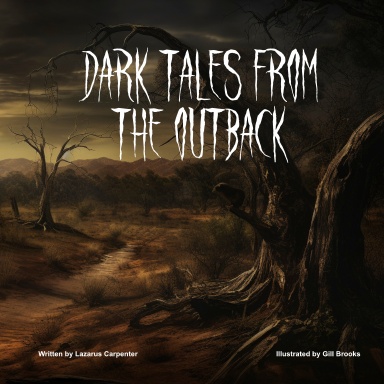
Once, in the remote Australian outback, there lived an aborigine named Kaya. He was a skilled tracker and hunter who roamed the vast, desolate lands with an air of quiet confidence. Kaya had always felt a deep connection to the spirits of the land, and his people often spoke of the ancient stories that warned of the dangers lurking in the wilderness. One moonless night, Kaya set out on a hunting expedition, guided only by the faint glow of the stars. His senses were sharp, and he moved through the rugged terrain with the ease of a shadow.
As he ventured deeper into the heart of the outback, a strange unease settled over him. The usual sounds of the night were absent, and an eerie silence enveloped the land. Suddenly, a piercing scream shattered the stillness, causing Kaya to halt in his tracks. The hair on the back of his neck stood on end as he tried to locate the source of the chilling cry. Following the sound, he stumbled upon a clearing where he saw a lone kangaroo, its eyes wide with terror as it desperately tried to escape an unseen force.
Kaya watched in horror as the kangaroo was dragged into the darkness by an unseen entity, its screams fading into the night. The aborigine felt a chill run down his spine, for he knew that the spirit world held many dark and malevolent forces. He knew he had stumbled upon something sinister, something beyond his understanding. Determined to uncover the truth, Kaya embarked on a quest to seek guidance from the wise elders of his tribe.
They revealed to him the ancient legend of a vengeful spirit unleashed upon the land, seeking to wreak havoc on the living. The elders warned Kaya that the spirit had become a monstrous kangaroo driven by an insatiable thirst for blood. Armed with the knowledge passed down by his ancestors, Kaya set out to confront the malevolent spirit. Armed with ancient symbols and blessed talismans, he ventured back into the wilderness. As he delved deeper into the treacherous terrain, the air grew thick with an otherworldly presence, and the ground seemed to tremble beneath his feet.
Finally, he came face to face with the monstrous kangaroo, its eyes glowing with an unholy light. The creature lunged at Kaya with supernatural speed and ferocity, but the aborigine stood his ground, wielding the protective symbols and chanting the sacred incantations. A fierce battle ensued as Kaya fought to banish the vengeful spirit from the mortal realm. The very fabric of reality seemed to warp and twist around them, and the night itself seemed to hold its breath as the two clashed in a struggle that transcended the physical world. In the end, with a final burst of mystical energy, Kaya managed to seal the spirit away, restoring peace to the land.
As the first light of dawn broke over the horizon, the outback was once again filled with the sounds of life, and Kaya knew he had fulfilled his duty as a guardian of his people. From that day on, the legend of Kaya and the malevolent kangaroo spirit became a cautionary tale, a reminder of the ancient forces that still linger in the world’s wild places. And though the memory of that fateful encounter would always haunt him, Kaya continued to roam the outback with a newfound sense of purpose and a deep respect for the land’s mysteries.
Over time, Kaya’s reputation as a protector and a keeper of ancient wisdom spread far and wide, and he became a revered figure among his people. Years passed, and Kaya’s hair turned grey, but his spirit remained unyielding. He passed down the knowledge he had gained to the younger generations, teaching them to honour the delicate balance between the physical and spiritual realms. His story became a part of the oral tradition, woven into the tapestry of his people’s history as a testament to the enduring power of courage and wisdom.
As the seasons changed and the land continued to whisper its secrets, Kaya’s name became synonymous with resilience and reverence for the natural world. His legacy endured, and the memory of his heroic encounter with the malevolent kangaroo spirit lived on as a reminder of the dangers hidden in the outback’s heart. The tale of Kaya and the vengeful spirit served as a timeless lesson, teaching the importance of humility and the need to safeguard the delicate harmony between humanity and the ancient forces that dwelled in the shadows. It became a parable of the enduring strength of the human spirit and the profound connection that binds all living things.
And so, in the vast expanse of the Australian outback, Kaya’s story echoed through the ages, a testament to the enduring power of the human spirit in the face of the unknown. And though the world continued to change, the legend of Kaya and the malevolent kangaroo spirit remained etched in the very fabric of the land, a testament to the enduring legacy of a humble aborigine who had stood against the darkness and triumphed.
Once upon a time, in a quaint little town, there lived a man named Harold who had a peculiar talent for being late. No matter the occasion—birthdays, weddings, or important meetings—Harold always seemed to arrive just after the moment had passed. Friends and family often joked that he was on a different schedule, one that ticked a little slower than everyone else’s. As a child, Harold’s tardiness was endearing. His parents would chuckle as he stumbled into the classroom, breathless and flushed, always missing the morning bell by a few minutes. In his teenage years, he was perpetually late for dates, leaving girls waiting with a mix of exasperation and amusement. “Better late than never,” he would say with a sheepish grin, and somehow, they never held it against him for long.
As an adult, Harold’s reputation only grew. He missed job interviews and deadlines, and his friends learned to adjust their plans around him. “Let’s just tell Harold an hour earlier,” they would whisper, a strategy that often backfired when he still managed to arrive late. Yet, despite the frustration he caused, his charm and good-natured spirit kept him surrounded by loved ones. One day, Harold received news that he had a serious illness. Determined to live life to the fullest, he decided to throw a party to celebrate his life. He meticulously planned every detail, inviting everyone he had ever known. But, true to form, he miscalculated the time it would take to prepare. The party was supposed to start at 4 PM, but he arrived at 5:30, just as the last guests were leaving.
“Harold, we were just about to leave!” they exclaimed, laughing at the irony.
But Harold, ever the optimist, simply shrugged and said,
“Well, at least I made it for the cake!”
And they all stayed a little longer, sharing stories and laughter, grateful for the time they had. Months passed, and Harold’s condition worsened. He was in and out of the hospital, but even there, he was late for his own treatments. The nurses would chuckle, “We’ve got to set an alarm for you, Harold!” He would laugh along, making friends with everyone he met, turning each medical appointment into a lighthearted gathering. Finally, the day came when Harold’s time came to an end. He passed away quietly, leaving behind a legacy of laughter and love. When the day of his funeral arrived, friends and family gathered in the church, reminiscing about their favourite Harold stories. But true to form, Harold was late even for this final event. As the clock ticked on, people began to murmur. Just then, the church doors swung open with a loud creak, and Harold, or rather, his spirit, walked in. He floated in, grinning widely as if he had just walked in from a party.
“Sorry I’m late!” he shouted, and laughter erupted in the sombre room.
At that moment, everyone understood that Harold had never indeed been late. He had always arrived just when he was meant to, filling every moment with joy, love, and laughter. And so, they celebrated his life and the wonderful chaos he brought into theirs, proving that sometimes, being late is the best way to make a grand entrance.




 Lazarus Carpenter - Author