The Sun and the Moon’s Gentle Dispute

Once upon a time, in the vastness of the cosmos, the Sun and the Moon often watched over Mother Earth. They shared a bond forged by their love for her, each shining in their own way, bringing life and calm to her surface. One day, as the Sun blazed fiercely across the sky, he grew worried.

“Mother Earth is burning under my rays,” he muttered. “Her deserts are drying up, her forests withering. I must shine brighter to warm her, but I fear I’m causing her pain.”

The Moon, soft and gentle, listened quietly. When the Sun finished, she softly replied,

“Dear Sun, your warmth is vital, but too much can scorch her delicate lands. I watch over her at night, providing gentle light and cooling shadows, giving her time to rest and heal.”

The Sun frowned, flickering with concern.

“But if I don’t shine fiercely, she might freeze in the cold darkness of space. My rays sustain her life, but I worry I might be harming her through excess.”

The Moon nodded, understanding his fears.

“And I, too, worry. I see her suffering when you burn too brightly, and I see her thriving when I cast my quiet glow. Perhaps we need to find balance, for her sake.”

Suddenly, a gentle breeze whispered through the cosmos, and the stars listened intently. The Sun and the Moon looked at each other, realising their shared concern. They understood that together, their light and warmth could work in harmony, each taking turns to nurture Mother Earth, ensuring she flourished without harm. From that day forward, the Sun and the Moon agreed to share their care. The Sun would shine fiercely by day, warming and energising her, while the Moon would cast calming shadows by night, helping her rest and recover. Their argument turned into a beautiful dance—balancing light and dark, warmth and coolness—for the love of Mother Earth.

And so, under their watchful eyes, Mother Earth thrived and still is, cradled in the gentle embrace of the Sun and the Moon. If only mankind could achieve such a balance?
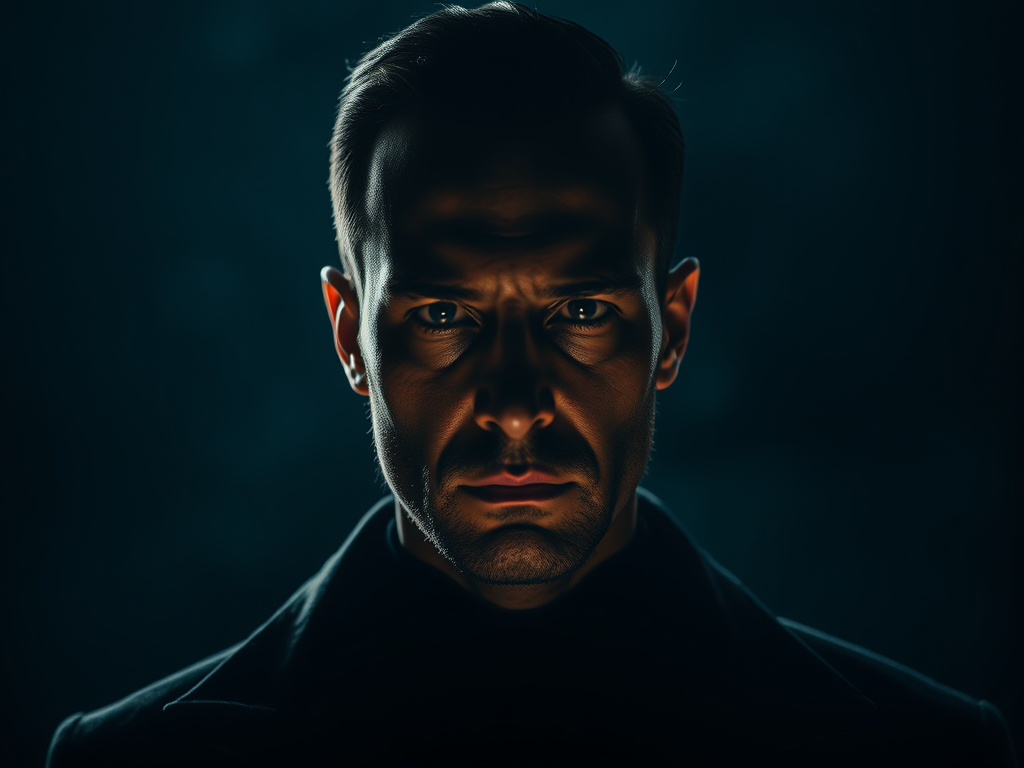
The Stranger Who Lost His Shadow – A Parable – ‘Shadows are the echoes of ourselves—what we leave behind’

One misty morning in a quiet village nestled between rolling hills and dense forests, a stranger appeared seemingly from nowhere. He was tall, cloaked in a dark coat, and carried a mysterious air about him. No one knew his name, nor where he had come from, but he moved with unusual grace that caught everyone’s attention. As he wandered through the village square, something peculiar happened. The sun was shining brightly, casting sharp shadows on the cobblestones, yet the stranger’s shadow was nowhere to be seen. People stared in wonder, then in confusion. Children giggled, trying to spot the stranger’s shadow, but it was simply gone.

The stranger didn’t seem bothered by this. Instead, he continued his walk, observing everything with a gentle smile. That evening, he settled in the village inn, and when the innkeeper brought him a warm cup of tea, she couldn’t help but ask,

“Sir, why is it that you have no shadow?”

He looked at her with kind eyes and replied,

“Long ago, I was a man who chased after his dreams so fiercely that I forgot to look behind me. One day, I lost my shadow, not as a curse, but as a reminder. Shadows are the echoes of ourselves—what we leave behind. Without it, I am free from the past, free to become someone new.”

From that day on, the villagers saw the stranger in a different light. He was no longer just a mysterious visitor but a symbol of letting go of old burdens and embracing the unknown. When he eventually left the village, no one knew where he went, but they remembered his words. And as for the shadow? It never appeared, but perhaps, in some way, the stranger and his words stayed with them — a gentle reminder that sometimes, to truly move forward, we must let go of what’s behind.

David Lodge

David Lodge is a renowned British author and playwright, born on January 28, 1935, in London. He is best known for his novels that often explore themes of academia, religion, and the complexities of human relationships, typically infused with humour and irony.

Lodge’s academic career significantly influenced his writing. He taught English literature at the University of Birmingham for many years, which provided him with a rich backdrop for his literary explorations. His notable works include “Changing Places” (1975), “Small World” (1984), and “Nice Work” (1988), all of which are part of what is sometimes referred to as the “Campus Trilogy.” These novels examine the lives of academics and the often absurd realities of university life.

In addition to his novels, Lodge has written plays, essays, and critical works on literature, showcasing his deep engagement with the literary world. His writing style is characterized by wit and a keen observation of social dynamics, making his works both entertaining and thought-provoking. Lodge has received various awards and accolades throughout his career, solidifying his status as a significant figure in contemporary literature. His contributions to both fiction and literary criticism continue to resonate with readers and scholars alike. 

Dragons Who Saved the World Abstract

Drako

Wind Dragon

Once upon a time, in a magical land, there lived a dragon named Drako. He was unlike any other dragon in the realm. While other dragons breathed fire and hoarded treasure, Drako had a unique passion for the wind. He would spend his days soaring high above the clouds, feeling the gentle breeze against his scales, and listening to the harmonious melody it created as it whistled through the trees. Drako admired the wind’s freedom and grace. He marvelled at how it could travel anywhere it pleased, carrying whispers and stories from distant lands. Drako often imagined himself as the wind, dancing through the sky and exploring the vast wonders of the world.

One day, as Drako was gliding through the sky, he came across a small village nestled in a lush valley. The villagers, who had never seen a dragon before, were terrified at the sight of Drako. They hid inside their homes, fearing that he would unleash his fiery breath upon them. Curious and saddened by the villagers’ fear, Drako decided to show them his gentle nature. He descended from the sky and landed in the village square, making sure not to harm anyone or anything with his massive wings. The villagers cautiously peered out from behind their windows, their eyes wide with both fear and wonder. Drako approached them with a friendly smile, trying his best not to appear intimidating.

“My name is Drako,” he said softly. “I mean you no harm. I come in peace.”

The villagers hesitated for a moment, but seeing the sincerity in Drako’s eyes, they cautiously stepped forward. They soon realized that Drako was not like the other dragons they had heard tales of. Drako was kind, gentle, and harboured a deep reverence for the wind. Intrigued by Drako’s unique qualities, the children of the village gathered around him, their eyes sparkling with curiosity. Drako saw this as an opportunity to share his love for the wind and inspire the children. He began to tell them stories of his adventures through the skies, describing the breath-taking landscapes he had seen and the enchanting sounds of the wind he had heard. The children listened intently, their imaginations ignited by Drako’s words.

As the sun began to set, Drako spread his wings and took flight, his scales shimmering in the golden light. The children watched in awe as he gracefully soared through the air, riding the currents of the wind. Inspired by Drako’s passion and bravery, the children decided to create a special celebration in honour of the wind. They built colourful windmills and kites, decorating them with symbols of the wind and the dragon who worshipped it. Every year, on the same day, the village celebrated the Wind Festival. They flew their kites high in the sky, their laughter carried by the wind, and they danced joyously to the music it created.

Drako was their honoured guest, and together, they celebrated the beauty and power of the wind. And so, Drako the dragon, who worshipped the wind, not only brought joy and inspiration to the village but also taught them the importance of embracing the unique passions and qualities that make each individual special. From that day forward, the village and Drako lived in harmony, forever connected by their reverence for the wind and the dragon who showed them the beauty of following one’s heart.

Digital Illustrations by Gill Brooks

William Butler Yeats

William Butler Yeats (1865-1939) was an Irish poet, dramatist, and one of the foremost figures of 20th-century literature. Born in Sandymount, Dublin, he was influenced by the Irish nationalist movement, folklore, and mysticism, which profoundly shaped his work. Yeats’s early poetry was heavily influenced by Romanticism and the Symbolist movement. His first collection, “The Wanderings of Oisin” (1889), reflects his interest in Irish mythology and the supernatural. As his career progressed, his style evolved, incorporating more modernist elements, particularly in his later works such as “The Tower” (1928) and “The Winding Stair” (1933).

In addition to poetry, Yeats was involved in theatre, co-founding the Abbey Theatre in Dublin in 1904, which became a crucial platform for Irish drama. His commitment to Irish identity and culture is evident in his works, and he played a significant role in the Irish Literary Revival. Yeats was also deeply interested in spiritualism and the occult, engaging with various esoteric philosophies that influenced his writing and worldview. He received the Nobel Prize in Literature in 1923, acknowledging his poetic accomplishments and contributions to literature.

His later years were marked by political involvement, particularly in Irish politics, and he served as a senator in the Irish Free State. Yeats’ poetry often reflects ageing, love, and the passage of time, culminating in some of his most famous pieces like “Sailing to Byzantium” and “The Second Coming.” Yeats’s legacy is a cornerstone of modern poetry, characterized by its lyrical beauty, rich imagery, and profound exploration of human experience. He passed away in 1939 and was buried in Drumcliff, County Sligo, Ireland, where his epitaph famously reads: “Cast a cold eye on life, on death. Horseman, pass by!”