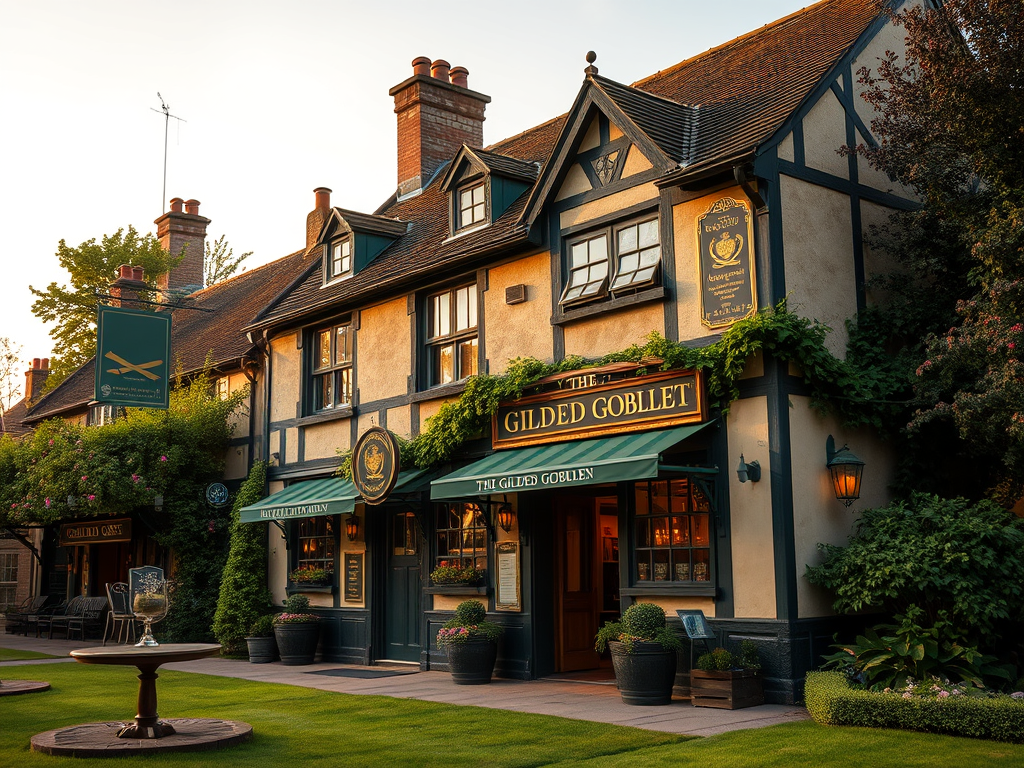
The Haunted Hearth: A Tale of The Gilded Goblet

Once upon a time, nestled in a sleepy village, there stood an ancient pub known as The Gilded Goblet. Its weathered timber beams and creaky floors whispered stories of three centuries past. But what drew curious visitors and sometimes dread wasn’t just its age, but the spectral inhabitants that called it home. Legend had it that Spew Hardcastle, the original landlord from the early 1700s, still lingered behind the bar, his ghostly figure often seen polishing invisible glasses or napping in his old leather armchair. Over the centuries, a motley crew of ghostly patrons had joined him: a jolly pirate, a forlorn noblewoman, and a mischievous tavern boy, all eager to play tricks on the living.

In recent years, the current landlord, Tom, and his wife, Mary, found their peaceful business turned upside down. Ghostly “customers” would tip over pints, hide the keys, and whisper eerie comments in the dead of night. Sometimes, a sudden chill would sweep the room, and the flickering candlelight would dance to an unseen tune. The staff grew nervous, and the once lively pub became a place of nervous glances and whispered fears. Tom tried everything, blessing the place, hanging garlic, even trying to ignore the spectral antics. But the spirits were persistent, and their pranks grew more elaborate. Chairs would slide across the floor, ghostly laughter echoed when no one was near, and the ghostly patrons seemed to demand attention, uninvited.

One stormy evening, as the tavern was shrouded in shadows and ghostly chuckles, a stranger stepped inside. Dressed in a long coat and with a calming demeanour, she introduced herself as Miss Eliza Hart, a renowned psychic investigator. Eliza quietly observed the scene, sensing a swirl of restless energies. She sat at the bar, ordered a pint, and began speaking softly to the spirits. Her voice was gentle but firm, and she listened intently to their stories. Through her communication, Eliza learned that Spew Hardcastle’s spirit was upset because he felt forgotten. His descendants had long since sold the pub, and he yearned for recognition. The ghostly patrons, too, had their own tales; one had been a sailor who died in a drunken brawl, another a noblewoman who longed for her lost love. Most importantly, Eliza discovered that the ghosts weren’t malicious; they simply wanted to be seen, heard, and remembered.

Eliza gently explained to the spirits that they were loved and appreciated, even after all these years had passed. She promised to tell their stories to the living world and to help them find peace. She performed a heartfelt ritual, lighting a candle and reciting words that honoured their memories. As she did, the ghostly activity softened. The spirits nodded, their forms shimmering with gratitude, before slowly fading into a peaceful glow. The next morning, the atmosphere in The Gilded Goblet was transformed. The pranks ceased, replaced by a warm and welcoming charm. Tom and Mary felt lighter, their pub filled with a renewed sense of joy. Visitors now often remarked on the friendly, lively spirit of the place, not just the living, but the ghosts as well.

And as for Spew Hardcastle and his spectral friends? They remained, not as troublemakers, but as eternal guardians of the pub’s history, happily watching over their beloved Gilded Goblet, forever part of its story.
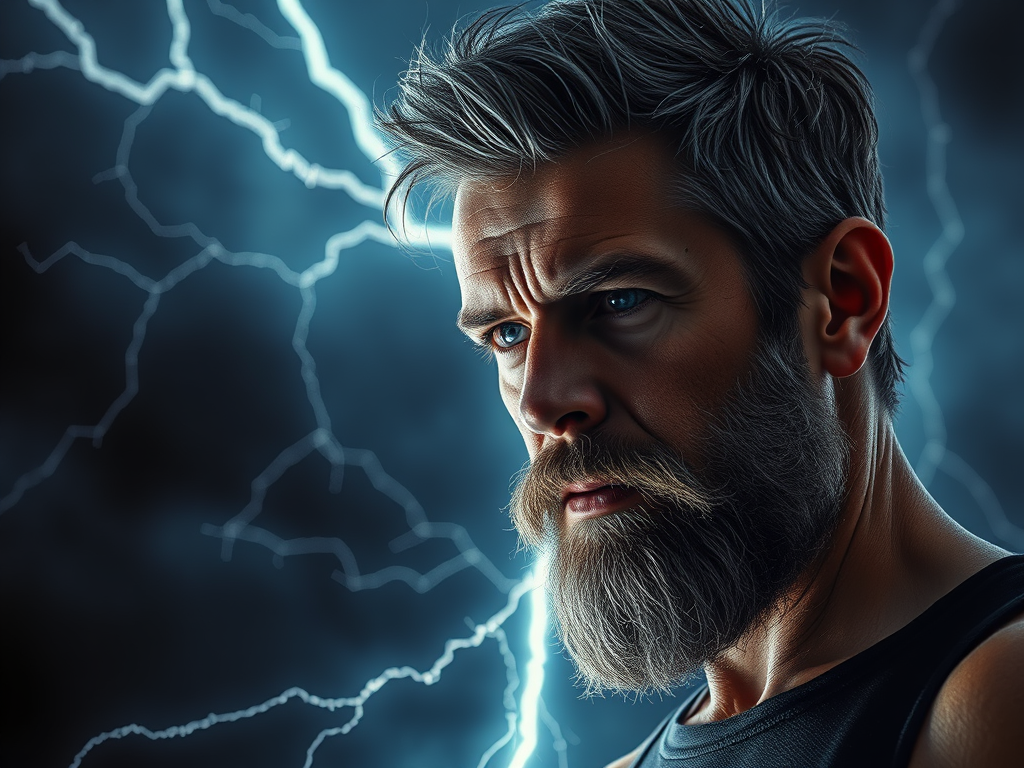
The Lightening

A man named Rowan lived in the tiny village of Eldergrove, nestled between rolling hills and whispering forests. Known for his quiet demeanour and simple life, Rowan spent his days tending to his garden and sharing stories with the villagers. But one fateful afternoon, everything changed. Dark clouds gathered ominously over Eldergrove, and as a storm brewed, lightning struck Rowan while he was out in his garden. Miraculously, he survived, but the strike transformed him. From that moment on, he began to experience vivid visions of the future—flashes of wondrous and terrifying events.

At first, the visions were benign. He saw the village prospering: a bountiful harvest, children laughing and playing, and the village square filled with joy. Rowan shared these glimpses with the villagers, and optimism bloomed. They celebrated their newfound fortune, and hope thrived like never before. However, as time went on, the visions darkened. Rowan foresaw a devastating drought that would wither their crops, a sickness that would sweep through the village, and an impending storm that would destroy homes. Each time he shared these visions, fear replaced the earlier joy, and the villagers began to look to him for guidance, hanging on his every word.

Some villagers welcomed the truth of his visions, believing they could prepare for the worst. Others grew resentful, feeling cursed by the knowledge of what was to come. Tensions mounted, and soon, the village was divided. Arguments erupted over what actions to take based on Rowan’s foretellings. The vibrant community spirit began to erode, replaced by suspicion and despair. Burdened by the weight of his gift, Rowan became an unwilling prophet. He tried to focus on the promising visions, but the bad ones persisted, each more dire than the last. He witnessed fires consuming the forest, floods washing away homes, and even unravelling relationships among his friends and neighbours. The village, once a close-knit community, fell into chaos.

One stormy night, Rowan had a vivid vision that shook him to his core. He saw the beautiful and serene village slowly fading away, caught in a cycle of despair and division until it vanished completely. He woke in a panic, heart racing, realizing he had to act before it was too late. Desperate to unite the villagers, Rowan called a meeting in the square. He shared his vision of the village disappearing and urged everyone to set aside their differences. He spoke of the strength of their community and the importance of supporting one another in times of adversity. Slowly, the villagers listened, and the fear that had divided them began to dissolve.

Inspired by Rowan’s plea, they worked together to prepare for the drought, forming groups to share resources and help those in need. They planted drought-resistant crops and built rainwater collection systems. The spirit of cooperation rekindled, and the villagers began to mend their relationships, rekindling the bonds frayed during the tumult. But the storm Rowan had foreseen approached, fierce and unrelenting. As the winds howled and the skies darkened, the villagers stood together, hand in hand. They faced the tempest not as individuals but as a unified community. When dawn broke, the village stood battered but intact. The storm had passed, and though the aftermath was devastating, the villagers were determined to rebuild. Rowan realized that while his visions showed both light and dark, what truly mattered was how they chose to respond. Yet, as the months passed, the visions continued, each more haunting than the last. Rowan began to understand that the visions were not merely predictions but reflections of their choices. The more they focused on fear and division, the more dire the visions became.

Finally, after months of struggle and unity, the last vision came to him—a serene image of Eldergrove, thriving and full of life, surrounded by a vibrant forest. He shared this final vision with the villagers, urging them to embrace love, cooperation, and resilience. But as he spoke, he noticed something strange. The village began to shimmer, the edges of reality blurring. The villagers gasped as they realized the visions had taken a toll on their existence. Each moment spent in fear and anger had pulled them further from the tangible world. One by one, they began to fade until only Rowan remained.

In that final moment, Rowan understood the truth: the village existed not just in the physical realm but in the hearts of its people. With a surge of determination, he closed his eyes and envisioned the vibrant community he had seen. He poured his heart into that image, willing it to become real. When he opened his eyes, he found himself standing in a lush meadow, the echoes of laughter and love surrounding him. Eldergrove had transformed into a new realm—one that existed beyond the confines of fear and division. In this place, the villagers’ souls thrived, united in spirit, forever woven together in a tapestry of shared history and hope. And so Rowan, the man struck by lightning, became the guardian of Eldergrove’s spirit, a reminder that while the future may hold both light and darkness, it is the choices we make together that shape our reality. 

Uri Geller

Uri Geller is an Israeli-British illusionist, magician, and self-proclaimed psychic known for his spoon-bending tricks and mind-reading abilities. Born on December 20, 1946, in Tel Aviv, Israel, Geller gained fame in the 1970s and 1980s, captivating audiences with his performances that often blurred the lines between magic and mysticism. Geller’s rise to prominence began after he appeared on television, showcasing his unique abilities, which he claimed resulted from psychic powers. His most famous act involves bending spoons and other metal objects, which he often attributes to telekinesis. While many have been sceptical of his claims, arguing that his feats can be replicated through sleight of hand and illusion, Geller maintains that he possesses genuine psychic abilities.

Throughout his career, Geller has been involved in various media, including television shows, books, and public appearances. He has also faced criticism and controversy, particularly from sceptics and magicians who argue that his performances are misleading. Despite this, Geller has maintained a loyal following and has continued to perform and engage with audiences worldwide. In addition to his entertainment career, Geller has claimed to have worked with various scientific institutions and has been involved in research related to psychic phenomena. His life and career have often sparked debates about the nature of reality, belief, and the limits of human potential. Uri Geller has claimed that he was involved with the CIA during the 1970s in a program exploring psychic phenomena for potential applications in espionage and intelligence gathering. This program, often referred to as “Project Stargate,” investigated the use of psychics for remote viewing and other paranormal abilities.

Geller’s association with the CIA became a topic of interest, notably when he demonstrated his abilities to various military and intelligence personnel. He stated that he was asked to participate in tests to see if his supposed psychic skills could be harnessed for intelligence. However, the specifics of his involvement and the outcomes of those tests remain a subject of debate and scepticism. While Geller has often spoken about these experiences, it’s important to note that many in the scientific community remain critical of claims regarding psychic abilities, and there has been considerable scepticism regarding the validity and replicability of Geller’s feats. The discussions around his alleged CIA connections continue to contribute to the intrigue surrounding his persona as a psychic entertainer. 

SAVED BY ET

Once upon a time, in a small town nestled between rolling hills and meandering rivers, the skies darkened ominously. It had been a dry season, and the villagers welcomed the rain, hoping it would replenish their crops. But as the first drops fell, they quickly turned into a torrential downpour. Within hours, the gentle streams swelled into raging torrents, and the town was engulfed in chaos. The water rose swiftly, sweeping away everything in its path. Animals sought refuge in trees and rooftops while families scrambled to save their loved ones and belongings. Panic gripped the townsfolk as they watched their world transform into a swirling sea. The cries of people and animals echoed through the storm, merging with the relentless sound of rain pounding against the earth.

A strange light pierced through the dark clouds as the situation grew dire. The townspeople paused, mesmerized by the glowing object descending from the sky. It was a UFO, shimmering in hues of blue and green, casting an otherworldly glow over the flooded landscape. The villagers struggled to comprehend what they witnessed as the UFO hovered above them. Then, a beam of radiant light shot down from the craft, enveloping the town. In an instant, the rain stopped, and the skies cleared. The sun broke through the clouds, bathing the land in warm golden light. The floodwaters began to recede, revealing the remnants of the devastation and the resilience of the town.

Animals cautiously climbed down from their perches, and families reunited, overwhelmed with relief. The UFO hovered for a moment longer as if assessing the situation, then slowly ascended, disappearing into the blue sky. The townsfolk watched in awe, their hearts filled with gratitude. It felt as though they had been given a second chance. In the days that followed, the community came together to rebuild. They shared stories of survival and hope, and their bonds strengthened by the experience. The UFO had not only saved them from drowning but had also reminded them of the fragility of life and the importance of unity. As the crops flourished again, the townspeople often looked up at the sky, wondering if the mysterious visitors would return. They celebrated their survival and learned to appreciate the rain, knowing it could bring both life and peril. The day it rained so much became a tale of resilience, reminding them that even in the darkest storms, there is always a glimmer of hope waiting to shine through. 

Image by AI