‘Walls Have Ears’- Craig y Nos Castle

Introduction

In December of 2022, I had a dream to bring alive the story of Craig y Nos Castle,
to relate the history, its life and times but in that of a novel format. Then, the idea came to write the story from the ‘first person’ perspective as an observer of the comings and
goings of life in this Gothic mansion. What better, thought me, than to be a lump of rock
in the foundations mined from the Cribarth, overlooking Cae-Brynmelyn-Bach opposite
Pentrecribarth farm? Deep in the foundations I would be aware of everything that
happened through vibrations emanating within the walls. Thus, the title was born, ‘Walls
Have Ears’.

Craig y Nos Castle has a long history of paranormal occurrences. As a ‘trance
psychic channel’
I felt an opportunity presented itself to incorporate the words and stories of the spirits still present, combined with tales gained through actual historical facts and interviews with people who had family and work connections with the castle through the years. Thus my research began both with those alive, and those long gone to the world of spirit.

Abstract

I know not how long I have lain upon the Cribarth, here so high on this
craggy ridge amidst passing clouds looking down to the valley below. Back in the
mists of time, volcanoes roared, earthquakes cracked mountains, ice thawed, and beds
of limestone and Twrch sandstone were laid down in sedimentary layers in tropical
seas near the equator some 350 million years ago. They arrived where they are
today by continental drift, and since then, here is where I have been, and much has
passed me by. Many have trod over me through millennia, ancient Celts, Druids,
invaders from Rome and England. But I am a rock, and I remember everything
passing through time as only a rock can.
Staring down the valley below, I see a tall man whom I know to be Captain Rice
Davies Powell, distinguished, suited and whiskered, leaning on an ebony walking
cane with a hand grip of gold. He stands on a field I know as Cae-Brynmelyn-Bach
opposite Pentrecribarth farm. It is late in the Autumn of 1843, leaves falling and
floating through the air, blown by easterly winds gather beneath stone walls and
footings covering ground as a carpet of bronze.
Captain Rice Davies Powell shielded his eyes with a gloved hand, the noonday
autumnal sun momentarily blinding more than ambition. His companion was a much smaller yet rotund man in his fifties, with bushy dark hair swept back over a checkedcoat collar. He stood with a sketchpad in one hand and charcoal in the other. Thomas H Wyatt was an architect of some renown, and being far from his offices in Great Russell
Street, London, he stood looking at the empty field of Cae-Brynmelyn-Bach. A tall,

stooped, thin man with wispy, greying hair stood at Thomas Wyatt’s shoulder. His
partner, David Brandon, accompanied him travelling from their offices by rail to
Swansea and then coach and four to Pentrecribarth for a planning meeting with
Captain Powell. Both were well-known architects at this time, responsible for building numerous Gothic-style churches, public buildings and private mansions.

Harold – the man who was always late!

Once upon a time, in a quaint little town, there lived a man named Harold who had a peculiar talent for being late. No matter the occasion—birthdays, weddings, or important meetings—Harold always seemed to arrive just after the moment had passed. Friends and family often joked that he was on a different schedule, one that ticked a little slower than everyone else’s. As a child, Harold’s tardiness was endearing. His parents would chuckle as he stumbled into the classroom, breathless and flushed, always missing the morning bell by a few minutes. In his teenage years, he was perpetually late for dates, leaving girls waiting with a mix of exasperation and amusement. “Better late than never,” he would say with a sheepish grin, and somehow, they never held it against him for long.

As an adult, Harold’s reputation only grew. He missed job interviews and deadlines, and his friends learned to adjust their plans around him. “Let’s just tell Harold an hour earlier,” they would whisper, a strategy that often backfired when he still managed to arrive late. Yet, despite the frustration he caused, his charm and good-natured spirit kept him surrounded by loved ones. One day, Harold received news that he had a serious illness. Determined to live life to the fullest, he decided to throw a party to celebrate his life. He meticulously planned every detail, inviting everyone he had ever known. But, true to form, he miscalculated the time it would take to prepare. The party was supposed to start at 4 PM, but he arrived at 5:30, just as the last guests were leaving.

“Harold, we were just about to leave!” they exclaimed, laughing at the irony.

But Harold, ever the optimist, simply shrugged and said,

“Well, at least I made it for the cake!”

And they all stayed a little longer, sharing stories and laughter, grateful for the time they had. Months passed, and Harold’s condition worsened. He was in and out of the hospital, but even there, he was late for his own treatments. The nurses would chuckle, “We’ve got to set an alarm for you, Harold!” He would laugh along, making friends with everyone he met, turning each medical appointment into a lighthearted gathering. Finally, the day came when Harold’s time came to an end. He passed away quietly, leaving behind a legacy of laughter and love. When the day of his funeral arrived, friends and family gathered in the church, reminiscing about their favourite Harold stories. But true to form, Harold was late even for this final event. As the clock ticked on, people began to murmur. Just then, the church doors swung open with a loud creak, and Harold, or rather, his spirit, walked in. He floated in, grinning widely as if he had just walked in from a party.

“Sorry I’m late!” he shouted, and laughter erupted in the sombre room.

At that moment, everyone understood that Harold had never indeed been late. He had always arrived just when he was meant to, filling every moment with joy, love, and laughter. And so, they celebrated his life and the wonderful chaos he brought into theirs, proving that sometimes, being late is the best way to make a grand entrance.

Image by http://www.gillsplace.com

Charles Darwin

Charles Darwin was an English naturalist, geologist, and biologist best known for his contributions to understanding evolution. His most famous work, “On the Origin of Species,” published in 1859, introduced the concept of natural selection as a mechanism for evolution. Darwin’s observations during his voyage on the HMS Beagle, particularly in the Galápagos Islands, led him to develop his theories on the diversity of life and the common descent of species. Darwin proposed that individuals with traits better suited to their environments are more likely to survive and reproduce, passing those traits on to future generations. He argued that species evolve over time through gradual changes rather than static or unchanging. Darwin’s ideas challenged traditional views of creation and profoundly impacted various fields, including biology, genetics, anthropology, and philosophy. His work laid the foundation for modern evolutionary biology, influencing scientific thought and research.

Daniel Defoe

Daniel Defoe was born around 1660 in London, England, into a family of dissenters. His father was a successful merchant, which provided Defoe with a certain level of education. He attended a dissenting academy, where he was exposed to various ideas and philosophies. Defoe started his career as a merchant but faced financial difficulties, leading him to switch to writing and journalism. He wrote political pamphlets and essays, often expressing his views on trade, politics, and society. His early works included “The Review,” a periodical that discussed contemporary issues.


Robinson Crusoe (1719): Defoe’s most famous novel tells the story of a shipwrecked sailor who spends 28 years on a deserted island. The novel explores survival, self-sufficiency, and colonialism, and it has been interpreted in various ways, including as an allegory for the human condition.

Moll Flanders (1722): This novel follows the life of a woman born in prison and embarks on a series of adventures that include crime, love, and betrayal. It examines issues of gender, class, and morality.

A Journal of the Plague Year (1722): This historical novel is a first-person account of the Great Plague of London in 1665. It blends fiction with real events and provides vivid descriptions of the plague’s societal impact.

Roxana (1724): In this novel, Defoe tells the story of a woman who becomes a successful courtesan. It explores themes of identity, morality, and women’s struggles in a patriarchal society.

Defoe’s later years were marked by financial instability and political controversy. He was imprisoned for a time due to his political writings, which often criticized the government. Despite these challenges, he continued to write until he died in 1731. Defoe is considered one of the founding figures of the modern novel. His works influenced future writers and established narrative techniques still used today. His exploration of character psychology and realistic settings helped shape prose fiction’s development.

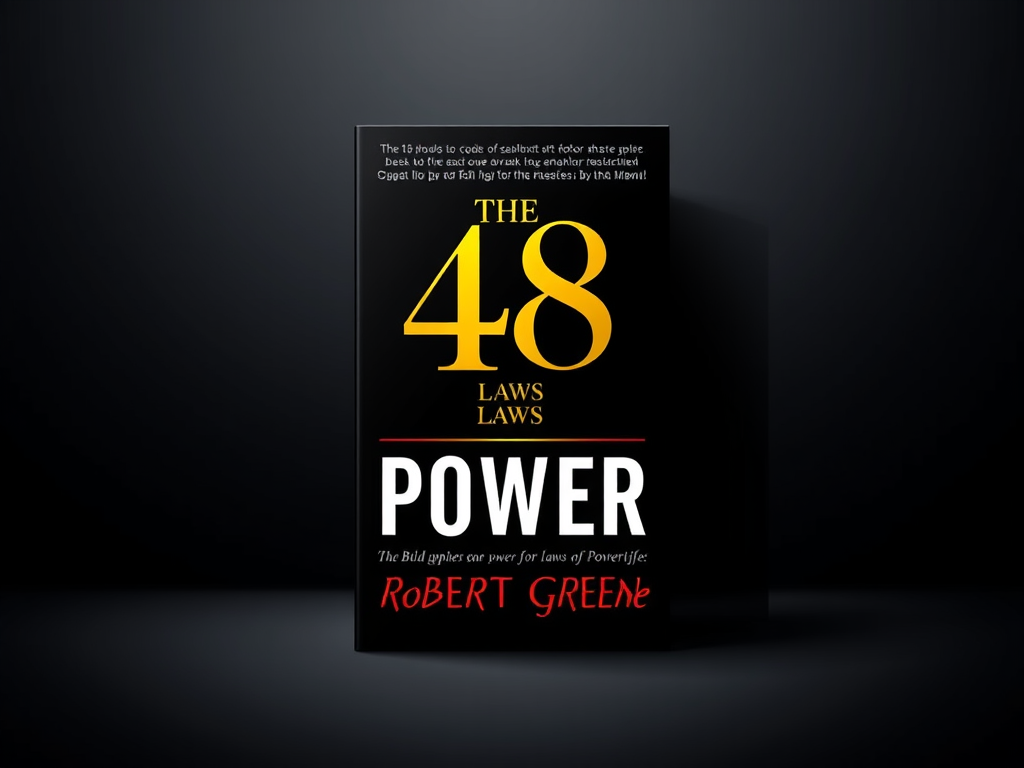
Robert Greene – “The 48 Laws of Power”

“The 48 Laws of Power” by Robert Greene is a guide to gaining and maintaining power, drawing on historical examples and philosophical insights. Here’s a summary of some key themes and a few notable laws:

1. Power Dynamics: The book emphasizes the importance of understanding power dynamics in relationships, personal or professional.

2. Manipulation and Strategy: Greene discusses the art of manipulation and the strategies individuals can use to achieve their goals, often advocating for cunning and strategic thinking.

3. Historical Examples: Each law is illustrated with historical anecdotes, showcasing figures like Machiavelli, Sun Tzu, and various monarchs and politicians who exemplified the principles.

Notable Laws:

– Law 1: Never Outshine the Master: Make those above you feel superior; in your desire to please, do not go too far in displaying your talents.

– Law 3: Conceal Your Intentions: Keep people off-balance by never revealing your true purpose.

– Law 15: Crush Your Enemy Totally: Leave no room for your opponent to recover; if you allow them to escape, they may return stronger.

– Law 33: Discover Each Man’s Thumbscrew: Find the weakness in others to gain leverage over them.

– Law 48: Assume Formlessness: Be adaptable and unpredictable to avoid being pinned down by others.

The book is a controversial but insightful exploration of power and its complexities. It encourages readers to navigate their social landscapes with awareness and strategy. I have had this book on my shelf for many years, and it serves numerous uses, including bibliomancy. In my opinion, there are two sides to the usage of the laws:

Softly, as in a positive way of thinking without harming others or oneself but using them to achieve goals. Example – The success of this book, which became a New York Times bestseller with over 1.3 million copies sold in North America alone.

Hard and Literate, as some of today’s politicians and country leaders’ attitudes and behaviours testify. This world seems overrun by people in powerful positions in whatever industries, as being ruthless in the extreme. There is room to consider that many of these laws could also be applied to rules, regulations and policies repressing the electorate globally.