Alaric

Once upon a time, nestled in a verdant valley surrounded by lush forests and rolling hills, there lay the village of Eldergrove. It was a peaceful place known for its vibrant festivals and fertile lands. At the heart of this village lived a unique and enigmatic figure—a two-headed magician named Alaric. Alaric was unlike any other, for he possessed two distinct personalities: Thaddeus, the kind and wise head, and Vesper, the bold and impulsive counterpart. Together, they wielded immense magical power, yet their constant disagreements often set them at odds. The villagers of Eldergrove had long relied on Alaric’s magic for prosperity and protection. Thaddeus was known for using magic to nurture crops, heal the sick, and create gentle illusions that brought joy to the people. On the other hand, Vesper preferred adventurous displays of power and flamboyant spells that dazzled the eyes and stirred excitement. This dichotomy in their personalities meant that, despite their shared body, Alaric was frequently caught in internal conflict.

In the year 1555, as the harvest festival approached, anticipation filled the air. The villagers eagerly awaited the magician’s performance, an annual highlight that brought everyone together in celebration. Yet, this year, the discord between Thaddeus and Vesper reached unprecedented heights. Thaddeus envisioned a serene, enchanting display—a dance of lights and colours to mimic the celestial beauty of the night sky. Vesper, however, sought to impress with a storm of magic, crackling with energy and spectacle. As the festival day dawned, the two heads argued more fiercely than ever. Their voices rose, echoing through the valley, as each tried to assert their vision. Thaddeus appealed to reason and harmony, while Vesper insisted on grandeur and excitement. Their magic, influenced by their conflicting emotions, began to manifest uncontrollably. Sparks flew, and the air hummed with tension as their powers collided.

Without warning, their magic spiralled out of control. A tumultuous explosion of energy erupted, engulfing the village in a kaleidoscope of light and sound. The sky darkened, and a powerful shockwave rippled through Eldergrove. The villagers watched in horror as their beloved homes and fields were torn asunder, replaced by a chaotic storm of raw magic. In the blink of an eye, the village was reduced to ruins—a testament to the destructive potential of unchecked power. As the magical tempest subsided, Alaric stood amidst the devastation, both heads silent and filled with remorse. The once-bustling village was now desolate, and the realisation of their catastrophic mistake hit them hard. They understood that their inability to cooperate had led to this tragedy, and both Thaddeus and Vesper were overcome with guilt.

Determined to atone for their actions, Alaric vowed to rebuild Eldergrove and restore what was lost. With his gentle wisdom, Thaddeus proposed a new approach: to work in harmony, blending their strengths and respecting each other’s perspectives. Vesper, chastened by the disaster, agreed, recognizing the importance of unity and understanding. Together, they began the arduous task of rebuilding. Alaric’s magic, now guided by cooperation and mutual respect, slowly restored the village. They mended homes, revitalized fields, and healed the land. Seeing the sincerity of their efforts, the villagers joined in, and through collective effort, Eldergrove began to flourish again.

The tale of Alaric, the two-headed magician, became a cherished legend in Eldergrove. It served as a powerful reminder of the necessity of cooperation and understanding, especially in the face of differing viewpoints. From that year onward, the harvest festival was a celebration of abundance and unity, emphasizing the strength of working together toward a common goal. In time, Eldergrove thrived, becoming a beacon of harmony and resilience. Alaric, with Thaddeus and Vesper now working as one, continued to protect and nurture the village, ensuring that past lessons would guide the future. Thus, the story of the two-headed magician and the village of Eldergrove lived on is a timeless testament to the power of collaboration and the enduring spirit of community. 

Image by AI

George Eliot

George Eliot is the pen name of Mary Ann Evans, a renowned English novelist, poet, journalist, and translator who lived during the Victorian era. She was born on November 22, 1819, in Nuneaton, Warwickshire, England, and died on December 22, 1880, in London. Mary Ann Evans wrote under the pseudonym George Eliot to ensure her works were taken seriously in a male-dominated literary world. She was a prominent figure in the literary scene of her time and is best known for her novels, which are celebrated for their psychological insight, realism, and detailed depiction of rural life in England.

Some of George Eliot’s most famous works include:

1. “Adam Bede” (1859) – Her first full-length novel, which explores the lives of rural English people.
2. “The Mill on the Floss” (1860) – A novel that delves into the complexities of family relationships and personal choices.
3. “Silas Marner” (1861) – A heartwarming tale about redemption and community.
4. “Middlemarch” (1871-1872) – Often considered her masterpiece, this novel is a complex portrayal of life in a provincial English town.

Beyond her literary accomplishments, George Eliot was known for her unconventional life. She lived with George Henry Lewes, a philosopher and critic, in a relationship that was considered scandalous at the time because they were not married. Despite societal disapproval, their relationship was a supportive and intellectually stimulating partnership that lasted until Lewes died in 1878. After Lewes’s death, George Eliot married John Walter Cross in 1880, but her health began to decline soon after. She passed away later that year at the age of 61. George Eliot’s works continue to be studied and admired for their profound insights into human nature and society. 

Image by AI

Elias

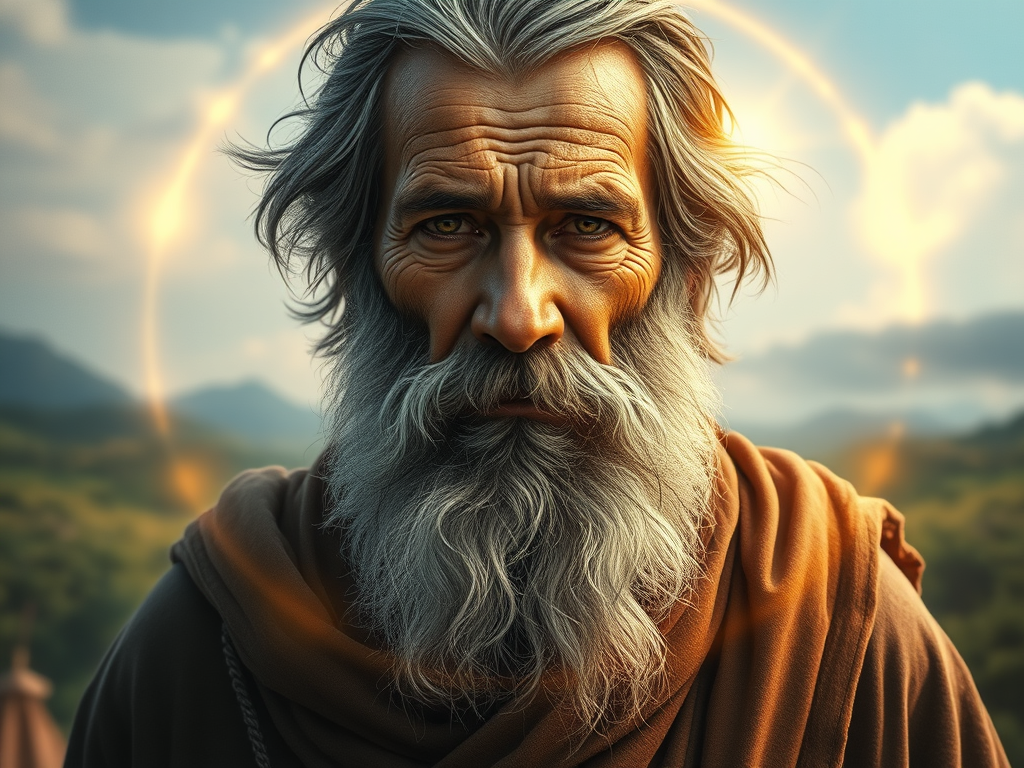
Once upon a time, in a quiet village nestled between rolling hills, there lived an old man named Elias. Known for his wisdom and gentle spirit, Elias was often seen tending to his garden or sharing stories with the village children. Few knew of his past; he had once been a renowned scholar and adventurer who travelled the world searching for knowledge and truth. One fateful day, a dark cloud descended upon the land. An ancient evil, long thought vanquished, had awakened. Creatures of shadow began to emerge, spreading fear and chaos. The villagers were terrified, and many fled their homes, believing nothing could save them.

Elias, however, felt a familiar stirring within him. He remembered the old prophecies about the “Keeper of Light” rising in times of darkness. Determined to protect his home, he gathered his few belongings and set off on a quest to confront the evil that threatened the world. His journey led him to the Whispering Woods, where he sought the wisdom of the ancient spirits. They revealed that the source of the darkness was a powerful crystal hidden deep within the Caves of Despair. Only by uniting the fragments of the Light Stone scattered across the land could he hope to confront the malevolence.

Elias travelled far and wide, facing numerous challenges along the way. He helped a village beset by drought by teaching them sustainable farming techniques, earning the first fragment of the Light Stone. He rescued a trapped beast in the mountains, gaining another fragment in gratitude. Each act of kindness brought him closer to his goal and rekindled hope in the hearts of those he encountered. Finally, after many trials, Elias gathered all the fragments and made his way to the Caves of Despair. Inside, he faced the embodiment of darkness itself—a towering figure wreathed in shadows. With courage in his heart, Elias held the Light Stone high, channelling the love and kindness he had shared throughout his journey.

A brilliant light erupted from the stone, clashing with the darkness. The power of his compassion and bravery pierced through the shadows, banishing the evil that had plagued the land. As the light spread, it illuminated the cave and transformed the darkness into shimmering stars, restoring balance to the world. Exhausted but triumphant, Elias returned to his village, where he was greeted as a hero. Yet, he humbly declined the title, choosing instead to continue his quiet life among the people he loved. Inspired by his bravery and kindness, the villagers began rebuilding their lives and spreading their lessons. Elias spent his remaining years sharing stories of hope and resilience, reminding everyone that true strength comes not from power or might but from compassion and the willingness to act in the face of adversity. And so, the old man who saved the world became a cherished legend, his tale whispered through generations, a beacon of light against the darkness. 

Image by AI

The Blade of Elys

In a world where legends intertwine with the fabric of reality, there lay a magical sword known as the Blade of Elys. Forged over ten thousand years ago by the ancient gods, this sword was imbued with the power to restore peace and vanquish darkness. Its hilt was adorned with intricate engravings that shimmered like stars, and the blade gleamed with an ethereal light, said to be the essence of hope itself.

The tale begins with Aeloria, a fierce warrior of the Eldrin tribe. Her people lived in harmony with nature, but their peace was shattered when the Shadow Wraiths, malevolent spirits from the Netherrealm, threatened to engulf the world in despair. The skies darkened, and a chilling fear gripped the heart of every living being. Aeloria, driven by a vision of a radiant sword and a call from the gods, embarked on a perilous journey to the Sacred Caverns of Lumina. Deep within, she discovered the Blade of Elys, resting atop a pedestal bathed in celestial light. She felt a surge of power and purpose as she grasped its hilt. With the sword in hand, Aeloria united the fragmented tribes of the land, rallying them against the encroaching darkness. In the heart of the Valley of Whispers, Aeloria faced the Wraith King, a creature born from the very shadows it sought to spread. The battle raged for days, echoing with the clash of steel and the cries of warriors. Yet, with a final, resounding strike of the Blade of Elys, Aeloria shattered the Wraith King’s essence, dispersing the shadows and bringing light back to the realm. The tribes celebrated her as a hero. Aeloria, knowing the sword’s power was too great for any one person, entrusted it to the Eldrin Council, vowing to protect it for future generations.

Centuries passed, and the sword lay dormant, waiting for the next worthy hero. That hero arrived in the form of Thorian, a humble blacksmith’s son from the village of Eldergrove. Known for his unwavering courage and kind heart, Thorian lived a simple life, unaware that destiny had greater plans for him. When a fierce dragon named Zephyrax descended upon the land, scorching villages and hoarding treasures, Thorian felt the call of destiny. Guided by dreams of Aeloria and whispers of the past, he sought the Blade of Elys, hidden deep within the Whispering Woods. Upon retrieving the sword, Thorian confronted Zephyrax atop the fiery peaks of Mount Solara. The dragon roared, its flames threatening to consume all. But Thorian, with the guidance of the sword, harnessed the power of the winds. The battle was fierce, but he struck the beast’s heart with a swift and decisive blow, releasing a torrent of fire into the sky. The skies cleared, and peace returned as the dragon’s hoard was shared among the people, ensuring prosperity.

Millennia later, the world faced a new threat: the Veil of Sorrow, a dark mist that drained joy and hope from the people’s hearts. Lyra, a gifted mage with a deep connection to nature, felt the sword’s pull as she wandered the Whispering Woods. She found the Blade of Elys, still radiant and powerful, waiting for her to wield it. Lyra journeyed to the source of the Veil, a cursed grove where sorrowful spirits lingered. With the sword, she channelled the ancient magic of the earth, transforming the blade into a beacon of light. As she faced the spirit of despair, she spoke words of love and remembrance, reminding the spirits of their past joys. The sword glowed brightly, and the mist began to lift, revealing the world’s beauty beneath. The spirits were freed, and harmony was restored.

Through the ages, the Blade of Elys symbolised hope and unity. Each hero, Aeloria, Thorian, and Lyra, left their mark on history, their stories woven into the very fabric of the land. The sword itself, a silent guardian, rested in the Eldrin Council’s sanctuary, awaiting the next hero who would rise in the face of darkness. As the years turned into aeons, the tales of the Blade of Elys echoed through the mists of time, reminding all that true strength lies not in the sword itself but in the hearts of those who wield it. And so, the legacy of peace and courage continued, a timeless reminder that hope would always shine through, even in the darkest of times. The stories of these heroes became legends, told around campfires and recorded in ancient tomes, inspiring generations to come. The Blade of Elys, a beacon of hope, stood as a testament to the enduring spirit of those who dared to dream and fight for a better world. 

Image by AI

Eldergrove

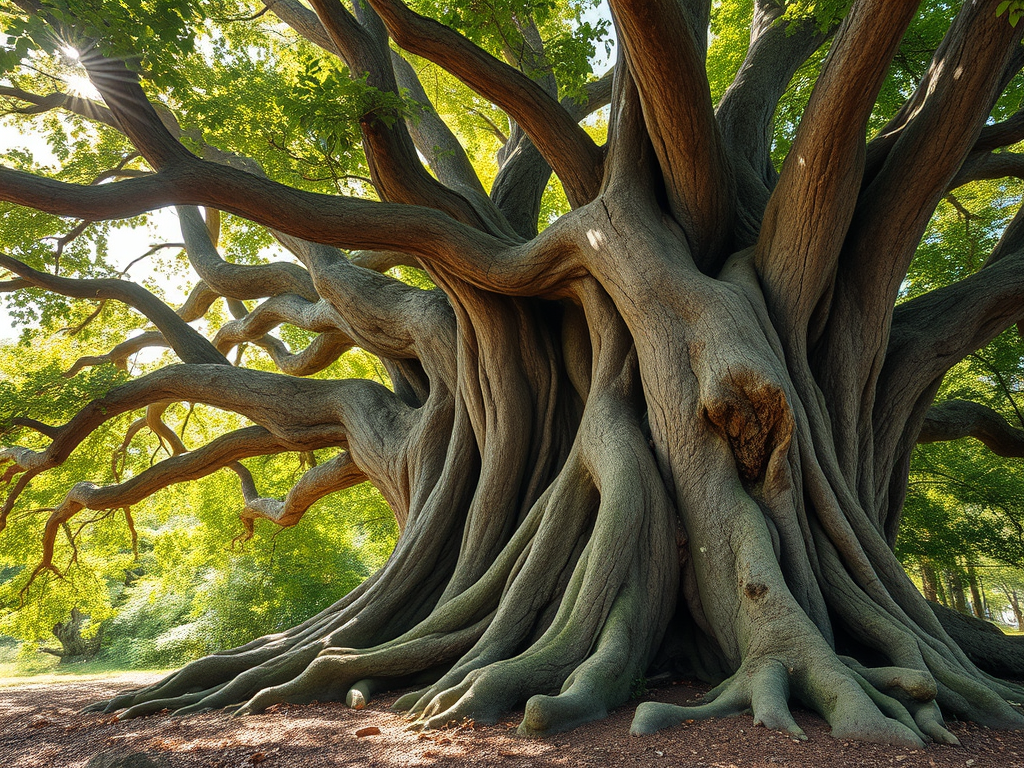
Once upon a time, in a secluded valley surrounded by towering mountains, there stood an ancient tree known as Eldergrove. This was no ordinary tree; it was said to be the oldest living organism in the world, over 5,000 years old. Its gnarled branches stretched wide, and its thick trunk was a tapestry of scars and knots, each telling a story of the centuries it had witnessed. Eldergrove was revered by the villagers who lived nearby. They believed the tree possessed profound wisdom and could answer the deepest questions of the heart and mind. On nights when the moon was full, villagers would gather around Eldergrove, sharing their worries and dreams, hoping to glean insights from its timeless presence.

One evening, a young woman named Lila approached the tree, her heart heavy with uncertainty. She was at a crossroads, torn between following her family’s wishes to take over the family business or pursuing her passion for art. Kneeling before the great tree, she placed her hands on its rough bark and closed her eyes.

“Great Eldergrove,” she whispered, “please help me find my path?”

A gentle breeze rustled the leaves above as if responding to her plea, creating a soft, melodic whisper. Lila listened intently, her heart calming as she felt a connection to the ancient spirit of the tree. In that moment, she sensed the stories of countless souls who had stood where she was, seeking guidance and clarity. The wind carried a message:

“Follow your heart, for it is the compass that will lead you to your true self. The world needs your light, just as it has needed the sun for millennia.”

Inspired, Lila stood up, a newfound clarity washing over her. She realized that while her family’s expectations were significant, her happiness and passion were paramount. She decided to pursue her art, creating pieces that reflected the beauty of the world around her. As the years passed, Lila’s art flourished, and her works began to resonate with many. She often returned to Eldergrove, sharing her successes and challenges, always finding comfort in the tree’s silent wisdom. One day, as she sat beneath its sprawling branches, she noticed a group of children playing nearby. They were laughing and weaving flower crowns, their innocence a reminder of the joy in simplicity. Lila smiled, realizing Eldergrove was a source of wisdom and a symbol of continuity and connection.

With each passing season, Eldergrove stood tall, nurturing generations with its ancient wisdom. The villagers taught their children to listen to the tree and seek its counsel in times of doubt. They understood that while the world was ever-changing, the lessons imparted by Eldergrove remained timeless. And so, the oldest tree in the world endured a steadfast guardian of wisdom, reminding all who sought its guidance that true fulfilment comes from embracing one’s authentic self and sharing that light with the world. 

Image by AI