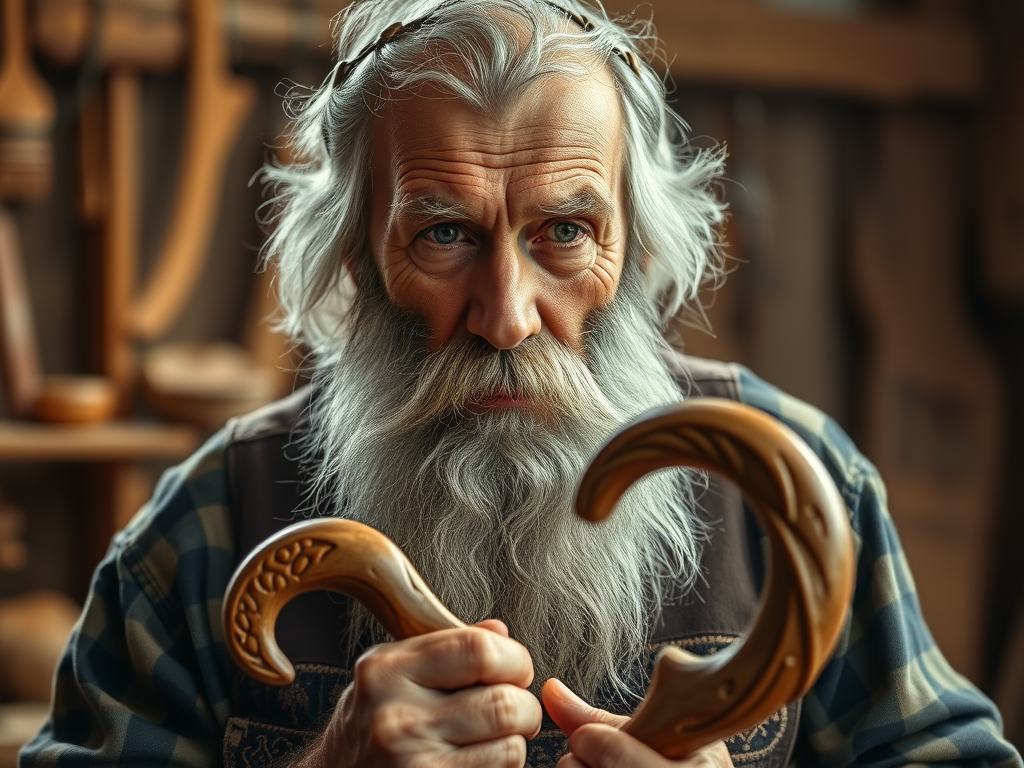
The Tale of Edward, the Blind Healer

In a quiet village nestled between rolling green hills, there lived a man named Edward. No one remembered exactly when he was born, but they knew two things for certain: Edward had been blind from birth, and yet, he possessed a gift unlike any other, a healing power that could mend both body and spirit. Despite his blindness, Edward was known far and wide for his compassion and gentle spirit. He spent his days wandering through the village, offering his help to anyone in need. Children loved to sit beside him, and elders sought his counsel, for Edward’s words carried wisdom beyond his years.

But what made Edward truly extraordinary was his magic. When someone was sick or broken, he would place his hands upon them, and their pain would fade, their wounds would close, and their spirits would lift. It was as if an unseen light flowed through him, illuminating and healing everything it touched. Many wondered how Edward could do such wondrous things without sight. Some believed he saw with his heart. Others whispered that he had been touched by a divine presence, a second coming of hope in a world often shadowed by darkness.

One day, a terrible storm swept through the village, bringing destruction and despair. Crops were ruined, homes damaged, and spirits broken. The villagers gathered, feeling lost and helpless. In the midst of the chaos, Edward stepped forward. His hands trembled with quiet resolve. He closed his eyes, though he had never seen with them, and began to hum softly. A warm, glowing light seemed to emanate from his palms, spreading across the village like dawn’s first light. As he moved from house to house, healing the wounded and comforting the grieving, a remarkable transformation took place. The storm’s fury ebbed away, replaced by a gentle calm. The villagers watched in awe as their suffering was eased, as hope was rekindled in their hearts.

When the storm had passed and the skies cleared, the villagers saw Edward in a different light. They saw not just a blind man, but a vessel of divine grace, a symbol of renewal—the second coming of compassion and healing.

From that day forward, Edward’s story spread beyond the village, inspiring others to believe in the power of kindness, faith, and unseen light. Though he could not see the world with his eyes, he had opened the eyes of everyone around him to the truth: that sometimes, the greatest vision comes from the heart, and true miracles happen when we believe in the impossible. Edward’s legacy endured, the humble healer who, through his magic and his love, reminded the world that even in darkness, there is always a light waiting to be awakened.

The Intrepid Walker

Harry was an ordinary man with an extraordinary dream. From a young age, he was captivated by stories of distant lands, diverse cultures, and the world’s boundless beauty. But what set Harry apart was his obsession: he wanted to visit every country on Earth, not by plane or luxury cruise, but on foot. The idea took root during a solo trip to a small village in Southeast Asia. Sitting by a river at sunset, Harry realised that the true essence of a place could only be felt by walking through its streets, talking to its people, and immersing himself in its everyday life. From that moment, he dedicated himself to his lifelong quest.

In 2013, Harry sold his belongings, packed a sturdy backpack, and set out from his hometown. His journey began with a simple plan: to walk through neighbouring countries, gradually expanding his reach. His first year took him across Europe, through forests, mountains, and bustling cities, where he met fellow travellers and locals alike. Over the next nine years, Harry’s trek was a mosaic of experiences. He crossed deserts in Africa, navigated jungles in South America, and trekked mountain passes in Asia. Each country brought its own challenges and stories: a lost passport in a remote village, a language barrier, and a storm that forced him to seek shelter under a makeshift tarp.

He often camped under the stars, relying on the kindness of strangers for food and shelter. His feet bore the stories of countless roads, and his heart grew richer with every encounter. Harry’s journey was not just about geography; it was about humanity. In India, he learned to cook spicy street food. In Kenya, he volunteered in a school. In Brazil, he danced at lively festivals. Everywhere he went, he collected stories, friendships, and lessons about resilience, hope, and love.

The journey wasn’t without hardships. Political unrest, injuries, fatigue, and moments of doubt tested his resolve. There were times he questioned whether he could continue. But his obsession, fueled by a deep curiosity and a desire to understand the world, kept him moving forward. Finally, after ten years of relentless walking, Harry reached his goal by visiting every country on the planet. He stood at the border of the last nation, feeling a profound sense of accomplishment. It wasn’t just the number of countries visited that mattered; it was the journey itself, the growth, the connections, the stories.

Harry’s adventure changed him. He returned home not as the man who once dreamed of walking across the world, but as someone who had truly lived it. He became an advocate for understanding and compassion, sharing his stories to inspire others to explore and connect. Today, Harry spends his time speaking at schools and community centres, encouraging others to pursue their passions, no matter how impossible they may seem. His ten-year odyssey reminds us that the world is vast and full of wonder, and sometimes, the greatest journey is simply putting one foot in front of the other.

The Triplets

Once upon a time, there lived three identical triplets named Tom, Tim, and Toby. They were inseparable and mischievous, known throughout the village for their clever jokes and playful tricks. Whether it was swapping clothes, pretending to be each other, or pulling harmless pranks on villagers, they loved to keep everyone on their toes. Their favourite game was to deceive outsiders with their identical appearances. They would often stand together, fooling travellers and merchants, claiming to be the “triplet trio” and spinning amusing stories about their adventures. Their antics brought laughter to the village until one day, their jokes went too far.

One afternoon, a wandering old wizard named Eldrin arrived in the village. Rumours of his wisdom and magical powers had spread far and wide, and villagers gathered to hear his tales. Curious about the triplets, Eldrin approached them and asked,

“Young ones, what mischief do you play today?”

Tom grinned mischievously.

“Oh, sir, we’re just having fun! We love to trick people and make them laugh.”

Eldrin’s eyes twinkled with a mixture of amusement and concern.

“Fun is good, but remember, deception can sometimes lead to confusion and hurt feelings. Tell me, what do you truly value?”

The triplets shrugged and laughed, dismissing his words. But Eldrin, sensing their playful spirit was also a bit reckless, decided to teach them a lesson. That evening, as the village settled into sleep, Eldrin approached the triplets’ home. Using his magic, he cast a spell that made each of them appear as a different person: Tom as a humble farmer, Tim as a wise old scholar, and Toby as a shy merchant. When the triplets awoke the next morning, they were bewildered to find themselves in unfamiliar clothes, with villagers treating them differently.

“Who are you?” asked a confused villager, eyeing the “farmer” who looked nothing like Tom.

The triplets tried to convince everyone of their true identities, but their appearances and voices had changed. They felt helpless and embarrassed, realising how confusing and upsetting their tricks could be when taken too far. Eldrin appeared before them, smiling gently.

“You see, my children, tricks are fun but should never come at the expense of trust. Today, you experienced what it’s like to be misunderstood and deceived — not as a joke, but as a lesson.”

The triplets nodded solemnly, understanding the wisdom in his words. They apologised to the villagers and promised to use their cleverness for good rather than mischief. Eldrin then reversed his spell, returning them to their true selves. From that day on, Tom, Tim, and Toby still loved jokes and laughter, but they learned to be kind and honest in their fun. Their tricks became playful rather than deceptive, and the villagers appreciated their newfound maturity. And so, the triplets grew wiser, carrying with them the lesson that true friendship and trust are the greatest treasures of all.

The Tale of the Friendly Ghost of Ravenshire Castle

Once upon a time, an ancient castle called Ravenshire stood perched atop a misty hill. Legend had it that the castle was haunted by a ghost named Sir Whisp, who was infamous for frightening every visitor who dared to step inside. Sir Whisp’s spectral form was tall and translucent, often glowing faintly in the darkness, and he would bellow loudly,

“Get out! Leave this place! This is my home, not yours!” startling even the bravest souls.

For centuries, visitors were terrified of Ravenshire. No one ever stayed long enough to enjoy its grand halls or explore its history; they only wanted to escape the ghostly shouts and eerie whispers.

One day, a young traveller named Oliver arrived at the castle. Unlike others, Oliver was not afraid of ghosts. He had read stories of spirits and believed that they only wanted to be understood. When Sir Whisp appeared and roared, Oliver simply looked at him calmly and said,

“Hello there. Why do you scare people?”

The ghost was taken aback. No one had ever spoken kindly to him before.

“I frighten people because I am lonely,” Sir Whisp replied. “Long ago, I was a noble knight, but now I am trapped here, unseen and unheard. My only way to be noticed is to shout and scare.”

Oliver listened thoughtfully and then said,

“If you want to be seen and heard, why not try speaking softly or sharing your story? Maybe people would listen and learn about you.”

For the first time, Sir Whisp paused. He realised that his loudness only pushed visitors away and deepened his loneliness. From that day, he decided to change his ways. The next visitor who entered Ravenshire found the ghost not shouting loudly but softly whispering,

“Welcome, traveller.”

He told stories of the castle’s history and his own past as a brave knight. Visitors found the ghost’s new gentle demeanour more charming than frightening. They began to enjoy their visits, listening to Sir Whisp’s tales and marvelling at the castle’s mysteries. Thanks to Oliver’s kindness and understanding, the ghost’s appearance softened, and Ravenshire became a place where stories and spirits could coexist peacefully. And so, the ghostly goings-on turned from frightful to friendly, filling the castle with a new kind of magic, one born of compassion and empathy.

Parable of the Smiling Lady

Once upon a time, there lived a woman named Elara. She was renowned throughout the village for her radiant smile, shimmering eyes, and a beauty that seemed to glow from within. Yet, beneath her grace lay a life that had seen its share of hardships, losses, worries, and moments of quiet despair. Despite these trials, Elara possessed a remarkable gift: her sense of humour. It was a spark that never truly dimmed, even in the darkest times. Her laughter was like sunlight piercing through storm clouds, and her quick wit could turn the gloomiest day into a celebration.

One day, as she strolled through the market, Elara overheard a young boy trying to sell his handmade trinkets. His voice trembled with nervousness, and his eyes held a flicker of hope. Elara knelt down, flashed a warm smile, and said,

“If I buy one of your treasures, will you promise to keep making the world a little brighter?”

The boy nodded eagerly, and Elara chuckled softly, purchasing a tiny, imperfect but charming locket. This simple act sparked a series of joyful moments. Elara began to host small gatherings in her garden, inviting friends and neighbours to share stories, laughter, and music. Her jokes and playful teasing became the heart of these gatherings, infusing the air with warmth and happiness. Her humour was a balm for her own wounds and a gift she shared freely. Over time, her life, once shadowed by sorrow, blossomed with love and joy. She found that her ability to laugh and make others laugh transformed her hardships into stories of resilience, her tears into tears of mirth. The villagers came to see her not just as a beautiful lady, but as a beacon of hope, a reminder that even in life’s most difficult moments, a good laugh could turn everything around.

And so, Elara’s story became a gentle legend: a testament to the power of humour to heal, to connect, and to turn life’s toughest trials into moments of pure, infused love and joy.