The Balance

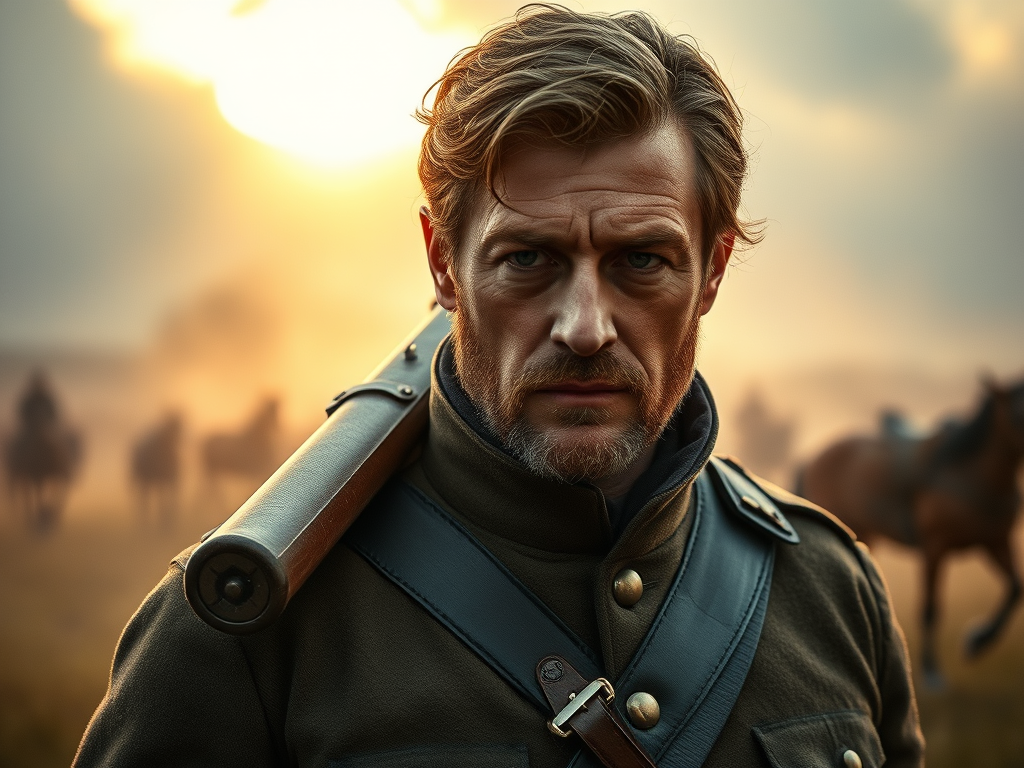
Once upon a time, two siblings, Elara and Alden, lived in a kingdom nestled amidst towering mountains and lush forests. Elara was known far and wide for her physical strength; she could lift boulders and outmatch any warrior in combat. On the other hand, Alden possessed a different kind of strength – he was incredibly intelligent and possessed a keen wit that could unravel the most complex puzzles. Despite their differences, Elara and Alden were inseparable and complemented each other perfectly. Where Elara’s strength failed, Alden’s intellect would prevail, and Elara’s might would triumph where Alden’s mind faltered.

One day, a great evil descended upon the kingdom in the form of a fierce dragon that terrorized the land, laying waste to villages and crops. The king called upon his bravest knights to slay the beast, but all efforts were in vain. It seemed that no one could match the dragon’s power and ferocity. Elara and Alden knew they had to do something to save their kingdom. Drawing upon their respective strengths, they devised a plan. Elara would challenge the dragon to a physical duel, distracting it with her incredible strength, while Alden snuck behind the beast to find its weakness. Elara fought with all her might as the battle raged, deflecting the dragon’s fiery breath and powerful attacks. Meanwhile, Alden searched for a way to defeat the beast. Finally, he discovered a small gap where its scales were weakest in the dragon’s armour.

With a swift and calculated strike, Alden plunged his sword into the dragon’s vulnerable spot, causing the beast to roar in pain and collapse. Elara seized the opportunity and delivered the final blow, vanquishing the dragon once and for all. The kingdom rejoiced at the victory of the siblings, celebrating their bravery and ingenuity. Elara and Alden have shown that true strength comes not just from physical might or intellectual prowess alone but from the unity of both. Together, they overcame the greatest challenges and emerged victorious, proving that strength and weakness are but two sides of the same coin, each complementing the other in perfect harmony.
Image by AI
Grumble the Grumpy Goblin

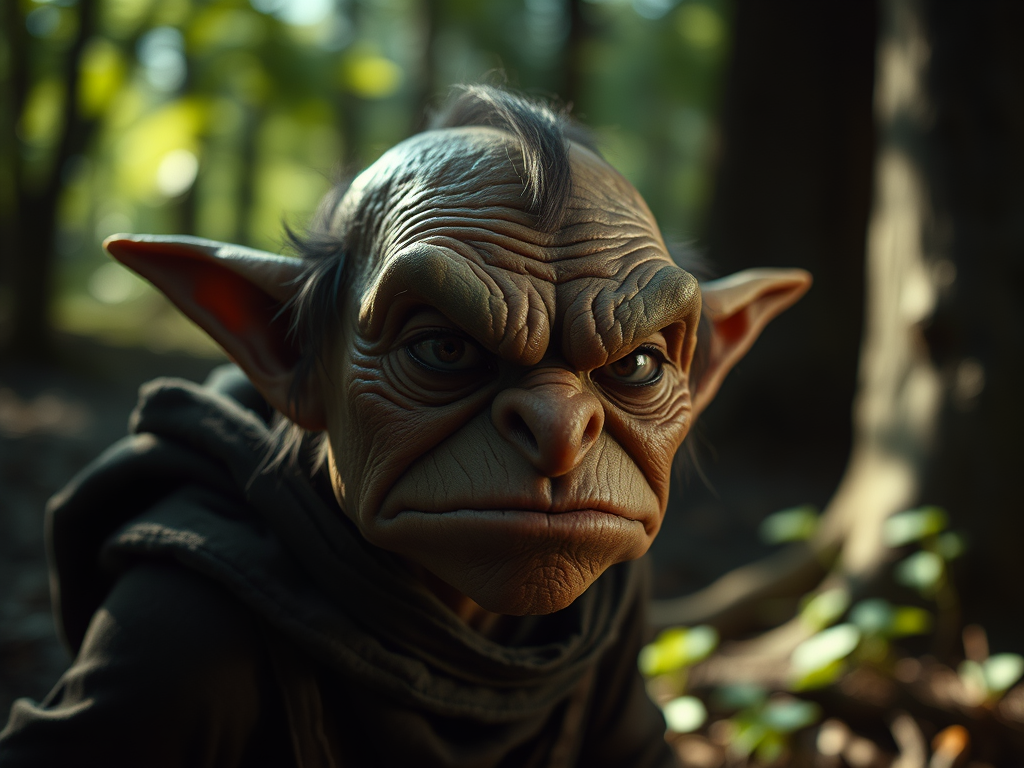
Once upon a time, a goblin named Grumble lived in the mystical land of Doria. Grumble was unlike any other goblin in the land. While goblins were known for their mischievous nature and love for causing trouble, Grumble was always unhappy. His face was constantly twisted into a frown, and his eyes were always filled with sadness. Grumble lived in a small cave at the edge of a Dark Forest, far away from the other goblins in the village. He spent his days wandering through the forest, grumbling to himself about how unfair life was. While the other goblins spent their days playing pranks and laughing, Grumble preferred to be alone, lost in his thoughts.

One day, as Grumble wandered through the forest, he stumbled upon a group of fairies dancing in a sunlit clearing. The fairies were laughing and singing, their wings shimmering in the sunlight. Grumble watched them from a distance, his heart heavy with envy. Why couldn’t he be as happy as they were? Why was he constantly so miserable?
As Grumble watched the fairies, a tiny fairy named Luna noticed Grumble and flew over to him.

“Why do you look so sad, little goblin?” she asked, her voice filled with kindness.

Grumble was taken aback. No one had ever shown him such kindness before.

“I am Grumble, the unhappy goblin,” he replied. “I have always been this way and fear I will never know true happiness.”

Luna smiled gently at Grumble.

“Happiness is not something that can be given to you, Grumble. It is something that comes from within. You must learn to see the beauty in the world and find joy in the small things.”

Grumble listened to Luna’s words, and for the first time in a long time, he felt a glimmer of hope in his heart. He followed Luna’s advice and began looking for beauty in the world around him. He watched the sun rise over the mountains, listened to the gentle rustling of the leaves in the wind, and marvelled at the colours of the flowers in the meadow. As days turned into weeks, Grumble’s frown began to soften, and a small smile tugged at the corners of his mouth. He found himself laughing and singing along with the birds, his heart filled with a newfound joy.

Word of the transformed goblin spread throughout Doria, and soon, goblins, fairies, and creatures from all corners of the land came to see the once unhappy Grumble now filled with happiness. Grumble had finally found his place in the world, surrounded by friends who loved him for who he was. And so, Grumble, the once unhappy goblin, learned that true happiness comes from within and that even the darkest of hearts can find light and joy in the world. From that day on, Grumble’s frown was replaced with a smile, and he lived happily ever after in the mystical land of Doria.

Image by AI

Bernard Cornwell

Bernard Cornwell is a British author known for his historical novels, notably his series of historical fiction novels set during the Napoleonic Wars featuring the character Richard Sharpe. Born on February 23, 1944, in London, England, Cornwell did not start writing novels until later. Before becoming an author, he worked as a teacher and television producer. His experiences as a teacher and interest in history influenced his decision to write historical fiction novels. Cornwell’s breakthrough came with publishing his first Richard Sharpe novel, “Sharpe’s Eagle,” in 1981. The Richard Sharpe series, which follows the adventures of a British soldier in the Napoleonic Wars, became immensely popular and established Cornwell as a leading author of historical fiction. In addition to the Sharpe series, Cornwell has written several other series and standalone novels set in various historical periods, including the Saxon Stories series (adapted into the TV series “The Last Kingdom”), the Warlord Chronicles, and the Grail Quest series.

Bernard Cornwell’s novels are known for their meticulous research, engaging storytelling, and vivid depictions of historical events and battles. Over the course of his career, Cornwell has received numerous awards and accolades for his work, and his books have been translated into multiple languages and adapted for television and film.

Images by AI

J.R.R. Tolkien

J.R.R. Tolkien, full name John Ronald Reuel Tolkien, was an English writer, poet, philologist, and university professor, best known as the author of the high fantasy works “The Hobbit,” “The Lord of the Rings,” and “The Silmarillion.” Tolkien was born on January 3, 1892, in Bloemfontein, Orange Free State (modern-day South Africa). He moved to England with his mother and brother after his father’s death when he was three years old. As a child, Tolkien showed an early interest in languages and storytelling, creating his own languages and fantasy stories.

He studied at Exeter College, Oxford, where he specialised in philology and Old and Middle English. Later, he became an Anglo-Saxon professor at Oxford University and then the Merton Professor of English Language and Literature. Tolkien’s first significant work was “The Hobbit,” published in 1937. It introduced readers to the world of Middle-earth and the character of Bilbo Baggins. He followed up with “The Lord of the Rings,” a sequel to “The Hobbit,” published in three volumes between 1954 and 1955. Tolkien’s works are renowned for their detailed world-building, complex characters, and rich mythology. His works have profoundly influenced fantasy and garnered a massive following worldwide. “The Lord of the Rings” has been adapted into successful films directed by Peter Jackson, further popularizing Tolkien’s work. Tolkien passed away on September 2, 1973, in Bournemouth, England, leaving behind a rich literary legacy that inspires readers and writers today. His impact on literature and popular culture is significant, and his works are considered classics in the fantasy genre. 

Image by AI

George R. R. Martin

George R. R. Martin, born George Raymond Richard Martin on September 20, 1948, is an American novelist and short story writer known for his contributions to the fantasy and science fiction genres. His most famous work is the epic fantasy series “A Song of Ice and Fire,” which has captured the imagination of readers worldwide and was adapted into the acclaimed television series “Game of Thrones” by HBO.

Martin was born in Bayonne, New Jersey, and from a young age, he showed a keen interest in writing and storytelling. After attending Northwestern University, where he studied journalism, he began his career as a writer, selling short stories to various science fiction and fantasy publications. His early works established him as a talented and imaginative writer within the genre. In 1996, Martin published the first book in his “A Song of Ice and Fire” series, titled “A Game of Thrones.” This novel marked the beginning of a sprawling and complex narrative set in the fictional continents of Westeros and Essos, filled with intricate plots, morally ambiguous characters, and a richly detailed world. The series has been praised for its realism, political intrigue, and exploration of themes such as power, honour, and betrayal.

As the series gained popularity, Martin became a household name in the world of fantasy literature. Fans eagerly awaited each new instalment in the series, but the gap between book releases lengthened as the story grew in scope and complexity. This led to frustration among some readers who eagerly anticipated the saga’s completion with the final two books, “The Winds of Winter” and “A Dream of Spring.” Aside from his work on “A Song of Ice and Fire,” Martin has authored numerous other novels, novellas, and short stories, showcasing his versatility. He has also worked in television, serving as a screenwriter and producer on various projects and collaborating with other creators in the industry.

George R. R. Martin’s impact on the fantasy genre is profound, with his storytelling prowess and world-building skills earning him a place among the most influential authors of his generation. His work has inspired a new wave of fantasy writers and has left an indelible mark on popular culture. Despite the challenges of completing his magnum opus, Martin’s legacy as a master storyteller remains secure.