Kingdom of the Trees – Abstract

Once upon a time, deep within a Kingdom of Trees, the Queen watched her daughter, the Princess, playing in the castle garden.  A warm sun shone across the princess’s golden hair, causing it to glisten and casting beams of sunlight into the shadows. The Princess was around nine years old now, and for her entire short life, she had grown up watching her mother, the Queen, rule the Kingdom of Trees wisely, kindly, and with good humour. She had known nothing but love from her mother, the Queen. After all, there had never been a King of the Kingdom of Trees. The Princess had never known a King. 

Every day, the Queen taught the Princess everything she knew, knowing that one day, the little Princess would grow into a queen herself. So, like all little princesses, especially those of such a young age, she had many difficulties understanding some of the things that went on in the castle. She played with a diablo while the Queen looked on, blinking in the bright sunlight.  The Princess tossed the spinning top and jumped high to catch it.  Her mother thought as she watched, it seemed the Princess had grown up but she knew she was really still a little girl.  The little Princess often pretended to be a queen, and everybody laughed at her jokes and antics; even the Queen smiled.

But the Kingdom of Trees made many demands upon the Queen, and the little Princess did not know or even understand this as she was far too young.  The biggest problem the Queen experienced was the loneliness she felt. She often wondered what it may be like to rule the Kingdom of Trees with a king when the Princess was fast asleep in her bed.  There had been several suitors from the neighbouring kingdoms for the Queen’s hand in previous years; however, the Queen had always said “No”.  She had always said ‘she had no time for such nonsense as she had a daughter to raise and a Kingdom to rule’.  But that was then, and this is now.

As the Queen watched the Princess replace the Diablo with a hula hoop, she thought she and the Princess did everything together.  The Princess laughed as the hoop spun up and down her body, faster and faster it went.  For a long time now, the Queen had very little time to herself, assisting other families, taking holidays with the Princess, seeing to affairs of state relating to the Kingdom of Trees, and the Princess took a part in everything.  But the time was approaching when they would need to do things separately and perhaps even spend time apart. The Queen appreciated the Princess knew this; she also knew that she was worried about it as well.  But they had not really talked about it, although there had been times when they discussed such things, and the little Princess had shown she was very upset at the mere idea.  The Queen knew this because although the Princess didn’t say much, she did have a habit of licking her bottom lip when she was worried.

The Queen had decided whilst watching the Princess hula hooping, to visit Professor Knowitallicus the Wizard.  He was a wise old man and would know what should be done. But she wondered if she should take the Princess with her.  She decided she would and they would both go after lunch.  The Queen sent a messenger to Knowitallicus to let him know to expect a Royal visit that very day.

Elian and the Wolf

Once upon a time, in a tranquil village nestled between towering mountains and lush forests, there lived a humble man named Elian. Known for his kindness, Elian spent his days tending to his small farm and helping his neighbours. However, he often felt lonely amid the beauty surrounding him. One fateful evening, as the sun dipped below the horizon, casting a golden hue over the land, Elian stumbled upon a wolf cub abandoned near the edge of the woods. Its fur was a soft grey, and its bright and curious eyes mirrored the young wolf’s innocence. Despite the warnings of the villagers, who believed wolves were dangerous, Elian’s heart swelled with compassion. He knew this cub needed a protector and felt an inexplicable bond forming between them.

Elian took the cub home and named him Kael. As days turned into weeks, the two became inseparable. While Elian taught Kael the ways of the world, Kael brought joy and adventure into Elian’s life. Together, they explored the forests, played by the river, and sat by the fire at night, sharing stories of bravery and dreams. As Kael grew, so did their bond. He became not just a companion but a guardian as well. The villagers, initially wary, began to see the gentle nature of the wolf cub and how dedicated Elian was to nurturing him. They watched as Kael learned to respect the land, helping Elian by keeping the farm safe from pests and providing companionship.

A severe storm hit the village one winter, isolating it from the outside world. Food supplies dwindled, and fear gripped the villagers’ hearts. Elian knew he had to act. He and Kael ventured into the harsh wilderness to find help. Through blinding snow and biting winds, their journey was filled with challenges, but the bond they shared fueled their determination. After days of searching, they discovered a nearby village that had supplies to spare. With Kael’s keen instincts and Elian’s unwavering spirit, they managed to gather enough food and bring it back home, saving the villagers from starvation. When they returned, the villagers rejoiced, celebrating Elian and Kael’s bravery. No longer seen as just a man and a wolf, they were now regarded as heroes. The village thrived once more, and Elian found a sense of belonging he had longed for.

Years passed, and Kael matured into a magnificent wolf, his spirit untamed yet loyal. Together, they faced the changing seasons of life, their bond only growing stronger. Elian knew that their story was one of devotion, a testament to the love that can flourish between the most unlikely of companions. In the end, Elian and Kael became legends, their tale woven into the fabric of the village’s history—a reminder that true friendship knows no bounds and that love can bridge the gap between species, proving that sometimes, the most profound connections come from the heart. 

Image by AI

 Septimus: A Tale of Strength and Confidence

A boy named Septimus lived in the quaint village of Oldridge, nestled between rolling hills and dense forests. From a young age, Septimus was different. He was smaller than his peers, with a quiet demeanour that often made him feel overlooked. Yet, beneath his unassuming exterior lay a heart full of courage and an unwavering spirit. As Septimus grew older, the village faced challenges. A severe drought struck, leaving crops wilting and families in despair. Once vibrant and full of life, the villagers were burdened with worry. Many believed the drought was a punishment for their past mistakes, and fear began to take root in their hearts. While the adults lamented their fate, Septimus felt a flicker of determination ignite within him. He had always loved the stories of heroes who faced insurmountable odds and realized that perhaps it was time for him to become one of those heroes.

As the sun dipped below the horizon one evening, Septimus gathered his courage and climbed to the highest hill overlooking Oldridge. He gazed down at the parched fields and the worried faces of his neighbours. At that moment, he made a vow to himself: he would find a way to bring life back to their village. With a plan in mind, Septimus began to explore the ancient forest surrounding Oldridge. He remembered tales of a hidden spring that was said to have healing waters that could revive the land. The journey was fraught with challenges—thorns that scratched his arms, steep cliffs that tested his footing, and shadows that whispered doubt into his ears. But with each obstacle, Septimus drew strength from within, reminding himself of his purpose. After days of searching, he finally discovered the spring, a shimmering pool nestled among stones, surrounded by vibrant greenery. Septimus filled his small flask with the precious water, feeling a surge of hope as he returned to the village. When he arrived, the villagers were sceptical.

“How can a boy like you save us?” they asked, their voices tinged with doubt.

But Septimus stood tall, his confidence shining through.

“I believe we can revive our land if we work together,” he proclaimed.

With the water from the spring, Septimus led the villagers in a collective effort. They watered the crops, shared the precious liquid, and tended to the withering plants. Little by little, life began to return. Green shoots broke through the parched earth, and hope blossomed in the villagers’ hearts. As the days turned into weeks, the drought faded, replaced by the laughter of children and the joyful work of families. The village of Oldridge was once again vibrant, and Septimus, the boy who had once been overlooked, became a symbol of strength and resilience. Through his journey, Septimus learned that true strength comes not from physical prowess but from the courage to face adversity and the confidence to inspire others. His tale spread far and wide, reminding everyone that hope can emerge from the most unexpected places, even in the darkest times. And so, the village thrived, forever grateful for the boy who dared to believe in a brighter future. 

Image by AI

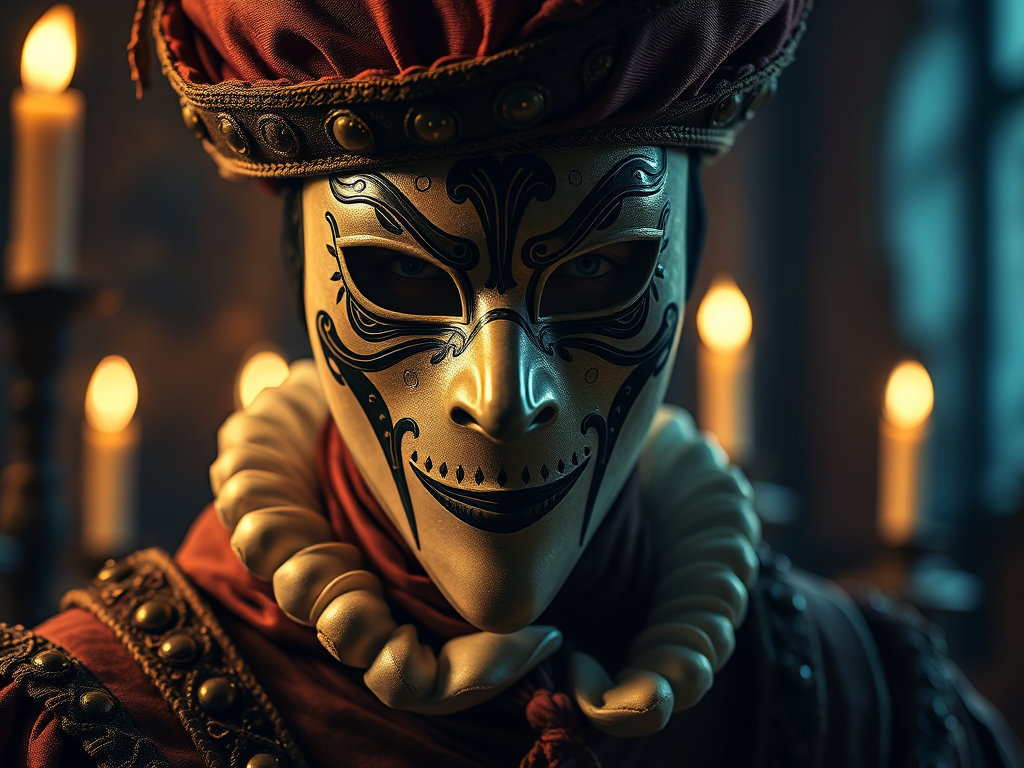
The Masked One

In a bustling medieval village surrounded by dense forests and majestic mountains, there lived a mysterious figure known only as the Masked One. This enigmatic persona was a source of fascination and fear as they moved silently through the cobblestone streets, always wearing a beautifully ornate mask that concealed their true identity. The mask was a masterpiece adorned with intricate designs, yet its purpose was to hide rather than reveal. The villagers were divided in their opinions about the Masked One. Some believed they were a nobleman in disguise, others feared they were sorcerers dabbling in dark arts, and a few even whispered that the mask concealed the face of a ghost seeking redemption. Despite the rumours, one thing was sure: the Masked One was a figure of mystery and intrigue.

Despite their anonymity, the Masked One was known for their acts of kindness. They would leave baskets of food on the doorsteps of the poor, offer coins to struggling families, and sometimes even provide medicine to the sick. These benevolent deeds earned them both admiration and suspicion. Villagers pondered why someone would be so generous yet hide behind a mask. Among those captivated by the Masked One’s allure was a young girl named Elara. Unlike others who feared the unknown, Elara was driven by curiosity and a desire to uncover the truth. She often watched the Masked One from a distance, fascinated by their quiet grace and the aura of mystery that surrounded them. One stormy night, as rain poured down and thunder rumbled in the distance, Elara decided to follow the Masked One. She watched as they moved with purpose through the village, eventually reaching the edge of the settlement where a secluded cottage stood, partially hidden by overgrown trees and vines. With her heart pounding, Elara crept closer, peering through a window to catch a glimpse inside.

What she saw astonished her. The Masked One, alone in the dimly lit room, slowly removed their mask. Beneath it was the face of Sir Cedric, a knight once renowned for his valour and honour. His face bore the marks of battle—scars that told tales of bravery and betrayal. Sir Cedric had been a hero, but after being wronged by those he trusted, he withdrew from the world, choosing to hide his identity behind the mask. Elara’s heart ached with compassion. She knocked softly on the cottage door, and when Sir Cedric opened it, he was taken aback to see the young girl standing there. Instead of fear or judgment, Elara offered kindness.

“You’ve helped so many,” she said, “but who helps you?”

At that moment, Sir Cedric realised that he had been isolating himself physically and emotionally. He invited Elara in and recounted his story—a tale of loyalty betrayed, battles lost, and the deep shame that had driven him to hide. The mask, he explained, was both his shield from the world and a prison of his own making. Moved by his story, Elara vowed to help Sir Cedric reclaim his place in the village. Together, they devised a plan to share his true identity and intentions with the townsfolk. Elara’s courage and Sir Cedric’s sincerity would be key to winning their trust. The following day, with Elara by his side, Sir Cedric returned to the village square, this time without his mask. The villagers gasped in surprise, recognizing the once-great knight they thought was lost to time. Sir Cedric spoke to them openly, sharing his story and the reasons behind his disguise. He expressed his desire to serve and protect the community once more, not as a masked stranger but as a friend and neighbour. At first, the villagers were hesitant, but Elara’s unwavering support and Sir Cedric’s genuine remorse and goodwill began to sway their hearts. They saw not a ghost or a villain but a man who had suffered and learned the true value of compassion and humility. Over time, Sir Cedric became a beloved protector of the village, respected not for his past glories but for his present kindness. The mask, which once symbolized fear and mystery, was transformed into a powerful reminder of redemption and the strength found in vulnerability. The tale of the face behind the mask became a cherished legend, teaching generations that true beauty lies not in appearances but in the courage to reveal one’s true self and the kindness that flows from an open heart. 

Image by AI

Alaric

Once upon a time, nestled in a verdant valley surrounded by lush forests and rolling hills, there lay the village of Eldergrove. It was a peaceful place known for its vibrant festivals and fertile lands. At the heart of this village lived a unique and enigmatic figure—a two-headed magician named Alaric. Alaric was unlike any other, for he possessed two distinct personalities: Thaddeus, the kind and wise head, and Vesper, the bold and impulsive counterpart. Together, they wielded immense magical power, yet their constant disagreements often set them at odds. The villagers of Eldergrove had long relied on Alaric’s magic for prosperity and protection. Thaddeus was known for using magic to nurture crops, heal the sick, and create gentle illusions that brought joy to the people. On the other hand, Vesper preferred adventurous displays of power and flamboyant spells that dazzled the eyes and stirred excitement. This dichotomy in their personalities meant that, despite their shared body, Alaric was frequently caught in internal conflict.

In the year 1555, as the harvest festival approached, anticipation filled the air. The villagers eagerly awaited the magician’s performance, an annual highlight that brought everyone together in celebration. Yet, this year, the discord between Thaddeus and Vesper reached unprecedented heights. Thaddeus envisioned a serene, enchanting display—a dance of lights and colours to mimic the celestial beauty of the night sky. Vesper, however, sought to impress with a storm of magic, crackling with energy and spectacle. As the festival day dawned, the two heads argued more fiercely than ever. Their voices rose, echoing through the valley, as each tried to assert their vision. Thaddeus appealed to reason and harmony, while Vesper insisted on grandeur and excitement. Their magic, influenced by their conflicting emotions, began to manifest uncontrollably. Sparks flew, and the air hummed with tension as their powers collided.

Without warning, their magic spiralled out of control. A tumultuous explosion of energy erupted, engulfing the village in a kaleidoscope of light and sound. The sky darkened, and a powerful shockwave rippled through Eldergrove. The villagers watched in horror as their beloved homes and fields were torn asunder, replaced by a chaotic storm of raw magic. In the blink of an eye, the village was reduced to ruins—a testament to the destructive potential of unchecked power. As the magical tempest subsided, Alaric stood amidst the devastation, both heads silent and filled with remorse. The once-bustling village was now desolate, and the realisation of their catastrophic mistake hit them hard. They understood that their inability to cooperate had led to this tragedy, and both Thaddeus and Vesper were overcome with guilt.

Determined to atone for their actions, Alaric vowed to rebuild Eldergrove and restore what was lost. With his gentle wisdom, Thaddeus proposed a new approach: to work in harmony, blending their strengths and respecting each other’s perspectives. Vesper, chastened by the disaster, agreed, recognizing the importance of unity and understanding. Together, they began the arduous task of rebuilding. Alaric’s magic, now guided by cooperation and mutual respect, slowly restored the village. They mended homes, revitalized fields, and healed the land. Seeing the sincerity of their efforts, the villagers joined in, and through collective effort, Eldergrove began to flourish again.

The tale of Alaric, the two-headed magician, became a cherished legend in Eldergrove. It served as a powerful reminder of the necessity of cooperation and understanding, especially in the face of differing viewpoints. From that year onward, the harvest festival was a celebration of abundance and unity, emphasizing the strength of working together toward a common goal. In time, Eldergrove thrived, becoming a beacon of harmony and resilience. Alaric, with Thaddeus and Vesper now working as one, continued to protect and nurture the village, ensuring that past lessons would guide the future. Thus, the story of the two-headed magician and the village of Eldergrove lived on is a timeless testament to the power of collaboration and the enduring spirit of community. 

Image by AI