The Thousand Deaths of Zachariah

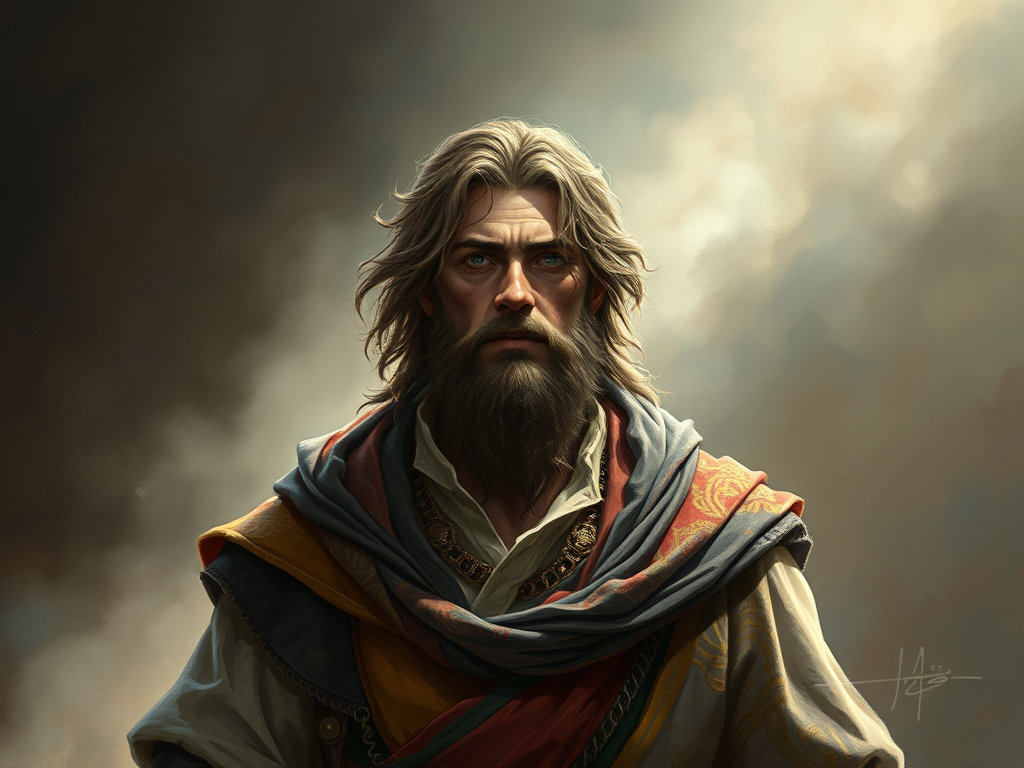
In a city of dust and reeds, where the Tigris sighed its ancient songs, there lived a man named Zachariah. The people spoke in the cadence of clay tablets, and the walls of bricks breathed with the memory of gods and kings. Zachariah was not mighty in the way of warriors, nor clever in the way of scribes, but he carried within him the stubborn flame of a man who would not surrender to time. He was born under a pale blue crescent, when the river level rose and the city seemed to dream. His childhood was measured in the hum of rare winds through the ziggurat staircases and the clink of copper tools in the workshop of a jeweller who traded memories for coins. He learned to read the stars in the way one learns a language, slowly, by listening to the night until the letters arranged themselves in patterns.
As years unfurled, his life stretched beyond the ordinary span of men. He survived famine and flood, earthquake and plague, days when the sun burned like a forge and days when the rain fell in a single, patient thread. He watched rulers rise and fall, and the city’s prayers shift their focus from temple to temple, from one god to another, until the names grew a little old on the tongue and the people spoke of their faith as if it were a map with a few extra lines pencilled in. Yet Zachariah’s longevity was not a blessing that saved him from suffering; it was a burden that braided itself into every sorrow that crossed his path.
The phrase “a thousand deaths” haunted him the way a fever haunts a body felt not in one moment but in the repetition of many small, intimate partings. He did not die in one grand catastrophe; he died in a thousand strands of life that unravelled and then wove themselves shut again.
He buried a wife who sang as if she could coax barley from stone, and after her death the city’s songs lost their sweetness for a season.
He watched friends grow old and then fade, their memories slipping like clay slipping from a potter’s hands.
He endured days when the temple bells called for mercy and days when the gods seemed distant as stars behind a veil of smoke.
He stood at the edge of a city wall and felt the fear of armies, then returned to a quiet room where his breath steadied and the lamp kept its stubborn, tiny flame.

In each repetition, Zachariah died a little, not the final death, but a micro-death: a shedding of identity, a loss, a renaming, a letting go. And in every rebirth, he learned something new about himself, about his city, about the world that kept turning despite the weight of memory.
If a man lives long enough, he becomes a repository of others’ stories. Zachariah gathered the memories of his city, the taste of date-syrup on a child’s lips, the ache of a mother who lost a son to war, the sudden joy of a bard who found a chorus for a lament. He learned to listen for the hints of fate in the bickering of merchants and the quiet prayers of homebound labourers. The city spoke to him in a dialect of clamour and whisper, and he answered in patient silence. He began to write, not with ink on parchment, but with gestures, with the careful alignment of stones in a low wall to mark a grave, with the quiet brimming of a cup to honour a guest. He kept a hidden ledger of the dead who rose in memory whenever the river rose again, a ledger that housed the names of those who did not survive the long life’s trials.
Toward the end of his life if the word “end” can even apply to someone who had learned to linger. Zachariah stood at the very edge of the river. The water carried the city’s reflection like a vessel, and in its surface, he saw the faces of all who had passed: the mother who sang of grain when famine pressed, the child who learned to count by the rhythm of the flood, the king who learned mercy only after tasting loss. In that moment, he understood a paradox haunting him since first breath: to live a thousand lives is to die a thousand times to what you were, and to be reborn a thousand times into what you can become. He did not fear the last death, for it would be the final shedding of the old Zachariah, the one who had learned to love through loss and to endure through ache. The city kept turning after his final breath, as cities do. Temple bells rang in their old, stubborn way, the river sang its patient song, and the sun carved its stair-step light upon the walls. If you wandered to the edge where clay meets water and looked closely, you might imagine Zachariah’s spirit walking among the reeds, tallying the memories like coins in a purse, offering them back to the living as stories that never truly end.
For in a life that endured a thousand deaths, what remains is not merely the memory of pain but the quiet, enduring gift of having lived so fully that even death must pause to listen to the echo of a life well spent.

Rescue on a Silent Path

The forest wore a quiet, indifferent kind of twilight as if the trees themselves were listening to the distant thunder of rain that would never come. A man named Liaso trudged along a narrow, forgotten path, his boots sinking into moss and fallen needles. He set out at dawn to find the last of the old orchard’s apples, brave enough to risk a storm that never arrived, foolish enough to trust his own stubborn pace. Hours bled into hours, and the sky darkened with the patience of waiting wolves. Liaso’s breath came in shallow puffs, his bottle of water growing lighter with every swallow. He knew the land: the way the ferns curled like fingers along the creek, the way the pines leaned their shoulders toward the hill, the way the world narrowed as if to test a man’s resolve. Then the wind shifted.

A sound, a low rolling rumble seemingly coming from the bones of the earth rose from the thicket. It wasn’t fearsome, but attentive, as if the forest itself leaned closer to listen. From behind a drift of bracken stepped a big grey wolf. Not a hunter’s shadow but a creature with eyes that held the cold clear light of a winter morning and a coat that seemed to drink the last colours from the world. Liaso steadied himself. He had read things in books, heard the old men speak in hushed tones about wolves as omens or protectors. He could not tell which this wolf would be, and he did not want to find out the hard way.
The wolf did not advance with snarls or teeth bared. It paused, then lowered its head and studied Liaso with unblinking, silver-blue eyes. The forest seemed to hold its breath. After a long heartbeat, the wolf turned and walked a steady line toward the path Liaso had followed toward a bend where the trees pressed close and the ground sloped down to a hidden ravine, where the river learned to speak in thunder. Liaso followed, not sure why, except that the animal’s presence pressed the world into a truth he could not deny: he was not as strong as he believed. The wolf moved with the ease of a guardian who knew every root, every hollow, every slip of soil that could swallow a man whole. When they reached the bend, the air grew heavier, and a sudden gust toppled a branch, sending a rain of needles onto Liaso’s shoulder. He slipped, his foot catching on a slick stone he neither saw nor felt. The ravine yawned beneath him, dark and ancient. For a breath, the world shrank to the sound of his own heartbeat and the distant pulse of the river.
The wolf did not leap to the rescue. Instead, it stepped closer, a silhouette of careful strength, and placed itself between Liaso and the edge, as if to say, Thus far, you do not go alone. Liaso reached out, his fingers brushing the bark of a tree, feeling the texture of life through rough skin and cold air. Then the wolf crouched, inviting him to step onto the mossy, firm earth on the other side of danger. With a courage that trembled like a flame in wind, Liaso found purchase on a ledge of rock, then pulled himself up and away from the ravine’s hungry mouth. He breathed air that tasted of pine and rain and something older than fear. The wolf stood for a moment longer, checking the path, as if ensuring there was no hidden trap, no careless slip waiting to claim a tired traveller. When Liaso finally looked back, the wolf had vanished into the trees as if it had never been, leaving only the memory of keen eyes and a quiet, steady presence. In the space where it stood, the world revealed a softer truth: the forest did not hate him, nor did it owe him safety. It simply offered a partnership, a mutual promise that when the edge of despair appeared, there might be a being willing to meet it with calm, quiet strength.

Night thickened around the forest, but Liaso did not feel alone. He walked the rest of the way with a new lightness in his step, not because the danger had disappeared, but because he carried a memory of guardianship he hadn’t known he needed. The path back to the village wound through silvered trees and the distant murmur of a river that had learned to forgive the world many times over. When the lights of the village finally blinked on, Liaso stood at the door to his modest home, breath fogging in the cold. He pressed a palm to his chest and felt the heartbeat he had almost forgotten, steady and true. He did not tell many people about the wolf, some stories are meant to be kept between the living and the land that shelters them. But in the quiet hours, when the wind moved like a whispered conversation through the eaves, he would hear the memory of those eyes, two points of ancient blue and know he had been saved not merely by a creature of fur and fang, but by a reminder: that survival is rarely a solitary act, and protection often arrives wearing the most unexpected skin. 

‘Hiding your head in the sand ‘

On the edge of a quiet town, where the river curled like a sleeping cat and the wind spoke in whispers through the elm leaves, lived a man named Elias. He carried a satchel of problems, each one heavy enough to bend his shoulders a touch lower with every passing day. He didn’t mean to hoard them, but they fit snugly in the space where his breath once lived, and he kept them close like an improvised shield against the world. His problems were not loud or dramatic in the way a storm is dramatic. They were the sort that gnawed at the corners of his mornings: a debt he hadn’t spoken aloud, a letter unsent, a promise broken to a friend, the memory of a mistake that wouldn’t stop replaying in his mind. He tried to solve them in fragments, here and there, as if solving a puzzle one missing edge at a time would eventually reveal a doorway out. But the edges didn’t align, and every attempt only widened the ache.
Elias worked at the town’s small bakery, a place where the air always smelled faintly of sugar and yeast, and the clock above the doorway ticked with a stubborn patience. He kneaded dough with the same careful seriousness he used for his thoughts, measuring warmth, time, and hope in equal parts. People came and went, each with their own little arithmetic of troubles, and he listened with the practiced quiet of someone who had learned to mute their own weather to hear others more clearly.
One autumn morning, when the first frost glinted on the hedges and the world wore a pale blue certainty, a letter arrived that did not belong to any routine. It bore the seal of a distant place, the sender a name Elias had not spoken aloud since he was a boy. The letter was simple in its gravity: a notice that a loan must be repaid by a date that would not wait, a reminder that consequences do not negotiate with intention. It was a stone in a pocket, a weight that pressed upward against the lungs with every breath. That evening, the bakery filled with the ordinary music of customers, the clink of cups, and the soft, tired sighs of the day winding down. Elias stood at the counter, counting coins in a way that made the metal feel like a fragile chorus line. He read the letter again, then again, and again, as if the repetition might conjure a path through the shadows that crowded his thoughts. He did not speak of it to his co-workers, not wanting to burden them with a gravity they could not fix, but inside, the problem grew teeth and began to gnaw with a routine seriousness.
The next morning brought no relief. If the past had learned to hide in corners, it now stood boldly in the doorway and asked for an audience. The debt he owed was no longer merely a number; it was a trapdoor in the floor of his life, a possibility of ruin that felt almost ceremonial in its inevitability. He walked the town with a hollow courage, greeting neighbours with smiles that did not quite reach his eyes. He fed pigeons in the square and listened to their soft, uncertain chatter as if the birds might offer a script for a life unscarred by consequences.
People began to notice that Elias carried something heavier than usual, something that made him pause where he used to stride, that made him listen to the rustle of the trees as if the wind might give him a solution. A woman named Mara, who owned the bookshop and kept a window seat for readers who needed a reminder of the world beyond their troubles, watched him one afternoon and asked if everything was all right. Elias found himself telling Mara the truth he had avoided for so long, but only in the soft, provisional way that keeps a part of you safe: not all of it, not all at once. He spoke of the debt, of the fear of losing his small home, of promises broken to friends who deserved better. He spoke with a tremor in his voice, the tremor of a man peering into a room he had darkened by stubborn denial for years.
Mara listened, not to fix him, but to stand near him as he faced the doorway he had been avoiding. She handed him a book she kept on the counter an old anthology of stories about endings and beginnings, about how sometimes a life can only be reset when the heart accepts a hard truth.

“Some doors don’t unlock with effort,” she said gently, “but they can be opened with a decision.”

That night, Elias did something he had not done in a long time: he sat with the problem until it did not look like a burden but a map. He wrote letters he had long avoided writing apologies to old friends, statements of intention to repay, a plan to seek help where help existed. He contacted a counsellor for financial guidance, spoke to the loan officer with a steadier voice than he felt, and began to see steps that could be taken, no matter how small they seemed. The weekend brought a quiet clarity. The debt remained, the consequences remained, but the air around him began to shift, as if winter’s edge could dim enough for him to breathe with less fear. He realized that the core of his problem was not the debt or the broken promises alone; it was the idea that bearing them in secret made him stronger. In truth, hidden burdens grow louder the longer they go unspoken. The louder they grow, the more they resemble a wall between a person and any chance of relief.
There came a morning when the sun rose with a patient confidence, and Elias woke with a decision that felt both simple and monumental: he would let go of the need to control every outcome. He could not erase the past, but he could choose how to move forward. He would face the consequences, not as a condemned man, but as someone who finally agreed to carry his share and seek help where needed.

The days after that decision were not easy. There were moments of doubt, days when the weight returned, and nights when worry pressed into his chest like a stubborn knot. Yet each breath felt a little lighter, as if the air itself remembered how to move without resistance. He learned to apologize when apologies were due, to ask for patience when he needed it, and to hold onto the truth that some problems require more time than one man’s stubborn resolve can provide. In time, the bakery’s rhythm shifted. The place that once bore the weight of a single man’s unspoken fears began to feel lighter to the people who filled it with their own stories. Elias found himself listening more than speaking, offering small acts of quiet care sharing a slice of bread with a neighbour in need, helping a co-worker with a task, or simply lending an ear to someone who carried their own satchel of problems. And then came a moment of reckoning not with a debt, but with a choice. A letter arrived that promised a path toward resolution rather than ruin: a proposal for repayment that respected his limits and a plan that offered a future if he agreed to move forward with openness. He did not know if the offer would endure, but for the first time in years, he felt the certainty of a door that could be opened, even if he could not yet see what lay on the other side.

Elias took the step. He did not pretend the road ahead would be painless or quick, but he moved toward it with a new gravity that did not crush him but steadied him. He learned to live with uncertainty without letting it own him. And in a town where the river kept its secrets beneath the surface, he found a simple truth: the day you have no choice but to move forward is the day you finally learn how to let go of the burden you were never meant to carry alone. The problems did not vanish as if by magic, but they began to lose their power to immobilize. They shrank to their true size, manageable and transient, like shadows that recede when the sun climbs higher. Elias kept walking, one careful step after another, toward a life where the weight of the past would still be a part of him but no longer the full measure of him. And in that balance between accountability and hope, between error and effort, he discovered a kind of freedom he had never imagined: not the absence of trouble, but the courage to face it, honestly and finally, because he chose not to pretend that he could endure it forever.

A Witch, a Wizard, and a Moonlit Spell

On a night when the moon wore a silver grin and pumpkins carved with patient faces glowed like patient stars, the village of Brackenmere held its breath. Halloween had a hush about it this year, as if the air itself were listening for a whisper. For in Brackenmere, darkness had recently learned a name: Ishmael Blackface. A sorcerer whose shadow lingered long after his footsteps. In a crooked cottage at the edge of the village lived two unlikely guardians: Morgana the Witch, elder as the oldest oak and twice as wise, and Caius the Wizard, with robes that shimmered like a night sky filled with distant comets. They had once traded riddles and recipes for years, but tonight they came together for a single purpose: to heal the children who lay in comas, the victims of Blackface’s lingering curse.
The air grew thick with the scent of elderflowers and rain as Morgana opened her cauldron, not for a brew of curses, but for a salve of light. Candied apples hung from a broomstick like tiny moons, and a circle of chalk traced the shape of a heart around their feet, the village’s heartbeat made visible.

“Caius,” Morgana spoke, her voice a soft chime, “the spell must be sung with two truths: courage and mercy. We call upon the Bright Weave, the thread that binds every living spark.”

Caius nodded, his eyes reflecting constellations. “We need the breath of the brave, the tears of the hopeful, and the vow of the innocent. And we must do this before Ishmael’s dusk crawls back into the world.”

From a hidden pocket within his cloak, Caius drew a scroll etched with runes that glowed faintly with a pale blue light. He whispered a word, and the runes warmed, turning the page transparent enough to read. On it were names of the children, each one a star in Brackenmere’s night, sleeping as if the world itself pressed a gentle lid upon them. The door creaked. A gust of wind flung the candle flames outward, but Morgana steadied the circle. In the doorway stood a figure not seen in years, the ghost of a child who had once thrived in Brackenmere’s lanes, now a wisp of memory named Lora. She drifted closer, her voice like the tinkling of glass bells.

“Morgana, Caius,” Lora whispered, “the illness in the village does not stem from the dark heart alone. Blackface’s shadow feeds on fear. If you heal the bodies without quieting the fear, the light will fade again.”

Morgana smiled, a crescent of moonlight on her lips. “Then we will teach the village to fear less and hope more.” She reached into the cauldron and drew forth a vial that shimmered with the breath of dawn. “This is the Heart Seed Elixir. It blooms only in the presence of true care.”

Caius stepped to the center of the circle and raised his staff, which bore a crystal orb at its tip. “Hear me, Bright Weave. I call upon your threads to braid courage with mercy, to stitch sleep with waking, to lay healing upon the doorsteps of every home.”

Morgana chanted in a language older than the village walls, a melody that sounded like rain on slate. The cauldron answered with a bubbling chorus, sending up a scent of rain-soaked earth and something sweeter, hope. The circle glowed, not with harsh flame but with a soft aurora, as if night itself were wearing a gentle shawl.

Outside, a storm began to tremble in the distance, yet in Brackenmere, the air felt warmer, gentler, as if warmth could be bottled like honey. The two spell casters moved in tandem, their movements a dance learned from centuries of watching seasons change. Morgana poured the Heart Seed Elixir into the cauldron, then poured from it a luminous stream that curled upward like a ribbon of dawn. Caius spoke a chain of syllables that sounded like wind chimes in a quiet grove. The stream collided with the silver moonlight, weaving a tapestry of light that stretched across the village and into every doorway, every window, and every sleeping child. The light did not shove or rush; it eased. It brushed each child’s brow with a gentle warmth, like a lullaby whispered by a grandmother long gone but never forgotten. For a heartbeat, the world held its breath, and then a small, soft sigh rose from the village. One by one, the comatose children began to breathe, slowly at first, then with a rhythm that grew steadier, stronger. Their eyelids fluttered open, not to panic or fear, but to the steady, comforting glow of a night that had chosen kindness over conquest. The gong of the village clock tolled in the distance, yet this was not the sound of warning but the sound of a victory gently won. Lora, the ghost child, drifted closer to Morgana and Caius, her form becoming more solid with each passing moment.

“You did it,” she whispered, a note of awe in her voice. “Blackface’s shadow faltered where light stood its ground.”

Morgana knelt to Lora’s level, smiling with an old, quiet tenderness. “We did not beat him alone, dear one. The village did. Courage lives where people choose to help one another. Mercy is a choice as much as a spell.”

Caius closed the circle with a final sweep of his staff, and the runes in the scroll dimmed to a respectful glow. “The children are resting, and the village’s fear has loosened its grip for now. Ishmael Blackface’s power is stubborn, but not invincible.”

The two guardians stepped back from the circle, letting the dawn creep in through the windows like a patient cat, purring softly with relief. The storm outside broke, rain turning to a gentle drizzle that tapped a hopeful rhythm on the rooftops. In the days that followed, the village of Brackenmere woke not to worry but to a new habit: tending to one another. Parents spoke of dreams once interrupted by fear, and the children woke with a memory of a night when the sky opened up and chose to heal. Ishmael Blackface, wherever his shadow lurked, found his influence waning as the Bright Weave sewed bright threads of resilience through the hearts of Brackenmere’s people. He could massage fear and dim hope, but he could not erase the memory of a night when two devoted guardians, a witch and a wizard, stood together and let light do what it does best: heal.

And so, on Halloween and on all days that followed, Morgana and Caius kept watch, not with weapons, but with wells of care, ready to pour healing into any heart that needed it, whenever the world’s night grew too long and a child’s breath grew thin.

Trapped by Secrets.

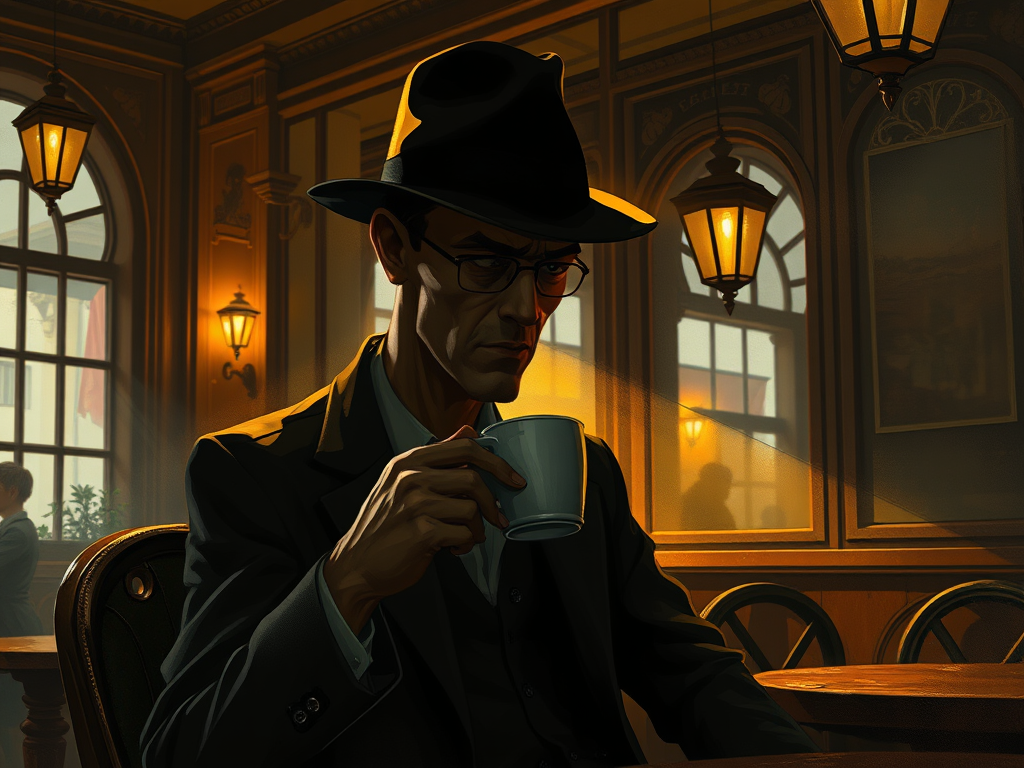
The man moved through the city like a shadow wearing a tailored suit. His name wasn’t important; what mattered were the doors he kept shut, the keys he refused to admit he carried. The world saw a man of quiet routines: a morning coffee at the same café, a stroll along the river, a desk lamp that hummed a familiar lullaby as dusk fell. But behind every routine lay a secret that bent the day to its own gravity. In the quiet moments, when the city exhaled and the streets grew thin with fog, his secrets stirred. They wore the faces of extinguished lights in a long-buried attic, the taste of copper on his tongue, and the echo of footsteps that never seemed to belong to anyone alive. He had learned early that some truths, once spoken, could devour the speaker and scatter the pieces across the floor of the world.

There were dark marks in his memory: a name whispered in a corridor, a choice made with a velocity that left no residue of doubt, a door closed on a cry that never quite stopped reverberating. Secrets like these do not simply lie dormant; they gnaw, they coil, they tighten until even the breath in his chest felt borrowed. He wore a mask of civility even as a storm brewed just beneath his ribcage, a storm that carried with it the scent of rain and something far more dangerous.

Yet not all his secrets were reservoirs of ruin. Some housed light, moments when the world revealed its softer facets, when a child’s laughter braided with a grandmother’s quiet counsel, when a neighbour’s simple act of kindness offered a compass in a night of confusion. These were the memories he visited in the evenings, after the city’s clamour settled into a muffled purr. They kept him upright, like a row of unyielding stars that refused to blink away even when clouds gathered.

There was a woman, a rare constellation in the shape of a smile, who believed in him when he believed in nothing but the ache of his own mortality. She spoke to him in the language of ordinary miracles, tea left to steep too long, a book left open on the balcony, a song that somehow threaded its way into the apartment and found the corner of his heart he had sworn off long ago. With her, he learned the texture of gentle forgiveness, the possibility that a life could be stitched back together with patience, not with punishment. Guilt was the concealing cloth behind which all his secrets wore their disguises. It wrapped him in a fabric so thick that even the simplest truth could not push through. He could tell himself the lie that to remain hidden was to preserve the fragile balance of a life others believed he had mastered. But the balance was a lie. The more he moved through the city, the tighter the cloth wound around him, until the silhouette of a man grew almost unrecognizable to himself.

In the quiet hours, when the clock’s hands scraped the wall, he would catch sight of his reflection and see not a well-groomed gentleman but a map of fault lines. The lines led to rooms he refused to open: a warehouse of memories where he kept the sins that refused to die, a cabinet of choices where the echoes of the wrongs he had done sat like dust on glassware, waiting for a gust to shatter them. Secret by secret, the doors to those rooms began to ache, and the hinges sang a tired, metallic hymn. He knew that the only way to release the pressure would be to walk into the darkness with a lantern of truth, to name what tormented him even when the name burned his tongue.

One night, the city’s skyline burned with a pale, indifferent beauty as if the stars themselves were choosing to overlook his confession. He stood at the river’s edge, where the water remembered every raindrop it had ever tasted. He spoke aloud, not to the listening world but to the part of himself that refused to listen. He spoke the names he had buried, one by one, letting the syllables fall into the current like leaves that refused to return to the tree. The words did not cleanse him at once; forgiveness never comes with a trumpet blast. But the act of naming began to loosen the strangling cloth. The air brightened a fraction, and for a heartbeat, the weight on his chest shifted. The darkness did not vanish, but it stopped pressing so relentlessly, as if it paused to witness a man choosing to open doors rather than smash them down.

In the days that followed, the man found that some secrets could be housed in the open instead of the closet. He learned to tell the smaller truths that mattered to the people who loved him—the apologies to those he had wronged, the promises he kept to those who trusted him, and the careful disclosure of his fears to the woman who stood against the tide of his guilt with a steadiness that felt almost sacred. The light he carried was not a beacon blazing for others; it was a quiet lamp he kept burning to guide himself away from the shallows of cruelty and toward the deeper currents of mercy. Some secrets, he realised, are not meant to be banished but integrated and held with care, acknowledged for what they are, and allowed to coexist with the love that is earned through steadfast, imperfect honesty.

He still walked the city streets, still wore a suit that pressed neatly to his frame, and still bore the weight of the secrets he had learned to carry. Yet the weight felt different now, less like a crushing cage and more like a map. Each step was a choice: to reveal a thread here, to withhold a fear there, to forgive himself a little more with every sunrise. In the end, he understood that being trapped by secrets does not require a single grand release. It asks for patient courage: to name the hurt, to repair what can be repaired, and to let in the light where love is willing to linger, even in the vicinity of the darkest truths.

And so he moved forward, not unscarred but unbroken in the way that matters most: open to the next, uncertain revelation, and capable of choosing love again, even after the shadows have dictated too many of his days.