The Lens of Obsession

In a secluded laboratory nestled deep within the foggy outskirts of the city, Dr Evelyn Harper was known as a mad scientist—an eccentric genius whose obsession with microscopes bordered on neurosis. Her cluttered workspace was filled with dozens of microscopes, each more bizarre and intricate than the last, some antique, some futuristic, all meticulously maintained. As a child and later at university, her mind could absorb masses of information, ensuring academic attainment and success. Meticulous note-taking and attention to detail created a wealth of knowledge. Evelyn had read in excess of two thousand textbooks, written many research papers and attained two PhDs before reaching twenty-five. There was no time in her life for boyfriends or partying like her fellow students. Study, work, sleep, study, work, sleep, this was Evelyn’s chosen path and life. She was what can only be defined as driven, driven by a desire to achieve something capable of changing the world. Colleagues found her difficult, often withdrawn, and obsessed.   

Evelyn had dedicated her life to unravelling the secrets hidden within the tiniest particles of life. She studied cancer cells under her microscopes for years, peering into their chaotic, destructive world. Most dismissed her as overzealous, even unstable, but Evelyn believed that the key to curing the disease that had claimed her mother lay within these minuscule worlds. Her obsession grew intense. She spent sleepless nights adjusting lenses, tinkering with lighting, and testing countless chemical compounds. Her neighbours whispered tales of her madness, but Evelyn cared little. Her microscopes became a window into the universe, and the obsession was driven by expectation and hope.

One stormy night, as lightning crackled outside, Evelyn observed a peculiar pattern in the cancer cells she had been studying for months. A rare, almost imperceptible fluctuation in the cell’s behaviour caught her eye. She focused her most powerful microscope on the anomaly, her hands trembling with anticipation. Suddenly, she saw it—the secret to halting the cancer’s progression. A tiny, unseen particle was disrupting the cells’ ability to multiply. A molecule, a fragment of something unseen before, seemed to interfere with the cancer’s growth mechanisms. Evelyn worked tirelessly, synthesising compounds based on her observations. Weeks turned into months, and her obsession intensified. She tested her new formula on lab models, and the results were astonishing: the cancer cells stopped dividing altogether.

Her discovery spread like wildfire, from her isolated lab to the world. The scientific community was sceptical initially, but with rigorous testing, Evelyn’s cure proved effective in human trials. Her obsession had unlocked a new era in cancer treatment. Evelyn Harper, once dismissed as a madwoman, became a hero. Her relentless obsession with microscopes and the tiniest details led to one of the greatest medical breakthroughs in history. She had shown that sometimes, madness is just another form of genius—focused, unwavering, and driven by an unshakable hope. And from that day forward, her microscopes sat in museums and laboratories, silent witnesses to the madness that changed the world.

The Trio of Triumph

In a vibrant town called Harmonyville, three friends lived: Lily, Marcus, and Amina. Each of them was different, yet their friendship was unbreakable, and together, they proved that diversity and perseverance could inspire the entire world. Lily, a girl in a wheelchair, was born with a rare condition that limited her leg movement. Despite her physical challenges, she never let them define her. She was a brilliant thinker and a talented artist, and her contagious smile lit up every room. Marcus was a boy who used a hearing aid. Born deaf in one ear and hard of hearing in the other, he faced communication barriers but never let that stop him from singing, playing the drums, or sharing his ideas. His passion for music and his determination to be heard made him a natural leader among his friends. Amina was a girl with a learning disability that made reading and writing difficult. She had a creative mind and a warm heart. She loved storytelling and had a gift for seeing the world in unique ways that others often overlooked.

One day, the friends decided to participate in the town’s annual talent show. They wanted to showcase their talents together, despite their differences. They called themselves “The Spectrum of Dreams” and planned to perform a story about friendship, hope, and acceptance. Lily painted vibrant backdrops for their story, Marcus composed a rhythmic beat to accompany their performance, and Amina crafted a heartfelt story celebrating diversity and kindness. Their act was a beautiful blend of art, music, and storytelling, with each friend contributing their unique strengths.

When the day of the show arrived, the town was sceptical but curious. As they performed, the audience was moved by the trio’s sincerity and courage. Lily’s colourful illustrations brought the story to life, Marcus’s music added emotion, and Amina’s words touched hearts. By the end of their performance, the entire hall erupted in applause. The friends showed everyone that differences could be sources of strength and that perseverance and friendship could overcome any obstacle. News of their inspiring story spread beyond Harmonyville. Their message reached schools, community centres, and even international platforms. The trio became ambassadors of inclusion, advocating for accessible education, adaptive technology, and acceptance of diversity.

Jacqueline Wilson

Jacqueline Wilson is a renowned British author, best known for her children’s and young adult literature. She has written over 100 books, many of which have become bestsellers. Her writing frequently explores complex themes, including family dynamics, friendship, and the challenges faced by children and adolescents.

Some of her most popular works include:

“The Diamond Girls” – A story about a group of sisters navigating life’s challenges together.
“Girls in Love” – The first book in a series that follows the lives of teenage girls dealing with love and relationships.
“Hetty Feather” – A historical novel set in Victorian England, chronicling the life of a young orphaned girl.
“The Illustrated Mum” – A poignant tale of a young girl and her troubled mother, exploring themes of mental health and family.

Wilson’s books often feature strong female protagonists and tackle issues like bullying, mental health, and social inequality, making her work relatable and impactful for young readers. She has received numerous awards for her contributions to children’s literature, including the British Book Award and the Children’s Book Award. Her engaging writing style and ability to address serious topics with sensitivity have cemented her reputation as one of the leading figures in contemporary children’s literature

The Little Boy Who Loved to Sleep

Once upon a time, in a quaint little village, there lived a boy named Leo. Leo was known throughout the village not for his mischievous antics or playful spirit but for his extraordinary talent for sleeping. From the moment he was born, it seemed like sleep was his superpower. He could doze off anywhere—on a swing, in the middle of a game, and even during dinner! While other children played in the sun, Leo would often be found under a shady tree, snuggled up with a soft blanket, dreaming of far-off lands and magical creatures. His parents, while sometimes exasperated by his constant napping, loved him dearly. They often joked,

“Our Leo could sleep through a thunderstorm!”

One sunny afternoon, the village held its annual festival, filled with laughter, music, and delicious food. The children ran about, excitedly participating in games and contests. But as the festivities began, Leo found a cozy spot beneath a grand old oak tree and quickly drifted off to sleep. In his dreams, Leo wandered through a vibrant world filled with colorful flowers that sang and trees that danced. He met friendly animals who invited him to join their adventures. There were talking birds who shared stories of their journeys and wise old turtles who offered him riddles to solve.

Meanwhile, back in the village, the festival continued, but something unexpected happened. As the sun began to set, a thick fog rolled in, enveloping the village in a mysterious haze. The villagers grew worried; they could hardly see each other, and the celebrations stopped. Suddenly, from the depths of the fog, a melodic voice rang out. It was the Dreamkeeper, a magical being who appeared only when the village was in need.

“Fear not, dear villagers,” she said. “The fog will lift if you can awaken the boy who dreams the most.”

The villagers looked at each other, realizing that Leo was missing. They rushed to the oak tree and gently shook him awake. Leo yawned and blinked, still caught between the dream world and reality. With a nudge from a concerned friend, he finally sat up, rubbing his eyes.

“Leo, you must help us!” the villagers pleaded. “The fog won’t clear until you share your dreams with us.”

Still half-asleep but sensing the urgency, Leo took a deep breath and recounted his incredible adventures in his dreams. He spoke of the singing flowers, the dancing trees, and the wise turtles. As he shared these tales, the fog began to shimmer and swirl, slowly lifting as laughter and joy filled the air. The villagers felt a sense of wonder with each story, their hearts lightening with each whimsical detail. The Dreamkeeper smiled, her magic weaving through the air, and soon the fog disappeared completely, revealing a beautifully starlit sky. The villagers cheered, grateful for Leo’s gift of dreams. They realized that his ability to sleep wasn’t just a quirk; it was a special connection to a world that inspired joy and creativity. From that day on, Leo was celebrated as the boy who slept and as the storyteller who brought dreams to life.

And so, Leo continued to nap, but now he did so with purpose. Every time he awoke, he shared his adventures, bringing the village together with enchanting tales. The little boy who was always sleeping had become the heart of the village, reminding everyone that dreams can bring light to even the foggiest days. And they all lived happily, the dreamers and the awakened, forever enchanted by the magic of imagination. 

‘Just One More Trophy’

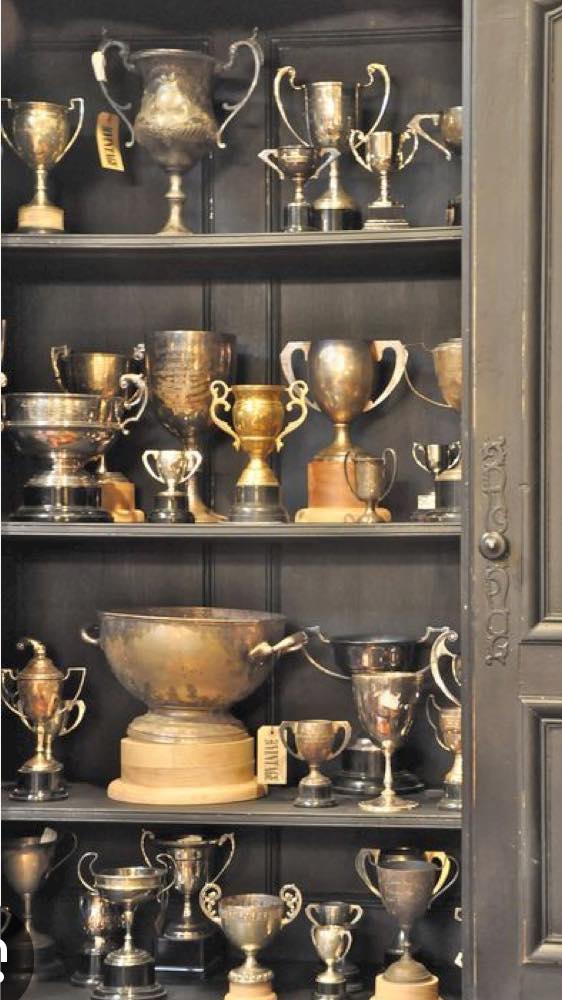
In a small town where the sun kissed the rooftops every morning lived a man named Victor Ace. Victor was a boxer, revered for his lightning-fast jabs and an iron will that had led him to victory in every competition he entered. His home was a shrine to his achievements, with trophies gleaming on every surface, from the kitchen cupboards to the living room shelves. Each trophy told a story of sweat, determination, and the thrill of victory. As the years passed, Victor’s fame grew, but so did the weight of his trophies. They began to overwhelm him, crowding his space and life. He often joked that he was winning more cups than he could drink from. Friends would laugh, but Victor felt a strange sense of burden. He had dedicated his life to the ring, but now he yearned for something more profound meaning beyond the accolades that adorned his home.

One day, as he polished a particularly large championship cup—his pride and joy—Victor received a call from his longtime coach, Leo.

“Victor, there’s one last fight coming up. It’s a big one. The championship title is on the line, and they want you to take it.”

Victor hesitated. He had promised himself that this would be his final fight, a chance to retire on top.

“I don’t know, Leo. I’ve won so much already. What if I lose?”

“Winning or losing isn’t everything,” Leo replied, his voice steady. “It’s about the journey, the passion. Just think about it.”

That night, Victor lay in bed, staring at the ceiling. The thought of one last fight gnawed at him. After a restless night, he made his decision; he would fight, but not just for the trophy. He would fight to embrace his legacy, to show that boxing was more than just medals and cups. The day of the fight arrived, and the arena buzzed with electric anticipation. As he stepped into the ring, the crowd roared, their cheers echoing in his ears like a heartbeat. The atmosphere was tense; he could feel the weight of expectations pressing down on him. His opponent, a fierce young fighter with a reputation for raw power, stood across the ring, eyes burning with determination.

The bell rang, and the fight began. Victor danced around his opponent, slipping punches that came at him like thunder. He felt alive, the adrenaline coursing through his veins. Each jab was not just a move but a message to himself that he still had it and could soar. But as the rounds wore on, fatigue began to set in. The young fighter was relentless, pushing him to his limits. Victor’s body ached, but his spirit remained unbroken. With the crowd on the edge of their seats in the final round, he summoned every ounce of strength he had left. He executed a combination of punches that left his opponent staggering, and for a moment, time stood still.

With one final blow, he sent his rival to the canvas. The referee’s count echoed in the arena, and when the bell rang, it was clear—Victor had won again. The crowd erupted into a frenzy, but as he stood there, the cheers felt distant. He raised his arms in triumph, but his gaze shifted to the faces in the audience. In that moment, he understood. It wasn’t the trophy that mattered; it was the love of the sport, the camaraderie with his fellow fighters, and the journey he had taken. The trophies would remain, but they were just symbols of a life well-lived. After the fight, Victor walked home, the championship belt glistening at his side. He entered his house, where trophies lined every shelf, a testament to his legacy. But instead of feeling overwhelmed, he felt a profound sense of peace. He would keep the belt as a reminder. Still, he would also begin to clear out the cupboards, making space for new experiences—mentoring young fighters, volunteering, and sharing his love for boxing with the next generation. He smiled as he placed the latest trophy on a shelf that night. This was his last fight but also the beginning of a new chapter. The trophies would always be there, but now, they would serve as a reminder of the journey rather than the destination. Victor Ace had fought his last fight, but the real victory was yet to come.