E.M. Forster was an English novelist and essayist renowned for his insightful exploration of class, sexuality, and human connection. Born on January 1, 1879, in London, Forster grew up in a middle-class family and was educated at Tonbridge School and King’s College, Cambridge. Forster’s literary career began with his first novel, “Where Angels Fear to Tread” (1905), but he gained significant recognition with “A Room with a View” (1908), which delves into themes of love and social conventions. His most famous works include “Howards End” (1910) and “A Passage to India” (1924), the latter of which examines British colonialism and race relations in India.
Throughout his life, Forster was known for his progressive views on sexuality and social issues, which he often reflected in his writing. He was openly gay, a fact that influenced his works, though he published much of his writing at a time when such topics were often considered taboo. In addition to his novels, Forster wrote essays and worked as a critic, contributing to various literary journals. He also had a brief career as a screenwriter in Hollywood.
Forster’s later years were marked by a retreat from public life, and he spent much of his time in his home in Somerset. He passed away on June 7, 1970. His legacy endures, and his works are celebrated for their humanism and emotional depth.
Once upon a time, in a mystical ghostly land, there was a kingdom ruled by a wise and benevolent king. The kingdom was known for its enchanting beauty and vibrant culture. One of the most anticipated events of the year was the annual Absinthe Ball, a grand celebration where everyone would gather to dance, sing, and revel in the magic of the night. In this kingdom, there lived a young frog princess named Seraphina. Seraphina was not like other frogs. She possessed a unique beauty and a mesmerizing voice that captivated anyone who heard her sing. However, she was cursed by a wicked sorcerer and transformed into a frog. Despite her predicament, Seraphina remained hopeful that one day, a true love’s kiss would break the curse and restore her to her human form.
Meanwhile, in a smoky jazz club on the outskirts of the kingdom, there lived a talented frog blues singer named Felix. With his soulful voice and his skilful guitar playing, Felix could make the whole room sway with emotion. He had a reputation for singing songs that touched the depths of people’s hearts, and his music carried a hint of melancholy, reflecting the struggles he faced as a frog in a human-dominated world. As fate would have it, Seraphina and Felix’s paths crossed one moonlit night at the Absinthe Ball.
Seraphina, disguised as a common frog, hopped into the ballroom, drawn by the melodies that filled the air. She watched as Felix took the stage, his voice echoing through the hall, casting a spell over the entire audience. Captivated by Felix’s performance, Seraphina couldn’t resist joining in with her own melodious croak. The crowd was astonished by the harmony of their voices blending together, creating a magical duet that seemed to transcend the boundaries of their frog forms. The enchantment in the air was palpable as their voices intertwined, filling the ballroom with a sense of longing and hope. As the song came to an end, the room erupted in applause. Seraphina and Felix locked eyes, and at that moment, they knew that they had found something special. They spent the rest of the night talking and laughing, completely unaware of the world around them. It felt as if time stood still, and they were the only two beings in existence.
Days turned into weeks and weeks into months. Seraphina and Felix’s bond grew stronger with each passing day. Together, they faced the challenges of being frogs in a human world, supporting and encouraging one another through their struggles. They never lost hope that one day, they would find a way to break their curses and live a life of freedom and love. Their dedication and unwavering belief in each other’s talents caught the attention of the kingdom’s wise king. Intrigued by their story, he summoned Seraphina and Felix to the royal palace. The king, moved by their love and talent, used his powers to break the curses that held them captive.
As the curses lifted, Seraphina and Felix were transformed into their true selves. Seraphina stood before the king as a beautiful princess, and Felix regained his human form, his blues singer persona shining through. The king blessed their union and declared a grand celebration in their honour. And so, the Absinthe Ball took on a whole new meaning. It became a symbol of love, hope, and the power of music to transcend boundaries. Seraphina and Felix, now free from their curses, stood hand in hand at the centre of the ballroom, surrounded by joyful revellers. The room was adorned with twinkling lights, and the air was filled with laughter and music. Seraphina’s voice soared through the hall, and Felix’s guitar strummed with passion, their music intertwining in perfect harmony.
As the night unfolded, their love story became an inspiration to all who witnessed it. The kingdom celebrated their union, and their tale of overcoming adversity spread far and wide, touching the hearts of people from distant lands. Seraphina and Felix continued to perform together, their music echoing through the kingdom, bringing joy and healing to all who listened. But amidst their newfound happiness, Seraphina and Felix never forgot the lessons they had learned. They remained humble and kind, using their talents to uplift others and spread love wherever they went. Their love story became a legend, whispered by storytellers and passed down through generations, reminding people of the transformative power of love and the magic that lies within us all. And so, the Absinthe Ball became an annual celebration of love, music, and the triumph of the human spirit. Each year, the kingdom would come alive with the enchanting melodies of Seraphina and Felix, their voices echoing through the night, reminding everyone that true love knows no boundaries and that dreams have the power to come true. And so, the frog princess and the frog blues singer lived happily ever after, their love story forever etched in the hearts and minds of the kingdom’s people. Their legacy was one of love, music, and the belief in the extraordinary things that can happen when two souls, against all odds, find each other in a world full of enchantment and ghostly possibility.
Charles Bukowski was an American poet, novelist, and short story writer born on August 16, 1920, in Andernach, Germany. His family moved to Los Angeles when he was a child, and he spent most of his life there. Bukowski’s writing often drew from his experiences with poverty, relationships, and his love for alcohol, reflecting a raw and unfiltered view of life. He began writing at an early age but faced numerous rejections before gaining recognition. His big break came in the 1960s when he started publishing poetry in underground literary magazines. Bukowski’s work is characterized by its gritty realism, often focusing on the lives of the downtrodden and the working class.
His most famous novels include “Post Office,”“Factotum,” and “Women,” which depict his alter ego, Henry Chinaski, and explore themes of loneliness, love, and existential despair. Bukowski’s writing style is straightforward and colloquial, making it accessible yet profound. Bukowski wrote prolifically throughout his life, producing numerous collections of poetry and prose until his death on March 9, 1994. He remains an influential figure in American literature, celebrated for his unapologetic voice and candid exploration of the human condition.
In the quaint village of Misty Hollow lived a man named Thornton Squash-Mash. Thornton was an earnest fellow, always eager to make his mark in the world. Yet, no matter how hard he tried, he seemed to stumble at every turn. From his botched attempts at baking bread to his misguided efforts at gardening, his life was a series of blunders. Despite his good intentions, he had a knack for turning simple tasks into grand disasters. Neighbours would chuckle as they recalled when he tried to help with the local bake sale, only to accidentally create a batch of cookies resembling charcoal bricks. Or the time he planted a vegetable garden, only to discover that he had sown seeds for flowers instead.
Frustrated and disheartened, Thornton spent many nights pondering his fate. “Why can’t I do anything right?” he would lament to his reflection in the mirror. Yet, deep down, he longed for something more—something that would change his life forever. While wandering through the village market one fateful evening, he stumbled upon an old bookshop. The scent of aged paper and leather drew him in. A dusty volume caught his eye as he browsed the shelves: “The Wisdom of Mistakes: Embracing Imperfection.” Intrigued, he purchased the book and hurried home. That night, as he flipped through its pages, he discovered stories of great inventors, artists, and thinkers who had all faced failures before achieving success. The common thread was their ability to learn from their mistakes rather than be defeated by them. A flicker of hope ignited in Thornton’s heart.
As he continued reading, he found a particularly poignant passage: “Mistakes are not the end; they are the stepping stones to growth. Embrace them, learn from them, and let them guide you.” It struck a chord with him. He realized that his fear of making mistakes had always held him back. Instead of viewing his blunders as failures, he could see them as opportunities for learning. Inspired, Thornton decided to approach life differently. The next day, he set out to bake bread again, this time armed with the understanding that mistakes were part of the journey. He mixed the ingredients with a sense of curiosity rather than dread. When the dough didn’t rise as he had hoped, he analyzed what went wrong instead of giving up. He learned about yeast and kneading, adjusting his technique with each attempt.
Over the following weeks, he applied this new mindset to everything he did. He embraced the chaos of gardening, experimenting with different plants, and even enjoyed the unpredictability of it all. His once-haphazard efforts began to yield results—his garden flourished, and his baked goods, though still imperfect, were edible and even delicious! Word spread around Misty Hollow about Thornton’s transformation. People stopped by to admire his garden and taste his bread. They were amazed at how he had turned his failures into successes. Thornton found himself at the centre of the community, sharing his newfound wisdom and encouraging others to embrace their mistakes.
Months later, there was a festival in the village, and Thornton was invited to showcase his creations. With a heart full of joy, he presented his bread and vegetables, proudly sharing his journey of growth. The villagers celebrated his accomplishments and the spirit of resilience he embodied. From that day forward, Thornton Squash-Mash became a beloved figure in Misty Hollow, known not just for his delicious bread or vibrant garden but for teaching everyone that mistakes are merely stepping stones toward greatness. And so, the man who once feared failure became a beacon of hope, inspiring others to embrace their imperfections and discover the beauty of their journeys. And in that little village, Thornton’s laughter echoed, a reminder that life is not about never falling but about rising every time we do
Noam Chomsky is a prominent linguist, philosopher, cognitive scientist, historian, and social critic, born on December 7, 1928, in Philadelphia, Pennsylvania. He is best known for his contributions to the fields of linguistics and cognitive psychology, particularly for developing the theory of generative grammar, which revolutionized our understanding of language structure and acquisition.
Chomsky’s academic career began at the Massachusetts Institute of Technology (MIT), where he became a professor and published influential works, including “Syntactic Structures” (1957) and “Aspects of the Theory of Syntax” (1965). His theories posited that the ability to acquire language is innate to humans, a concept known as the “universal grammar.”
Beyond linguistics, Chomsky is recognized for his political activism and criticism of U.S. foreign policy and corporate power. He has authored numerous works on politics and society, including “Manufacturing Consent” (1988), co-written with Edward S. Herman, which critiques the media’s role in shaping public perception.
Chomsky’s influence extends across various domains, and he is often regarded as one of the most important intellectuals of the 20th and 21st centuries. His work continues to inspire debates in linguistics, philosophy, cognitive science, and political theory.
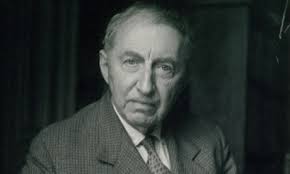


 Lazarus Carpenter - Author