David Walliams

David Walliams is a British author, comedian, and television personality best known for his children’s books and his work on the television show “Britain’s Got Talent.” His literary work includes a variety of popular children’s novels, often characterized by humour, engaging characters, and heartwarming themes. Some of his notable books include:

1. “The Boy in the Dress” – A story about a boy who enjoys wearing dresses and explores themes of identity and acceptance.
2. “Mr. Stink” – A tale about a homeless man and a young girl who befriends him, highlighting compassion and understanding.
3. “Gangsta Granny” – A humorous adventure featuring a boy and his grandmother, who turns out to be a retired jewel thief.
4. “Awful Auntie” – A story about a young girl who must outsmart her wicked aunt to save her family home.

Walliams’ books often include illustrations by artistic collaborator Tony Ross, making them visually appealing to young readers. His writing has received acclaim for its ability to tackle serious topics in an accessible and entertaining manner.

In addition to his literary accomplishments, Walliams has appeared in numerous television shows, including sketches for “Little Britain,” where he starred alongside Matt Lucas. His work blends comedy with poignant social commentary, making him a versatile figure in the entertainment industry. 

An Insatiable Passion for Writing

Once, in a small town, there lived a man named Victor, known for his insatiable passion for writing. His small apartment was cluttered with stacks of paper, overflowing notebooks, and a typewriter that had seen better days. Victor believed the world was shrouded in mysteries that desperately needed to be unveiled. Every morning, he rose before dawn, fueled by an unquenchable thirst for knowledge and a sense of duty to inform others. He would pen down the secrets he stumbled upon—hidden histories, forgotten truths, and conspiracies that loomed large in the shadows. His writings ranged from the mundane to the profound; he wrote about everything from the local legends of his town to grand political intrigues that spanned continents.

Victor’s obsession with writing grew as he uncovered more secrets. He believed the truth could change the world and was determined to share it. He spent hours in libraries, searching for ancient texts, interviewing elderly townsfolk, and even delving into the internet’s dark corners. His fingers danced across the typewriter keys as he poured out the revelations he unearthed. However, his relentless pursuit began to take a toll on his personal life. Friends and family grew concerned as they noticed Victor becoming increasingly reclusive. Invitations to gatherings went unanswered, and his once vibrant social life faded into the background, overshadowed by his compulsion to write. Still, he pressed on, convinced that every secret he unveiled was a step towards enlightenment for humanity.

One day, while rummaging through an old bookstore, Victor stumbled upon a dusty manuscript that spoke of a long-lost artefact said to hold the knowledge of the universe—a key to understanding the very fabric of existence. This ignited a new fire within him. He became obsessed with the idea of finding this artefact, believing that it would validate his work and serve as a beacon of truth for the world. Victor’s quest led him on a journey across the globe, from ancient ruins in Egypt to the mountains of Tibet. He documented every encounter, every whisper of wisdom he gathered along the way. His writings transformed into a grand narrative, a tapestry woven with threads of history, culture, and the universe’s secrets.

As he neared the end of his journey, Victor realized that the true secret was not the artefact itself but the connections he made and the stories he shared. He returned home, his heart full and his mind racing with ideas. With a renewed sense of purpose, he began to compile his works into a book that would reveal the secrets he had uncovered and inspire others to seek their truths. When the book was finally published, it became a sensation. People were drawn to Victor’s fervour and passion, and his words resonated with those yearning for understanding in a chaotic world. He held readings and discussions, fostering a community of seekers who gathered to share their secrets and stories.

Victor transformed from a solitary writer into a catalyst for change, showing that while secrets might be hidden, the quest for truth is a shared journey. Ultimately, he learned that writing was not just about revealing secrets but about connecting with others and sparking the flame of curiosity in every heart. And in that, Victor found his true purpose—a lifelong storyteller dedicated to illuminating the shadows of the unknown.

Enid Blyton

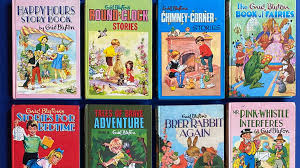
Enid Blyton (1897–1968) was a prolific British author known for her children’s books, which have captivated young readers for generations. She is best known for her series, including “The Famous Five,” “The Secret Seven,” and “Malory Towers,” which often feature themes of adventure, friendship, and mystery. Born in East Dulwich, London, Blyton had a passion for storytelling from a young age. She worked as a teacher and a governess before dedicating herself to writing full-time. Her first book was published in 1922, and she quickly gained popularity, producing over 700 titles throughout her career.

Blyton’s writing is characterized by its straightforward style, engaging plots, and relatable characters, making it accessible for children. Her work often reflects her love for nature and the outdoors, with many stories set in rural landscapes. Despite her success, Blyton’s work has faced criticism over the years for its perceived lack of depth and outdated themes. Nevertheless, her books have remained in print and continue to be loved by new generations.

Enid Blyton’s legacy endures, and her influence on children’s literature is significant, inspiring countless readers and writers alike. 

Orion

Once upon a time, nestled deep within a magical forest, there lived a magnificent wolf named Orion. He possessed a sleek, silver coat that shimmered under the moonlight, and his piercing blue eyes sparkled like the stars in the night sky. But despite his extraordinary appearance, Orion carried a secret burden; he could not shed a single tear. While the other creatures of the forest revelled in the beauty of their emotions, Orion felt trapped within himself. His inability to cry made him an outcast, as his fellow wolves and woodland friends couldn’t understand his emotional plight. They believed tears to be a sign of vulnerability, but Orion yearned to experience the emotional release that tears could bring.

One day, as Orion wandered through a sunlit glade, he stumbled upon a wise old owl perched atop a moss-covered branch. The owl, Athena, possessed ancient wisdom and keen insight into matters of the heart. Sensing Orion’s sadness, she invited him to share his story. With a heavy heart, Orion poured out his tale of woe to Athena. He expressed his longing to cry, to release the emotions locked within him, and to feel a connection with his kindred spirits. Moved by his plight, Athena offered her guidance.

“Dear Orion,” Athena began, “the ability to cry goes beyond mere tears. It is the language of the heart, a gateway to understanding and compassion. But to embrace this gift, you must first uncover the source of your emotions.”

Together, Orion and Athena embarked on a quest to discover the key to unlocking Orion’s tears. They wandered through enchanted forests, climbed towering mountains, and crossed treacherous rivers. Along the way, they encountered various animals who shared their own stories of sorrow and joy, love and loss. As the journey unfolded, Orion began to understand that emotions were not a sign of weakness but rather an expression of his true self. He discovered that crying was not solely reserved for sadness but could also be a manifestation of happiness, empathy, and gratitude. Finally, deep within the heart of the forest, Orion faced his ultimate challenge, a mystical waterfall known as the “Tears of the Ancients.” It was said that those who stood before it with pure intentions would have their emotions released, allowing their tears to flow freely.

With trembling paws, Orion approached the waterfall. He called upon every emotion buried within him, allowing them to surge through his being. As his heart overflowed with a kaleidoscope of feelings, a single tear welled up in his eye, shimmering like a dewdrop. And then, with a sense of liberation, the tear trickled down Orion’s snout, splashing into the sacred waters below. In that instant, the floodgates burst open, and tears streamed down his face like a gentle rain, cleansing his soul and connecting him to the world around him. Word of Orion’s tearful transformation spread throughout the forest, and the animals rejoiced.

They recognized that emotions were not something to be feared but to be embraced and shared. Orion became a symbol of courage, teaching others to honour their feelings without shame. From that day forward, Orion’s tears became a gift, a reminder that expressing emotions is an essential part of the human experience. He roamed the forest, weaving tales of empathy and compassion, comforting those in need, and spreading the message that every tear carried within it the power to heal and unite. Children from far and wide would gather around Orion, eager to hear his stories and learn from his wisdom. They discovered that crying was not a sign of weakness but a testament to the strength and depth of their hearts.

Orion became a beloved character loved by many, guiding young ones through their own emotional journeys and encouraging them to embrace their feelings with open arms. As the forest flourished with newfound compassion and understanding, a remarkable transformation took place within Orion. With each tear shed, his heart grew lighter, and a radiant joy replaced the burden he had carried for so long. His once solitary existence transformed into a life filled with connection and meaning.

And so, the story of the wolf who could not cry, Orion, became a legend in the magical forest. It served as a reminder to all that emotions are a precious part of being alive, and that through embracing and expressing them, one can find solace, strength, and a profound sense of belonging to all that is and will ever be.


Anthony Trollope

Anthony Trollope (1815–1882) was an English novelist and civil servant, known for his prolific writing and keen social observations. He is best known for his series of novels set in the fictional county of Barsetshire, which explore the lives and interactions of its inhabitants, often highlighting themes of politics, love, and social change.

Born in London, Trollope faced various challenges in his early life, including financial difficulties. He worked for the Post Office, where he developed a disciplined writing routine, often composing during his commute. This dedication enabled him to publish numerous works, including “The Warden,” “Barchester Towers,” and the “Palliser” series.

Trollope’s writing is characterized by its realism, humor, and deep understanding of human nature. He was a pioneer in the use of serialized fiction, which allowed him to reach a broad audience. Despite facing criticism during his time, he has since been recognized as one of the major Victorian novelists, influencing many writers who followed.

In addition to his literary work, Trollope was known for his travels and interest in politics. He was an advocate for social reform and often infused his political views into his narratives. His legacy endures, with many of his novels still in print and widely read today.