The Monster with the Big Heart

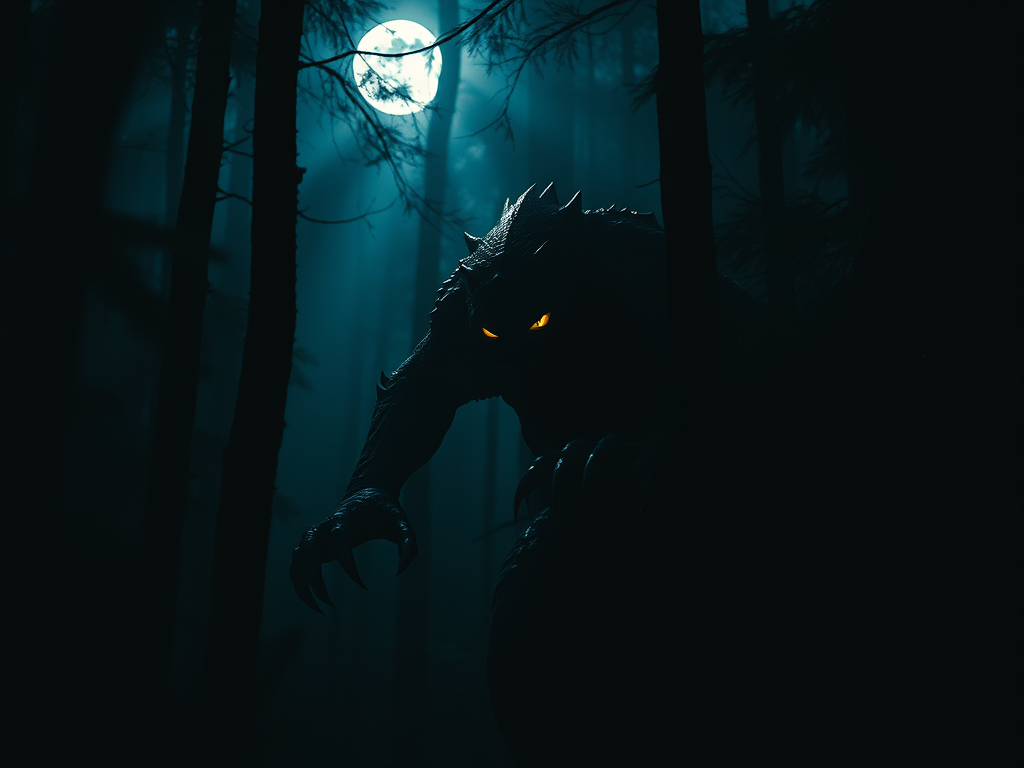
Once upon a time, in a mystical forest shrouded in ancient secrets and whispers of old, a monster lived unlike any other. This monster was feared by all who dwelled nearby, for its appearance was terrifying, with sharp fangs, claws as long as swords, and eyes that glowed like fiery embers in the darkness. Tales of its ferocity and insatiable hunger spread far and wide, striking fear into the hearts of all who heard them. However, most did not know this monster, despite its fearsome exterior, possessed a heart as big as the moon in the night sky. It longed for companionship, understanding, and acceptance, but no one dared approach it, for they only saw the monster’s monstrous form and not the gentle soul that lay within.

One day, a young child lost in the forest stumbled upon the monster’s lair. Trembling with fear, the child expected the worst, but to their surprise, the monster did not attack. Instead, it looked at the child with eyes full of sadness and loneliness. Sensing the monster’s true nature, the child reached out a hand in friendship. To the amazement of both, the monster hesitantly extended a clawed hand in return, its massive form crouching down to the child’s level. From then on, an unlikely bond formed between the two, built on trust, kindness, and understanding. The monster’s true nature began to shine through as days turned into weeks and weeks into months. It showed compassion for the forest creatures, protecting them from harm and helping those in need. The once-feared monster became a guardian, a friend to all who called the forest their home.

Word of the monster with a big heart spread far and wide, and soon, creatures from near and far came to seek its wisdom and guidance. The monster, now known not for its fearsome appearance but for its compassionate soul, welcomed them all with open arms.
And so, the monster with a big heart found acceptance, love and friendship in a world that once shunned it. Its legend lived on for generations to come, a reminder that true beauty lies not in appearances but in the kindness and love that reside within us all.

Image by AI

Miguel de Cervantes Saavedra

Miguel de Cervantes Saavedra, widely regarded as one of the greatest writers in the Spanish language and one of the world’s pre-eminent novelists, is best known for his novel “Don Quixote.” Miguel de Cervantes was born in September 1547 in Alcalá de Henares, near Madrid, Spain. He came from a modest background; his father was a surgeon. Cervantes served in the Spanish military and fought in the Battle of Lepanto in 1571, where he was wounded and lost the use of his left hand. Later, he was captured by pirates and spent five years as a slave in Algiers before being ransomed.

He began his literary career after returning to Spain. His most famous work, “Don Quixote,” was first published in two parts in 1605 and 1615. The novel is considered one of Western literature’s earliest and most significant works. In addition to “Don Quixote,” Cervantes wrote many other works, including plays, poems, and short stories. Some of his notable works include “Novelas Ejemplares” (Exemplary Novels) and “La Galatea.” Despite his literary success, he struggled financially throughout his life. He died on April 22, 1616, in Madrid, Spain. Coincidentally, this was the same day as the death of William Shakespeare, although they died under different calendars (Spain used the Gregorian calendar, while England used the Julian calendar at that time). Miguel de Cervantes is often referred to as the “Prince of Spanish Literature.” His work, particularly “Don Quixote,” has had a profound influence on Western literature and continues to be studied and celebrated around the world.

Cervantes’ life was marked by adventure, hardship, and literary achievement, making him a fascinating figure in Spanish and world history. 

Image by AI

The Balance

Once upon a time, two siblings, Elara and Alden, lived in a kingdom nestled amidst towering mountains and lush forests. Elara was known far and wide for her physical strength; she could lift boulders and outmatch any warrior in combat. On the other hand, Alden possessed a different kind of strength – he was incredibly intelligent and possessed a keen wit that could unravel the most complex puzzles. Despite their differences, Elara and Alden were inseparable and complemented each other perfectly. Where Elara’s strength failed, Alden’s intellect would prevail, and Elara’s might would triumph where Alden’s mind faltered.

One day, a great evil descended upon the kingdom in the form of a fierce dragon that terrorized the land, laying waste to villages and crops. The king called upon his bravest knights to slay the beast, but all efforts were in vain. It seemed that no one could match the dragon’s power and ferocity. Elara and Alden knew they had to do something to save their kingdom. Drawing upon their respective strengths, they devised a plan. Elara would challenge the dragon to a physical duel, distracting it with her incredible strength, while Alden snuck behind the beast to find its weakness. Elara fought with all her might as the battle raged, deflecting the dragon’s fiery breath and powerful attacks. Meanwhile, Alden searched for a way to defeat the beast. Finally, he discovered a small gap where its scales were weakest in the dragon’s armour.

With a swift and calculated strike, Alden plunged his sword into the dragon’s vulnerable spot, causing the beast to roar in pain and collapse. Elara seized the opportunity and delivered the final blow, vanquishing the dragon once and for all. The kingdom rejoiced at the victory of the siblings, celebrating their bravery and ingenuity. Elara and Alden have shown that true strength comes not just from physical might or intellectual prowess alone but from the unity of both. Together, they overcame the greatest challenges and emerged victorious, proving that strength and weakness are but two sides of the same coin, each complementing the other in perfect harmony.
Image by AI

Grumble the Grumpy Goblin

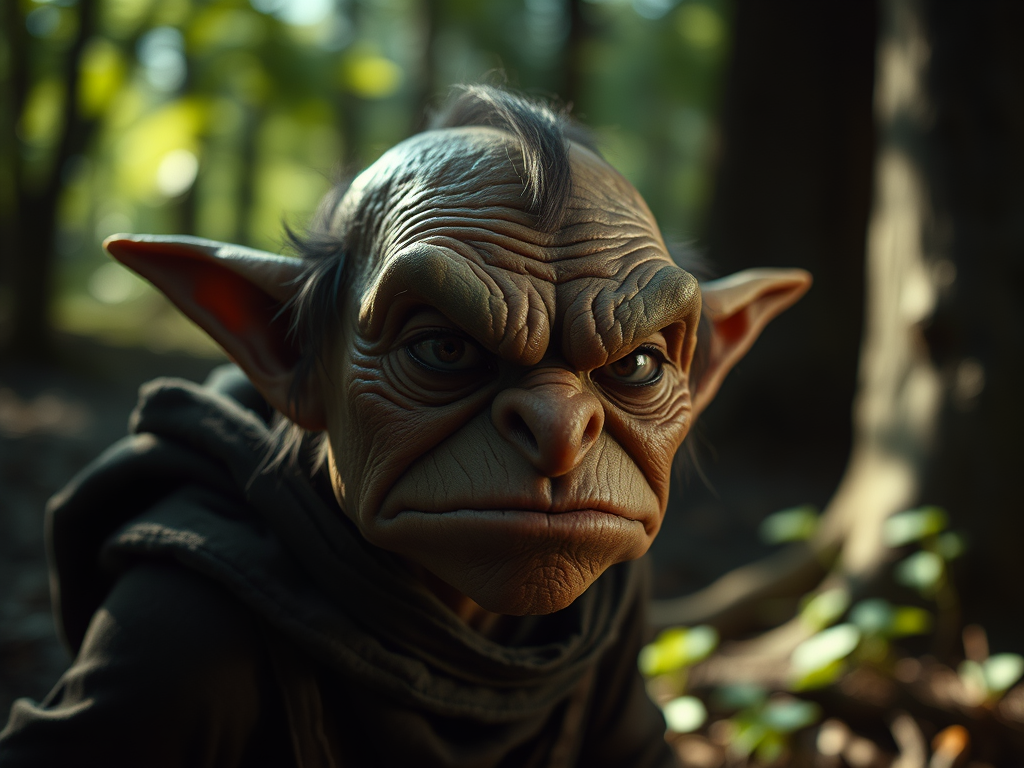
Once upon a time, a goblin named Grumble lived in the mystical land of Doria. Grumble was unlike any other goblin in the land. While goblins were known for their mischievous nature and love for causing trouble, Grumble was always unhappy. His face was constantly twisted into a frown, and his eyes were always filled with sadness. Grumble lived in a small cave at the edge of a Dark Forest, far away from the other goblins in the village. He spent his days wandering through the forest, grumbling to himself about how unfair life was. While the other goblins spent their days playing pranks and laughing, Grumble preferred to be alone, lost in his thoughts.

One day, as Grumble wandered through the forest, he stumbled upon a group of fairies dancing in a sunlit clearing. The fairies were laughing and singing, their wings shimmering in the sunlight. Grumble watched them from a distance, his heart heavy with envy. Why couldn’t he be as happy as they were? Why was he constantly so miserable?
As Grumble watched the fairies, a tiny fairy named Luna noticed Grumble and flew over to him.

“Why do you look so sad, little goblin?” she asked, her voice filled with kindness.

Grumble was taken aback. No one had ever shown him such kindness before.

“I am Grumble, the unhappy goblin,” he replied. “I have always been this way and fear I will never know true happiness.”

Luna smiled gently at Grumble.

“Happiness is not something that can be given to you, Grumble. It is something that comes from within. You must learn to see the beauty in the world and find joy in the small things.”

Grumble listened to Luna’s words, and for the first time in a long time, he felt a glimmer of hope in his heart. He followed Luna’s advice and began looking for beauty in the world around him. He watched the sun rise over the mountains, listened to the gentle rustling of the leaves in the wind, and marvelled at the colours of the flowers in the meadow. As days turned into weeks, Grumble’s frown began to soften, and a small smile tugged at the corners of his mouth. He found himself laughing and singing along with the birds, his heart filled with a newfound joy.

Word of the transformed goblin spread throughout Doria, and soon, goblins, fairies, and creatures from all corners of the land came to see the once unhappy Grumble now filled with happiness. Grumble had finally found his place in the world, surrounded by friends who loved him for who he was. And so, Grumble, the once unhappy goblin, learned that true happiness comes from within and that even the darkest of hearts can find light and joy in the world. From that day on, Grumble’s frown was replaced with a smile, and he lived happily ever after in the mystical land of Doria.

Image by AI

Gabriel García Márquez

Gabriel García Márquez, full name Gabriel José de la Concordia García Márquez, was a Colombian novelist, short-story writer, screenwriter, and journalist. He was born on March 6, 1927, in Aracataca, Colombia, and passed away on April 17, 2014, in Mexico City, Mexico. Márquez is best known for his novels, particularly his masterpiece “One Hundred Years of Solitude” (1967), considered one of the greatest achievements in literature in the 20th century. He was a significant proponent of magical realism, a literary style in which magical elements are woven into a realistic narrative.

Throughout his career, García Márquez received numerous awards, including the Nobel Prize in Literature in 1982 for his novels and short stories, in which the fantastic and the realistic are combined in a richly composed world of imagination, reflecting a continent’s life and conflicts. His other notable works include “Love in the Time of Cholera,” “Chronicle of a Death Foretold,” and “The Autumn of the Patriarch,” among others. Gabriel García Márquez’s works have had a profound impact on literature and have influenced countless writers around the world. 

Image by AI