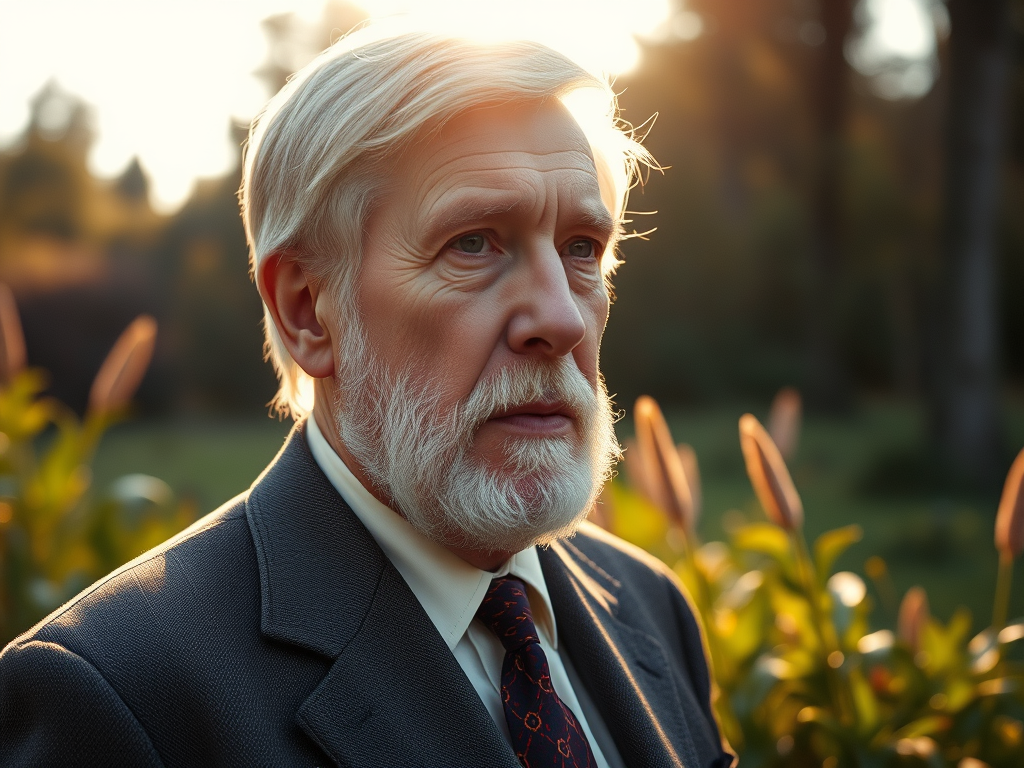
Carl Sagan

Carl Sagan was an influential American astronomer, astrophysicist, and science communicator, best known for his work in popularizing science and making complex concepts accessible to the public. Born on November 9, 1934, in Brooklyn, New York, Sagan developed an early interest in astronomy inspired by a visit to the 1939 New York World’s Fair. He earned his doctorate in astronomy and astrophysics from the University of Chicago in 1960. Sagan contributed significantly to our understanding of planetary science, particularly in studying Mars and the greenhouse effect on Venus. He played a crucial role in several NASA missions, including the Mariner, Viking, Voyager, and Galileo missions, helping to design experiments and analyze data.

Sagan was also a prolific writer, authoring or co-authoring more than 20 books, including the best-selling “Cosmos,” which accompanied the acclaimed television series of the same name. The series aired in 1980 and is credited with inspiring a generation to take an interest in science and space exploration. In addition to his scientific achievements, Sagan was a passionate advocate for the search for extraterrestrial intelligence (SETI) and was involved in various initiatives to promote scientific literacy. He co-founded the Planetary Society, an organization dedicated to advancing space exploration.

Sagan received numerous awards throughout his career, including the Pulitzer Prize for his book “The Dragons of Eden.” He passed away on December 20, 1996, but his legacy continues through his contributions to science and his impact on popular culture. His ability to communicate the wonders of the universe continues to inspire scientists and enthusiasts worldwide. 

The Mischievous Fairies

Once upon a time, in a mystical forest hidden deep within the heart of an enchanted land, there lived two identical twin girls who were unlike any other fairies in the realm. These mischievous sisters, Lily and Rose, were known for their playful antics and boundless love for all creatures, big and small. Lily and Rose had a special connection beyond their physical resemblance from the moment they were born. Their laughter echoed through the forest, filling the air with joy and warmth. But it was their mischievous nature that truly set them apart from the other fairies. While most fairies were known for their gentle and kind-hearted ways, Lily and Rose had a penchant for pranks and tricks that kept the forest creatures on their toes. Despite their mischievous ways, Lily and Rose had hearts as pure as the morning dew. They often spent their days frolicking through the forest, spreading love and laughter wherever they went. Whether helping a lost squirrel find its way home or playing a trick on a grumpy old owl to make him smile, the twins’ kindness knew no bounds. One day, a terrible darkness began to spread across the land, casting a shadow over the once vibrant and lively forest. Creatures began to disappear, and the once cheerful songs of the birds fell silent. Lily and Rose knew they had to do something to save their beloved home. With their mischievous minds and loving hearts, the twins set out to defeat the darkness that threatened to consume the forest. They used their tricks and pranks to outsmart the evil forces, all the while spreading love and joy to those in need. Slowly but surely, the darkness began to recede, and the forest came back to life once more. Ultimately, it was not their clever tricks or mischievous pranks that saved the day but their boundless love for all creatures.

Lily and Rose’s kindness and compassion had touched the hearts of even the darkest beings, turning them back to the light. And so, the mischievous fairies became heroes of the forest, and their stories passed down through the generations as a reminder of the power of love and kindness. Lily and Rose continued to spread joy and laughter wherever they went, their mischievous ways tempered by the wisdom they had gained on their grand adventure. And so, the tale of the identical twin girls, the naughty impish fairies who loved everyone, became a legend in the enchanted land, a story of hope, love, and the magic of two hearts beating as one.

The Lilver Parkes Twins – are real people, and the story is dedicated to their enormous hearts and beauty

Geoffrey Hinton

Geoffrey Hinton is a prominent figure in the field of artificial intelligence (AI) and deep learning. Born on July 6, 1947, in Wimbledon, London, he pursued his education at the University of Cambridge, where he earned a degree in experimental psychology. He later completed his PhD in artificial intelligence at the University of Edinburgh.

Hinton is best known for his pioneering work in neural networks, especially in the development of backpropagation, a key algorithm used for training deep learning models. His research laid the groundwork for many modern AI applications. In 2006, he co-authored a seminal paper that reignited interest in deep learning, leading to breakthroughs in various domains, including computer vision and natural language processing.

Throughout his career, Hinton has held positions at several prestigious institutions, including the University of Toronto and Google. He has received numerous accolades for his contributions to AI, including being named a Fellow of the Royal Society and receiving the Turing Award in 2018, often referred to as the “Nobel Prize of Computing.”

In recent years, Hinton has also voiced concerns about the ethical implications of AI and has advocated for responsible AI development. His work continues to influence the trajectory of AI research and applications globally. 

Elara the Wandering Storyteller

Once upon a time, a wandering storyteller named Elara lived in a land where the mountains kissed the sky and rivers sang gentle lullabies. With a heart full of dreams and a satchel overflowing with tales, she roamed from village to village, gathering experiences and sharing the rich tapestry of her stories. Elara’s journey began in a small village nestled between lush green hills. She discovered her love for storytelling there as she listened to the elders weave their narratives by the flickering firelight. Inspired, she decided to embark on a quest to collect stories from every corner of the realm.

She encountered many characters as she travelled: a wise old woman who spoke to the stars, a brave knight searching for his lost honour, and a mischievous fox who knew all the forest secrets. Each encounter enriched her collection, adding wisdom and wonder to her repertoire. While resting under a towering oak tree one day, Elara met a curious young girl named Lila. With sparkling eyes, Lila asked,

“What makes a story truly magical?”

Elara smiled, her heart warming at the question, and replied,

“A story becomes magical when it is shared with an open heart. It lives in the listener’s imagination, transforming with each telling.”

Intrigued, Lila asked if she could join Elara on her journey. The storyteller welcomed her with open arms, and together, they travelled through bustling markets, serene meadows, and enchanted forests, sharing tales that made people laugh, cry, and dream. As their bond grew, so did their understanding of the world. They learned that stories could heal wounds, bridge divides and ignite hope. In a village plagued by despair, Elara and Lila told tales of courage and resilience, reminding the villagers of their strength. Slowly, the village transformed as laughter replaced sorrow and dreams rekindled.

One evening, as the sun dipped below the horizon, Elara and Lila found themselves at the edge of a shimmering lake. The water mirrored the colours of the sky, creating a breathtaking canvas. There, Elara shared her most cherished story—a tale of a phoenix that rose from its ashes, symbolizing rebirth and renewal. As she spoke, the flames of the campfire danced in rhythm with her words, and Lila felt a warmth inside her. She realized that storytelling was not just about sharing tales; it was about connecting souls, sparking imagination, and celebrating the beauty of life itself.

Years passed, and Elara became a legend in her own right, known far and wide as the wandering storyteller. But she never forgot the girl who had travelled with her, for Lila had grown into a gifted storyteller. Inspired by Elara, she took up the mantle, continuing the journey, weaving her own stories into the fabric of the world. And so, the legacy of the wandering storyteller lived on, a reminder that every tale told ignites a spark of magic, connecting hearts across time and space. 

Robert Frost

Robert Frost was an American poet born in San Francisco, California, on March 26, 1874. He is widely regarded as one of the most important poets of the 20th century. Frost’s work is known for its depictions of rural New England life, its use of everyday speech, and its exploration of complex philosophical themes.

Frost’s family moved to Massachusetts after his father died in 1885, and he spent much of his youth there. He attended Harvard University briefly but left to pursue a career in farming and writing. His first book of poetry, “A Boy’s Will,” was published in 1913, followed by “North of Boston” in 1914, establishing his reputation as a leading poet. Frost received numerous accolades throughout his career, including four Pulitzer Prizes for Poetry. Some of his most famous poems include “The Road Not Taken,” “Stopping by Woods on a Snowy Evening,” and “Mending Wall.” His work often explores themes of nature, rural life, individuality, and the human condition.

Frost’s style is characterized by its conversational tone and rhythmic quality, often reflecting the speech patterns of New Englanders. He was also known for his public readings and engaging personality, which helped popularize his poetry. Frost continued to write and publish until his later years, and he passed away on January 29, 1963, in Boston, Massachusetts. His legacy endures, and he remains a central figure in American literature.