Lazarus Carpenter
I have lived in Wales for over twenty five years. Born in North Yorkshire, I am now an author, actor, musician and song writer, previously being a therapist, trainer and researcher, specialising in mental health. He was educated in Middlesbrough, Sheffield and Cambridge. With a fascination for Welsh History, I create worlds within worlds; magical, haunting, spirituality permeating sound moral codes of life. I live quietly with Debbie Eve (also my illustrator and our dog, Noodle in a small cottage surrounded by the beauty of the Brecon Beacons in the Valleys of South Wales.
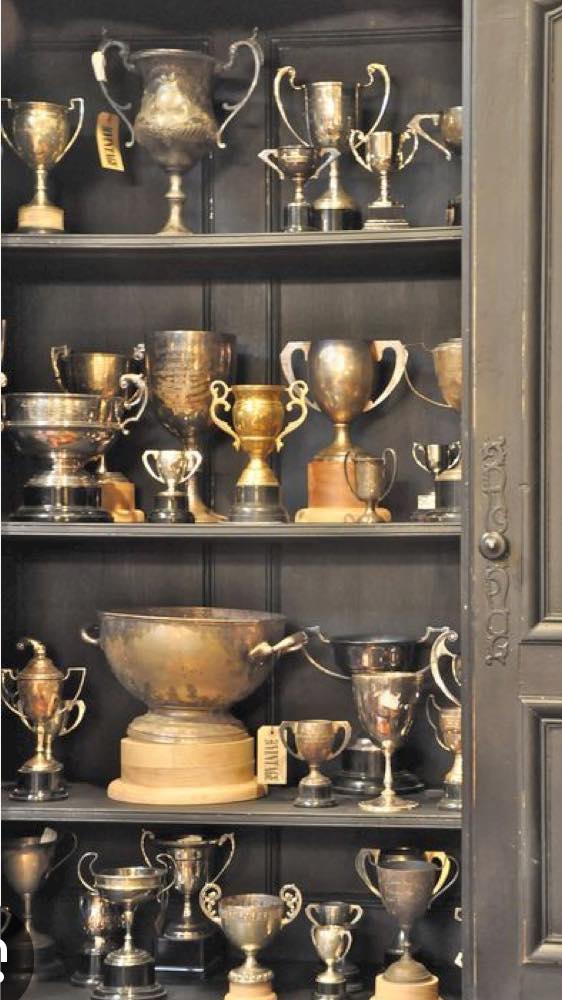
In a small town where the sun kissed the rooftops every morning lived a man named Victor Ace. Victor was a boxer, revered for his lightning-fast jabs and an iron will that had led him to victory in every competition he entered. His home was a shrine to his achievements, with trophies gleaming on every surface, from the kitchen cupboards to the living room shelves. Each trophy told a story of sweat, determination, and the thrill of victory. As the years passed, Victor’s fame grew, but so did the weight of his trophies. They began to overwhelm him, crowding his space and life. He often joked that he was winning more cups than he could drink from. Friends would laugh, but Victor felt a strange sense of burden. He had dedicated his life to the ring, but now he yearned for something more profound meaning beyond the accolades that adorned his home.
One day, as he polished a particularly large championship cup—his pride and joy—Victor received a call from his longtime coach, Leo.
“Victor, there’s one last fight coming up. It’s a big one. The championship title is on the line, and they want you to take it.”
Victor hesitated. He had promised himself that this would be his final fight, a chance to retire on top.
“I don’t know, Leo. I’ve won so much already. What if I lose?”
“Winning or losing isn’t everything,” Leo replied, his voice steady. “It’s about the journey, the passion. Just think about it.”
That night, Victor lay in bed, staring at the ceiling. The thought of one last fight gnawed at him. After a restless night, he made his decision; he would fight, but not just for the trophy. He would fight to embrace his legacy, to show that boxing was more than just medals and cups. The day of the fight arrived, and the arena buzzed with electric anticipation. As he stepped into the ring, the crowd roared, their cheers echoing in his ears like a heartbeat. The atmosphere was tense; he could feel the weight of expectations pressing down on him. His opponent, a fierce young fighter with a reputation for raw power, stood across the ring, eyes burning with determination.
The bell rang, and the fight began. Victor danced around his opponent, slipping punches that came at him like thunder. He felt alive, the adrenaline coursing through his veins. Each jab was not just a move but a message to himself that he still had it and could soar. But as the rounds wore on, fatigue began to set in. The young fighter was relentless, pushing him to his limits. Victor’s body ached, but his spirit remained unbroken. With the crowd on the edge of their seats in the final round, he summoned every ounce of strength he had left. He executed a combination of punches that left his opponent staggering, and for a moment, time stood still.
With one final blow, he sent his rival to the canvas. The referee’s count echoed in the arena, and when the bell rang, it was clear—Victor had won again. The crowd erupted into a frenzy, but as he stood there, the cheers felt distant. He raised his arms in triumph, but his gaze shifted to the faces in the audience. In that moment, he understood. It wasn’t the trophy that mattered; it was the love of the sport, the camaraderie with his fellow fighters, and the journey he had taken. The trophies would remain, but they were just symbols of a life well-lived. After the fight, Victor walked home, the championship belt glistening at his side. He entered his house, where trophies lined every shelf, a testament to his legacy. But instead of feeling overwhelmed, he felt a profound sense of peace. He would keep the belt as a reminder. Still, he would also begin to clear out the cupboards, making space for new experiences—mentoring young fighters, volunteering, and sharing his love for boxing with the next generation. He smiled as he placed the latest trophy on a shelf that night. This was his last fight but also the beginning of a new chapter. The trophies would always be there, but now, they would serve as a reminder of the journey rather than the destination. Victor Ace had fought his last fight, but the real victory was yet to come.
In a quaint village nestled between misty hills and whispering woods lived an old man named Elias. His hair was as white as the clouds above, and his eyes twinkled with the kind of wisdom that only time can bestow. Elias was known for his vast collection of ancient books, which he had gathered over the decades—tomes filled with forgotten lore, mystical spells, and the stories of the world long past. Every day, he would wander through the village, his weathered leather satchel slung over his shoulder. The satchel was as old as Elias, its surface cracked and worn, telling tales of countless travels and adventures. Inside, the pages of the books were yellowed and frayed, each a treasure trove of knowledge he often shared with curious villagers, especially the children who gathered around him, wide-eyed and eager to learn.
One fateful autumn afternoon, as leaves danced gently, Elias set out for the nearby forest, seeking solace among the ancient oaks. He often found inspiration there, a connection to the earth that rejuvenated his spirit. However, as he walked deeper into the woods, the sun dipped below the horizon, casting long shadows ominously around him. Lost in thought and the beauty of the twilight, Elias didn’t notice when he brushed against a low-hanging branch. The satchel snagged, and with a sudden tug, the strap broke. Books tumbled out, scattering like leaves caught in a gust of wind. Distracted, Elias bent to gather them, but in his haste, he misjudged the distance and stumbled, falling to the ground. When he finally rose, the satchel was gone. A wave of panic washed over him as he searched the area, his heart racing. The sun had set, and the woods were now cloaked in darkness. The only sounds were the rustle of leaves and distant calls of night creatures. Elias knew he had to return to the village, but losing his precious books—a lifetime of knowledge—was unbearable. He retraced his steps, hoping against hope that he might find the satchel. Hours passed, and just as despair began to seep into his heart, he caught a glimmer of light in the distance. Curious, he followed the light and soon stumbled upon a small clearing. To his astonishment, there sat a group of children from the village, their faces illuminated by a flickering campfire. They were gathered around the very books that had spilt from his satchel, their eyes wide with wonder as they flipped through the pages, enchanted by the stories contained within.
“Elias!” they cried, spotting him. “Look what we found! These books are amazing!”
Touched by their innocent joy, Elias approached slowly, a smile breaking across his face. “I’m glad you’ve discovered them,” he said, kneeling beside them. “Each book holds a piece of history, a spark of magic.”
The children eagerly shared their favourite tales, laughter ringing through the trees. For the first time that evening, Elias felt a warmth in his heart that overshadowed his earlier worry. They spent hours together, the fire crackling as he recounted stories that brought the words in the books to life. When the night grew deep and the stars twinkled brightly overhead, Elias realized that perhaps losing the satchel was not a loss. He had found something far more precious: a community united in the love of stories, a legacy that would carry on long after the last page was turned. As dawn broke, painting the sky with hues of orange and gold, the children returned the books to Elias, their eyes sparkling with excitement and dreams. He smiled, placing the books back into his satchel, now more a symbol of shared knowledge than a mere leather and fabric bag.
From that day on, Elias continued to venture into the woods, always with his satchel in tow. But now, he often brought the children along, their laughter echoing through the trees as they discovered new tales together. And while the satchel remained worn and battered, it was a testament to Elias’s journey and the friendships that blossomed through the power of stories—timeless treasures that would never be lost.
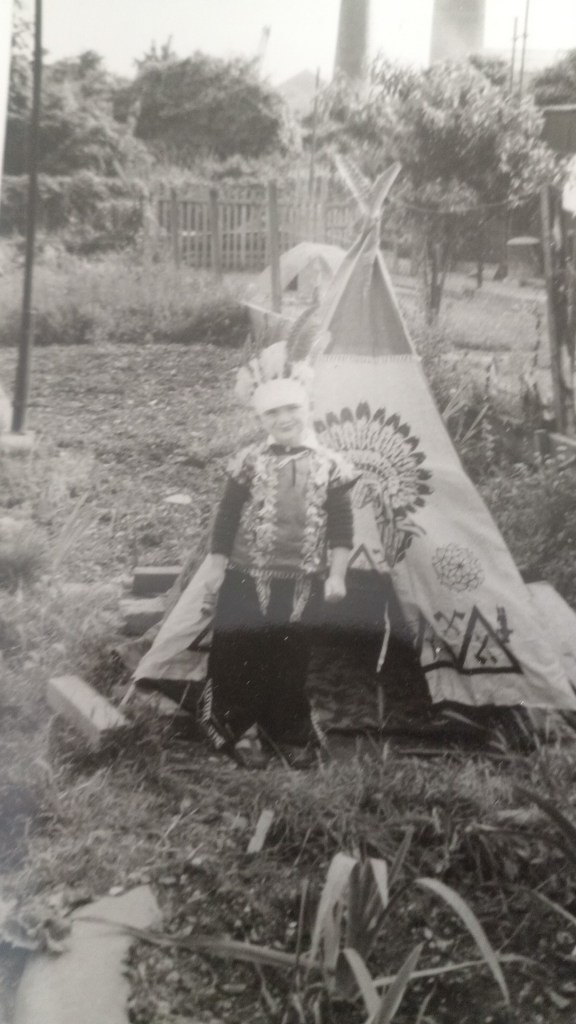
Once upon a time, a little boy named Mark lived in a small town nestled between rolling hills and endless forests. Mark was a dreamer, and every day after school, he would rush to the back garden of his home, where an old, forgotten tent he had decorated, mimicking a Teepee, stood. To Mark, this tent was not just a piece of fabric; it was a magnificent wigwam, and he was a brave red Indian living in harmony with nature. In his imagination, Mark would gather sticks and leaves, carving tools and toys, pretend to hunt and fish, and listen to the whispers of the wind as if they were the voices of his ancestors. He learned the names of plants and animals and took to heart the stories of respect and gratitude he imagined his tribe would have shared. His heart swelled with pride as he envisioned himself as a protector of the earth, a guardian of traditions long past.
One day, while exploring the forest near his home, Mark stumbled upon a litter-filled clearing—plastic bottles, wrappers, and old toys. The beauty of the place was marred, and he felt a pang of sadness. Mark remembered the stories he had created about his ancestors, who revered the land and lived in balance with it. Determined to make a change, he ran home, filled with an urgency he couldn’t quite explain. That evening, Mark gathered his friends and shared his vision.
“Let’s clean up the forest! We can be like my tribe, taking care of the land.”
His friends were intrigued; together, they formed a team armed with garbage bags and boundless energy. They spent the weekend picking up trash, returning the forest to its natural beauty. As they worked, Mark shared stories of the Red Indians and how they honoured nature and worked together for the good of all. Word spread through the town of Ystradgynlais about the children’s efforts. Inspired by Mark’s passion, adults began to join in. Families organized community clean-ups, and soon the little boy who played in a wigwam became a leader, rallying everyone to protect their environment. The town began to hold monthly events, planting trees and creating community gardens, fostering a sense of unity and stewardship.
Years passed, and Mark grew older, but his vision remained steadfast. He became an advocate for environmental education, teaching others about the importance of caring for the planet. His childhood dreams of being a red Indian morphed into a mission to honour the traditions of Indigenous peoples and to ensure their teachings about the earth were shared with future generations. The small town transformed into a beacon of sustainability, attracting visitors from afar who wanted to learn from Mark’s example. What started as a boy playing in a back garden had blossomed into a movement that inspired others. Mark had changed the town, not through grand gestures, but by reminding everyone of their simple, robust connection with nature.
And so, even as he grew, Mark never forgot his roots. He would often return to the old wigwam in his backyard, sitting quietly in reflection, knowing that the spirit of the Red Indian he had played was alive in every heart he had touched. He had learned that change begins with a single step, a small act of love for the world around us, and that everyone has the power to make a difference, no matter how small they may seem.
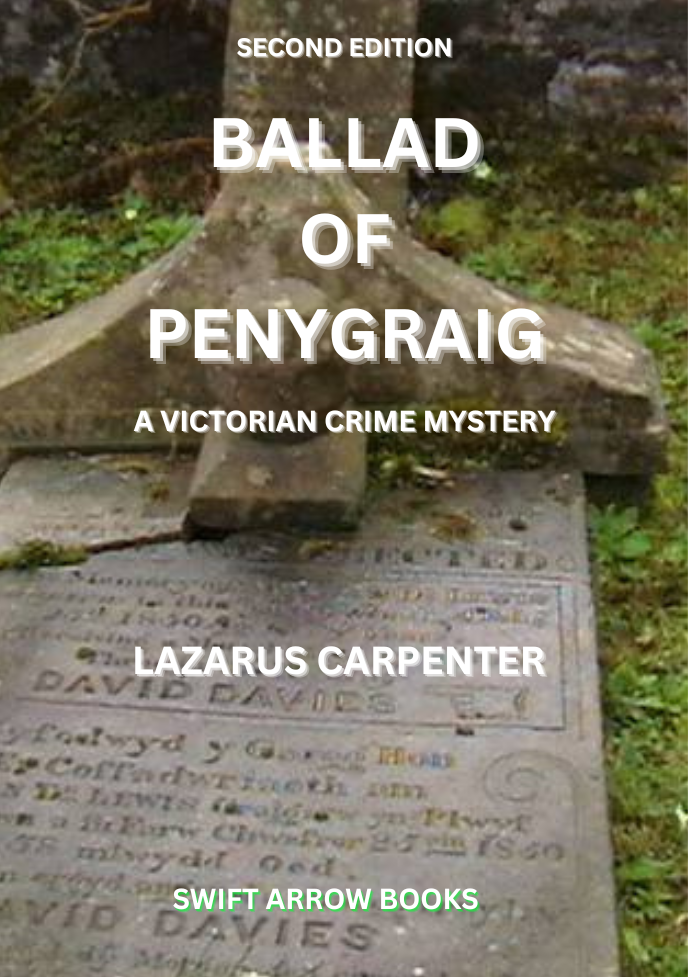
The Ballad of Penygraig is a Victorian crime mystery set in Ystalyfera, a small industrial village in the Swansea Valley of 1850. This dark tale is based on actual events, a David and Goliath story. A scandal shocking an entire community racked and divided by lies, deceit, bullying, and ultimately, murder. This novel is in the second edition and includes additions and a rewrite of parts of the story. First published in 2015.
This is the true story of a terrible tragedy in the village of Pantteg on 25 February 1850. It is the story of ordinary working folk and how everyday events and accidents between them created havoc, changing the lives of two families forever and entering the annals of valley history. The story was unknown to me until 2004, when I moved into Penygraig, ‘The House on the Rock’. Moving to Penygraig was a sanctuary where I sought to recover from sadness. I needed solitude at this time as my partner and best friend and I proved to each other that living together was an impossibility. Penygraig is five hundred yards up the mountain from our semi-detached farmhouse. Built in the early 1800s, the cottage is very isolated, and the landscape has changed much in the past one hundred and seventy odd years. Once a thriving community, it lies in ruins amidst sparse forest lost in time. Tracks once trod by horses dragging coal up the mountain to the villagers’ homes, and those bringing Welsh stone from the quarry for building the village are long gone. Also long gone are the Miner’s Arms, the Iron Works, Coal Mines and Gough Estate. The New Swan Inn is still here, though no longer used for Coroner’s Inquests, and the headstones of Morgan and Rachael still haunt the graveyard. I experienced a strange phenomenon before moving into Penygraig, accompanied by the owner, when I was viewing the cottage for the first time. We were sitting in the lounge around early afternoon when twice I started to roll a cigarette in a way that was foreign to me. I remember remarking to Andy, ‘that was a weird feeling’ as it happened when suddenly I saw a bent figure standing at the stable-doorway in silhouette looking at me, then seemingly walking on. I told Andy what I had just seen, he was not in the slightest bit surprised; he seemed to take it on the chin as an everyday occurrence – a ghost in the middle of the day!
I asked Andy if he knew who the ghost was, but he didn’t. However, he acknowledged that there had been some strange goings on in the house. He witnessed some ghostly goings on himself, and one or two tenants in the past ended up running down the hill in the middle of the night, but he never did find out why. So we left it there, and in I moved. Almost as soon as I moved in, strange phenomena seemed to be an integral part of the fabric of Penygraig. Admittedly, the isolation of the cottage, and its general bleakness, especially in the winter, could feed the most furtive creative of imaginations. Still, some of the things that were to be experienced by me, and others, could not be explained away in such dull terms. I often heard voices whispering in the corners of the cottage, and on more than one occasion heard the name John Jenkins. Only later did I understand that it was two names, and indeed later, it was revealed as the brothers of David Davies, John, and Jenkins. In my first winter at Penygraig, Christmas was followed by intrigue, and on the 25th of February, at five o’clock in the evening, a loud knock came to my back door. Still, my collie dog did not respond in her usual way of manic screeching or barking, and when I answered the door, nobody was there. Fortunately, two or three friends in the cottage at the time witnessed the event, so I could not be accused of madness. On another occasion, a photograph of the garden revealed a brick building standing in front of a giant oak tree. There is no building there now, or was there when the picture was taken, but it is believed there was one thirty years ago, back in the seventies. Something or someone lived in the attic, and it was not mice or any other creature, as my cat is a skilled hunter, but noises were often heard as if someone was moving about. Cushions in the living room were frequently moved about, and as daft as it sounds, somebody was tidying up and fluffing cushions, but who? A malevolent presence seemed to haunt the pathway through the sparse forest from the gate up to the top of the hill, opposite the main entrance, Pantteg Chapel’s graveyard. With the help of friends, I decided to find out who had lived at Penygraig in the past, and through the census, we obtained a list of names. Through this work, we accidentally discovered a grave on the boundary wall between the graveyard, and the house next door to where I had recently moved from. It said.
‘Here lies the body of Morgan Lewis whose life was taken by a stone thrown by the handof David Davies.’
In 1850 David Davies lived with his brothers John and Jenkins in Penygraig. To confuse the story even further, research through the parish records, and the census revealed that Morgan Lewis, the man killed by David Davies, along with his wife Rachael, and five children, lived in a tithe cottage fronting the garden where I lived previously, five hundred yards as the crow flies from Penygraig. All of this was such a coincidence, but why I did not know. The ‘Ballad of Penygraig’ was born or reborn on this day! Lying near Morgan Lewis’s grave, where Rachael is buried, I found to my utmost surprise the headstone of David Davies. It was sheared in half long ways. I have only been able to find this half, I picked it up from where it had been discarded, and placed it against the wall in front of Morgan and Rachael. An elder of the chapel was kind enough to tell me of the ‘stone in the hand’. He is a very elderly gentleman but remembers when he was a boy they played in the graveyard, and one of the games was called ‘blood tag’, and involved passing on fictitious blood from the stone to one’s fleeing friends running for fear of being clouted by a folk legend, Morgan Lewis. The hand has disappeared over the years, and somewhere it may be lying in a garden shed or a loft at the bottom of an old suitcase? To this day I wonder what happened to the sculptured hand with the offending murderous stone cemented to it, and whoever has that hand I wonder if they know its history? I wonder if they know about the curse long gone and forgotten. Had I moved into my own ‘Most Haunted’, was I going psychotic or was something much bigger at hand, I did not know? My research began in earnest and more and more coincidences began to emerge.
In 1850 the Swansea Guardian published a story entitled ‘Affray in Ystalyfera’. Suddenly, I was confronted with facts about the case and amazed by the coincidences between what I intuited through the apparitions in the house and what was now in black and white in front of me, which was recorded in the annals of local history. My first project included writing four songs retelling the story: The hawk cried on the moor, Poacher on the rock, The Ballad of Penygraig and Rachael’s Lament. But it was the song Ballad of Penygraig, telling the story from the reasons for the fight to its bitter conclusions, that came first. It took me a few drafts before I was happy with my lyrical content and flow. I had a tune, but there was no last line, and I could not find one I was content to use. It was very late at night, advancing through the early hours, when I played the tune repeatedly. One of the advantages of living at Penygraig was that I could make as much noise as I liked night or day without the fear of upsetting my neighbors who lived well out of earshot. I recorded the tune and struggled on through my fancy little loop pedal. At around three in the morning, almost reaching the end of the song, approaching the need for a final line, thus far not forthcoming, I felt a shiver becoming aware of the essence of Morgan Lewis standing in front of me. I carried on playing sensing Dai Davies on my left, and I still played. There was no feeling of fear or trepidation, in fact, it was like having an audience. However, approaching the song’s end, I intuited the line ‘now they are both angels in flight’. I sang the words and there was a bluish flash in the room, the essences of Morgan and Dai were gone and the song was finished. They have never been seen since, and I think the song’s final line illustrates where they went. Since that day, I have never experienced further disturbances in the house.
So, I thank Morgan and Dai most sincerely. After this, I will never be afraid of anything again and never feel alone in this life or the next.I wonder who exorcised whom?
POSTSCRIPT
Sadly, on 22 December 2012 (the day when, according to Inca predictions, the world would end) at 1am a massive landslip crashed from the mountain and Penygraig disappeared back to the earth from whence it came.
Verse written by Lazarus Carpenter and performed by Sean Edwards inspired by the novel, ‘Ballad of Penygraig’ (2025)
Once upon a time in a cosy little town lived a terrier named Max. With his fluffy coat and soulful eyes, he was the very definition of a devoted companion. Max spent his days lounging in the sun, chasing squirrels, and, most importantly, keeping a watchful eye on his owner, Bob. Bob was an avid reader, often lost in the pages of a new novel. Today, he had chosen Truman Capote’s “In Cold Blood,” a gripping true crime story that had captured the attention of many. Max plopped beside him as he settled into his favorite armchair, his head resting on Bob’s knee. He loved these quiet afternoons, but today felt different. As Bob turned each page, his brows furrowed deeper, and his fingers tapped rhythmically against the book. Max tilted his head, wondering what thoughts were swirling in Bob’s mind. Did he feel the tension building in the story? Was he imagining the chilling moments Capote described? Or was he simply hungry for a snack? Max’s tail wagged, hopeful that Bob would notice and share a treat.
Bob paused, his eyes scanning the text as if searching for answers. Max could sense the narrative’s weight and the crime’s gravity, and his heart ached for his owner. He wanted to understand what Bob was thinking. Did he feel fear or sadness? Was he intrigued by the complexity of human nature? Or was he reflecting on the fragility of life, as the book so poignantly illustrated? Max shifted, nudging Bob’s arm gently with his nose. Bob looked down, his expression softening as he scratched behind Max’s ears.
“What do you think, puppy?” he murmured, a hint of a smile breaking through the seriousness of the story. “Can you believe people can do such things?”
Max’s tail thumped against the floor, a response to the warmth in Bob’s voice. He didn’t fully grasp the dark themes of the book, but he understood emotions. He sensed Bob’s curiosity mingled with discomfort, a cocktail of feelings that left an imprint on the air around them. Bob returned to his reading, but his mind wandered. He thought about the complexities of morality and the choices people make. He recalled the times he had walked through the town, greeted by friendly faces, and contrasted that with the chilling accounts in his book. Could anyone in their quiet little town harbor such darkness?
Feeling Bob’s contemplative mood, Max nestled closer, offering silent comfort. In that moment, he became the embodiment of loyalty, a reminder that not all was dark in the world. Bob glanced down at his furry friend, and a wave of reassurance washed over him. There was love and companionship, and that was something to cherish. As the sun began to set, casting a golden hue through the window, Bob closed the book, his mind still racing with thoughts. He reached down and pulled Max into a gentle embrace.
“You know, puppy,” he said softly, “sometimes I think about how lucky we are. We get to share this life together, away from all that chaos.”
Max responded with a happy bark, his tail wagging furiously. It was his way of saying that no matter how dark the world could be, they had each other, and that was more than enough. In the end, as Bob set the book aside and prepared dinner, Max pranced around the kitchen, his spirit unbroken and his loyalty unwavering. Together, they moved through their evening routine, a simple rhythm filled with love, laughter, and the promise of another day. And as they settled down for the night, Max knew that no matter what stories Bob read, their bond would always shine brighter than any shadow.



 Lazarus Carpenter - Author