Author: lazaruscarpenterauthor
Lazarus Carpenter
I have lived in Wales for over twenty five years. Born in North Yorkshire, I am now an author, actor, musician and song writer, previously being a therapist, trainer and researcher, specialising in mental health. He was educated in Middlesbrough, Sheffield and Cambridge. With a fascination for Welsh History, I create worlds within worlds; magical, haunting, spirituality permeating sound moral codes of life. I live quietly with Debbie Eve (also my illustrator and our dog, Noodle in a small cottage surrounded by the beauty of the Brecon Beacons in the Valleys of South Wales.
Parable of Two Shepherds
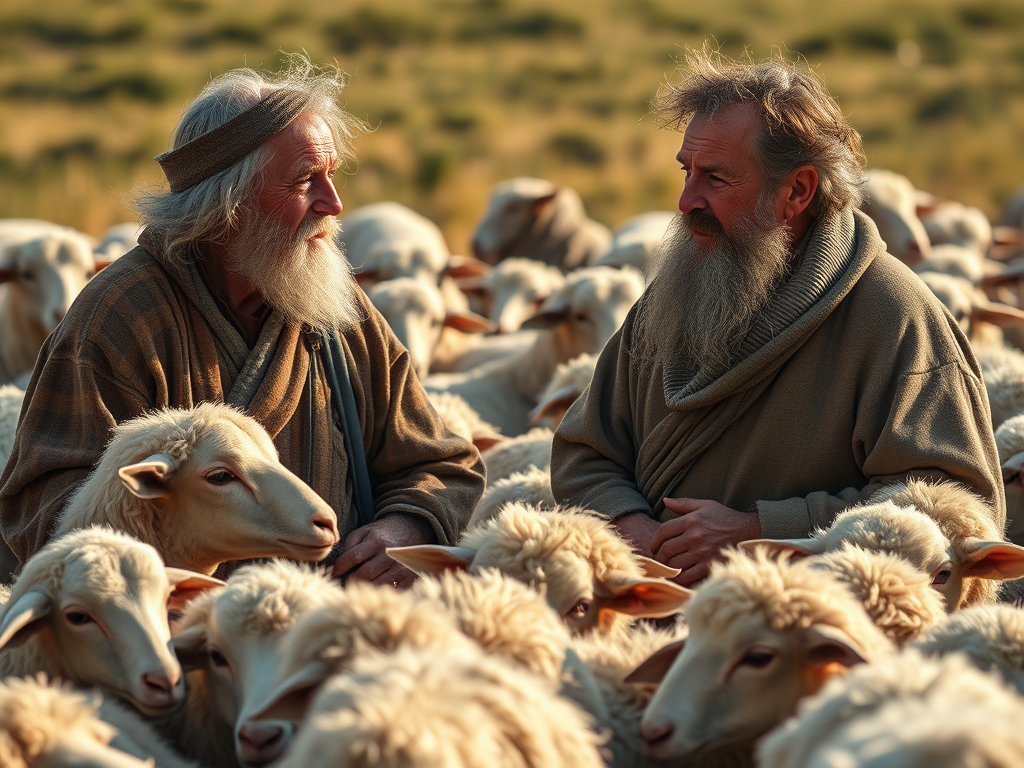
Once upon a time, there were two shepherds named Tomas and Eli. Both tended flocks of sheep and loved their animals dearly. The valley was beautiful, with plenty of grass and fresh water, but it was also small, and the grazing grounds were shared. One summer, as the grass grew sparse, Tomas and Eli found themselves in a disagreement. Tomas believed that the northern part of the valley belonged to him because he had been grazing his sheep there longer. On the other hand, Eli argued that the southern fields were his since he had started grazing his sheep there more recently. Their disagreement quickly grew into a heated argument. Tomas claimed,
“I have been here for many years, and my sheep have always grazed in this part of the valley. It is my right to continue doing so.”
Eli, in his own defence, replied,
“But I have also been here these past few seasons, and I need the grazing grounds just as much as you do. We both need to share fairly.”
The two shepherds argued day after day, each convinced they were right. Confused by the noise, their sheep began to stray and wander into the neighbouring pastures, causing more trouble. Finally, a wise old man who lived nearby heard about the dispute. He visited Tomas and Eli and asked to speak with them.
“Let me tell you a story,” he said. “There was once a river that flowed through a valley. Two farmers built their fields on either side of the river. Both wanted to use the water for their crops, but there was only enough for one to use at a time. They argued endlessly, each claiming the water was theirs.”
The old man paused and looked at the shepherds.
“One day, a wise elder suggested they build a small dam to direct the water to both fields at different times. They agreed to share the water equally, respecting each other’s needs. From then on, they worked together instead of fighting.”
Tomas and Eli listened carefully. They realised that their argument was causing more harm than good and that cooperation was better than conflict. They divided the grazing grounds equally, rotating their sheep between the two parts of the valley. From that day on, they worked together peacefully, and their sheep thrived in the harmony of shared land. So, the valley remained peaceful, and the two shepherds learned that sharing and understanding could solve even the thorniest disputes.
Parable of Three Brothers

Once upon a time, in a peaceful village, lived three brothers: Eli, Malrik, and Joran. They were born of the same parents but grew up with very different hearts. Eli, the eldest, was kind and compassionate and always sought to help others. He believed in kindness and fairness, and his gentle nature made him beloved by many. Malrik, the middle brother, was cunning and ambitious, but his heart was often clouded with greed and anger. He loved power and was not afraid to use deceit to get what he wanted. Joran, the youngest, was indifferent to everything. He cared little for rules, others’ feelings, or ambitions. He wandered through life without much thought or concern, often detached from the conflicts around him. As they grew older, their differences caused strife. Eli would try to mediate disputes, but Malrik’s schemes frequently led to misunderstandings. Indifferent to these disputes, Joran simply watched from the sidelines, often alienating himself further.
One day, their village faced a crisis—an ancient, enchanted forest nearby began to wither, threatening their homes and livelihoods. The village elders called upon the three brothers to find a solution. Eli believed they should seek the wisdom of the forest spirits and restore the balance with kindness. Malrik saw an opportunity to exploit the situation for personal gain, perhaps to claim the forest’s treasures. Joran shrugged, uninterested, hoping it would pass without his involvement.
Despite their differences, the brothers set out together, each driven by their own motivations. Eli’s journey was filled with compassion. He helped injured animals, listened to the whispers of the trees, and sought harmony. He believed that love and understanding could heal the forest. Malrik’s path was marked by cunning—tricking creatures, exploiting resources, and seeking shortcuts to quick success. Joran, meanwhile, wandered aimlessly, often indifferent to the dangers and lessons around him, only following when it suited him.
As they travelled deeper into the forest, they faced challenges that tested their hearts. Eli encountered a wounded phoenix and nursed it back to health, learning that restoring nature required patience and love. Malrik was tempted by a treasure hidden beneath a cursed tree, but realised that greed could bring ruin. Lost in the woods, Joran finally saw the beauty of the world around him—the songs of birds, the glow of fireflies—and felt a flicker of curiosity.
One night, they camped beneath a shimmering starry sky, and their differences came to the surface in a heated argument. Eli urged kindness, Malrik pushed for cunning, and Joran dismissed their concerns altogether. But in that moment, a wise old owl appeared and spoke:
“Only when you learn to listen to each other can you find the true path.”
Realising the importance of unity, the brothers decided to work together. Eli suggested they combine their strengths: kindness, cunning, and curiosity. They returned to the forest, where Eli’s compassion healed the land, Malrik’s cleverness uncovered the source of the curse, and Joran’s indifference transformed into genuine interest as he saw the forest’s beauty. Through their combined efforts, the enchanted forest was restored, its magic renewed. The village prospered once more, and the brothers discovered something profound: Love and understanding are the most incredible powers, capable of transforming discord into harmony.
The Stairs of the Mind
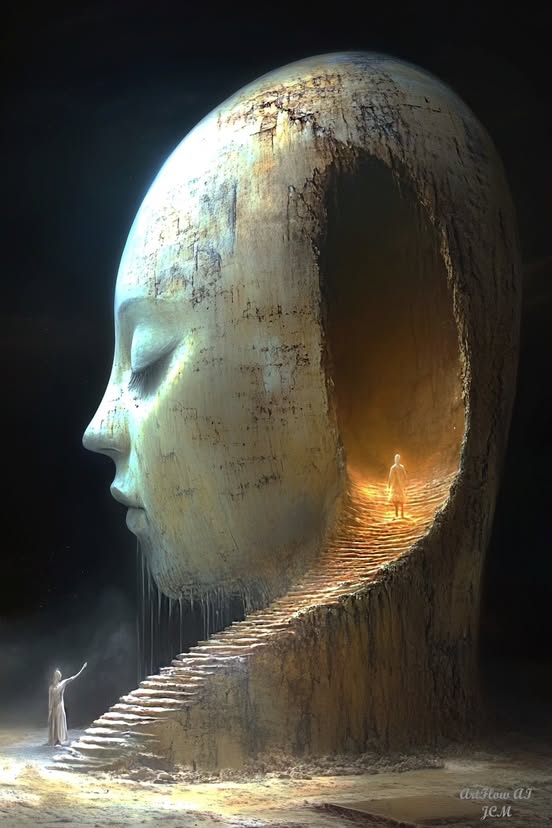
A curious student named Liam lived in a quiet town. From a young age, Liam was fascinated by the mysteries of life—why things were the way they were, and how he could understand the world more deeply. But as he grew older, he realised that understanding wasn’t always straightforward; it was a journey, a quest that required patience and courage. One day, as Liam sat beneath an ancient tree in the town square, he closed his eyes and imagined a staircase stretching endlessly upward, each step shimmering with possibilities. Intrigued, he decided to embark on a journey—an ascent of his mind—to reach enlightenment.
Liam’s first step was fueled by curiosity. He looked around the world with fresh eyes, asking questions about everything—about the stars, trees, and people he met. Each question was a rung on the staircase, guiding him higher. He learned that he must first acknowledge how much he didn’t know to truly understand.
Climbing higher, Liam gathered knowledge from books, teachers, and experience. He discovered truths about science, history, and philosophy. But he also realised that knowledge alone was not enough; it was like holding a map without knowing how to read it. Wisdom was the next step.
As he ascended, Liam paused to reflect. He pondered the meaning behind what he learned, contemplating his thoughts and feelings. Reflection helped him see his biases and assumptions, clearing the way for deeper understanding.
Beyond intellect, Liam learned the importance of compassion. He saw how kindness and empathy connected people. As he practised compassion, the staircase became wider, and the view from each new step became clearer and more vibrant.
Liam discovered mindfulness—being present in each moment. This practice quieted the noise of doubt and distraction, allowing him to see things as they were. The stairs now shimmered with clarity, each step a breath of peace.
Higher still, Liam faced challenges—doubts, fears, and illusions. But with perseverance, humility, and a heart open to discovery, he continued upward. And at last, he reached the summit—the place of proper understanding, where the mind is clear, and the soul feels at peace. From this height, Liam saw the interconnectedness of all things. He understood that enlightenment was not a destination but a continual journey, a stairway he would climb anew daily. Descending back into the world, Liam carried the light of his discovery, eager to share this newfound wisdom and continue ascending the stairs of his mind.
The Sun and the Moon’s Gentle Dispute

Once upon a time, in the vastness of the cosmos, the Sun and the Moon often watched over Mother Earth. They shared a bond forged by their love for her, each shining in their own way, bringing life and calm to her surface. One day, as the Sun blazed fiercely across the sky, he grew worried.
“Mother Earth is burning under my rays,” he muttered. “Her deserts are drying up, her forests withering. I must shine brighter to warm her, but I fear I’m causing her pain.”
The Moon, soft and gentle, listened quietly. When the Sun finished, she softly replied,
“Dear Sun, your warmth is vital, but too much can scorch her delicate lands. I watch over her at night, providing gentle light and cooling shadows, giving her time to rest and heal.”
The Sun frowned, flickering with concern.
“But if I don’t shine fiercely, she might freeze in the cold darkness of space. My rays sustain her life, but I worry I might be harming her through excess.”
The Moon nodded, understanding his fears.
“And I, too, worry. I see her suffering when you burn too brightly, and I see her thriving when I cast my quiet glow. Perhaps we need to find balance, for her sake.”
Suddenly, a gentle breeze whispered through the cosmos, and the stars listened intently. The Sun and the Moon looked at each other, realising their shared concern. They understood that together, their light and warmth could work in harmony, each taking turns to nurture Mother Earth, ensuring she flourished without harm. From that day forward, the Sun and the Moon agreed to share their care. The Sun would shine fiercely by day, warming and energising her, while the Moon would cast calming shadows by night, helping her rest and recover. Their argument turned into a beautiful dance—balancing light and dark, warmth and coolness—for the love of Mother Earth.
And so, under their watchful eyes, Mother Earth thrived and still is, cradled in the gentle embrace of the Sun and the Moon. If only mankind could achieve such a balance?
 Lazarus Carpenter - Author