
Once upon a time, in a small village nestled between rolling hills and lush green meadows, lived a wizard named Doctor John. Unlike ordinary wizards who were content with casting spells and brewing potions, Doctor John possessed an insatiable curiosity about the mysteries of time. From a young age, he had been fascinated by the concept of time and its ever-elusive nature. He often found himself pondering questions such as,
“Where does time go?” and “Can we ever catch up with time?”
These thoughts consumed his mind day and night, leaving him with an unquenchable desire to chase after time itself. One sunny morning, while strolling through the village, Doctor John stumbled upon an ancient book hidden in the depths of a dusty old bookstore.
The book was bound in weathered leather and emanated an aura of magic. As he opened its pages, a burst of shimmering light enveloped him, transporting him to a realm where time was tangible. In this enchanted world, time manifested as a radiant, glowing entity, dancing and swirling in the air. His eyes widened with awe as he watched the magical spectacle unfold before him. Determined to chase time and uncover its secrets, he embarked on an exhilarating quest. Doctor John soon discovered that chasing time was no easy feat. Time darted and weaved through the forest, slipping through his fingers like sand. Undeterred, he summoned his magical abilities and conjured a magnificent timepiece to aid him in his pursuit.
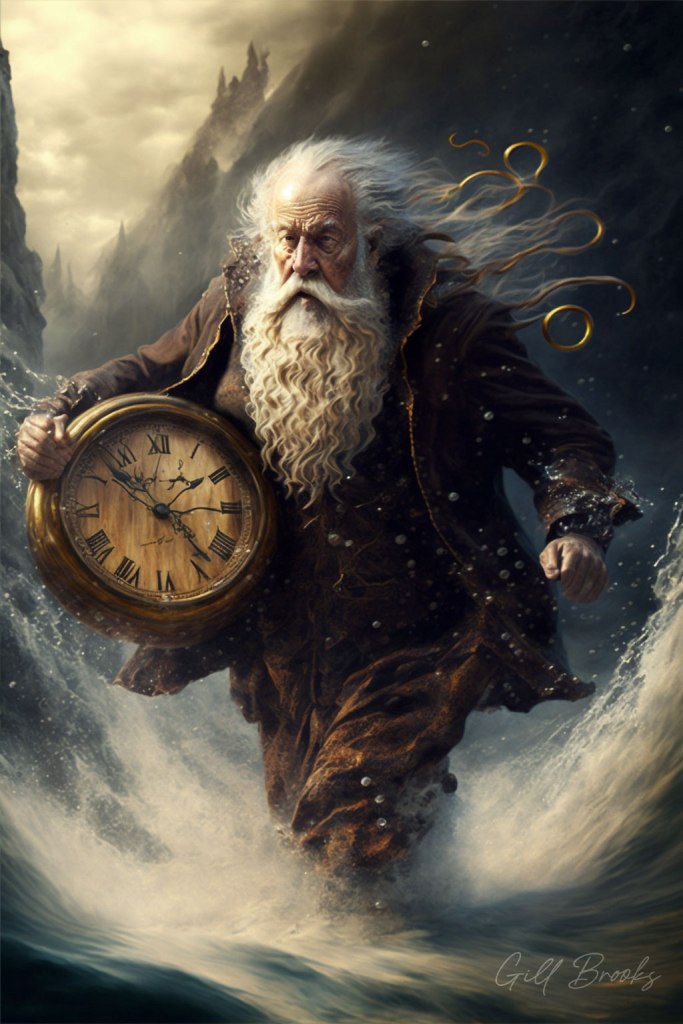
With each swoop and swirl, he tried to close the gap between himself and time. As he ventured deeper into the mystical forest, he encountered a mischievous fairy named Luna. She had heard of his quest and decided to join him on his adventure. Together, they traversed treacherous terrains, battled formidable creatures, and solved riddles left by ancient guardians. His determination and Luna’s cleverness formed an unstoppable duo. During their journey, Doctor John and Luna encountered various villagers whose lives were directly influenced by time. They met an elderly woman who yearned for more time to spend with her loved ones, a young artist who wished to capture the essence of time in her paintings, and a group of children who dreamed of slowing down time to savour every moment of their youth. Moved by these encounters, he realized that the beauty of time lay not in capturing it, but in cherishing the moments it offered. He understood that time was not something to be chased but something to be embraced.

With this newfound wisdom, Doctor John knew his quest had transformed into a mission to help others appreciate the value of time. Returning to the village, he used his magical powers to create a magnificent clock tower in the heart of the community. The clock tower became a symbol of time’s preciousness, reminding everyone to make the most of each passing second. Now an old man, he shared his experiences and the lessons learned, inspiring the villagers to live each day to the fullest. And so, the tale of the wizard who chased time turned into a story of wisdom and enlightenment. Doctor John’s quest may not have led him to physically catch time, but it led him to a deeper understanding of its significance. From that day forward, he dedicated himself to helping others cherish every moment, teaching them that the true magic of time lies within their hearts.
Book cover and images by http://www.gillsplace.com

 Lazarus Carpenter - Author