The Wizard Who Chased Time

Once upon a time, in a small village nestled between rolling hills and lush green meadows, lived a wizard named Doctor John. Unlike ordinary wizards who were content with casting spells and brewing potions, Doctor John possessed an insatiable curiosity about the mysteries of time. From a young age, he had been fascinated by the concept of time and its ever-elusive nature. He often found himself pondering questions such as,

“Where does time go?” and “Can we ever catch up with time?”

These thoughts consumed his mind day and night, leaving him with an unquenchable desire to chase after time itself. One sunny morning, while strolling through the village, Doctor John stumbled upon an ancient book hidden in the depths of a dusty old bookstore.

The book was bound in weathered leather and emanated an aura of magic. As he opened its pages, a burst of shimmering light enveloped him, transporting him to a realm where time was tangible. In this enchanted world, time manifested as a radiant, glowing entity, dancing and swirling in the air. His eyes widened with awe as he watched the magical spectacle unfold before him. Determined to chase time and uncover its secrets, he embarked on an exhilarating quest. Doctor John soon discovered that chasing time was no easy feat. Time darted and weaved through the forest, slipping through his fingers like sand. Undeterred, he summoned his magical abilities and conjured a magnificent timepiece to aid him in his pursuit.
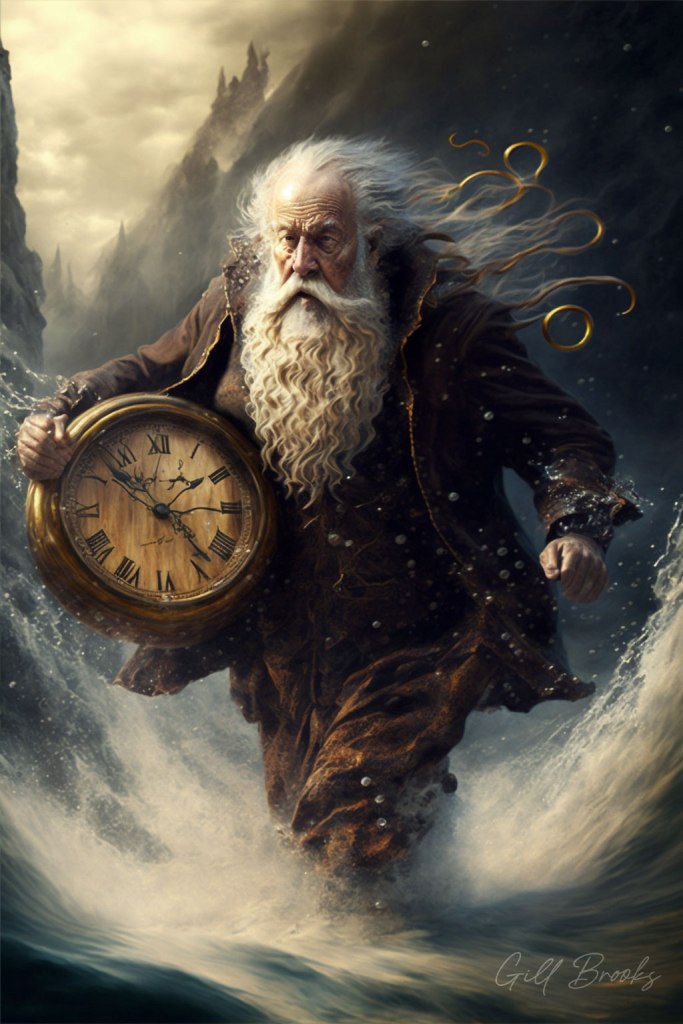
With each swoop and swirl, he tried to close the gap between himself and time. As he ventured deeper into the mystical forest, he encountered a mischievous fairy named Luna. She had heard of his quest and decided to join him on his adventure. Together, they traversed treacherous terrains, battled formidable creatures, and solved riddles left by ancient guardians. His determination and Luna’s cleverness formed an unstoppable duo. During their journey, Doctor John and Luna encountered various villagers whose lives were directly influenced by time. They met an elderly woman who yearned for more time to spend with her loved ones, a young artist who wished to capture the essence of time in her paintings, and a group of children who dreamed of slowing down time to savour every moment of their youth. Moved by these encounters, he realized that the beauty of time lay not in capturing it, but in cherishing the moments it offered. He understood that time was not something to be chased but something to be embraced.

With this newfound wisdom, Doctor John knew his quest had transformed into a mission to help others appreciate the value of time. Returning to the village, he used his magical powers to create a magnificent clock tower in the heart of the community. The clock tower became a symbol of time’s preciousness, reminding everyone to make the most of each passing second. Now an old man, he shared his experiences and the lessons learned, inspiring the villagers to live each day to the fullest. And so, the tale of the wizard who chased time turned into a story of wisdom and enlightenment. Doctor John’s quest may not have led him to physically catch time, but it led him to a deeper understanding of its significance. From that day forward, he dedicated himself to helping others cherish every moment, teaching them that the true magic of time lies within their hearts.

Book cover and images by http://www.gillsplace.com
Two Little Monkeys

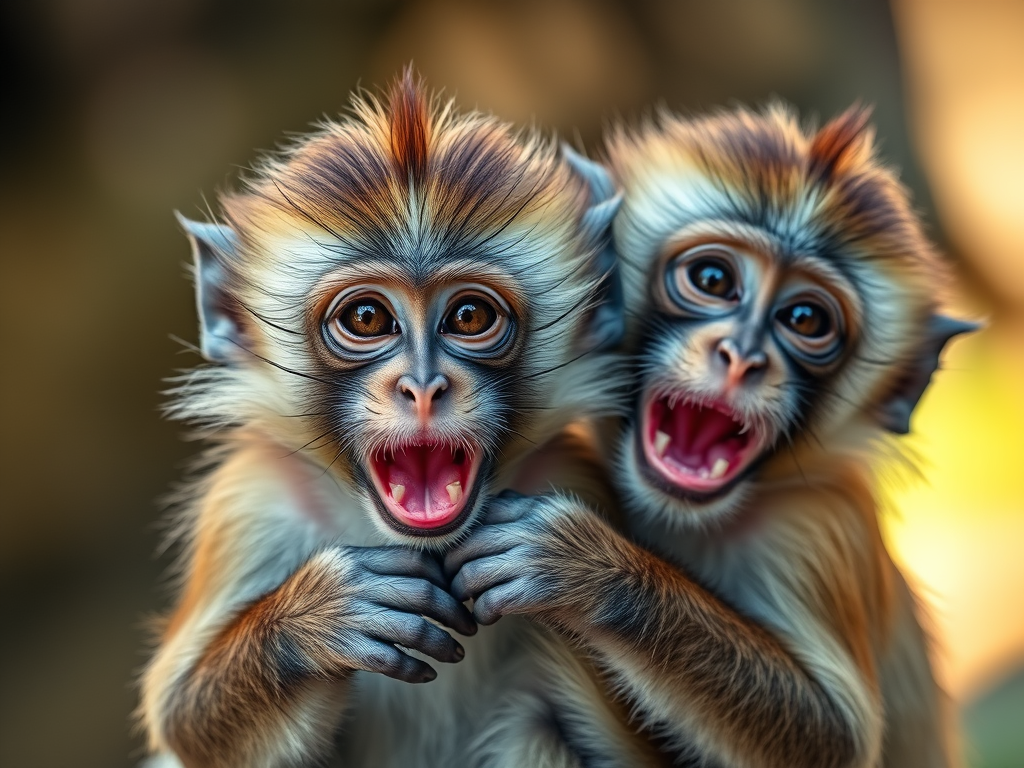
Once upon a time in a bustling city zoo, lived two identical twin monkeys named Max and Milo. They were the stars of their enclosure with their bright eyes, playful nature, and strikingly similar appearances. However, despite their playful antics for visitors, the twins felt a deep sense of unhappiness. Their days were filled with the same routines, the same visitors, and the same banana treats. They longed for adventure beyond the confines of their cage. One day, as they swung from branch to branch, Max had a brilliant idea.

“What if we use our identical looks to confuse the keepers? We could escape and explore the world beyond this zoo!”

Milo’s eyes sparkled with excitement.

“Yes! We can switch places! They won’t know who’s who!”

That night, as the zoo quieted down and the moon cast a silver glow, the twins put their plan into action. They practised their mimicry, copying each other’s movements and sounds. When morning came, the keepers arrived, unaware of the mischief about to unfold. As the keepers entered their enclosure, Max climbed high into the branches while Milo hung back, pretending to groom himself. When the keeper called out for them, Max swung down, but at the last moment, he let out a loud screech, startling the keeper. In the confusion, Milo took the chance to leap into the opposite corner, making it look like he was still in the same spot. The keepers were baffled.

“Wait, which one is which?” one of them exclaimed, scratching his head.

The twins exchanged mischievous glances, stifling their laughter. They knew they only had a short window before the keepers figured it out. As the day went on, the twins continued their clever ruse. They switched places during feeding time, and when the keepers tried to separate them, they would jump and play, making it impossible to tell who was who. The twins revelled in their newfound freedom to roam their enclosure without supervision, but they knew it was just a matter of time before the keepers caught on. That evening, when the zoo was closed to the public, Max and Milo knew it was time for the final phase of their escape. They waited until the keepers were distracted and then darted out of their enclosure, using the shadows to hide. They climbed over fences and squeezed through gaps, their hearts racing with excitement. Finally, they found themselves outside the zoo, standing in the cool night air. The world beyond was vast and filled with the sounds of nature. Max looked at Milo, his eyes wide with wonder.

“We did it! We’re free!”

With newfound courage, they ventured into the nearby park, trees towering above them like old friends. They swung from branches, chased fireflies, and feasted on wild fruit, their laughter echoing in the night. For the first time, they felt truly alive. As dawn broke, the twins knew they could not stay in the park forever. They missed the comfort of each other and the familiar routines, even if they were unhappy. So, they decided to return to the zoo, but not as prisoners. They would find ways to bring joy to their lives, using their cleverness to entertain not just visitors but also themselves. When they returned, the keepers were in disbelief, having searched high and low for the mischievous twins. Max and Milo resumed their antics, but now, with a sparkle in their eyes, knowing the world outside was filled with possibilities. They learned to embrace the zoo life with newfound joy, always planning little adventures and reminding each other that sometimes, happiness was a matter of perspective. And so, the twin monkeys lived on, not just as entertainers but as adventurers in their own right, forever bonded by their shared escapade and the spirit of freedom.

Image by AI

J.D. Salinger

Jerome David Salinger, known as J.D. Salinger, was an American author best known for his novel The Catcher in the Rye. He was born in New York City on January 1, 1919, and passed away on January 27, 2010, in Cornish, New Hampshire. Salinger grew up in Manhattan and attended various prep schools before enrolling at New York University. He also studied at Ursinus College and Columbia University. Salinger served in the U.S. Army during World War II and participated in the D-Day invasion of Normandy. He later suffered from post-traumatic stress disorder as a result of his wartime experiences.

Salinger’s most famous work, “The Catcher in the Rye,” was published in 1951 and became an instant classic. The novel explores themes of teenage angst, alienation, and the search for authenticity. After the success of “The Catcher in the Rye,” Salinger became increasingly reclusive and avoided the public eye. He stopped giving interviews, rarely appeared in public, and became known for his privacy. His writing style is characterized by its spare, precise prose and its focus on the inner lives of his characters. He often explored themes of innocence, disillusionment, and the struggle to find meaning in a complex world.

In addition to “The Catcher in the Rye,” Salinger published several collections of short stories, including “Nine Stories” and “Franny and Zooey.” He also continued to write but chose not to publish his later works. J.D. Salinger’s works have impacted American literature and continue to be widely read and studied. Despite his reclusiveness, his influence on other writers and his place in literary history remain significant. Overall, J.D. Salinger was a talented and influential writer whose work continues to resonate with readers around the world. 

Image by AI

Charles Dickens

The renowned English novelist Charles Dickens was born on February 7, 1812, in Portsmouth, England. He was one of the most popular and influential writers of the 19th century, known for his vivid characters and depiction of social issues in Victorian England. Dickens’ childhood was marked by financial struggles as his family faced poverty and debt. At the age of 12, he was forced to work in a factory to support his family after his father was imprisoned for debt. These early experiences profoundly influenced his later writings, as themes of poverty, social injustice, and the plight of the working class are prevalent in many of his novels.

Dickens began his writing career as a journalist and soon found success writing serialized novels. Some of his most famous works include “Oliver Twist,” “David Copperfield,” “A Christmas Carol,” “Great Expectations,” and “A Tale of Two Cities.” His works often featured colourful characters, intricate plots, and a keen eye for social commentary. Dickens was a prolific writer and a tireless social reformer. He advocated for better conditions for the poor and marginalized in society. His writing shed light on the injustices of his time and called for social change.

Charles Dickens passed away on June 9, 1870, leaving behind a rich literary legacy that continues to be celebrated and studied. His works remain popular and have been adapted into numerous films, plays, and other forms of media, ensuring that his influence endures in the world of literature. 

Image by AI