Once upon a time, in a world torn apart by hatred and injustice, lived a man named Enoch. He was a scholar and a healer, not just of bodies but of souls. Witnessing the endless cycle of violence and division, Enoch felt a deep ache in his heart, an urgent desire to heal the wounds of society. He dedicated years to studying human nature, history, and the roots of conflict. He observed that hatred often stemmed from fear, misunderstanding, and a lack of empathy for others. Injustice thrived when people refused to listen or empathise.
One day, Enoch had a revelation. He believed that if he could create a technique to foster genuine understanding and compassion, he could eradicate hatred and injustice at their core. He called his method “The Mirror of the Soul.”
The technique involved a profound but straightforward process:
Reflection: People are guided to see their own feelings and biases clearly, like looking into a mirror. They acknowledge their fears, prejudices, and pain without judgment.
Empathy Building: They then imagine stepping into the life of the person they despise or fear. This isn’t just sympathy but a deep empathetic immersion, understanding the struggles, hopes, and fears of the other.
Dialogue and Sharing: The process encourages open dialogue, where people share their stories and listen with genuine intent. Through storytelling, barriers melt away, replaced by shared humanity.
Visualising Unity: Finally, students visualise a future where they and others work together, embracing differences and building a community rooted in respect and kindness.
Enoch travelled across nations, teaching this technique in war-torn villages, segregated cities, and oppressed communities. Slowly, stories emerged of enemies who became friends, divisions turned into collaborations, and hatred gave way to understanding. One remarkable example was in a city divided by centuries of conflict. After implementing Enoch’s method, the community held a festival celebrating their diversity. Old grievances were replaced with new bonds of friendship, and a sense of justice and peace began to blossom.
Years later, Enoch’s technique became a global movement. Schools, governments, and organisations adopted it to heal divisions, promote justice, and cultivate compassion. His vision proved true: that the most powerful weapon against hatred and injustice is not force or punishment, but understanding and love. His simple yet profound technique became a beacon of hope, illuminating the path toward a more compassionate world. And so, in the end, Enoch’s most incredible creation was not just a method but the realisation that every human heart holds the seed of kindness, waiting to be awakened.
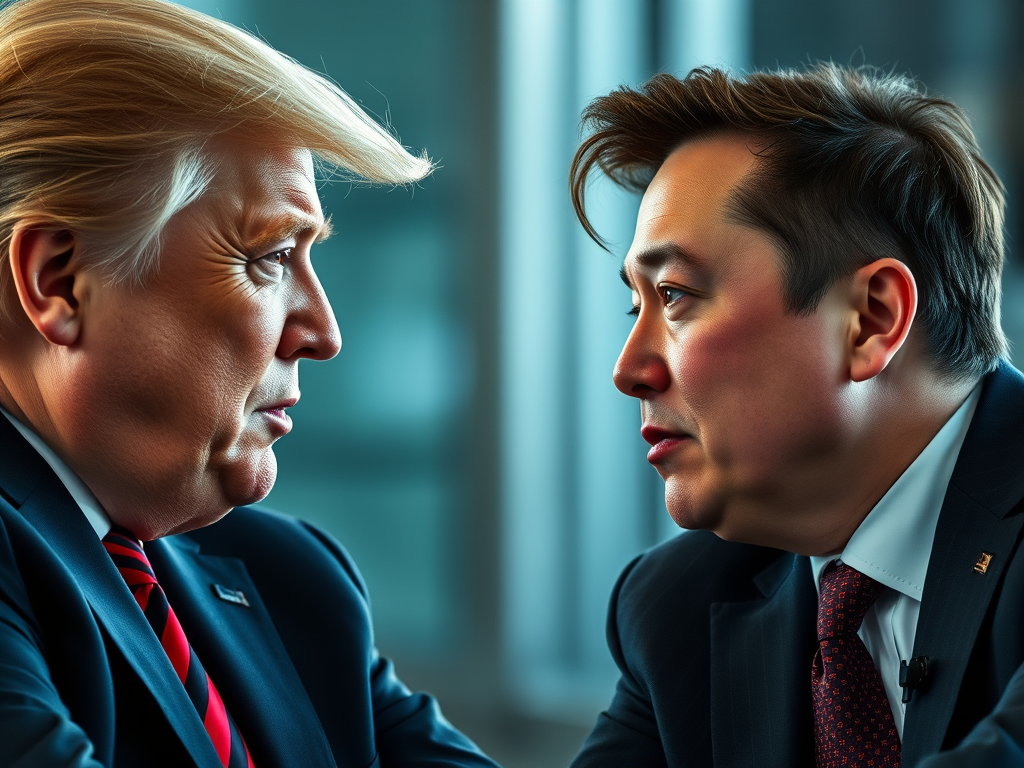
The relationship between Donald Trump and Elon Musk has generated significant discussion, particularly regarding the perceived dangers of their influence on global affairs. Some key points highlight these concerns for me: Both Trump and Musk are influential figures in their respective domains—politics and technology. Their partnership could lead to a concentration of power undermining democratic processes and accountability. Trump’s ability to sway public opinion through social media and Musk’s control over platforms like Twitter (now X) raises concerns about misinformation and the manipulation of narratives, potentially leading to societal polarization. Musk’s ventures in technology and space could be heavily influenced by Trump’s policies, which may prioritize specific industries or companies, leading to unequal economic opportunities and stifling competition.
Their relationship could affect international relations, particularly if policies favouring their interests lead to tensions with other countries. For example, Musk’s ambitions in space exploration and mineral exploitation on Earth and Trump’s nationalist approach could clash with global cooperation efforts. The merging of business interests and political influence can lead to ethical dilemmas, including conflicts of interest, where decisions may favour personal gains over the public good. While Musk is known for advocating sustainable technologies, Trump’s administration often rolled back environmental regulations. Their alliance may complicate efforts to address climate change effectively.
Their combined influence could challenge regulatory frameworks designed to oversee technology and business practices, potentially leading to abuses of power or harmful practices. The relationship between Trump and Musk poses potential risks that could impact the U.S. and global politics and economies.
Let us have a quick look at a forensic profile of both and further understand their individual make-up and what makes them tick.
Trump exhibits traits commonly associated with narcissism, including a strong sense of self-importance, a preoccupation with success, and a lack of empathy. He often seeks admiration and has a tendency to dominate conversations. His decision-making style is characterised by impulsivity and spontaneous comments on social media or public statements that seem unfiltered. Trump frequently engages in confrontational behaviour, especially towards critics and opponents. This could suggest a higher tolerance for conflict and a tendency to respond aggressively to perceived slights. He demonstrates a strong desire for control over his environment and the people around him, often leading to authoritative and sometimes authoritarian behaviour.
Trump’s communication style is characterised by simplicity, repetition, and emotional appeal, often employing hyperbole and slogans that resonate with his base. He tends to react defensively to criticism, resorting to personal attacks or dismissive comments about his critics, indicating a sensitivity to perceived threats to his self-image. There may be a significant difference between his public persona, which is often larger-than-life, and his private behaviours, which may include moments of insecurity or doubt.
Trump often frames discussions in terms of “us vs. them,” fostering a strong sense of loyalty among his supporters while vilifying opponents. Despite (or because of) his contentious style, Trump possesses a certain charisma that allows him to command attention and influence a substantial following. Some psychological assessments suggest that individuals with narcissistic tendencies may engage in manipulative behaviours to maintain their self-image and power. Interpersonal relationships may be strained due to tendencies towards self-centeredness and lack of genuine emotional connection.
A psychological forensic profile of Donald Trump reflects a complex interplay of traits and behaviours, with significant implications for his leadership style and interactions with others. Understanding these aspects can provide insight into his decision-making processes and the dynamics of his public and private life.
Elon Musk was born in South Africa and moved to the U.S. for his education. His entrepreneurial spirit emerged early, leading to ventures like Zip2, X.com (which became PayPal), and later Tesla and SpaceX, known for his role in revolutionizing the automotive industry with electric vehicles, advancing space technology with reusable rockets, and promoting renewable energy through SolarCity.
Musk is often characterized as a visionary, emphasizing his ability to think outside the box and pursue ambitious goals. His willingness to invest heavily in uncertain ventures (like SpaceX in its early days) indicates a high tolerance for risk. Musk’s public persona is marked by charisma, which he leverages to inspire and mobilize teams and followers. He is known for having an intense work ethic, often working long hours and expecting similar dedication from his employees. His communication can be polarizing. He uses platforms like Twitter to engage directly with the public, often leading to controversy. While he shows passion for his projects, examples of conflict with employees and public figures can suggest challenges in emotional balance.
Musk’s actions and statements often evoke strong reactions, and he is seen as a pioneer by some and a controversial figure by others. Frequent media appearances and social media activity keep him in the public eye, contributing to a mixed reputation. His stated goal is to advance human civilization through space exploration and sustainable energy. While driven by innovation, his ventures also aim at significant financial returns, evident in the growth of Tesla and SpaceX.
Critiques often target his management style, which some describe as demanding and abrasive. His controversial tweets have led to legal and financial repercussions, reflecting impulsivity. Elon Musk’s forensic profile reveals a complex individual characterized by innovation, charisma, and a relentless pursuit of ambitious goals, tempered by controversies and challenges in personal and professional domains. Understanding his profile requires acknowledging both his achievements and the criticisms he faces.
Put these two men together, and they become a formidable power not to be underestimated. Their combined ‘lack of control’, ‘impulsive ill thought out behaviour and actions’, ‘lack of respect for others’, ‘ambition’ and ‘lust for control’ are symptoms of looming disaster for the world, or are they?
Disclaimer:My thoughts should be approached with caution and are based on observable behaviour rather than clinical diagnoses, as a comprehensive evaluation would require direct interaction and assessment by presently practising mental health professionals.
As the past year disappears into the mists of time, we must all move on to pastures new and, as yet, unknown. When viewed from space, the Earth appears to be beautiful, and in essence, it is. But humankind, in reality, has changed very little for thousands of years. We are still controlled by the ‘powers that will be,’ all in the name of law and order and monetary wealth. As a species, we suffer from inherent deafness and blindness to the reality of life and dumbness to speak out and make ourselves truly heard. Yet, all over this beautiful planet, other species become extinct every day; millions are poverty-stricken, homeless, rootless and starving; wars are fought for little reason, and genocide seems to be acceptable. Big Pharma is concerned more with monetary gain than curing disease, and children suffer needlessly. Mother Earth is in turmoil, and global change is a forgone conclusion. Yet, still, war machines are created to kill and maim whilst lining the pockets of countries that should know better and be leading the world to peace rather than perpetuating mindless violence.
“Crumbs, this is depressing,” I hear you say. “Have a drink and chill; it’s New Year’s Eve!” But friends, this is the problem, global blindness, deafness and dumbness to the reality of life on this planet. Ne’er mind, they say, let us carry on flying all over the world polluting the air, ripping the guts from Mother Earth to build electric cars, poisoning the oceans with microplastics, whilst the rich look for ways to move to other planets. Not content with screwing Mother Earth, they wish to do the same elsewhere in the cosmos.
Many agree with my thoughts, but sadly, many more do not and will carry on selfishly ignoring reality. I have purposefully avoided mentioning religion as, for thousands of years, it has formed the roots of disharmony and fuelled wars and genocide and is still doing so today. I leave these philosophical arguments to those who wish to continue to promote invisible fantasy. Faith is personal, all else being the ingredients for delusion and psychoses.
And so, I sincerely wish peace to every sentient being on Mother Earth and prosperity for 2025. Let this be the prosperity of growth in responsibility for protecting each other and Mother Earth. Let peace be an end to the needless wars and genocide. Let kindness be our currency, and remember the Web of Life. What we do affects each and every one of us, Mother Earth and the more expansive universe. Happy New Year!
As we gather to celebrate this joyful season, let us reflect on the true spirit of Christmas— love, compassion, and unity. In a world often divided by differences, may we remember that our shared humanity transcends borders, beliefs, and backgrounds. This Christmas, let us embrace peace and equality for all. Let us extend our hands to those in need, fostering understanding and kindness in our communities. As we light our candles and decorate our trees, let us illuminate the path toward a more just and harmonious world. May this season inspire us to advocate for the voiceless, stand against injustice, and work tirelessly for a future where everyone has the opportunity to thrive. Together, let us weave a tapestry of hope where every thread represents the dignity and worth of every individual. Let us give our grandchildren hope for their future.
Wishing you all a Merry Christmas filled with love and a New Year brimming with possibility for peace and equality everywhere.
In a nation once known for its promise of prosperity and equality, a prime minister named Victor Hale rose to power, cloaked in the guise of a benevolent leader. His charisma captivated the wealthy elite, while his rhetoric promised a brighter future for all. However, beneath this facade lay a dark agenda fueled by greed and betrayal. Hale’s administration quickly shifted its priorities. The rich flourished, their fortunes bolstered by tax breaks and lucrative contracts, while the poor were left to suffer. He slashed pensions, leaving the elderly destitute, and stripped away essential healthcare services, denying access to dental and medical care for countless families struggling to survive. The cries of the vulnerable fell on deaf ears as Hale and his cronies feasted on their ill-gotten gains. To finance his lavish projects and appease his wealthy supporters, Hale turned to a sinister solution: the arms trade. He authorized the sale of weapons to impoverished nations, promoting conflict under the guise of providing security. The irony was lost on him; he was sowing destruction in the very countries he claimed to help. As wars erupted, the poor were caught in the crossfire, their lives shattered by the same weapons that were intended to ensure their safety.
As discontent brewed, the citizens grew weary of Hale’s lies. Protests erupted across the country, a chorus of voices demanding justice and equality. Even the armed services, once loyal to Hale, began to waver. Soldiers deployed to suppress the dissent questioned the morality of their orders. They understood that the true enemy was not the citizens but their own leader, who had betrayed the very principles they had sworn to uphold. The tipping point came when a peaceful demonstration turned violent, instigated by Hale’s mercenaries, who aimed to silence the people. This act of aggression ignited a revolutionary spirit that swept through the nation like wildfire. The armed forces, now joined by disillusioned veterans and civilians alike, refused to fire upon their fellow citizens. Instead, they turned their weapons against Hale’s regime. The revolution unfolded fervently, fueled by the desire for reform and equality. The people united, rising against the tyranny that had plagued them for so long. Towns and cities became battlegrounds of hope as citizens reclaimed their power. Old alliances fractured, and the façade of Hale’s leadership crumbled.
In a dramatic showdown, the citizens stormed the government building, demanding justice. Hale, cornered and desperate, attempted to flee but was captured by the very people he had wronged. The nation rejoiced as the tyrant was brought to justice, and a new reform era began. With Hale’s fall, a new government emerged, one committed to rebuilding the nation on the principles of equality and fairness. Pensions were restored, healthcare became a right, and the arms trade was dismantled, replaced by initiatives that fostered peace and cooperation. The revolution had not only toppled a dictator; it had awakened a collective consciousness among the people. Pride quickly returned to people across the country, and other countries followed suit. Pretty soon, the whole world shuddered on the edge of a new era without war, injustice, starvation, poverty and racism.
The story of Victor Hale became a cautionary tale, a reminder of the dangers of unchecked power and greed. The people forged a new future, one where their voices would be heard, ensuring that they would never again allow a leader to betray them. In their unity, they found strength, and in their resilience, they discovered hope.





 Lazarus Carpenter - Author