Earth (Well, I can dream can’t I?)

Once, in the dawn of time, Earth was a pristine paradise, a world of endless wonder where life flourished in perfect harmony. Towering forests stretched as far as the eye could see, rivers carved valleys and mountains with gentle persistence, and the oceans teemed with vibrant life. The planet moved gracefully, a living, breathing organism, with each element playing its part in the grand symphony of existence. For countless millennia, Earth thrived, untouched by the hand of humans. But then, curiosity ignited in the hearts of a few beings, humankind. They looked around at this beautiful world and saw not just beauty, but opportunity. They tamed fire, built tools, and soon their numbers grew, as their ambitions expanded. With each passing century, they carved into the land, tore down forests, drained wetlands, and harnessed rivers to power their machines.

At first, Earth seemed resilient, absorbing these wounds with quiet patience. The forests, although scarred, still regrew, and the oceans, despite pollution, continued to support life. But as mankind’s footprint widened, cracks appeared. The air grew thick with smoke, and the climate began to shift. Extinction became a silent, haunting melody, species vanished, and delicate ecosystems faltered. It was as if Earth was holding its breath, waiting for a moment of reckoning. Then, something miraculous happened. As the damage grew, so did awareness. People started to see the toll their relentless pursuit of progress was taking. Communities began to change, forests were protected, pollution was reduced, and renewable energy sources emerged from the ashes of coal and oil. The planet’s wounds, once thought irreversible, began to show signs of healing.

Nature, resilient as ever, started to reclaim its territory. Forests sprouted anew in abandoned fields, rivers cleared their murky waters, and animals returned to places once lost. The Earth’s core resilience was awakening, powered by a collective desire to mend what had been broken. It was a slow, patient process, akin to a scar healing over time, revealing strength beneath the surface. Humans learned that they weren’t separate from Earth, but part of it. They discovered that sustainability wasn’t a sacrifice but a necessity, a way to live in harmony with the planet’s natural rhythms. Technology evolved to work with nature, not against it. Cities grew greener, energy was harnessed from the sun and wind, and the air grew cleaner. The scars of the past remained, but they became lessons etched into the story of a wiser, more compassionate civilisation.

Throughout this journey, Earth’s resilience was tested many times. There were setbacks, pollution spikes, deforestation, and climate crises. Yet, each time, the planet responded with a quiet but mighty strength. Earth’s heartbeat persisted, steady and unwavering, reminding humankind that destruction was not the end, but a challenge to be overcome. In time, humans and nature forged a new relationship, one rooted in respect, stewardship, and understanding. The story of Earth’s resilience became a legend passed down through generations. It was a testament to hope that even in the darkest times, the planet’s spirit could endure, recover, and flourish again. And so, Earth continues to turn, resilient and wise, its heartbeat echoing through the cosmos, a reminder that life, in all its forms, is powerful beyond measure, capable of rebirth and renewal, as long as it’s given the chance.
Parable of Two Shepherds

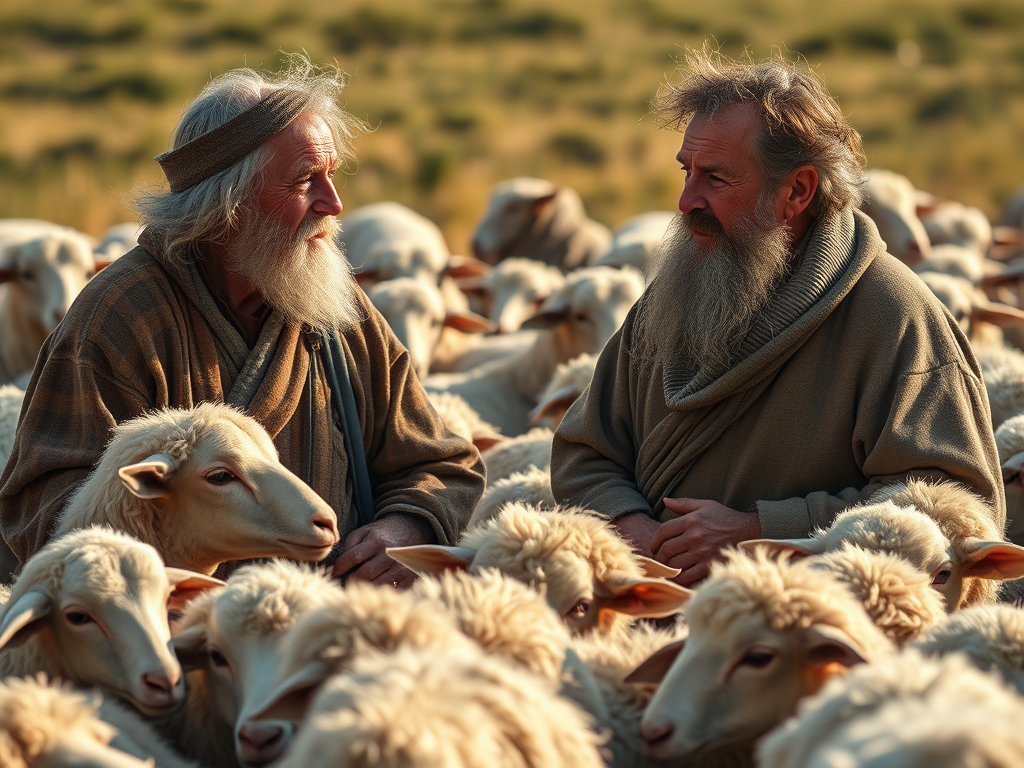
Once upon a time, there were two shepherds named Tomas and Eli. Both tended flocks of sheep and loved their animals dearly. The valley was beautiful, with plenty of grass and fresh water, but it was also small, and the grazing grounds were shared. One summer, as the grass grew sparse, Tomas and Eli found themselves in a disagreement. Tomas believed that the northern part of the valley belonged to him because he had been grazing his sheep there longer. On the other hand, Eli argued that the southern fields were his since he had started grazing his sheep there more recently. Their disagreement quickly grew into a heated argument. Tomas claimed,

“I have been here for many years, and my sheep have always grazed in this part of the valley. It is my right to continue doing so.”

Eli, in his own defence, replied,

“But I have also been here these past few seasons, and I need the grazing grounds just as much as you do. We both need to share fairly.”

The two shepherds argued day after day, each convinced they were right. Confused by the noise, their sheep began to stray and wander into the neighbouring pastures, causing more trouble. Finally, a wise old man who lived nearby heard about the dispute. He visited Tomas and Eli and asked to speak with them.

“Let me tell you a story,” he said. “There was once a river that flowed through a valley. Two farmers built their fields on either side of the river. Both wanted to use the water for their crops, but there was only enough for one to use at a time. They argued endlessly, each claiming the water was theirs.”

The old man paused and looked at the shepherds.

“One day, a wise elder suggested they build a small dam to direct the water to both fields at different times. They agreed to share the water equally, respecting each other’s needs. From then on, they worked together instead of fighting.”

Tomas and Eli listened carefully. They realised that their argument was causing more harm than good and that cooperation was better than conflict. They divided the grazing grounds equally, rotating their sheep between the two parts of the valley. From that day on, they worked together peacefully, and their sheep thrived in the harmony of shared land. So, the valley remained peaceful, and the two shepherds learned that sharing and understanding could solve even the thorniest disputes.

Parable of Three Brothers

Once upon a time, in a peaceful village, lived three brothers: Eli, Malrik, and Joran. They were born of the same parents but grew up with very different hearts. Eli, the eldest, was kind and compassionate and always sought to help others. He believed in kindness and fairness, and his gentle nature made him beloved by many. Malrik, the middle brother, was cunning and ambitious, but his heart was often clouded with greed and anger. He loved power and was not afraid to use deceit to get what he wanted. Joran, the youngest, was indifferent to everything. He cared little for rules, others’ feelings, or ambitions. He wandered through life without much thought or concern, often detached from the conflicts around him. As they grew older, their differences caused strife. Eli would try to mediate disputes, but Malrik’s schemes frequently led to misunderstandings. Indifferent to these disputes, Joran simply watched from the sidelines, often alienating himself further.

One day, their village faced a crisis—an ancient, enchanted forest nearby began to wither, threatening their homes and livelihoods. The village elders called upon the three brothers to find a solution. Eli believed they should seek the wisdom of the forest spirits and restore the balance with kindness.  Malrik saw an opportunity to exploit the situation for personal gain, perhaps to claim the forest’s treasures. Joran shrugged, uninterested, hoping it would pass without his involvement.

Despite their differences, the brothers set out together, each driven by their own motivations. Eli’s journey was filled with compassion. He helped injured animals, listened to the whispers of the trees, and sought harmony. He believed that love and understanding could heal the forest. Malrik’s path was marked by cunning—tricking creatures, exploiting resources, and seeking shortcuts to quick success. Joran, meanwhile, wandered aimlessly, often indifferent to the dangers and lessons around him, only following when it suited him.

As they travelled deeper into the forest, they faced challenges that tested their hearts. Eli encountered a wounded phoenix and nursed it back to health, learning that restoring nature required patience and love. Malrik was tempted by a treasure hidden beneath a cursed tree, but realised that greed could bring ruin. Lost in the woods, Joran finally saw the beauty of the world around him—the songs of birds, the glow of fireflies—and felt a flicker of curiosity.

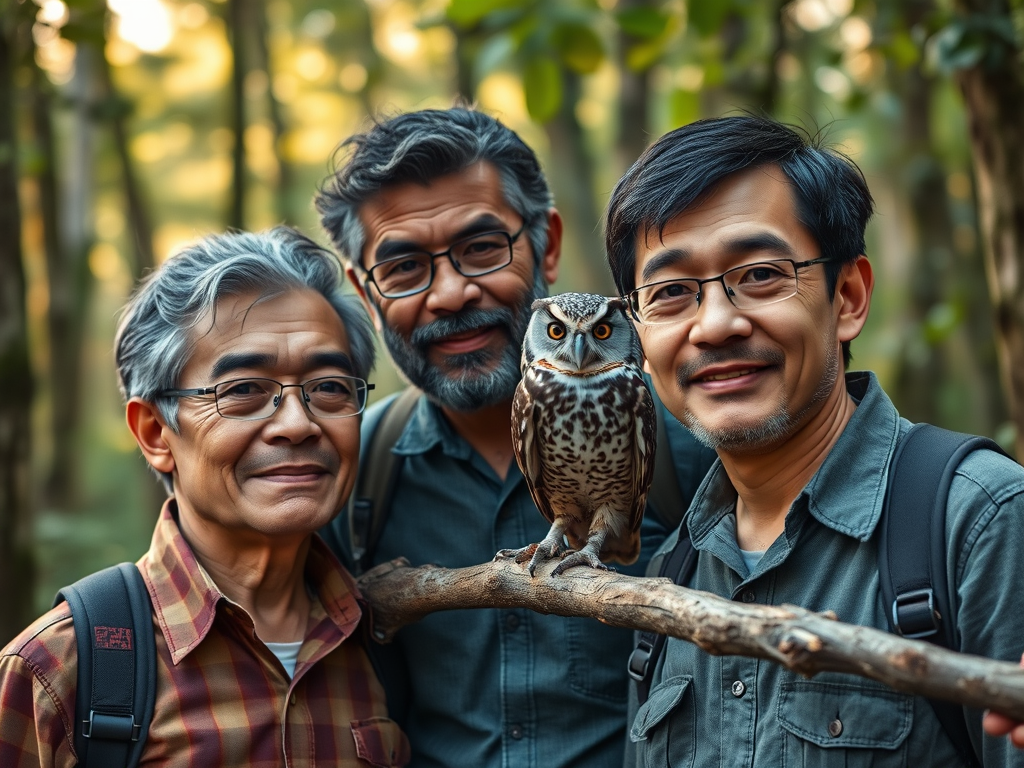
One night, they camped beneath a shimmering starry sky, and their differences came to the surface in a heated argument. Eli urged kindness, Malrik pushed for cunning, and Joran dismissed their concerns altogether. But in that moment, a wise old owl appeared and spoke: 
“Only when you learn to listen to each other can you find the true path.”

Realising the importance of unity, the brothers decided to work together. Eli suggested they combine their strengths: kindness, cunning, and curiosity. They returned to the forest, where Eli’s compassion healed the land, Malrik’s cleverness uncovered the source of the curse, and Joran’s indifference transformed into genuine interest as he saw the forest’s beauty. Through their combined efforts, the enchanted forest was restored, its magic renewed. The village prospered once more, and the brothers discovered something profound: Love and understanding are the most incredible powers, capable of transforming discord into harmony.

Koko the Talking Chimp – Voice of the Wild

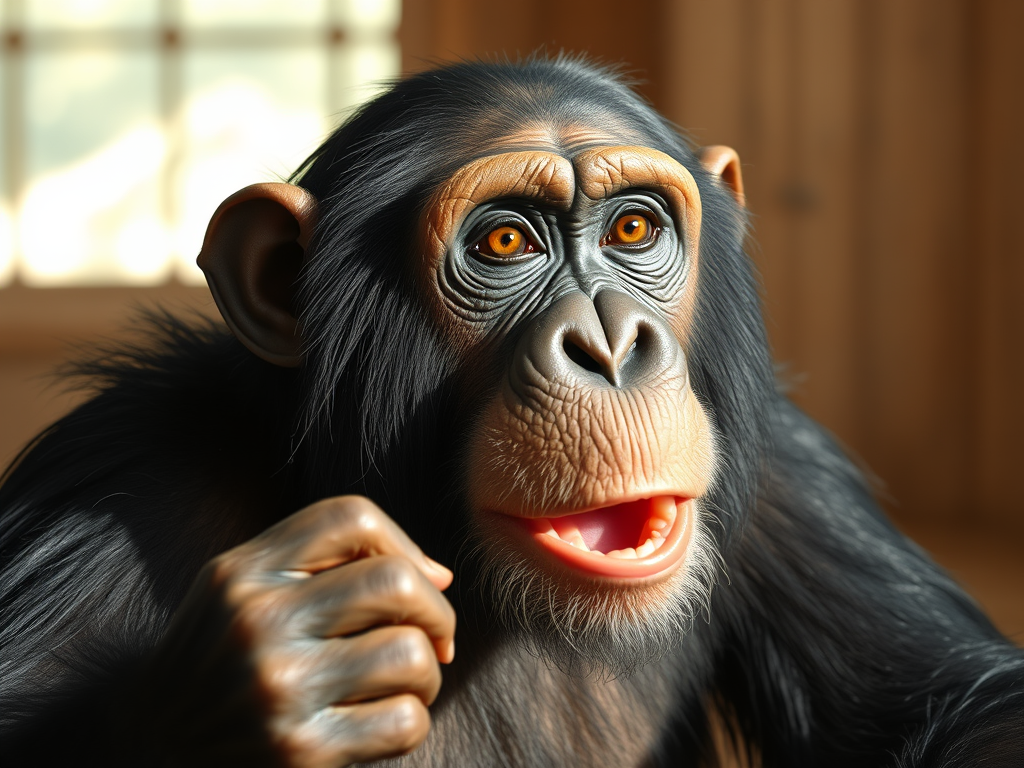
Once upon a time, in a lush jungle teeming with life, there lived a curious chimpanzee named Koko. Unlike any other of his kind, Koko had an extraordinary gift: one day, he suddenly learned to talk. It was a miracle that stunned scientists, villagers, and wildlife enthusiasts worldwide. At first, everyone thought it was a trick or a clever parlour stunt. But Koko’s words were clear and heartfelt. Using a specially designed device that translated his gestures and sounds into speech, Koko began to speak about what he saw and felt in the world beyond his jungle home.

“People,” Koko said one day, “are destroying my home. They cut down trees, pollute the rivers, and hunt animals just to own more and more. They forget that the forest belongs to all of us—the birds, the fish, the insects, and the trees. We are all part of this world.”

His words spread like wildfire. News outlets around the world broadcast his message, and people everywhere listened with wide-eyed wonder. Koko described how humans had built cities that stretched forever, how greed drove them to take everything they could, and how this greed was hurting the Earth and all its creatures. But Koko’s message wasn’t just a cry of distress—it was a call to action.

“We must remember,” he said, “that the Earth is our home, and it is fragile. We must share it, care for it, and stop taking more than we need.”

The world was moved. People began to realise that the destruction of nature was not just an environmental issue but a moral one. Movements to protect forests, clean rivers, and preserve wildlife gained momentum. Children learned about conservation in schools, inspired by the voice of a little chimpanzee who spoke from the heart. Koko became a symbol of hope and the importance of listening to those who are voiceless. His story reminded everyone that even the smallest among us can make a big difference when they speak out for what is right. And so, the tale of Koko the talking chimpanzee became a legend—a shining example of how understanding and compassion can bridge the gap between humans and nature, leading us toward a better, kinder world.

Two Little Monkeys

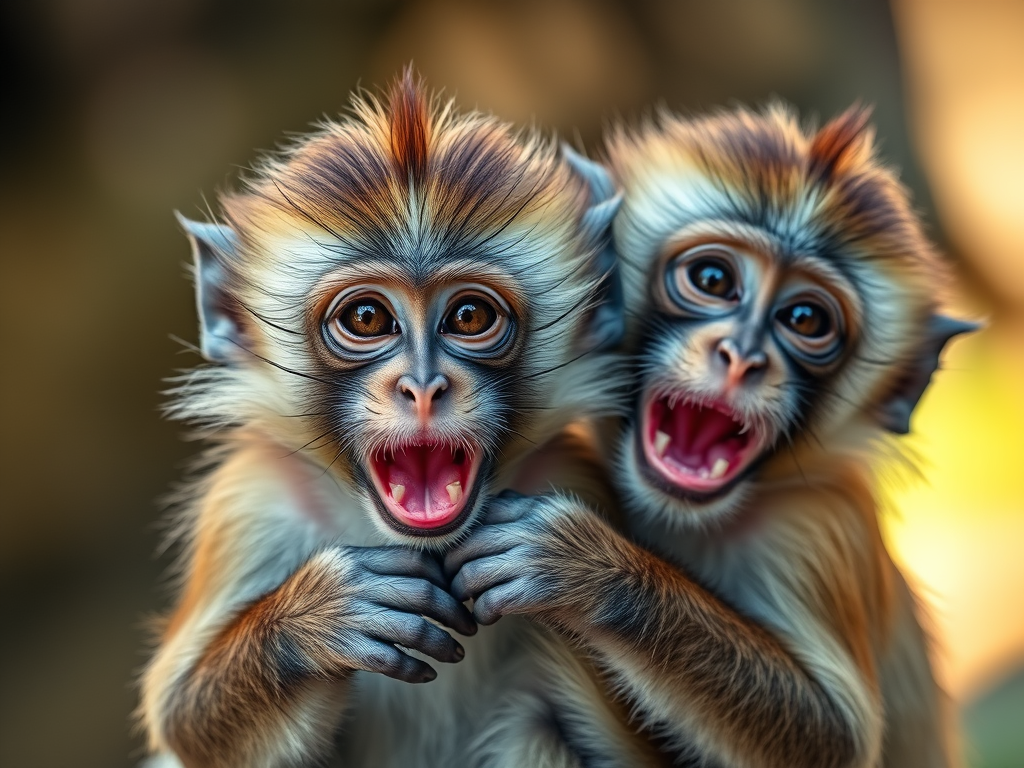
Once upon a time in a bustling city zoo, lived two identical twin monkeys named Max and Milo. They were the stars of their enclosure with their bright eyes, playful nature, and strikingly similar appearances. However, despite their playful antics for visitors, the twins felt a deep sense of unhappiness. Their days were filled with the same routines, the same visitors, and the same banana treats. They longed for adventure beyond the confines of their cage. One day, as they swung from branch to branch, Max had a brilliant idea.

“What if we use our identical looks to confuse the keepers? We could escape and explore the world beyond this zoo!”

Milo’s eyes sparkled with excitement.

“Yes! We can switch places! They won’t know who’s who!”

That night, as the zoo quieted down and the moon cast a silver glow, the twins put their plan into action. They practised their mimicry, copying each other’s movements and sounds. When morning came, the keepers arrived, unaware of the mischief about to unfold. As the keepers entered their enclosure, Max climbed high into the branches while Milo hung back, pretending to groom himself. When the keeper called out for them, Max swung down, but at the last moment, he let out a loud screech, startling the keeper. In the confusion, Milo took the chance to leap into the opposite corner, making it look like he was still in the same spot. The keepers were baffled.

“Wait, which one is which?” one of them exclaimed, scratching his head.

The twins exchanged mischievous glances, stifling their laughter. They knew they only had a short window before the keepers figured it out. As the day went on, the twins continued their clever ruse. They switched places during feeding time, and when the keepers tried to separate them, they would jump and play, making it impossible to tell who was who. The twins revelled in their newfound freedom to roam their enclosure without supervision, but they knew it was just a matter of time before the keepers caught on. That evening, when the zoo was closed to the public, Max and Milo knew it was time for the final phase of their escape. They waited until the keepers were distracted and then darted out of their enclosure, using the shadows to hide. They climbed over fences and squeezed through gaps, their hearts racing with excitement. Finally, they found themselves outside the zoo, standing in the cool night air. The world beyond was vast and filled with the sounds of nature. Max looked at Milo, his eyes wide with wonder.

“We did it! We’re free!”

With newfound courage, they ventured into the nearby park, trees towering above them like old friends. They swung from branches, chased fireflies, and feasted on wild fruit, their laughter echoing in the night. For the first time, they felt truly alive. As dawn broke, the twins knew they could not stay in the park forever. They missed the comfort of each other and the familiar routines, even if they were unhappy. So, they decided to return to the zoo, but not as prisoners. They would find ways to bring joy to their lives, using their cleverness to entertain not just visitors but also themselves. When they returned, the keepers were in disbelief, having searched high and low for the mischievous twins. Max and Milo resumed their antics, but now, with a sparkle in their eyes, knowing the world outside was filled with possibilities. They learned to embrace the zoo life with newfound joy, always planning little adventures and reminding each other that sometimes, happiness was a matter of perspective. And so, the twin monkeys lived on, not just as entertainers but as adventurers in their own right, forever bonded by their shared escapade and the spirit of freedom.

Image by AI