Seeds of Change

In a nation once known for its promise of prosperity and equality, a prime minister named Victor Hale rose to power, cloaked in the guise of a benevolent leader. His charisma captivated the wealthy elite, while his rhetoric promised a brighter future for all. However, beneath this facade lay a dark agenda fueled by greed and betrayal. Hale’s administration quickly shifted its priorities. The rich flourished, their fortunes bolstered by tax breaks and lucrative contracts, while the poor were left to suffer. He slashed pensions, leaving the elderly destitute, and stripped away essential healthcare services, denying access to dental and medical care for countless families struggling to survive. The cries of the vulnerable fell on deaf ears as Hale and his cronies feasted on their ill-gotten gains. To finance his lavish projects and appease his wealthy supporters, Hale turned to a sinister solution: the arms trade. He authorized the sale of weapons to impoverished nations, promoting conflict under the guise of providing security. The irony was lost on him; he was sowing destruction in the very countries he claimed to help. As wars erupted, the poor were caught in the crossfire, their lives shattered by the same weapons that were intended to ensure their safety.

As discontent brewed, the citizens grew weary of Hale’s lies. Protests erupted across the country, a chorus of voices demanding justice and equality. Even the armed services, once loyal to Hale, began to waver. Soldiers deployed to suppress the dissent questioned the morality of their orders. They understood that the true enemy was not the citizens but their own leader, who had betrayed the very principles they had sworn to uphold. The tipping point came when a peaceful demonstration turned violent, instigated by Hale’s mercenaries, who aimed to silence the people. This act of aggression ignited a revolutionary spirit that swept through the nation like wildfire. The armed forces, now joined by disillusioned veterans and civilians alike, refused to fire upon their fellow citizens. Instead, they turned their weapons against Hale’s regime. The revolution unfolded fervently, fueled by the desire for reform and equality. The people united, rising against the tyranny that had plagued them for so long. Towns and cities became battlegrounds of hope as citizens reclaimed their power. Old alliances fractured, and the façade of Hale’s leadership crumbled.

In a dramatic showdown, the citizens stormed the government building, demanding justice. Hale, cornered and desperate, attempted to flee but was captured by the very people he had wronged. The nation rejoiced as the tyrant was brought to justice, and a new reform era began. With Hale’s fall, a new government emerged, one committed to rebuilding the nation on the principles of equality and fairness. Pensions were restored, healthcare became a right, and the arms trade was dismantled, replaced by initiatives that fostered peace and cooperation. The revolution had not only toppled a dictator; it had awakened a collective consciousness among the people. Pride quickly returned to people across the country, and other countries followed suit. Pretty soon, the whole world shuddered on the edge of a new era without war, injustice, starvation, poverty and racism.

The story of Victor Hale became a cautionary tale, a reminder of the dangers of unchecked power and greed. The people forged a new future, one where their voices would be heard, ensuring that they would never again allow a leader to betray them. In their unity, they found strength, and in their resilience, they discovered hope. 
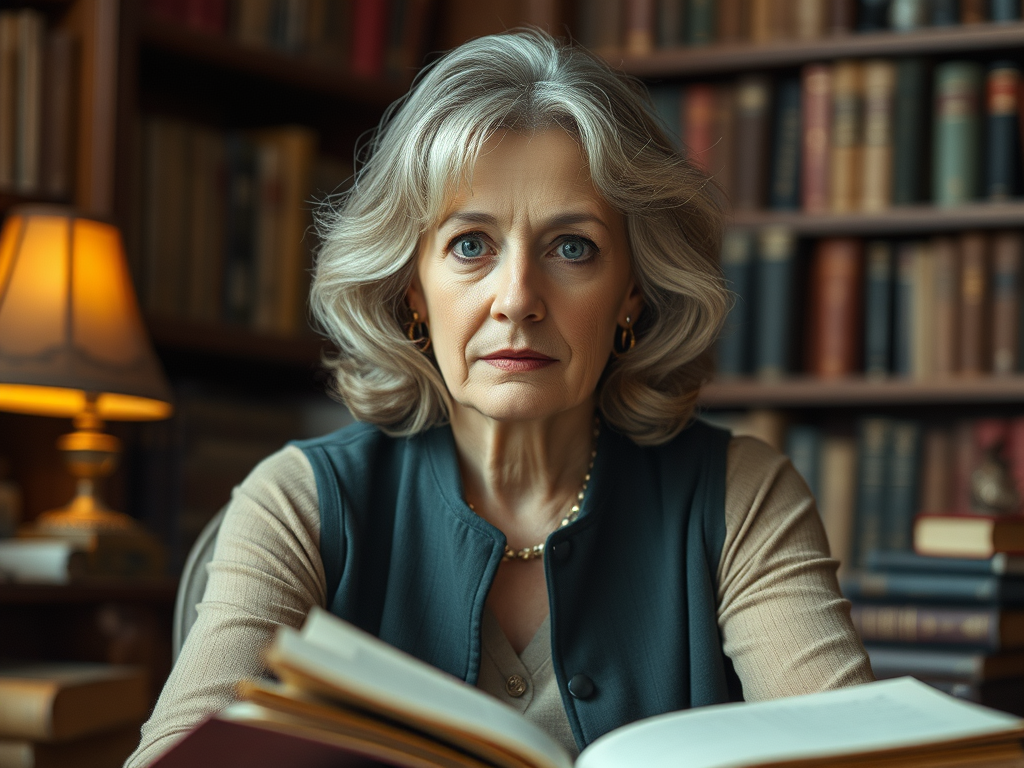
Philippa Gregory

Philippa Gregory is a British historical novelist known for her works in historical fiction, particularly historical romances and thrillers. She was born on January 9, 1954, in Nairobi, Kenya. Gregory’s most famous works include “The Other Boleyn Girl,” which tells the story of Mary Boleyn and her sister Anne Boleyn, who both had relationships with King Henry VIII. This novel was adapted into a successful film in 2008, starring Natalie Portman and Scarlett Johansson.

She has written many other novels set in various historical periods, including the Tudor era, the Wars of the Roses, and other significant periods in British history. Some of her other notable works include “The White Queen,” “The Red Queen,” and “The Kingmaker’s Daughter.” Gregory’s writing is known for its rich historical detail, complex characterizations, and engaging storytelling. She often focuses on women’s lives in history and explores their roles and relationships in the context of the broader historical events of their time.

In addition to her novels, Philippa Gregory has written non-fiction works on the Wars of the Roses and the Tudor period. She is a popular and prolific author with a large and dedicated following of readers worldwide. 

Image by AI

William Shakespeare

William Shakespeare (1564-1616) was an English playwright, poet, and actor. He is widely regarded as one of the greatest writers in the English language and the world’s pre-eminent dramatist. He is often called England’s national poet and the “Bard of Avon.” Shakespeare’s works, including plays, sonnets, and poems, have had a profound influence on literature and the arts. His plays have been translated into every major living language and are performed more often than those of any other playwright.

Some of his most famous plays include “Romeo and Juliet,” “Hamlet,” “Macbeth,” “Othello,” “King Lear,” and “A Midsummer Night’s Dream.” His works explore themes such as love, jealousy, betrayal, ambition, and the human condition. Shakespeare’s writing style is known for its rich language, complex characters, and timeless themes. His contributions to the English language are immense, with many phrases and words he coined that are still used today.

Overall, Shakespeare’s works continue to be studied, performed, and celebrated around the world, making him a cultural icon whose influence extends far beyond the literary realm. 

SAVED BY ET

Once upon a time, in a small town nestled between rolling hills and meandering rivers, the skies darkened ominously. It had been a dry season, and the villagers welcomed the rain, hoping it would replenish their crops. But as the first drops fell, they quickly turned into a torrential downpour. Within hours, the gentle streams swelled into raging torrents, and the town was engulfed in chaos. The water rose swiftly, sweeping away everything in its path. Animals sought refuge in trees and rooftops while families scrambled to save their loved ones and belongings. Panic gripped the townsfolk as they watched their world transform into a swirling sea. The cries of people and animals echoed through the storm, merging with the relentless sound of rain pounding against the earth.

A strange light pierced through the dark clouds as the situation grew dire. The townspeople paused, mesmerized by the glowing object descending from the sky. It was a UFO, shimmering in hues of blue and green, casting an otherworldly glow over the flooded landscape. The villagers struggled to comprehend what they witnessed as the UFO hovered above them. Then, a beam of radiant light shot down from the craft, enveloping the town. In an instant, the rain stopped, and the skies cleared. The sun broke through the clouds, bathing the land in warm golden light. The floodwaters began to recede, revealing the remnants of the devastation and the resilience of the town.

Animals cautiously climbed down from their perches, and families reunited, overwhelmed with relief. The UFO hovered for a moment longer as if assessing the situation, then slowly ascended, disappearing into the blue sky. The townsfolk watched in awe, their hearts filled with gratitude. It felt as though they had been given a second chance. In the days that followed, the community came together to rebuild. They shared stories of survival and hope, and their bonds strengthened by the experience. The UFO had not only saved them from drowning but had also reminded them of the fragility of life and the importance of unity. As the crops flourished again, the townspeople often looked up at the sky, wondering if the mysterious visitors would return. They celebrated their survival and learned to appreciate the rain, knowing it could bring both life and peril. The day it rained so much became a tale of resilience, reminding them that even in the darkest storms, there is always a glimmer of hope waiting to shine through. 

Image by AI

Roald Dahl

Roald Dahl was a British novelist, short story writer, poet, screenwriter, and fighter pilot. He was born on September 13, 1916, in Llandaff, Cardiff, Wales, and passed away on November 23, 1990, in Oxford, England. Dahl is best known for his children’s books, which have become classics of children’s literature. Some of his most famous works include “Charlie and the Chocolate Factory,” “Matilda,” “James and the Giant Peach,” “The BFG,” and “The Witches.”

His writing often featured darkly comic and macabre themes, with a touch of the fantastical and the absurd. His books have been adapted into films, stage plays, and even video games. Apart from his writing, Dahl had a fascinating life. He served as a fighter pilot in the Royal Air Force during World War II and as a spy for the British government in the United States. Dahl’s writing career began with adult short stories before transitioning to writing for children. His work continues to be beloved by readers of all ages worldwide, and his legacy as a storyteller lives on through his books and adaptations. 

Image by AI