The Railway Station – A Ghost Story

In the depths of a mist-covered forest, hidden from the prying eyes of modern civilization, lies the remnants of what was once a bustling railway station. This station, surrounded by an air of mystery and intrigue, is said to be haunted by the spirits of its past. Over the years, whispers of ghostly apparitions and eerie happenings have woven a tale of terror around the last railway station, captivating the imagination of those brave enough to venture near. Join me as we unlock the secrets of this ghostly realm and delve into the chilling story of the last railway station.

Once a thriving hub of activity, the last railway station was a vital link connecting distant towns and cities. Passengers eagerly awaited the arrival of trains, their anticipation mingling with the rhythmic chugging of the locomotives. The station’s bustling platforms reverberated with laughter, greetings, and tears of farewell as loved ones bid each other adieu. It was a place pulsating with life, but fate had a different plan in store.

Legend has it that disaster struck on a dark and stormy night as a train approached the station. An unforeseen malfunction caused the train to derail, hurtling off the tracks and into the surrounding wilderness. Chaos ensued, and lives were lost in the blink of an eye. The once vibrant station was forever marred by this tragic incident, casting a shadow over its existence. Since that fateful night, the abandoned railway station has become a place of inexplicable phenomena. Locals claim to have witnessed ghostly apparitions, the spectres of those who perished in the accident. These tormented souls are said to wander the deserted platforms, their ethereal figures bathed in an otherworldly glow. Some have reported hearing distant cries and whispers as if the echoes of the past linger in the air.

Among the spine-chilling tales surrounding the last railway station, the most haunting is that of the phantom train. Late at night, when the moon is concealed behind a veil of clouds, an otherworldly train is said to materialize on the abandoned tracks. Its spectral form glides silently, only to vanish into thin air moments later, leaving an eerie silence and an unsettling sense of dread behind. Psychics and paranormal investigators have been drawn to the last railway station, seeking answers and validation for the countless stories that have been shared. Some claim to have captured chilling EVP (Electronic Voice Phenomenon) recordings, capturing whispers and cries from the spirit realm. Others have reported fluctuations in temperature and strange electromagnetic readings, suggesting a lingering presence beyond our understanding.

The last railway station is a testament to the past, where history intertwines with the supernatural. Its abandoned platforms and dilapidated buildings hold the echoes of a bygone era, forever haunted by the tragic event within its walls. Whether one believes in the paranormal or not, the stories surrounding this ghostly site continue to captivate the imaginations of those who dare to explore its ethereal domain. The last railway station serves as a reminder of the fragility of life and the enduring power of the human spirit, even in the face of tragedy.
Bertrand the Sculptor

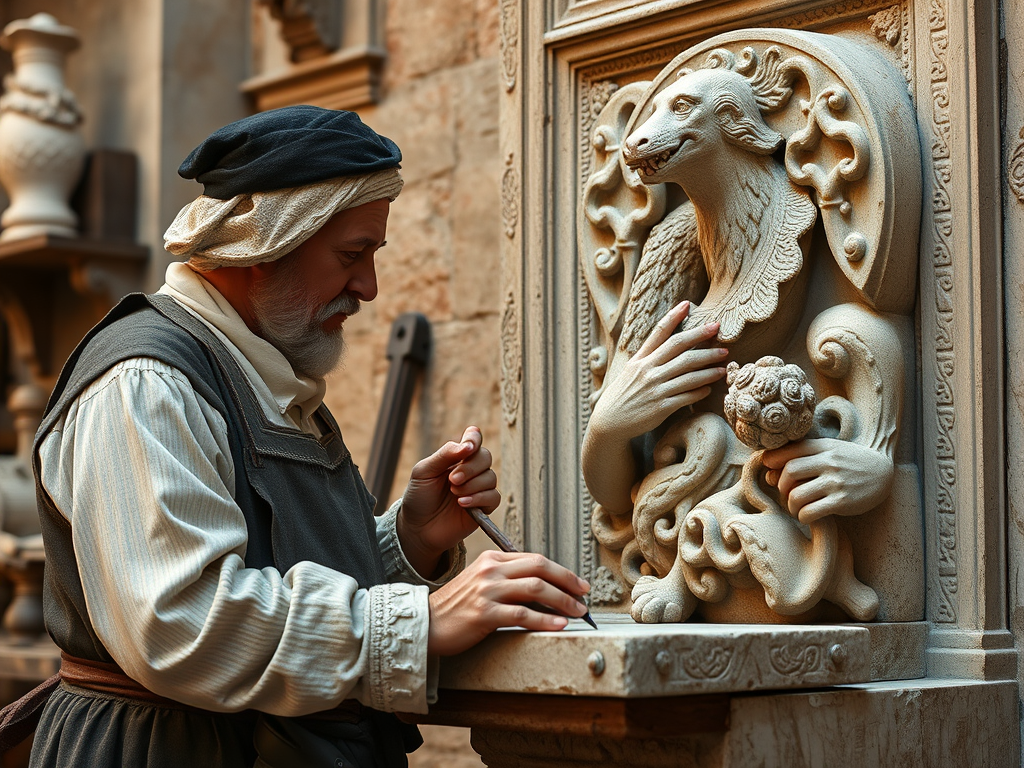
In the heart of Venice, amidst the winding canals and echoes of history, stood an art gallery known as “Galleria Fantasma.” This gallery was renowned not only for its exquisite collection of Renaissance masterpieces but also for its most enigmatic resident—Bertrand the Sculptor, a spectral artist who had haunted its halls since 1486. Bertrand was a gifted sculptor, celebrated for his ability to breathe life into stone. His works captured the depth of human emotion, a testament to his profound understanding of beauty and sorrow. However, his promising career was cut short when the plague swept through Venice, claiming his life at the age of 38. On his deathbed, surrounded by the unfinished sculptures that bore witness to his genius, Bertrand made a silent vow: his art would live on, even if he could not.

Upon his death, Bertrand’s soul found itself bound to his final creation—a haunting sculpture of a woman, her face a reflection of both melancholy and grace. This piece, known as “The Muse,” was said to embody a love lost to time, a muse who had inspired Bertrand’s greatest works. In the ethereal realm, Bertrand lingered, becoming a living, breathing ghost, his presence a whisper in the gallery’s corridors. Visitors to the Galleria Fantasma often reported eerie sensations—a sudden chill, the faint sound of chiselling, or a shadow glimpsed from the corner of the eye. These occurrences, though unsettling, seemed to possess an inexplicable warmth, as if the ghost meant no harm. Indeed, Bertrand’s intentions were pure; he sought not to frighten but to inspire.

Over the centuries, many artists and art lovers ventured into the gallery, drawn by its mysterious allure. Those sensitive to the supernatural sometimes found themselves in unexpected dialogue with Bertrand. He would guide them through the intricacies of art, offering insights that transcended time and space. His presence was most strongly felt near “The Muse,” where he appeared as a translucent figure, his spectral hands forever refining his masterpiece. Despite his spectral existence, Bertrand yearned for recognition—not as a ghost, but as an artist whose soul lived on through his work. As Venice evolved, the gallery became a sanctuary for those who admired the ethereal beauty of art. Yet, few understood the story behind the haunting presence within its walls.

One evening, Isabella, a fervent young art student, stumbled upon the gallery. Enchanted by “The Muse,” she felt an immediate connection as if the sculpture spoke directly to her heart. As she sketched, a gentle breeze brushed her cheek, and she sensed a presence watching over her. Encouraged, she spoke aloud, sharing her dreams and fears, the ache of unfulfilled longing. To her surprise, the atmosphere shifted, a warmth enveloping her—a sign that Bertrand was listening. Isabella returned to the gallery each night, her visits becoming a ritual. Through her art and passion, she forged a bond with Bertrand. Unbeknownst to her, Bertrand found renewed purpose in guiding this young artist. He revealed the secrets of his techniques, the emotions that fueled his creations, and the stories etched into every curve of “The Muse.” Together, they embarked on a creative journey, bridging the chasm between life and death.

As Isabella’s talent blossomed, the gallery thrived. She organized exhibitions that showcased her work and illuminated Bertrand’s legacy, weaving his story into the tapestry of her art. The tale of the living ghost who inspired a new generation spread, drawing visitors eager to experience the magic of Galleria Fantasma. In time, Bertrand’s name was spoken with reverence, his spirit woven into the fabric of Venice’s artistic heritage. No longer just a ghost haunting the gallery, he became a vital part of its story, celebrated through the creations of those he inspired. And in the quiet of the night, under the moon’s silver glow, Bertrand continued to sculpt, his heart at peace, knowing he would never be forgotten. 

Image by AI

A Tale for Halloween – Legend of Whitaker House

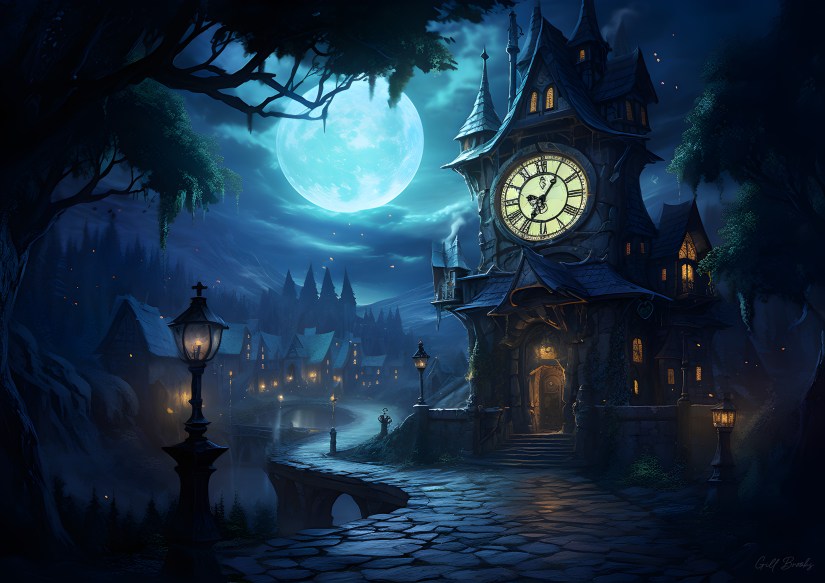
In the quaint town of Willow Creek, the legend of the Whitaker House had woven itself into the fabric of local folklore. On a moonless Halloween night, the wind howled through the barren trees, carrying the tales of the past. The mansion stood at the edge of the woods, its silhouetted form looming ominously against the dark sky. The townspeople avoided it, their imaginations haunted by stories of Eliza Whitaker, the young girl who vanished one fateful Halloween night decades ago. Despite the warnings, five adventurous teenagers, Jack, Lily, Sam, Emma, and Tom, decided to test their courage by entering the infamous house. Armed with flashlights, they approached the mansion; its grandeur faded, the windows boarded up, and ivy crawled over its stone facade.

As they stepped inside, the air turned frigid, and the scent of decay filled their nostrils. The door creaked ominously behind them, closing with a resounding thud. The group exchanged nervous glances but pressed on, their footsteps echoing through the dusty corridors. They split up to explore, each taking a different path through the labyrinthine interior. Jack and Lily entered the parlour, where cobwebs draped over antique furniture. A grand piano stood in one corner, its keys yellowed and silent. A haunting melody filled the air as Lily ran her fingers across the keys, though her hands never moved. Meanwhile, Sam and Tom found themselves in a dimly lit library, its shelves lined with ancient tomes. A heavy book lay open on a table, its pages filled with Eliza’s diary entries. As they read, a chill swept through the room. Eliza had written of hearing voices, whispers calling her to the forest, and a shadowy figure that appeared in her dreams.

Emma, exploring alone, stumbled upon the attic stairs. Curiosity getting the better of her, she ascended into the darkness. The attic was cluttered with forgotten relics and dusty trunks. There, she found a tarnished mirror, its surface cloudy. As she peered into it, the reflection shifted, revealing a young girl in a white gown, her eyes pleading. Suddenly, a loud crash echoed through the house, drawing the group back together. They converged in the hallway, their breaths visible in the freezing air. The house seemed to pulse with a life of its own, the walls groaning as if in pain. Determined to uncover the truth, they followed a trail of cold air leading to a hidden door behind a tattered tapestry. Pushing it open, they descended a narrow staircase into a forgotten basement. The air was damp and heavy, and the flickering light of their flashlights revealed a room filled with old toys and a small bed. A porcelain doll eerily resembling Eliza stood in the corner, its eyes glinting in the darkness. As they approached, the temperature dropped further, and a translucent and sorrowful spectral figure emerged. It was Eliza, her voice a mere whisper.

“You must help me,” she implored. I am trapped between worlds.”

The teens realized that Eliza’s spirit was bound to the house, unable to move on. Determined to help, they formed a circle, holding hands as they recited a passage from her diary, hoping to free her soul. As they chanted, the room filled with a blinding light, the walls trembling as if resisting the ritual. The ground shook violently, and the whispers grew into a deafening roar. Shadows writhed around them, and the dolls in the room seemed to come alive, their faces twisted in anguish. But the teens held firm, their voices rising above the chaos. The light exploded outward with a final, heart-stopping crescendo, and the mansion fell silent. The oppressive cold lifted, and Eliza’s spirit appeared before them, her face serene.

“Thank you,” she whispered, her form dissolving into shimmering light.

The group fled the basement, racing through the now-silent house and into the night. Behind them, the Whitaker House stood still, its aura of menace gone. They vowed to keep Eliza’s story alive, a reminder of the power of compassion and courage. Every Halloween, the townsfolk would gather, sharing the tale of the brave teens who freed Eliza Whitaker’s spirit, ensuring her legend would be told for generations to come. And though the house remained empty, the haunting whispers ceased, leaving only the echoes of a past finally at peace. 

Image by Gill Brooks

The Ghost of K2

Once upon a time, there lived a passionate mountaineer named Alex who had an insatiable love for climbing. From a young age, he was drawn to the towering peaks, feeling a magnetic pull to the heights only the mountains could offer. Alex spent his life chasing summits, driven by an unquenchable thirst for adventure and the thrill of conquering new peaks. For forty-five years, he traversed the globe, scaling the world’s most challenging mountains. From the snow-capped peaks of the Himalayas to the rugged terrain of the Andes, he left no summit unconquered. His determination and skill earned him a reputation as one of the greatest mountaineers of his time, with countless stories of his daring ascents circulating among the climbing community.

However, Alex’s fate took a mysterious turn on his eleventh expedition to K2, the formidable second-highest mountain in the world. As he and his team ascended the mountain’s treacherous slopes, a sudden storm descended, engulfing them in a swirling chaos of snow and wind. Despite his experience and resilience, Alex and his team were separated in the blizzard, and he was never seen again. Rumours began circulating among the local Sherpas and climbers that Alex’s spirit still roamed the slopes of K2, his presence felt in the eerie mist that often shrouded the mountain. Some claimed to catch glimpses of a lone figure moving through the fog, a spectral mountaineer searching for the summit that had eluded him in life. Over the years, tales of Alex’s ghostly apparition grew, with climbers sharing stories of encounters with the phantom mountaineer on the slopes of K2. Some saw him beckoning them onward, while others felt his presence as a warning to respect the power of the mountains.

Today, the legend of Alex, the mountaineer who could never stop climbing, lives on in the mist-shrouded slopes of K2. His spirit is said to watch over those who dare to challenge the mountain, a reminder of the thin line between triumph and tragedy in the world of high-altitude adventure.

Image by AI